Tenant Landlord About With Owners
Description



Get your form ready online
Our built-in tools help you complete, sign, share, and store your documents in one place.
Make edits, fill in missing information, and update formatting in US Legal Forms—just like you would in MS Word.
Download a copy, print it, send it by email, or mail it via USPS—whatever works best for your next step.
Sign and collect signatures with our SignNow integration. Send to multiple recipients, set reminders, and more. Go Premium to unlock E-Sign.
If this form requires notarization, complete it online through a secure video call—no need to meet a notary in person or wait for an appointment.
We protect your documents and personal data by following strict security and privacy standards.

Make edits, fill in missing information, and update formatting in US Legal Forms—just like you would in MS Word.

Download a copy, print it, send it by email, or mail it via USPS—whatever works best for your next step.

Sign and collect signatures with our SignNow integration. Send to multiple recipients, set reminders, and more. Go Premium to unlock E-Sign.

If this form requires notarization, complete it online through a secure video call—no need to meet a notary in person or wait for an appointment.

We protect your documents and personal data by following strict security and privacy standards.
Looking for another form?








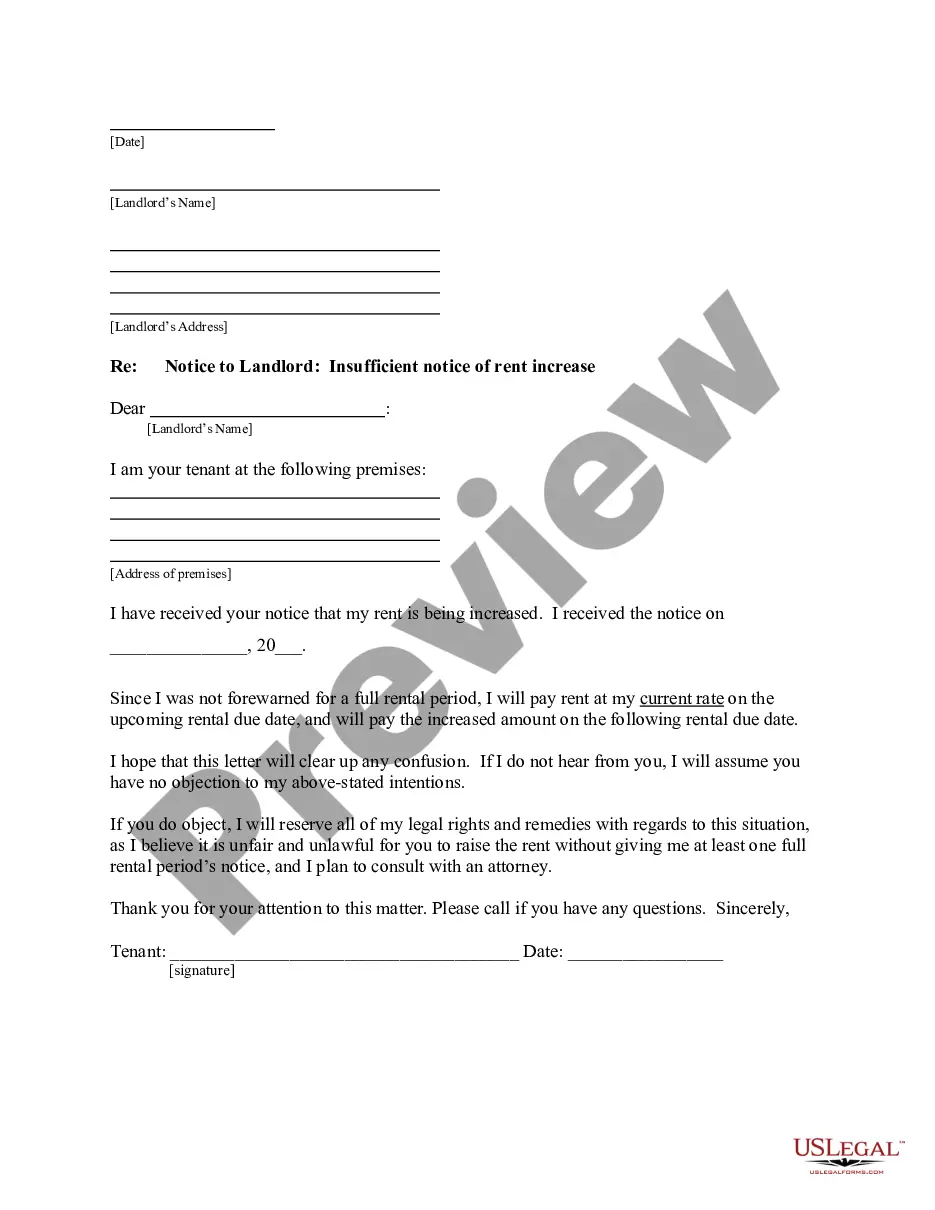
How to fill out Florida Letter From Tenant To Landlord About Insufficient Notice Of Rent Increase?
- If you are a returning user, start by logging into your account to download the necessary document. Ensure your subscription remains active; if it's expired, renew it according to your chosen payment plan.
- For first-time users, begin by reviewing the form description and preview mode. Confirm that you've selected the appropriate template that meets your needs and complies with local regulations.
- If the chosen template doesn’t fit, utilize the Search tab above to find another document that suits your requirements.
- Once you identify the right form, proceed to purchase. Click on the Buy Now button, select your preferred subscription plan, and create an account to access the full library.
- Complete your purchase by entering your credit card information or utilizing a PayPal account for payment.
- Finally, download your form to your device. You can access and complete the template anytime from the My Forms section in your profile.
US Legal Forms empowers both individuals and attorneys to efficiently navigate the legal document landscape. With over 85,000 editable templates at your fingertips, the service is unmatched in the market.
Start simplifying your legal processes today. Access US Legal Forms and ensure your documents are completed accurately and legally.
Form popularity
FAQ
In New York, it is illegal for landlords to discriminate against tenants based on race, religion, gender, or other protected characteristics. Additionally, landlords cannot retaliate against tenants for asserting their rights or fail to maintain the property in habitable condition. Being informed about your rights will help you navigate your tenant-landlord relationship effectively.
A landlord may agree to rent-to-own to secure a reliable tenant and potentially receive a higher return on investment. This arrangement provides the landlord with peace of mind, knowing that the tenant is motivated to maintain the property. It also opens the door for a future sale, which can be beneficial for both parties in the tenant-landlord dynamic.
A tenant is typically a renter who occupies a property under a lease agreement, rather than an owner. Owning the property requires a deed, whereas renting means you have the right to live in the property according to lease terms. Understanding this distinction is crucial in ensuring a smooth tenant-landlord relationship and knowing your rights.
Yes, a landlord can back out of a rent-to-own agreement under certain conditions, like if there are breach of terms by the tenant. However, clear documentation and a mutual understanding outlined in the agreement can prevent misunderstandings. Having a legal framework, such as that provided by uslegalforms, can protect both parties in this situation.
Start by having a clear and honest conversation with your landlord about your intentions to pursue a rent-to-own agreement. Explain your interest and ask if they would consider this option. Being prepared with information about how this arrangement works can help persuade your landlord and strengthen the tenant-landlord dynamic.
Finding rent-to-own homes can be done through online listings, local real estate agents, or by networking with other homeowners. Be sure to search specifically for properties marked as rent-to-own in your preferred area. Platforms like uslegalforms can provide vital documentation to guide you through the rent-to-own process seamlessly.
Yes, a friend or family member can live with you without being on the lease, but you should check your lease agreement first. Many landlords have specific rules about guests and additional occupants. It's essential to communicate with your landlord to avoid any potential issues that may arise regarding tenant-landlord relationships.
If you break up with someone you share a lease with, both parties remain responsible for the full lease terms unless agreed otherwise. You should communicate openly with your roommate and consider discussing the situation with your landlord. US Legal Forms can provide you with options for modifying your lease or understanding your rights in shared living arrangements, addressing tenant landlord concerns with owners.
In Texas, a guest can typically stay with you for a limited duration, often considered around two weeks, without being added to the lease. However, landlords may have specific rules that differ, so it's important to check your lease agreement. Understanding the guidelines around guest policies as a tenant landlord about with owners can help you avoid potential lease violations.
As a tenant in Texas, you have the right to a safe and habitable living environment, privacy, and protection against retaliation. Your landlord must follow legal procedures for eviction and cannot lock you out without proper notice. By understanding tenant landlord rights with owners, you can better navigate any challenges that may arise during your tenancy.