Is Florida A Landlord Friendly State
Description



Get your form ready online
Our built-in tools help you complete, sign, share, and store your documents in one place.
Make edits, fill in missing information, and update formatting in US Legal Forms—just like you would in MS Word.
Download a copy, print it, send it by email, or mail it via USPS—whatever works best for your next step.
Sign and collect signatures with our SignNow integration. Send to multiple recipients, set reminders, and more. Go Premium to unlock E-Sign.
If this form requires notarization, complete it online through a secure video call—no need to meet a notary in person or wait for an appointment.
We protect your documents and personal data by following strict security and privacy standards.

Make edits, fill in missing information, and update formatting in US Legal Forms—just like you would in MS Word.

Download a copy, print it, send it by email, or mail it via USPS—whatever works best for your next step.

Sign and collect signatures with our SignNow integration. Send to multiple recipients, set reminders, and more. Go Premium to unlock E-Sign.

If this form requires notarization, complete it online through a secure video call—no need to meet a notary in person or wait for an appointment.

We protect your documents and personal data by following strict security and privacy standards.
Looking for another form?







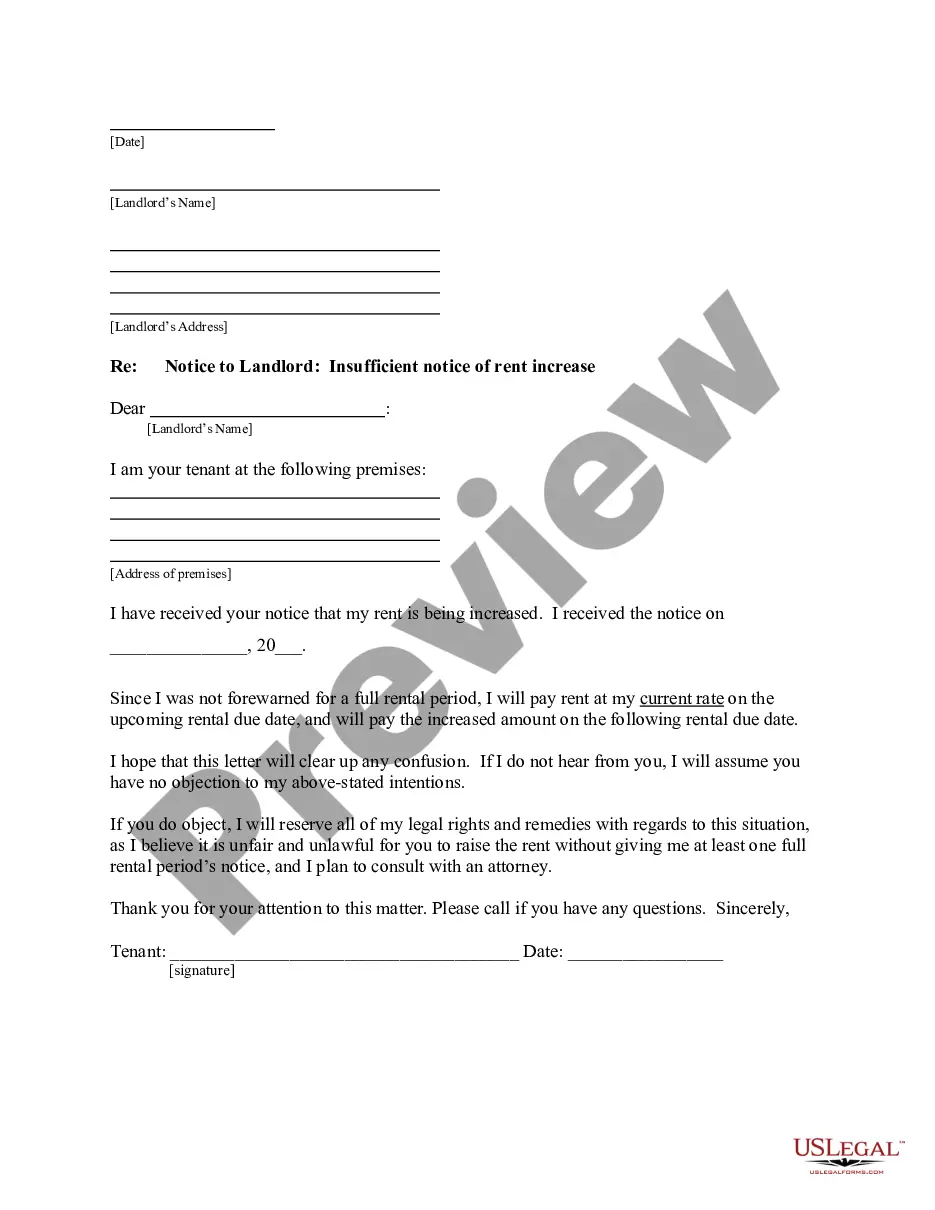
How to fill out Florida Letter From Tenant To Landlord About Insufficient Notice Of Rent Increase?
- Start by logging into your US Legal Forms account if you’re an existing user. Make sure your subscription is active, or renew it through your payment plan.
- For new users, browse through the extensive library of legal forms. Check the preview mode and read the descriptions to select a form that suits your specific needs.
- If you need different templates, use the Search tab to find alternative forms that comply with local regulations.
- Once you’ve chosen the correct document, click on the Buy Now button. You will then need to select a subscription plan and create an account to gain access.
- Proceed to checkout by providing your payment details. You can pay via credit card or your PayPal account.
- After the purchase, download your form to your device. You can also access it anytime later from the My Forms section in your profile.
With US Legal Forms, you gain access to an extensive library of over 85,000 legal documents, ensuring you have the templates you need at your fingertips.
Start simplifying your legal documentation today! Sign up for US Legal Forms and get the assistance you need to ensure your documents are precise and compliant.
Form popularity
FAQ
Protecting yourself as a landlord in Florida involves understanding the local laws and consistently following them. Regular communication with tenants and proactive management can help mitigate conflicts. Additionally, consider leveraging US Legal Forms for reliable lease agreements and legal documents, ensuring you feel secure in the landscape where many ask, 'Is Florida a landlord friendly state?'
To minimize the risk of lawsuits as a landlord, ensure that your lease agreements are clear and comprehensive. Regularly maintain the property and promptly address tenant complaints to avoid claims of negligence. Utilizing resources from platforms like US Legal Forms can help create legally sound documents that reinforce your position in what some may question as a landlord-friendly state.
To protect yourself as a landlord in Florida, start by thoroughly screening tenants with background and credit checks. Properly document tenancy agreements, repairs, and communications. Familiarize yourself with Florida landlord-tenant laws, as understanding these regulations is key in ensuring you operate within legal boundaries in a state often questioned about its landlord-friendliness.
To protect yourself as a landlord in Florida, it is essential to understand the local landlord-tenant laws. You should draft clear leases that specify the rights and responsibilities of both parties. By using tools offered through US Legal Forms, such as customizable lease agreements, you ensure compliance with state laws. Ultimately, Florida is seen as a landlord-friendly state, but your preparation and knowledge will enhance your protection.
Florida is often considered a landlord friendly state due to its favorable laws and regulations. The ease of navigating the rental process can make management simpler. For landlords seeking reliable resources, platforms like US Legal Forms offer valuable tools for understanding legal documents and requirements. Therefore, many landlords confidently affirm that 'Is Florida a landlord friendly state?'
Florida does not have a specific cap on how much a landlord can increase rent, unless the rental property is covered by a local rent control ordinance. This lack of limits allows landlords more flexibility in adjusting their rates. Many people find it beneficial when evaluating if 'Is Florida a landlord friendly state?' Make sure to stay informed about local laws for the best guidance.
In Florida, landlords must provide at least a 30-day notice to tenants if they intend to terminate a month-to-month lease. For leases of a different duration, the notice period may vary. Keeping these guidelines in mind will help you understand your rights. This consideration contributes to the conversation around whether 'Is Florida a landlord friendly state?'
The 3x rent rule in Florida states that a landlord can require tenants to have an income that is three times the monthly rent. This helps ensure that tenants can afford their payments. If you're considering renting in Florida, understanding this rule is essential. It also reflects why many people ask, 'Is Florida a landlord friendly state?'
Recent changes in Florida's laws may include updates to tenant screening requirements and alterations in the eviction process. These changes aim to balance the rights of both landlords and tenants while maintaining a stable rental market. For comprehensive guidance on navigating these new regulations, platforms like USLegalForms can offer valuable resources for landlords.
Indeed, Florida is widely considered a landlord-friendly state. It features various legal provisions that protect landlords' interests while also facilitating a smoother rental experience. From lease agreements to the eviction process, Florida's laws are designed to create a supportive framework for property owners.