Florida Codes For Building
Description


Get your form ready online
Our built-in tools help you complete, sign, share, and store your documents in one place.
Make edits, fill in missing information, and update formatting in US Legal Forms—just like you would in MS Word.
Download a copy, print it, send it by email, or mail it via USPS—whatever works best for your next step.
Sign and collect signatures with our SignNow integration. Send to multiple recipients, set reminders, and more. Go Premium to unlock E-Sign.
If this form requires notarization, complete it online through a secure video call—no need to meet a notary in person or wait for an appointment.
We protect your documents and personal data by following strict security and privacy standards.

Make edits, fill in missing information, and update formatting in US Legal Forms—just like you would in MS Word.

Download a copy, print it, send it by email, or mail it via USPS—whatever works best for your next step.

Sign and collect signatures with our SignNow integration. Send to multiple recipients, set reminders, and more. Go Premium to unlock E-Sign.

If this form requires notarization, complete it online through a secure video call—no need to meet a notary in person or wait for an appointment.

We protect your documents and personal data by following strict security and privacy standards.
Looking for another form?





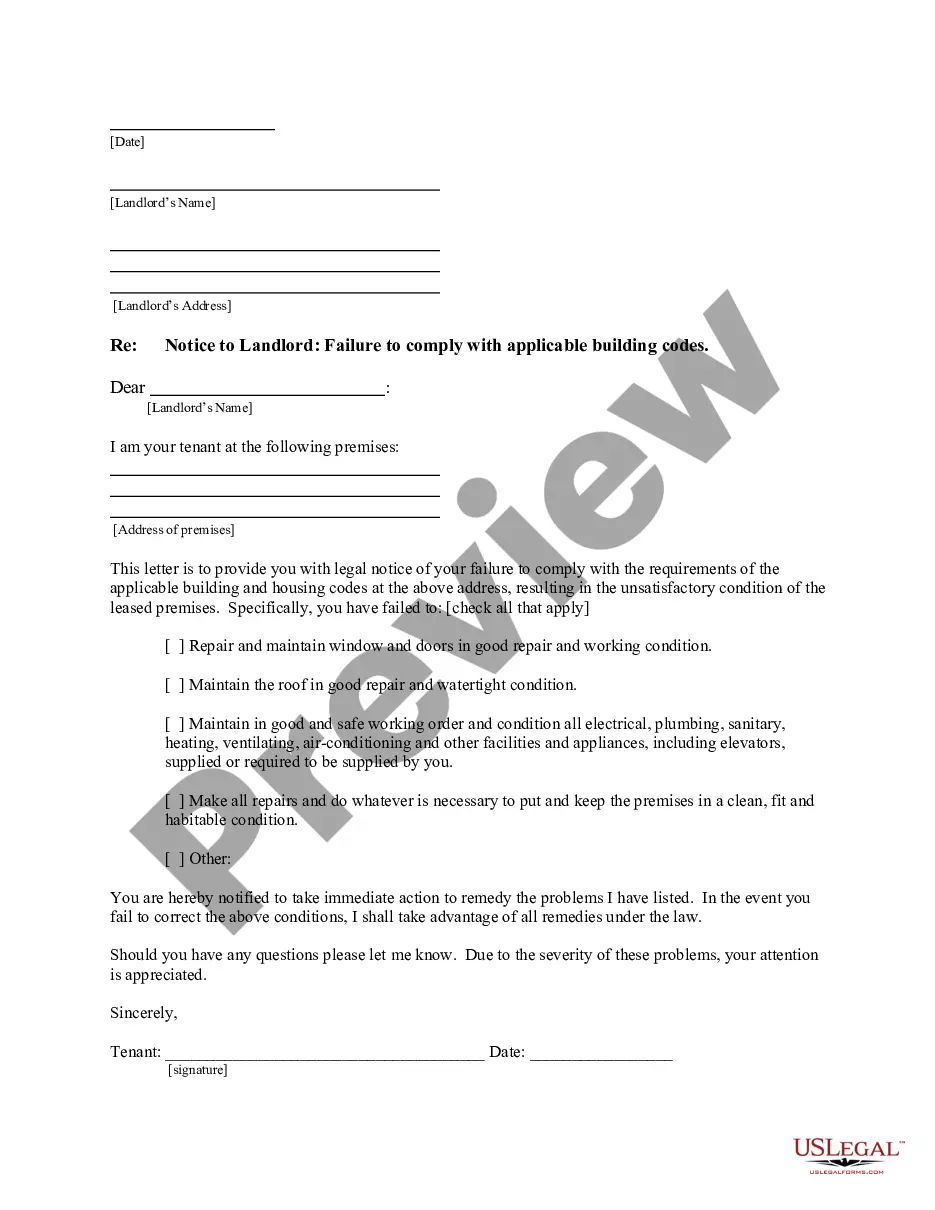
How to fill out Florida Letter From Tenant To Landlord For Failure Of Landlord To Comply With Building Codes Affecting Health And Safety Or Resulting In Untenantable Condition - Demand For Remedy?
Utilizing legal document examples that comply with federal and state regulations is essential, and the web presents a multitude of choices to select from.
However, why squander time searching for the suitable Florida Codes For Building template online if the US Legal Forms digital library already has these documents consolidated in one location.
US Legal Forms is the largest online legal repository with more than 85,000 editable templates created by lawyers for any professional and personal situation.
Explore the template using the Preview function or through the text outline to verify it meets your requirements.
- They are simple to navigate with all files categorized by state and purpose.
- Our experts keep abreast of legislative updates, so you can always ensure your form is current and compliant when obtaining a Florida Codes For Building from our site.
- Acquiring a Florida Codes For Building is straightforward and quick for both existing and new users.
- If you already hold an account with an active subscription, Log In and store the document sample you need in the appropriate format.
- If you are unfamiliar with our website, follow the steps listed below.
Form popularity
FAQ
Local building codes are typically enforced by municipal building officials and inspectors who are knowledgeable about regional requirements. These officials ensure that all construction projects align with local adaptations of Florida codes for building. They evaluate plans, issue permits, and conduct inspections to guarantee safety and compliance. For assistance in understanding local regulations, consider using our platform for helpful resources and tailored legal documents.
The most prevalent building code violation in Florida often involves improper electrical work. Issues can arise from faulty wiring or installation practices that do not meet the Florida codes for building standards. Homeowners and contractors must be diligent during construction and renovations to adhere to these codes. Our platform offers resources and legal forms to help you navigate compliance and avoid common pitfalls.
Florida building codes are enforced by local building departments that operate within each city or county. These departments ensure compliance with the state's regulations regarding construction and safety. Inspectors conduct regular assessments and approve or deny permits based on adherence to Florida codes for building. If you're looking for guidance on the enforcement process, our platform can help provide necessary documentation and resources.
Yes, Florida has comprehensive building codes that govern construction and renovation projects. The Florida Building Code encompasses regulations designed to promote safety, efficiency, and sustainability in the built environment. These codes are essential for protecting the welfare of residents and ensuring that structures are resilient against the unique climate challenges in Florida. For clear guidance, check out USLegalForms to help interpret the Florida codes for building.
Finding building code requirements in Florida can be done through several channels. The Florida Building Code offers an online portal where specific codes can be searched by category or topic. Additionally, local building departments often provide resources tailored to regional needs. For more detailed information, USLegalForms offers a wealth of organized data to help you navigate the Florida codes for building.
In Florida, the primary building code is the Florida Building Code (FBC). This code establishes the minimum requirements for construction and ensures safety and accessibility. The Florida codes for building are updated regularly to reflect the latest standards and practices, making it essential for builders and homeowners to stay informed. You can access the FBC through the Florida Building Commission's website.
Yes, Florida adopts certain aspects of the International Building Code (IBC) within its own Florida Building Code. This integration helps maintain consistency with national construction practices while also considering local environmental conditions. Understanding the relationship between IBC and Florida codes for building allows builders and contractors to stay aligned with both state and national safety standards.
Florida is known for having some of the strongest building codes in the nation, particularly due to its vulnerability to hurricanes and severe weather. The Florida Building Code includes rigorous standards that address wind resistance, structural safety, and energy efficiency. By following these Florida codes for building, you contribute to creating safer buildings that can withstand challenging environmental conditions.
Yes, the Florida Building Code applies statewide, providing uniform standards across all municipalities. This ensures that regardless of location, buildings adhere to the same safety and performance requirements. Familiarizing yourself with Florida codes for building enables you to navigate the regulations effectively, ensuring compliance and promoting safety in your community.
The Florida Building Code has gone through several editions since its inception, with the most recent edition being updated in 2020. This edition reflects the latest advancements in safety, sustainability, and construction practices. Staying informed about the current Florida codes for building ensures your projects comply with the most up-to-date regulations.