Personal Representative For Estate
Description
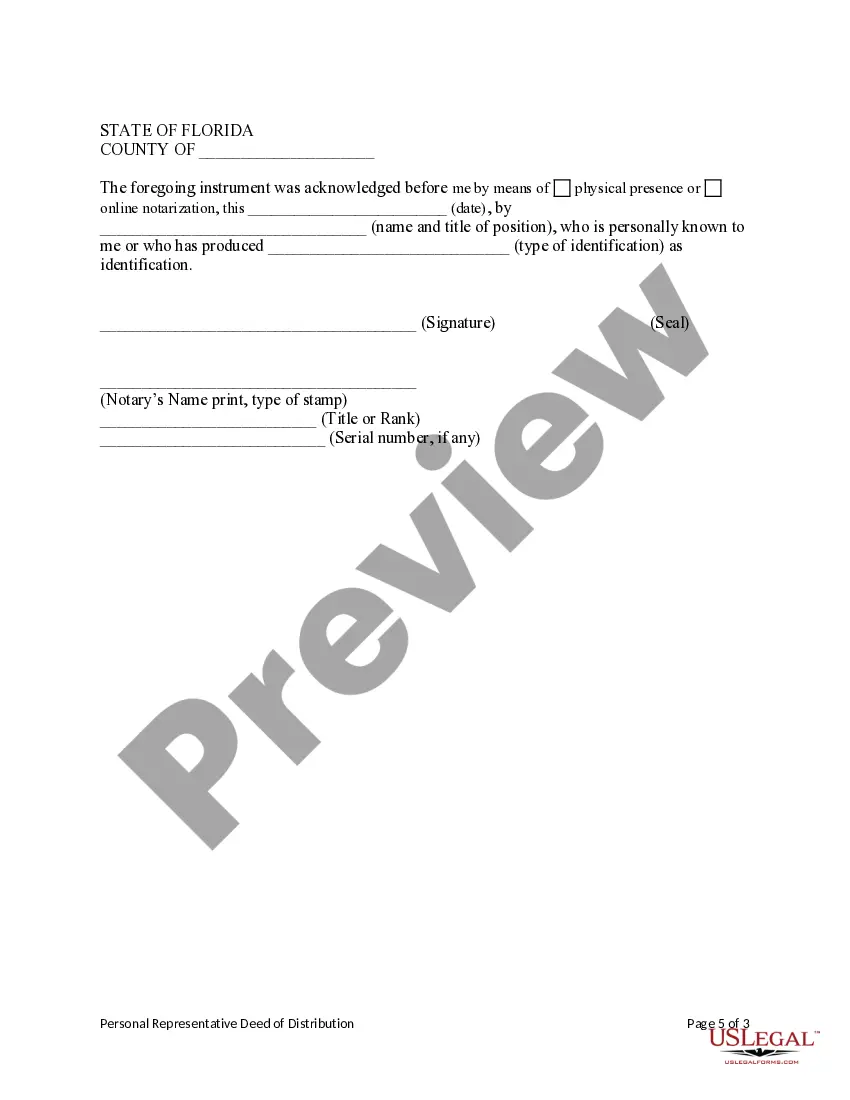
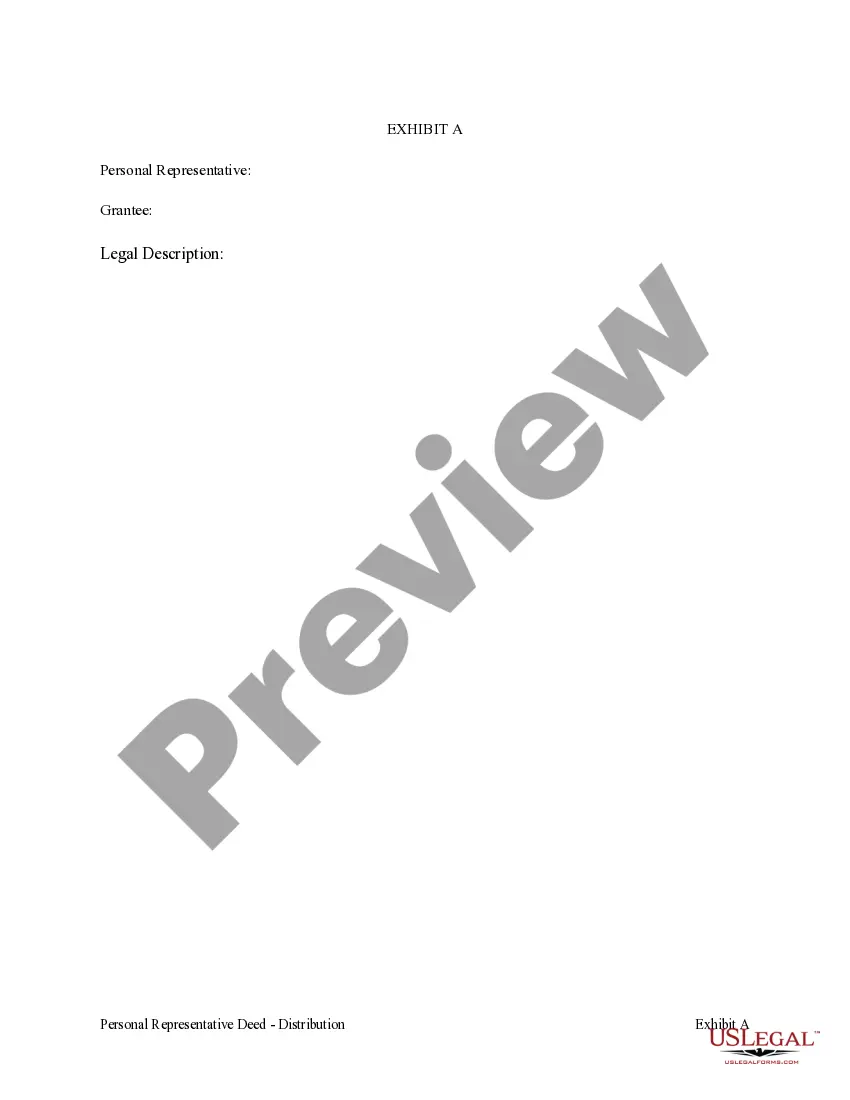

Get your form ready online
Our built-in tools help you complete, sign, share, and store your documents in one place.
Make edits, fill in missing information, and update formatting in US Legal Forms—just like you would in MS Word.
Download a copy, print it, send it by email, or mail it via USPS—whatever works best for your next step.
Sign and collect signatures with our SignNow integration. Send to multiple recipients, set reminders, and more. Go Premium to unlock E-Sign.
If this form requires notarization, complete it online through a secure video call—no need to meet a notary in person or wait for an appointment.
We protect your documents and personal data by following strict security and privacy standards.

Make edits, fill in missing information, and update formatting in US Legal Forms—just like you would in MS Word.

Download a copy, print it, send it by email, or mail it via USPS—whatever works best for your next step.

Sign and collect signatures with our SignNow integration. Send to multiple recipients, set reminders, and more. Go Premium to unlock E-Sign.

If this form requires notarization, complete it online through a secure video call—no need to meet a notary in person or wait for an appointment.

We protect your documents and personal data by following strict security and privacy standards.
Looking for another form?

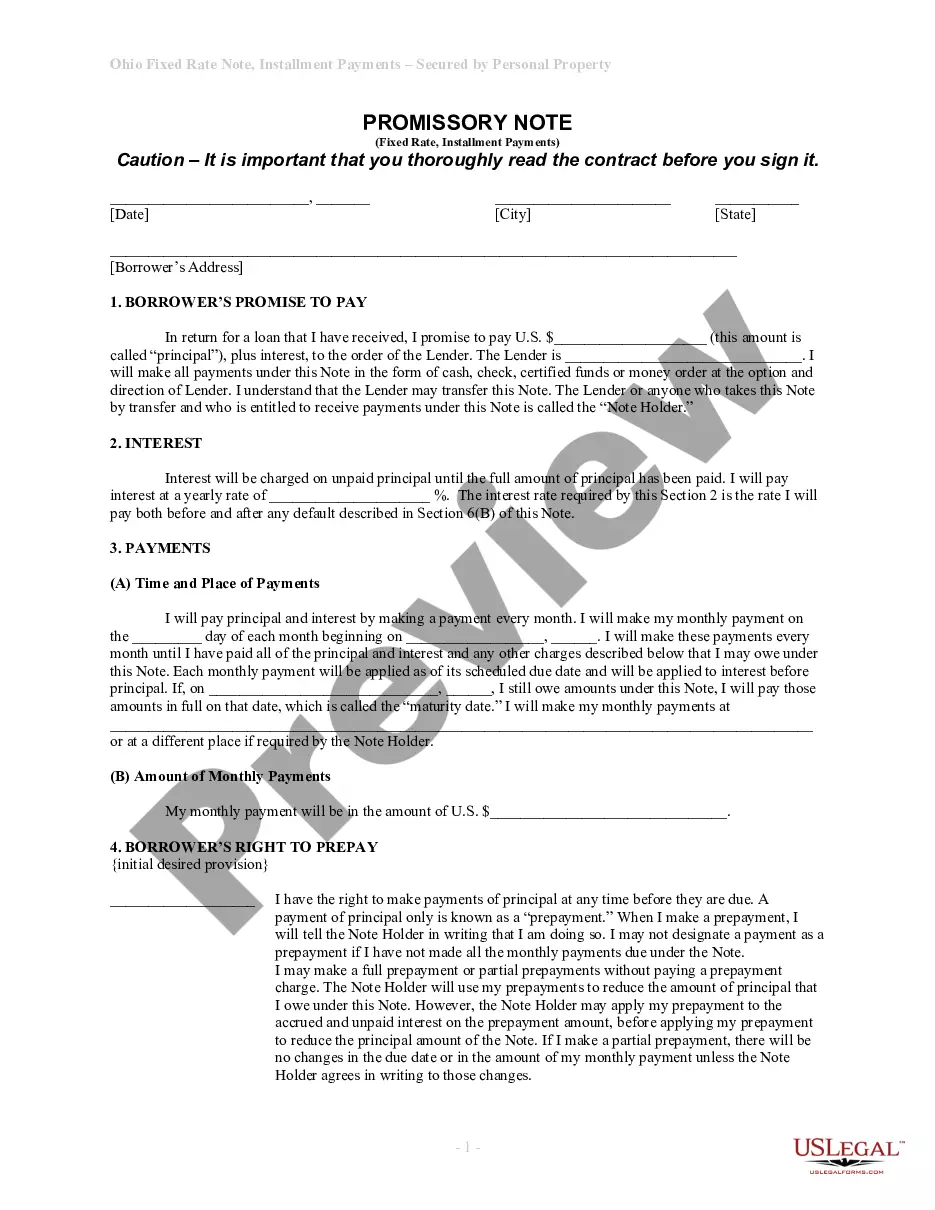






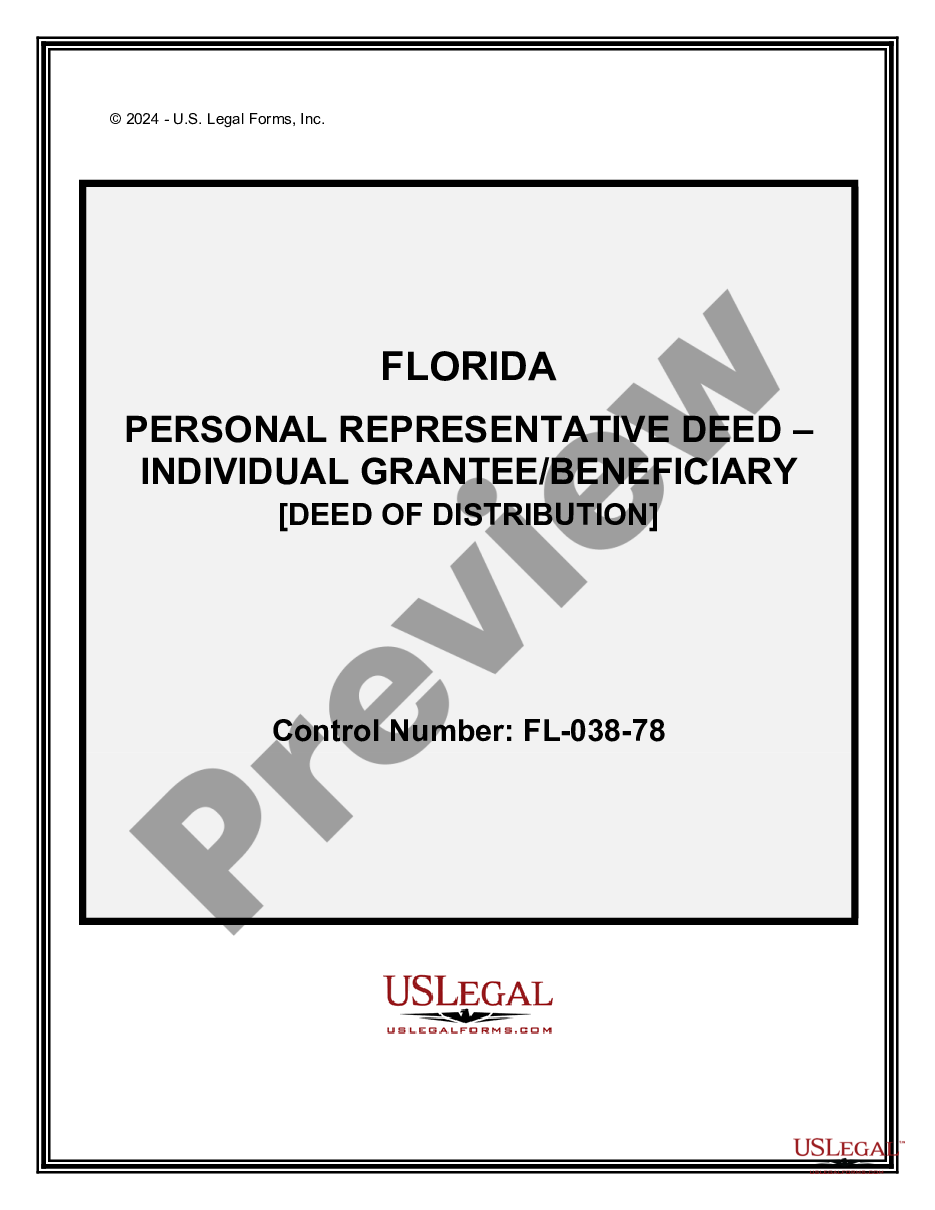
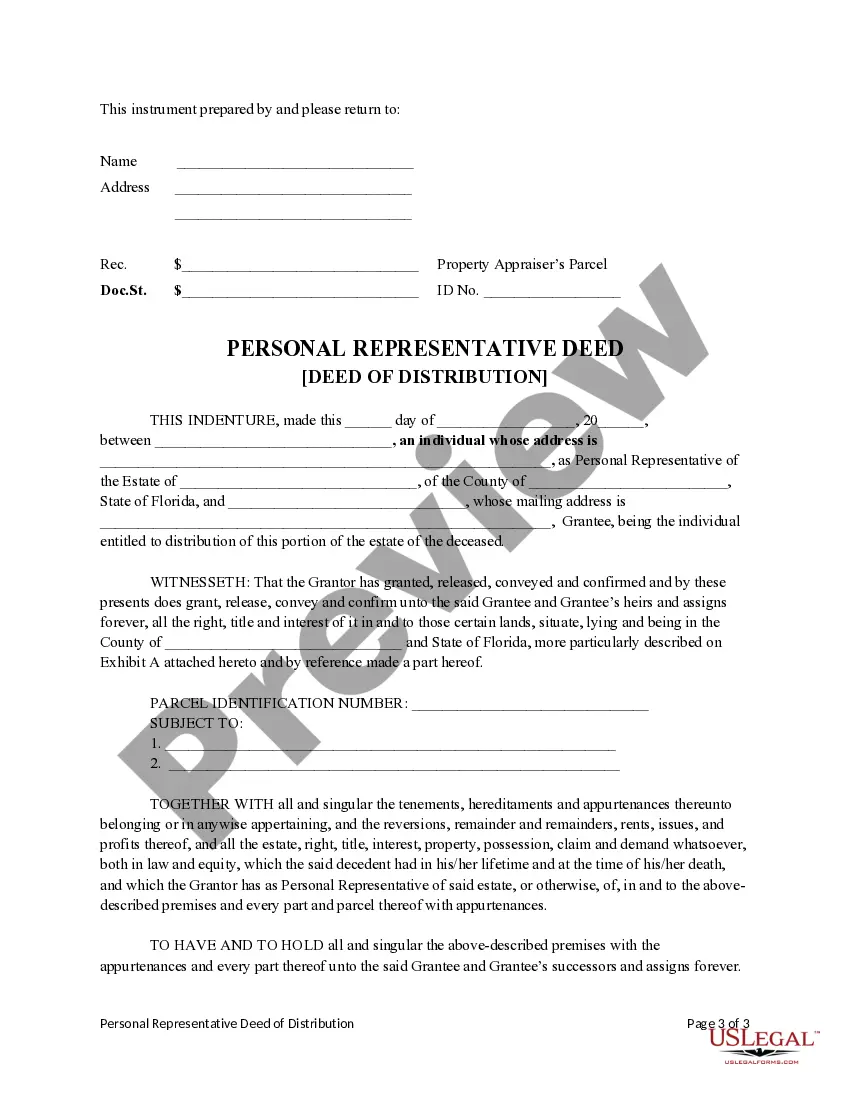
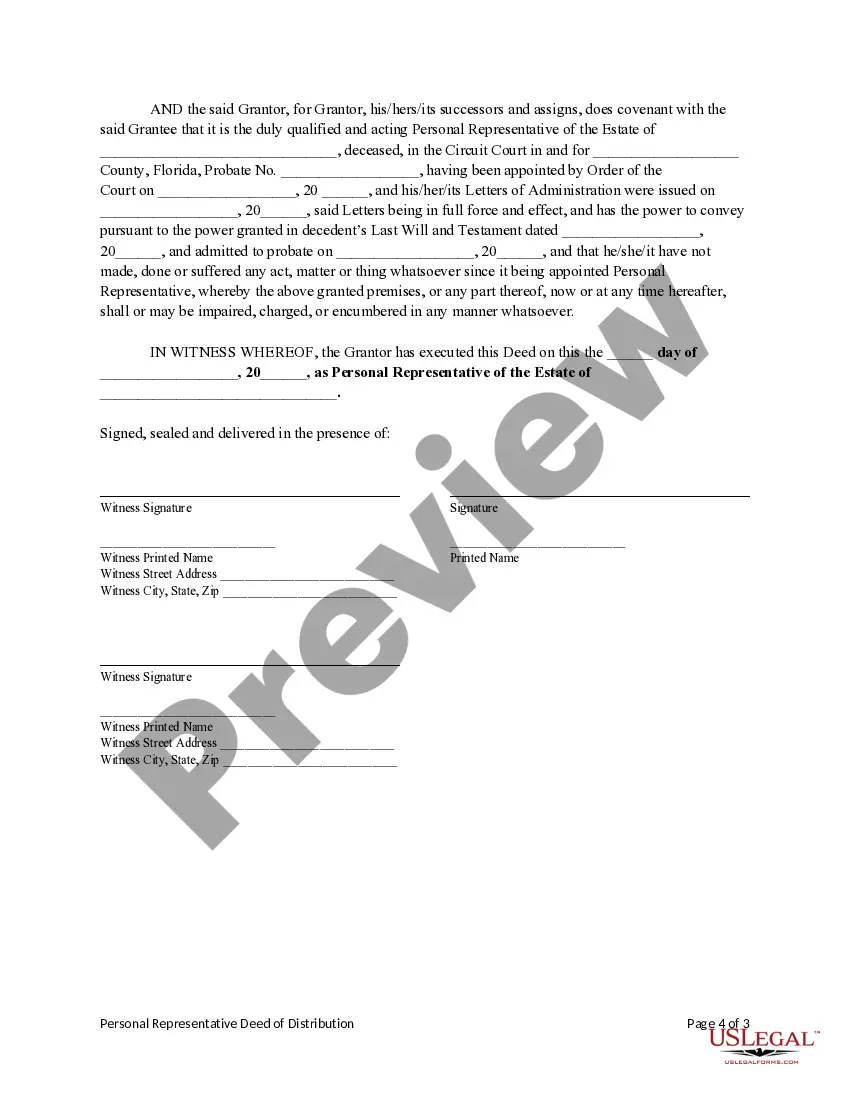
How to fill out Florida Personal Representative's Deed Of Distribution?
Acquiring legal templates that adhere to federal and local regulations is essential, and the web provides numerous selections to choose from.
However, what’s the value in spending time searching for the appropriate Personal Representative For Estate example online if the US Legal Forms digital library conveniently consolidates such templates in one location.
US Legal Forms is the largest online legal repository with over 85,000 fillable documents created by attorneys for various business and personal situations. They are easy to navigate with all files organized by state and intended use. Our experts keep up with legal updates, so you can always trust your documentation is current and compliant when obtaining a Personal Representative For Estate from our site.
All documents you find through US Legal Forms are reusable. To re-download and complete previously saved documents, access the My documents section in your profile. Take advantage of the most comprehensive and user-friendly legal documentation service!
- Acquiring a Personal Representative For Estate is fast and straightforward for both existing and new users.
- If you already possess an account with a valid subscription, Log In and download the document template you require in the appropriate format.
- If you're new to our site, follow the steps below.
- Examine the template utilizing the Preview feature or via the text description to ensure it fulfills your requirements.
- Search for an alternative sample using the search tool at the top of the page if needed.
- Click Buy Now once you’ve found the right form and select a subscription option.
- Establish an account or Log In and complete the payment using PayPal or a credit card.
- Select the correct format for your Personal Representative For Estate and download it.
Form popularity
FAQ
Section 3156, there are only two requirements for a person to be named executor in a will. These are that the person must be 18 years old or older, and that they must be of sound mind. In other words, they have not been judged as being incapacitated by a court.
A personal representative typically performs a number of tasks when acting as the executor of a deceased person's estate, including arranging funeral services, notifying those who are entitled to part of the estate's property, and determining the value of the estate, minus any debts.
A legal personal representative (referred to as an executor or administrator) is responsible for administering an estate. The executor will be named in the person's will, if they have one. The legal personal representative makes sure the deceased person's final wishes are carried out.
A personal representative (PR) is responsible for dealing with the estate of someone who has died: If the personal representative is named in the will, they are called the executor. If there is no will in place, then an administrator is appointed, which is usually a family member or close relative of the deceased.
Some traits that can be important ones for a personal representative to have include: Strong organizational skills. Good financial acumen. Sound judgment. Strong integrity (so as not be tempted to misuse their role for personal gain).