Florida Writ Of Garnishment Statute
Description
Get your form ready online
Our built-in tools help you complete, sign, share, and store your documents in one place.
Make edits, fill in missing information, and update formatting in US Legal Forms—just like you would in MS Word.
Download a copy, print it, send it by email, or mail it via USPS—whatever works best for your next step.
Sign and collect signatures with our SignNow integration. Send to multiple recipients, set reminders, and more. Go Premium to unlock E-Sign.
If this form requires notarization, complete it online through a secure video call—no need to meet a notary in person or wait for an appointment.
We protect your documents and personal data by following strict security and privacy standards.

Make edits, fill in missing information, and update formatting in US Legal Forms—just like you would in MS Word.

Download a copy, print it, send it by email, or mail it via USPS—whatever works best for your next step.

Sign and collect signatures with our SignNow integration. Send to multiple recipients, set reminders, and more. Go Premium to unlock E-Sign.

If this form requires notarization, complete it online through a secure video call—no need to meet a notary in person or wait for an appointment.

We protect your documents and personal data by following strict security and privacy standards.
Looking for another form?



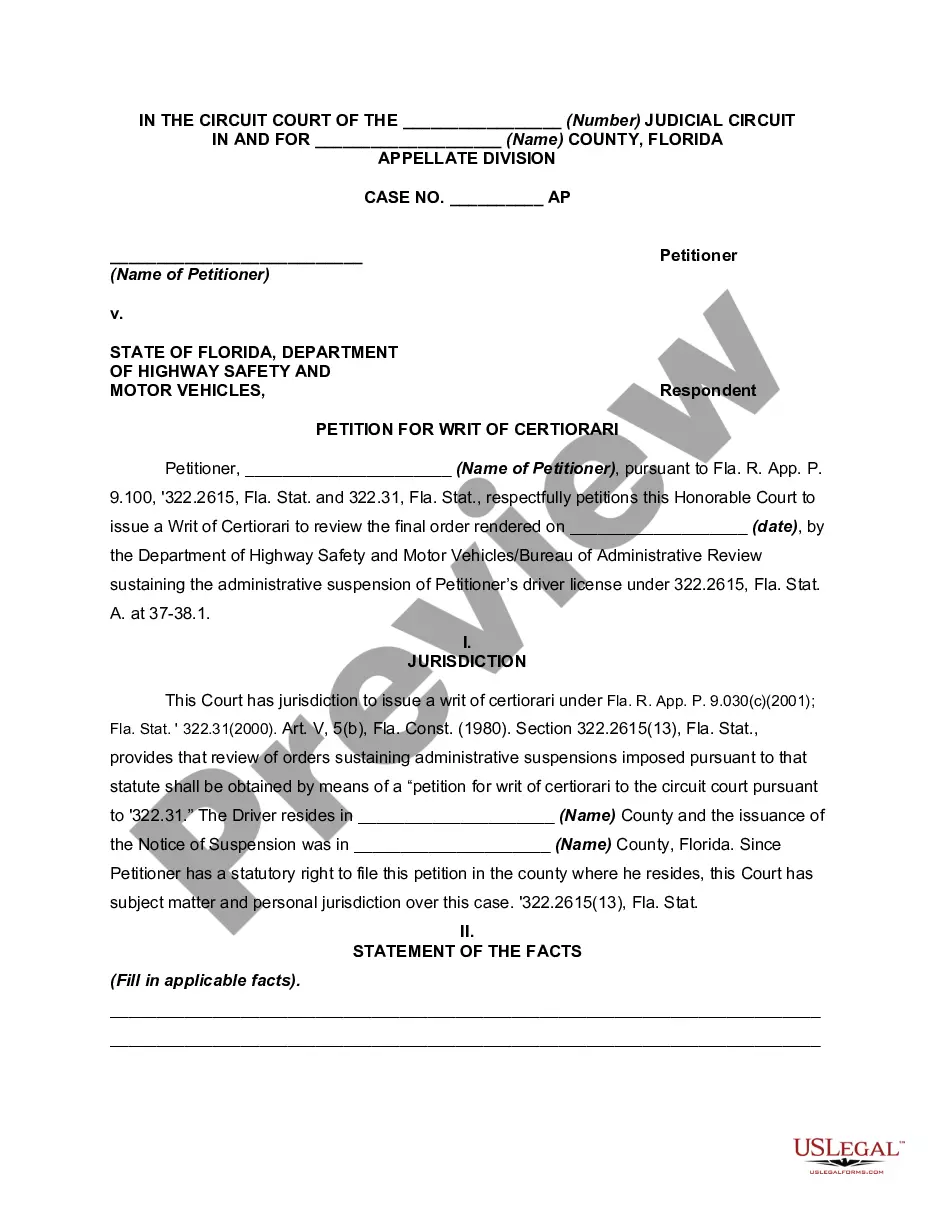
How to fill out Florida Writ Of Certiorari And Appeal Of License Suspension?
It’s widely recognized that you cannot instantly become a legal expert, nor can you learn to swiftly prepare the Florida Writ Of Garnishment Statute without possessing a specialized skill set.
Creating legal documents is a lengthy process that necessitates certain education and abilities.
So why not entrust the preparation of the Florida Writ Of Garnishment Statute to the experts.
Click Buy now. Once the transaction is complete, you can obtain the Florida Writ Of Garnishment Statute, complete it, print it, and send or mail it to the relevant individuals or organizations.
You can regain access to your forms anytime from the My documents tab. If you’re already a client, simply Log In and locate and download the template from the same tab.
- Access our website to find the form you need in just minutes.
- Use the search bar at the top of the page to locate the required form.
- If available, preview it and read the supporting description to determine if the Florida Writ Of Garnishment Statute is appropriate for your needs.
- If you require any other template, restart your search.
- Create a free account and select a subscription plan to acquire the form.
Form popularity
FAQ
Five (5) business days after the writ is issued or three (3) business days after the writ is served on the garnishee (whichever is later), the plaintiff is required to mail a copy of the Writ of Garnishment, a copy of the Motion and the 'Notice to Defendant' (if the defendant is an individual), as set forth in Fla.
Florida garnishment statute section 77.041 imposes procedural rules and deadlines for creditors, additionally allowing judgment creditors to contest a garnishment. Creditors must comply with all garnishment statutes, including properly completing and mailing legal papers while complying with various deadlines.
§ 77.061. When any garnishee answers and plaintiff is not satisfied with the answer, he or she shall serve a reply within 20 days thereafter denying the allegations of the answer as he or she desires.
The statute provides that a creditor begins the garnishment process by filing a short motion with the court (?Motion for Writ of Garnishment?) and paying fees and deposits to the clerk of court. The clerk then issues the writ. The judgment creditor is not required to seek a judge's permission or a court order.
The court shall allow the judgment debtor's employer to collect up to $5 against the salary or wages of the judgment debtor to reimburse the employer for administrative costs for the first deduction from the judgment debtor's salary or wages and up to $2 for each deduction thereafter.