Attorney Care Child With Special Need
Description
Get your form ready online
Our built-in tools help you complete, sign, share, and store your documents in one place.
Make edits, fill in missing information, and update formatting in US Legal Forms—just like you would in MS Word.
Download a copy, print it, send it by email, or mail it via USPS—whatever works best for your next step.
Sign and collect signatures with our SignNow integration. Send to multiple recipients, set reminders, and more. Go Premium to unlock E-Sign.
If this form requires notarization, complete it online through a secure video call—no need to meet a notary in person or wait for an appointment.
We protect your documents and personal data by following strict security and privacy standards.

Make edits, fill in missing information, and update formatting in US Legal Forms—just like you would in MS Word.

Download a copy, print it, send it by email, or mail it via USPS—whatever works best for your next step.

Sign and collect signatures with our SignNow integration. Send to multiple recipients, set reminders, and more. Go Premium to unlock E-Sign.

If this form requires notarization, complete it online through a secure video call—no need to meet a notary in person or wait for an appointment.

We protect your documents and personal data by following strict security and privacy standards.
Looking for another form?



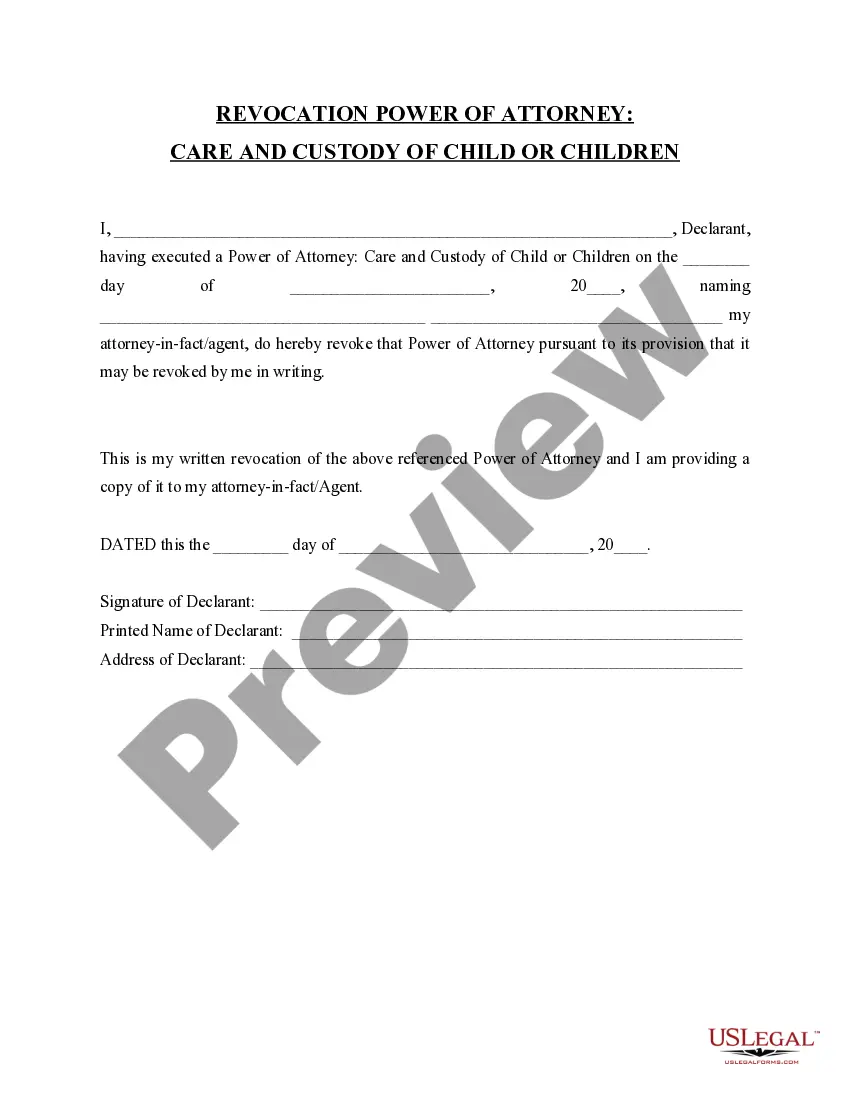
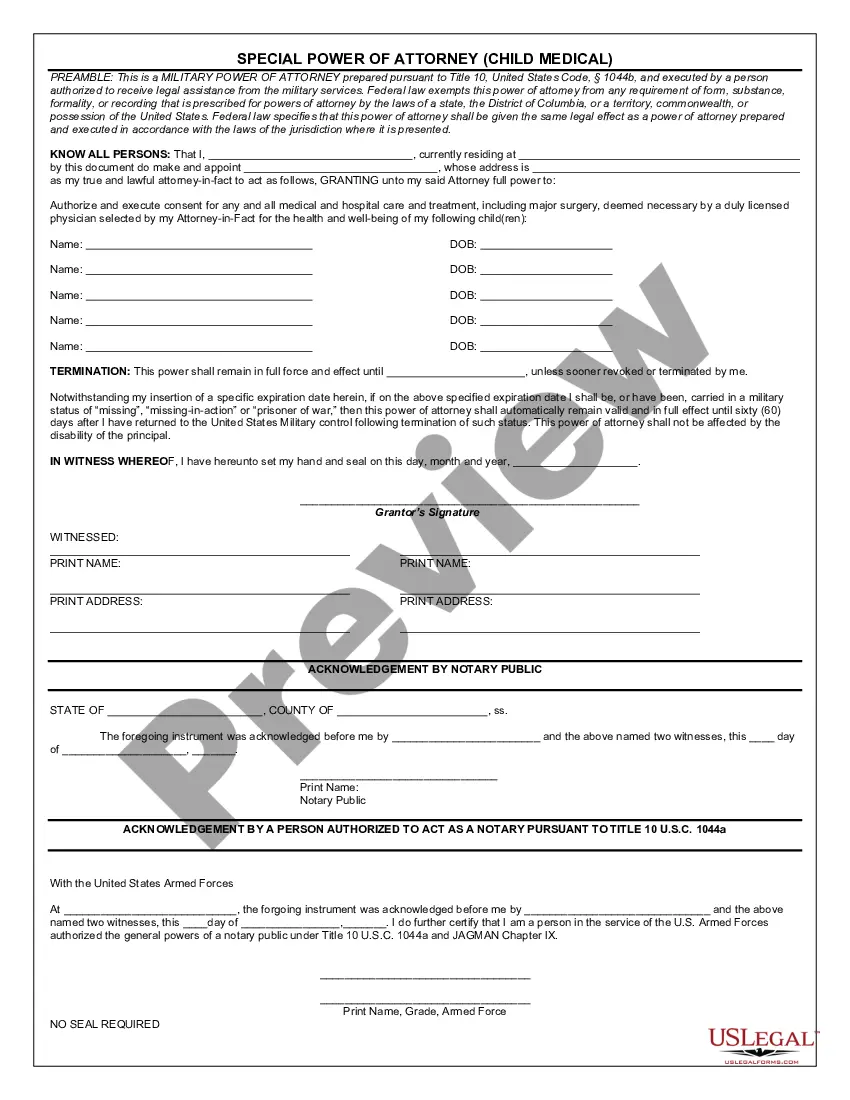
How to fill out District Of Columbia Revocation Of Power Of Attorney For Care Of Child Or Children?
- If you're a returning user, log in to your account and access your needed form template directly from the Download button. Ensure your subscription is active; renew if necessary.
- For new users, begin by previewing the available forms. Check the description to confirm it meets your needs and complies with your local jurisdiction.
- If adjustments are required or if you're in search of another document, utilize the Search tab to find the most suitable template.
- Once you've selected the correct document, click on the Buy Now button. Choose a subscription plan and sign up for an account to gain access to our extensive library.
- Complete your purchase by entering your credit card information or using your PayPal account for a seamless transaction.
- After purchase, download your form and save it to your device. You can always revisit it from the My Forms section of your profile.
US Legal Forms stands out with its vast form collection and over 85,000 fillable templates, empowering users to navigate legal processes effortlessly.
Streamline your legal documentation today with US Legal Forms. Start creating accurate and legally sound forms to provide the best care for your child. Don't wait—begin now!
Form popularity
FAQ
To obtain guardianship of a special needs child, you must file a petition in the appropriate court. An attorney who focuses on child care for special needs will guide you through the necessary steps, ensuring all legal requirements are met. Gather the required documentation, attend the court hearing, and demonstrate your ability to provide a stable environment for the child. With the right legal support, you can navigate this process smoothly.
Giving up a child with special needs is a difficult decision that requires deep consideration. If you feel overwhelmed, it's important to seek guidance from an experienced attorney who specializes in child care and special needs. They can help you explore all available options, including legal guardianship and adoption. Remember, there are resources and support systems in place to assist you through this challenging time.
A daycare may not legally refuse your autistic child without valid reasons related to safety or inability to provide necessary care. Understanding your rights in these situations is crucial. With the help of an experienced attorney, you can navigate potential refusals and ensure your child's right to access daycare services.
While daycares may have some discretion regarding enrollment, they generally cannot refuse a special needs child solely based on their disability. The law requires that appropriate accommodations be made whenever possible. An attorney specializing in child care laws can help you address any concerns you might have about this issue.
Daycares are generally required to accept kids with disabilities under federal and state laws, which emphasize the importance of inclusive education. However, facilities must be equipped to meet the needs of these children. Consulting with an attorney can clarify the legal obligations daycares must fulfill and help ensure your child's rights are protected.
Various supports are available for children with autism and their parents, including therapy services, educational programs, and government assistance programs. These resources aim to enhance the quality of life for both the child and their family. An attorney knowledgeable in care for a child with special needs can connect you to these essential supports and navigate the application processes.
When a person is mentally incapable, obtaining power of attorney typically involves a court procedure that assesses the individual's mental capacity. This process can help appoint a trusted person to make decisions on their behalf. Seeking legal assistance ensures that all steps are followed correctly to protect the well-being of your loved one.
To gain guardianship of your autistic child, you need to petition the court for legal guardianship. This process usually requires documentation demonstrating the child's needs and your suitability as a guardian. An attorney experienced in care for a child with special needs can help streamline this process and ensure your child’s best interests are prioritized.
Acceptable reasons to deny care to a child with disabilities often involve risks to the child or others, or if the facility lacks the resources to provide adequate support. Each situation is unique, and it is essential to approach matters with care and understanding. Consulting an attorney can provide clarity on rights and options in these sensitive scenarios.
To advocate effectively for a child with special needs, start by understanding their rights and available resources. Collaboration with teachers, therapists, and healthcare providers is essential. Moreover, partnering with an attorney can enhance your advocacy efforts, ensuring your child receives the appropriate care and services necessary for their development.