Tenant Landlord Shut With A Bill
Description


Get your form ready online
Our built-in tools help you complete, sign, share, and store your documents in one place.
Make edits, fill in missing information, and update formatting in US Legal Forms—just like you would in MS Word.
Download a copy, print it, send it by email, or mail it via USPS—whatever works best for your next step.
Sign and collect signatures with our SignNow integration. Send to multiple recipients, set reminders, and more. Go Premium to unlock E-Sign.
If this form requires notarization, complete it online through a secure video call—no need to meet a notary in person or wait for an appointment.
We protect your documents and personal data by following strict security and privacy standards.

Make edits, fill in missing information, and update formatting in US Legal Forms—just like you would in MS Word.

Download a copy, print it, send it by email, or mail it via USPS—whatever works best for your next step.

Sign and collect signatures with our SignNow integration. Send to multiple recipients, set reminders, and more. Go Premium to unlock E-Sign.

If this form requires notarization, complete it online through a secure video call—no need to meet a notary in person or wait for an appointment.

We protect your documents and personal data by following strict security and privacy standards.
Looking for another form?







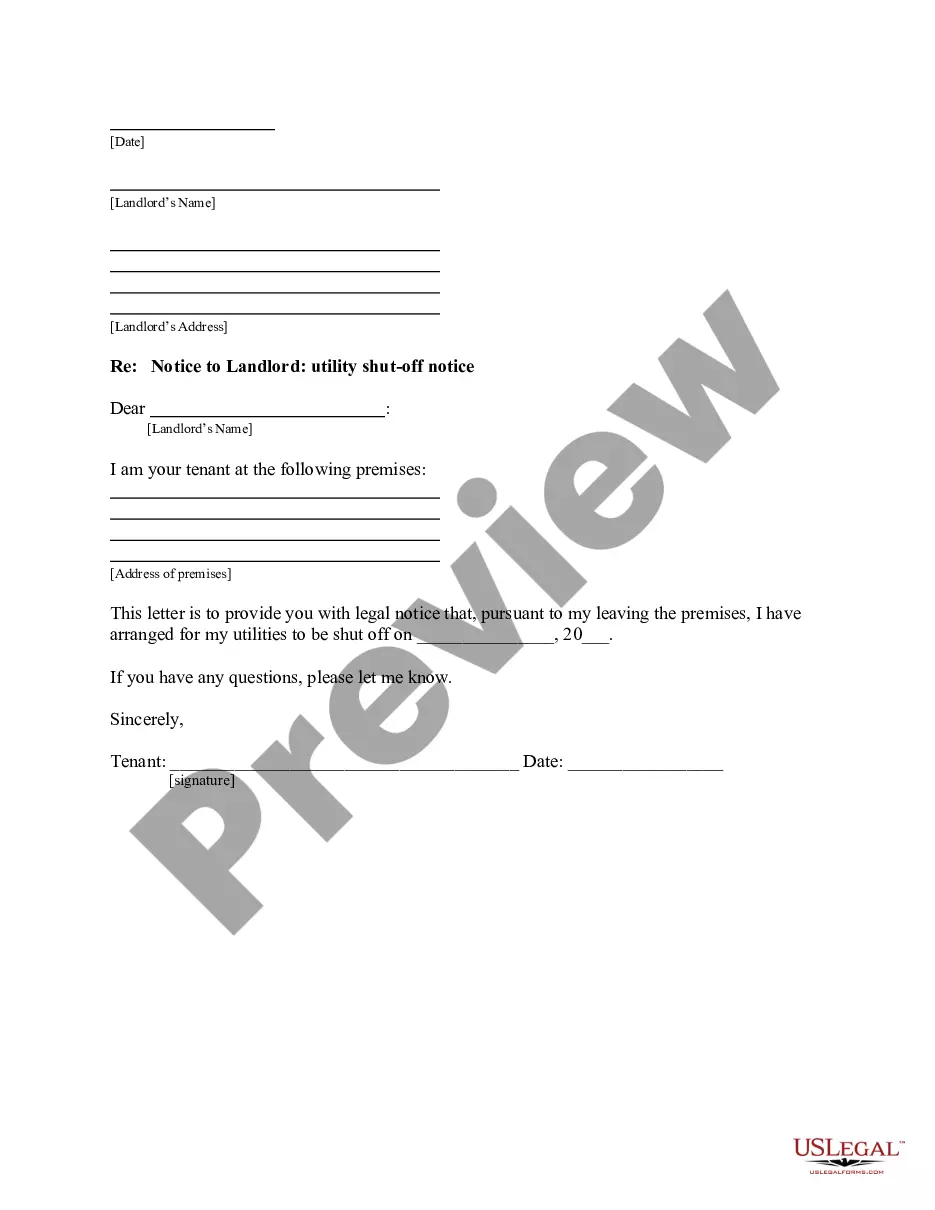
How to fill out Connecticut Letter From Tenant To Landlord - Utility Shut Off Notice To Landlord Due To Tenant Vacating Premises?
- Log in to your US Legal Forms account if you are a returning user. Ensure your subscription is active; renew it if necessary.
- Review the form preview and description to confirm it meets your needs and complies with local regulations.
- If needed, utilize the Search tab to locate alternative templates that may suit your requirements.
- Click the Buy Now button to select your preferred subscription plan and register for an account if this is your first time.
- Complete your purchase using a credit card or PayPal for secure payment processing.
- Download the legal form to your device, making it accessible for completion and future use in the My Forms section of your profile.
With US Legal Forms, you gain access to a vast collection of over 85,000 editable legal documents. This empowers you to efficiently handle various legal situations with ease.
Take advantage of our resources today and ensure your legal documents are precise and compliant. Start your journey with US Legal Forms for a hassle-free experience!
Form popularity
FAQ
Landlord retaliation in Texas occurs when a landlord takes adverse actions against a tenant after they assert their rights, such as filing a complaint or requesting repairs. This can include raising rent, eviction, or failing to renew a lease. Texas law protects tenants from such retaliation, and recognizing these actions is crucial for maintaining your housing rights. Resources like uslegalforms can help you identify your options if you find yourself in a tenant landlord shut with a bill situation.
To file legal action against your landlord, you should first document all interactions and issues thoroughly. Next, decide whether to seek mediation or go directly to court based on the severity of the situation. It can be helpful to access online platforms like uslegalforms for the right legal documents to support your case. Understanding your rights and having a solid strategy is crucial in a tenant landlord shut with a bill situation.
Filing legal action against a landlord begins with gathering evidence of your complaints, like photos or communication records. After compiling your documents, consult with a legal professional to determine the best approach, whether it involves small claims court or mediation. Legal action should be your last resort, but if your rights are violated, it’s essential to know how to proceed. Tools like uslegalforms can provide necessary forms and guidance related to tenant landlord shut with a bill.
To report a landlord in Texas, you can start by contacting the local housing authority, as they enforce housing codes. If you face discrimination or harassment, agencies like the U.S. Department of Housing and Urban Development are also available for assistance. These organizations play a vital role in protecting tenant rights and giving you the tools to navigate landlord issues. For serious concerns, explore the tenant landlord shut with a bill option for further options and guidance.
If your landlord won't fix essential repairs, first reach out to them directly, ideally in writing. However, if they remain unresponsive, consider contacting local housing authorities or tenant advocacy organizations. You have the right to a safe living environment under Texas law, and agencies like the Texas Department of Housing and Community Affairs can assist. Remember, if the problem persists, you may need to consider taking legal action against the landlord, especially in a tenant landlord shut with a bill scenario.
In Georgia, there is no specific limit on how much a landlord can raise the rent, but they must provide proper notice. Typically, landlords need to give at least 60 days' written notice before increasing the rent for a month-to-month rental agreement. Being aware of these regulations is important for tenants under the tenant landlord shut with a bill, allowing them to prepare for any changes.
The new law for renters in Georgia focuses on strengthening the rights of tenants, particularly during eviction proceedings. It mandates clear communication regarding lease agreements and ensures that tenants are given a fair amount of time to address any issues before eviction. This law supports the objectives of the tenant landlord shut with a bill, ensuring that renters have better security and resources.
In Georgia, a landlord cannot illegally evict a tenant or engage in any form of harassment. This includes actions like changing locks without notice or shutting off utilities to force a tenant to leave. Understanding these prohibitions is crucial, as they fall under the protections outlined in the tenant landlord shut with a bill, providing renters with the security they need.
The tenant protection bill in Georgia aims to provide essential rights to renters, ensuring fair treatment by landlords. This legislation includes measures to prevent unjust evictions and to establish clear guidelines regarding rental agreements. Essentially, this law helps create a protective framework for tenants, making them aware of their rights under a tenant landlord shut with a bill.
Landlords in Virginia can refuse a tenant based on factors such as poor credit history, lack of rental history, or failure to provide adequate income verification. They must have a legitimate reason for any refusal, as arbitrary discrimination is not allowed. If you find yourself dealing with a tenant landlord shut with a bill situation, knowing these grounds can assist you in understanding your application status. Seeking legal assistance might be beneficial if you believe you have been unfairly denied.