Tenant Meaning
Description


Get your form ready online
Our built-in tools help you complete, sign, share, and store your documents in one place.
Make edits, fill in missing information, and update formatting in US Legal Forms—just like you would in MS Word.
Download a copy, print it, send it by email, or mail it via USPS—whatever works best for your next step.
Sign and collect signatures with our SignNow integration. Send to multiple recipients, set reminders, and more. Go Premium to unlock E-Sign.
If this form requires notarization, complete it online through a secure video call—no need to meet a notary in person or wait for an appointment.
We protect your documents and personal data by following strict security and privacy standards.

Make edits, fill in missing information, and update formatting in US Legal Forms—just like you would in MS Word.

Download a copy, print it, send it by email, or mail it via USPS—whatever works best for your next step.

Sign and collect signatures with our SignNow integration. Send to multiple recipients, set reminders, and more. Go Premium to unlock E-Sign.

If this form requires notarization, complete it online through a secure video call—no need to meet a notary in person or wait for an appointment.

We protect your documents and personal data by following strict security and privacy standards.
Looking for another form?





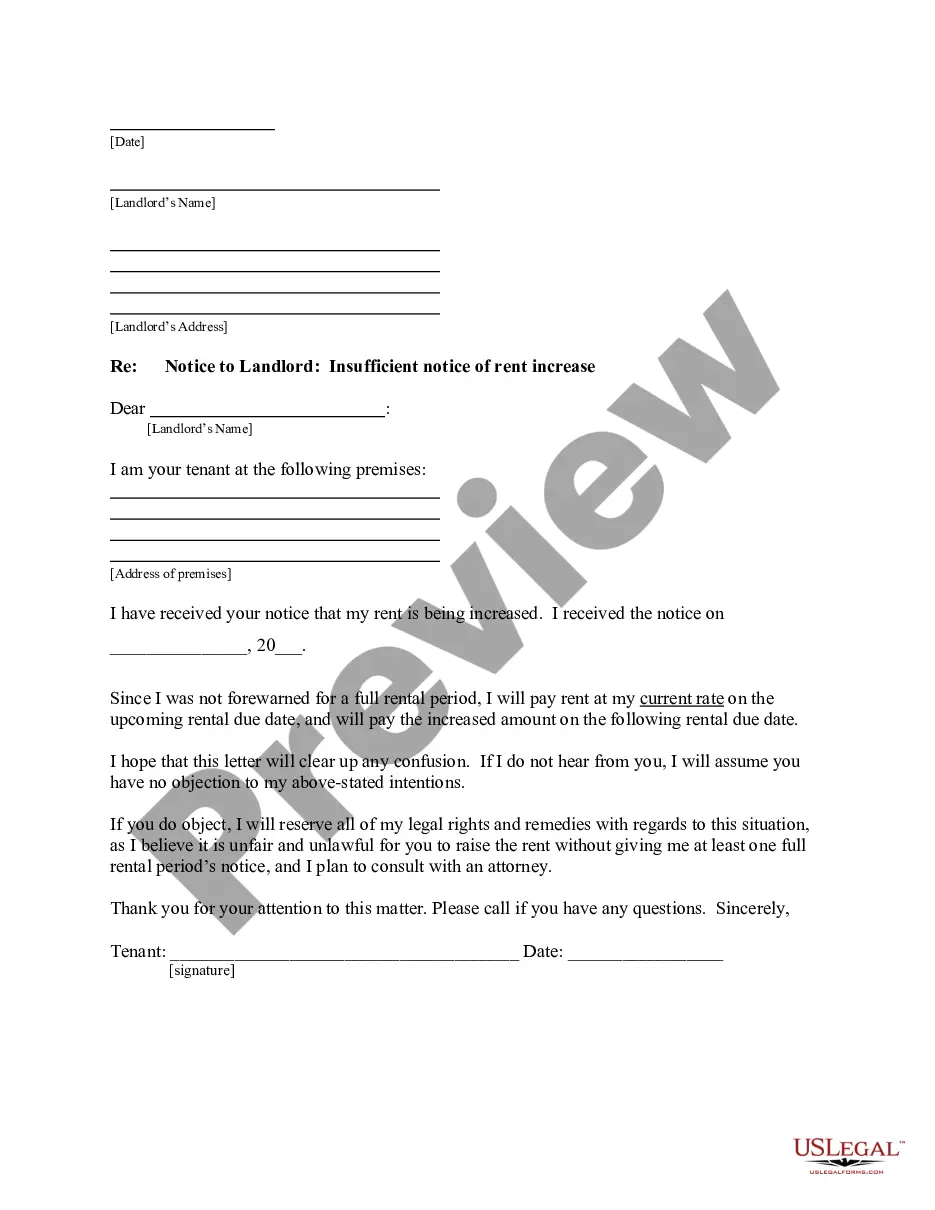
How to fill out Connecticut Letter From Tenant To Landlord About Insufficient Notice Of Rent Increase?
- If you are a returning user, log in to your account and download the required form template by clicking on the Download button. Ensure your subscription is active; if not, renew it based on your selected payment plan.
- For first-time users, start by reviewing the Preview mode and the document description. Confirm that the form aligns with your specific needs and local legal requirements.
- Search for other templates if necessary. If you find discrepancies in your chosen document, utilize the Search tab at the top to locate the correct form that fits your criteria.
- Purchase the document by clicking the Buy Now button. Select your desired subscription plan and create an account to engage with the extensive library of forms available.
- Complete your purchase by entering your credit card information or using PayPal for seamless payment.
- Download your selected form to your device, allowing for easy completion. Access it whenever needed through the My Forms section of your account.
In conclusion, using US Legal Forms to understand tenant meaning and accessing the right documentation can empower you to handle your legal responsibilities effectively. With an extensive library and expert assistance, you can ensure that your legal forms meet all requirements for your unique situation.
Don’t hesitate—start accessing your legal forms today!
Form popularity
FAQ
The true meaning of tenant encompasses more than just the act of renting; it involves a legal relationship defined by a lease agreement. Tenants have rights and responsibilities that protect both their interests and those of the property owner. Familiarizing yourself with tenant meaning can empower renters to navigate their housing situations effectively.
A tenant is an individual or group that rents a property from a landlord, gaining the right to occupy that space in exchange for rent. Tenants typically agree to specific conditions outlined in a lease or rental agreement. Understanding tenant meaning is crucial for maintaining harmonious landlord-tenant relationships.
To become a tenant, a person typically signs a rental agreement with a property owner or landlord. This agreement outlines the terms of occupancy, such as rent amount, duration, and responsibilities. US Legal Forms offers templates and resources to guide individuals through this process, ensuring a clear understanding of their rights and obligations.
The term 'Tennant' often arises as a common misspelling of 'tenant.' If you encounter this term, context will usually indicate whether it refers to a renter. Correct usage is essential when navigating legal documents and rental agreements.
The word 'tenet' refers to a principle or belief, often held by a group or organization. However, it is important to note that 'tenant' relates to those who rent or lease property. Clarity about these terms enhances your understanding of rental agreements and arrangements.
Finding a tenant can sometimes be challenging, depending on the market and your rental property's appeal. If your property is in a desirable location and priced correctly, you may attract tenants quickly. However, using resources like US Legal Forms can help streamline the process, offering tools that assist with tenant applications and screening.
In simple terms, a tenant is a person who pays to live in or use someone else's property. This arrangement typically occurs through a written lease or rental agreement. Understanding tenant meaning can help clarify their rights, responsibilities, and the overall dynamics within the rental process. Whether you are a new tenant or a landlord, grasping this concept is key to a smooth rental experience.
The tenant of a house is the person who occupies the residence under a rental agreement with the landlord. This relationship usually includes paying monthly rent and adhering to the lease terms. Clarifying the tenant meaning is important in maintaining a healthy landlord-tenant relationship and ensuring both parties understand their rights. Knowing who the tenant is can help in resolving disputes and managing property effectively.
A life tenant is someone who possesses the right to use and benefit from a property during their lifetime. For example, if Alice inherits a family home but can only reside there until her passing, she is considered a life tenant. After her death, the property typically transfers to another party, known as the remainderman. This concept is crucial in estate planning and helps clarify the tenant meaning in situations involving inherited property.
An applicant tenant refers to an individual who has applied to rent a property but has not yet signed a lease. This person typically goes through the screening process, which may include credit checks and background checks. Understanding the tenant meaning in this context helps landlords and property managers evaluate the suitability of a prospective renter. Knowing the rights and responsibilities of an applicant tenant can also guide them during the application process.