Ct Divorce Law For Spouse
Description


Get your form ready online
Our built-in tools help you complete, sign, share, and store your documents in one place.
Make edits, fill in missing information, and update formatting in US Legal Forms—just like you would in MS Word.
Download a copy, print it, send it by email, or mail it via USPS—whatever works best for your next step.
Sign and collect signatures with our SignNow integration. Send to multiple recipients, set reminders, and more. Go Premium to unlock E-Sign.
If this form requires notarization, complete it online through a secure video call—no need to meet a notary in person or wait for an appointment.
We protect your documents and personal data by following strict security and privacy standards.

Make edits, fill in missing information, and update formatting in US Legal Forms—just like you would in MS Word.

Download a copy, print it, send it by email, or mail it via USPS—whatever works best for your next step.

Sign and collect signatures with our SignNow integration. Send to multiple recipients, set reminders, and more. Go Premium to unlock E-Sign.

If this form requires notarization, complete it online through a secure video call—no need to meet a notary in person or wait for an appointment.

We protect your documents and personal data by following strict security and privacy standards.
Looking for another form?



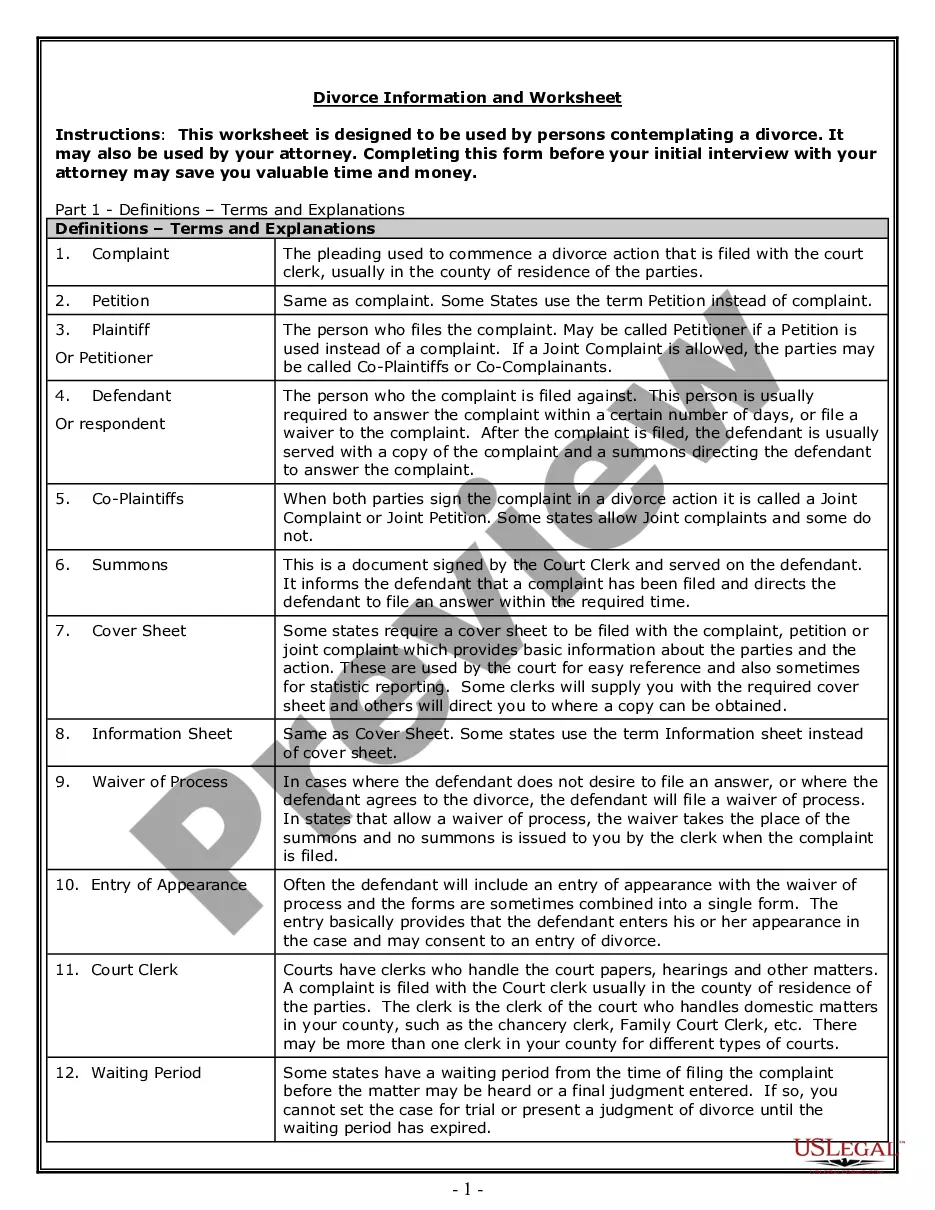
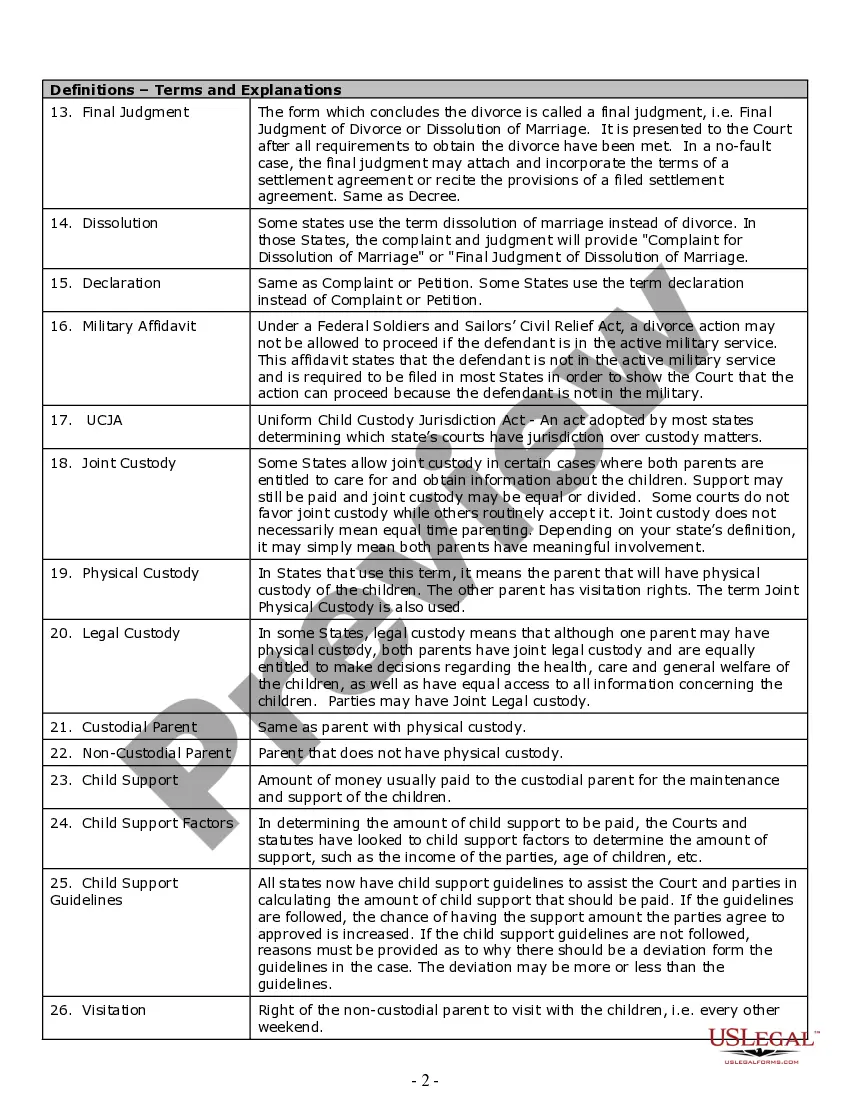
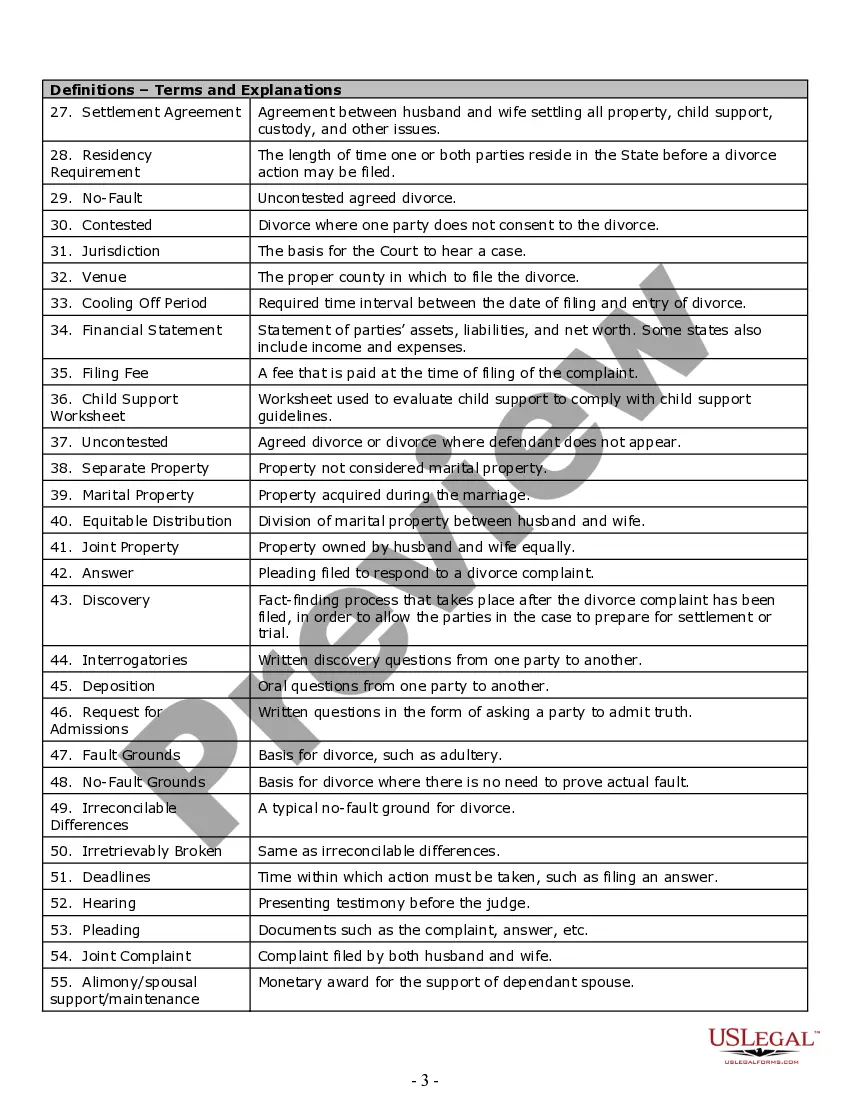
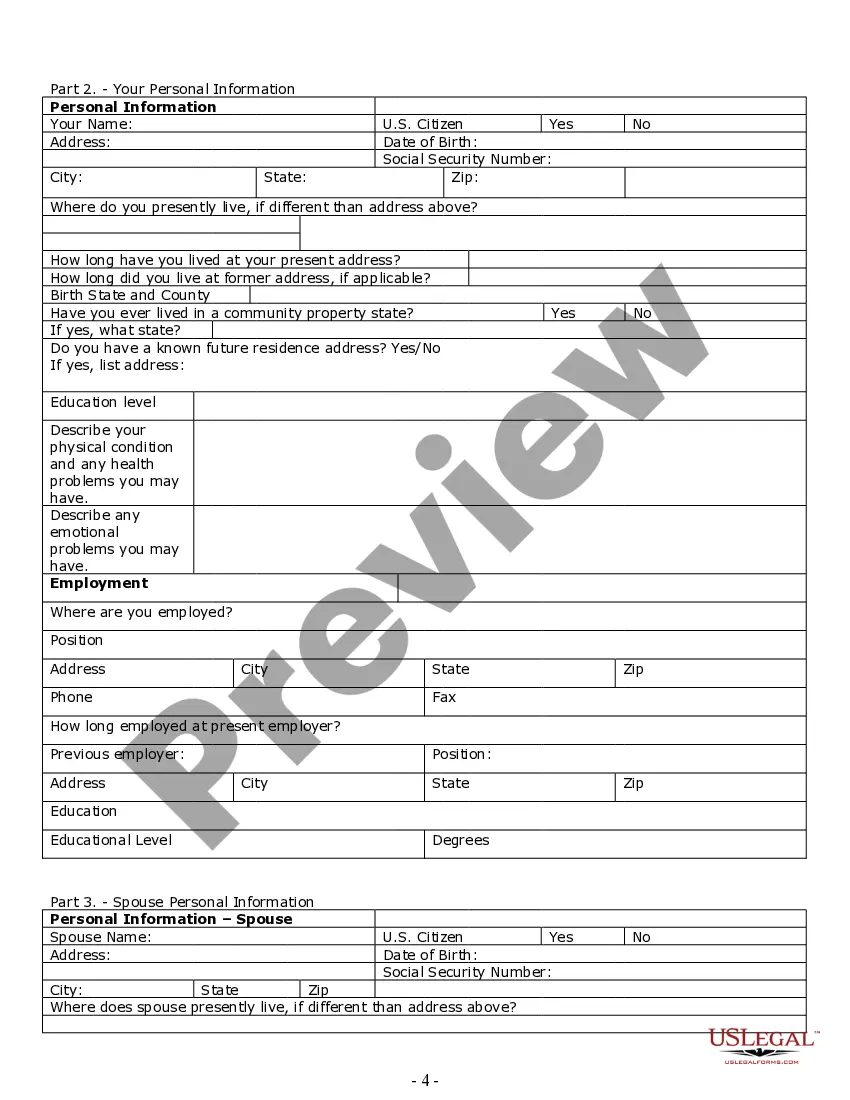
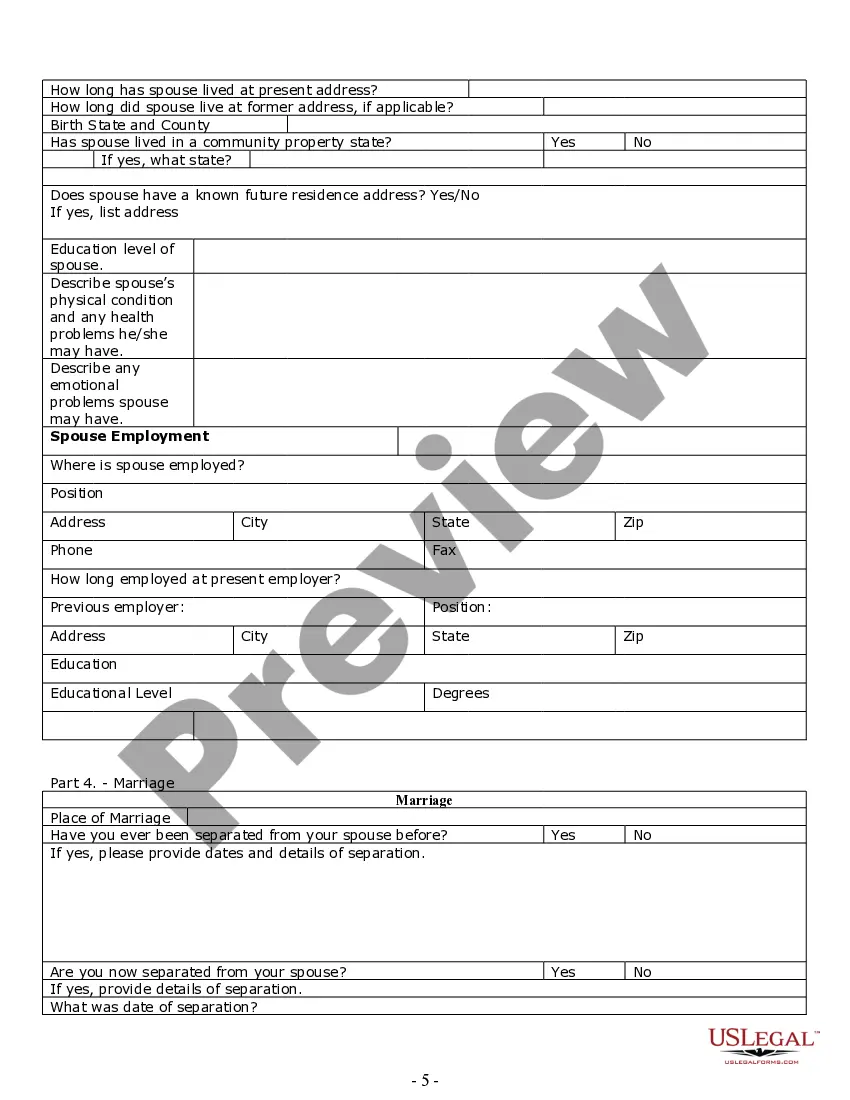
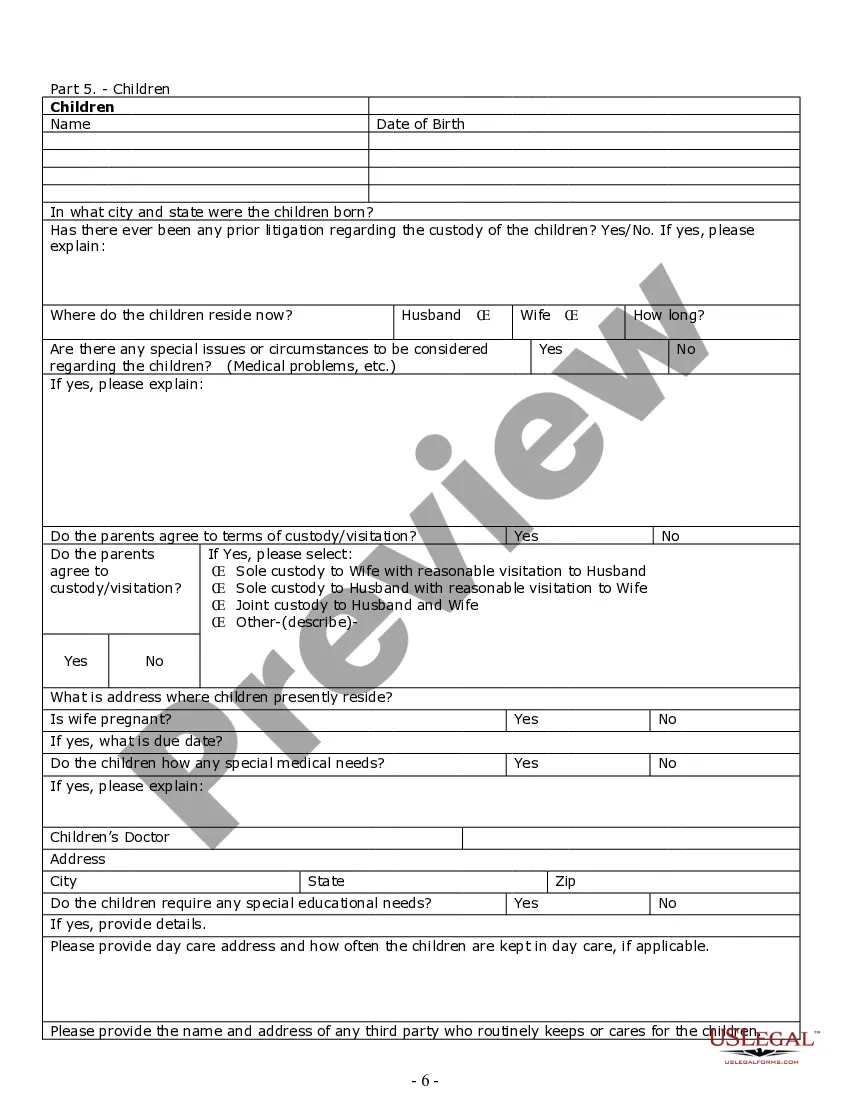
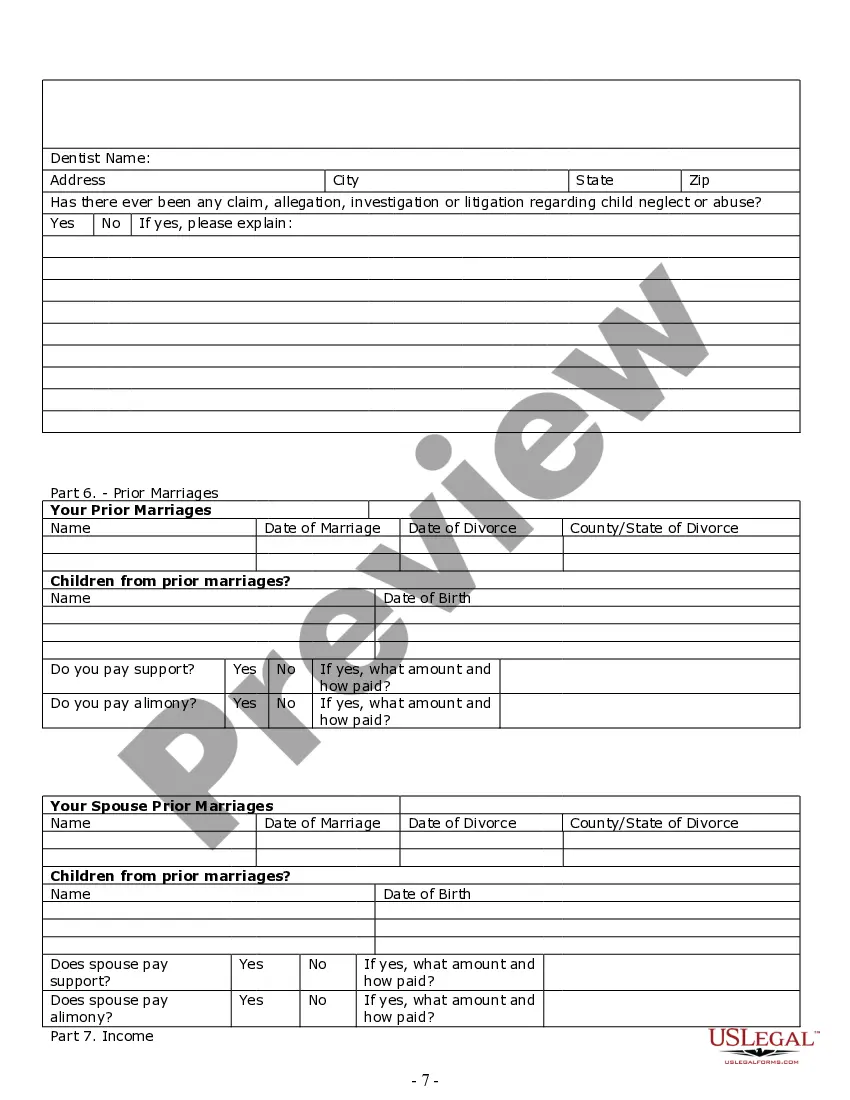
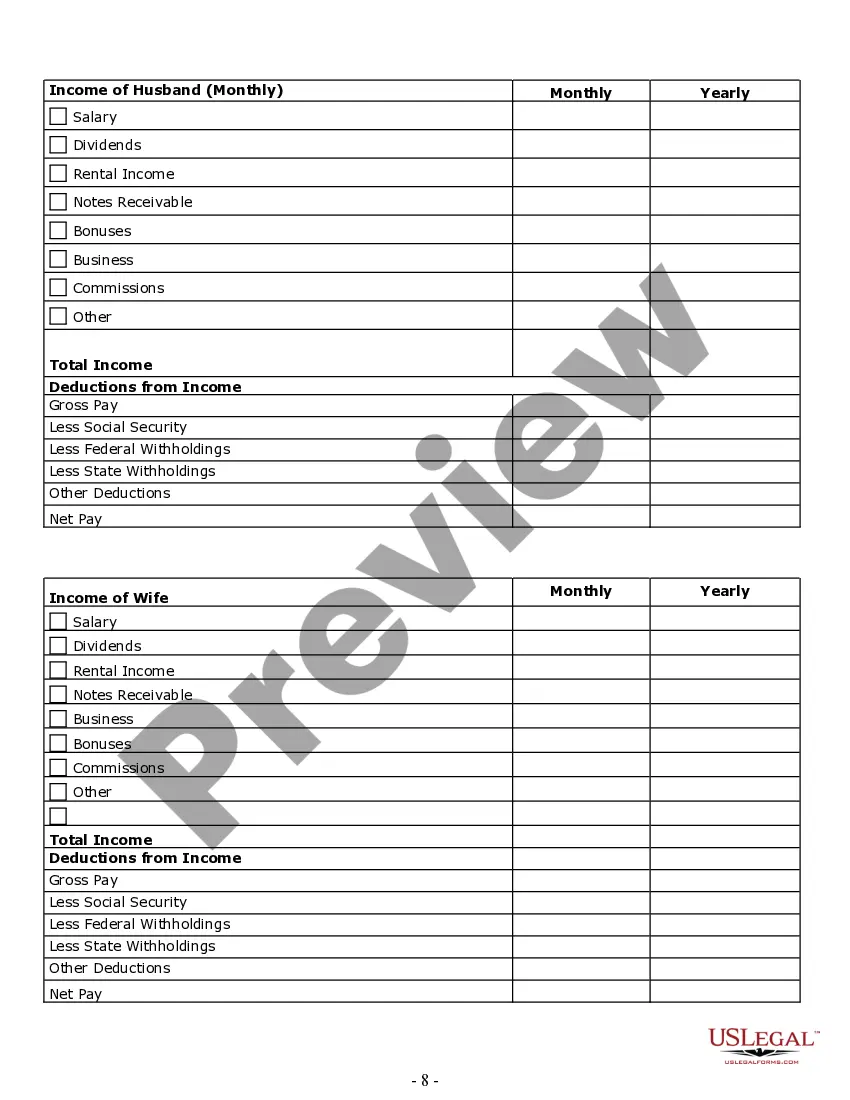
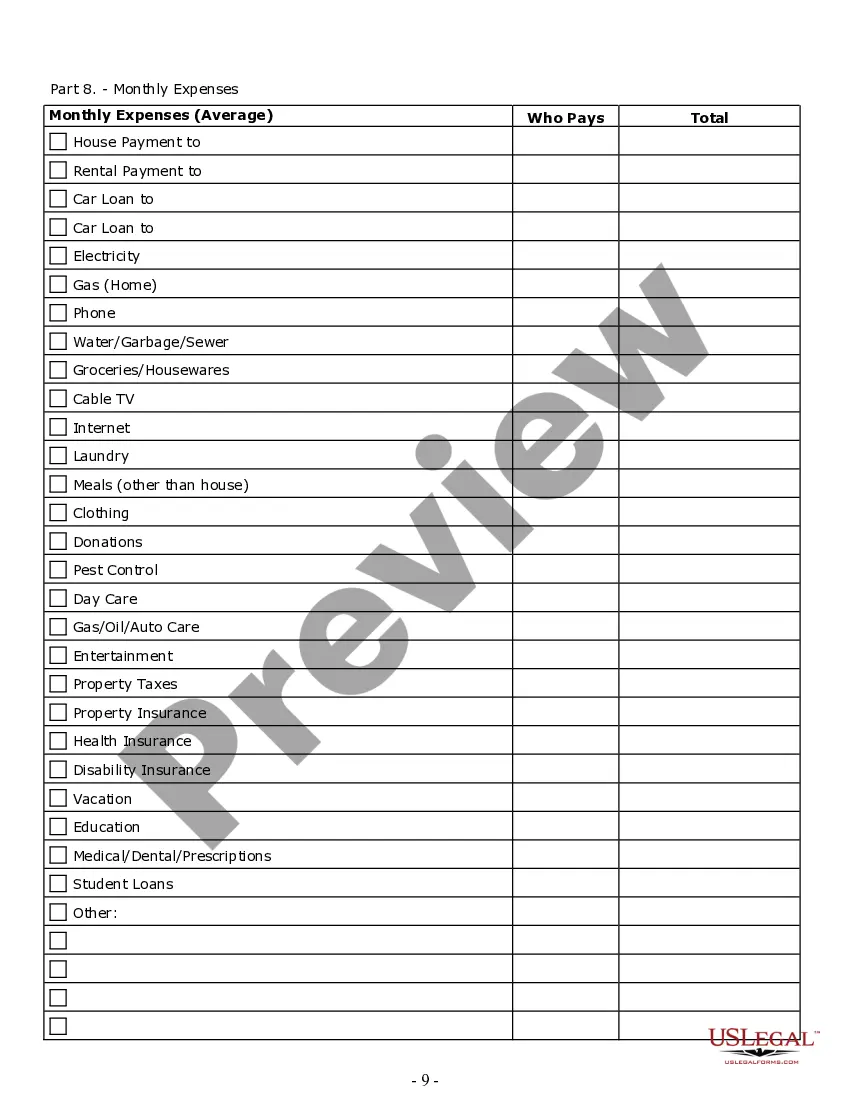
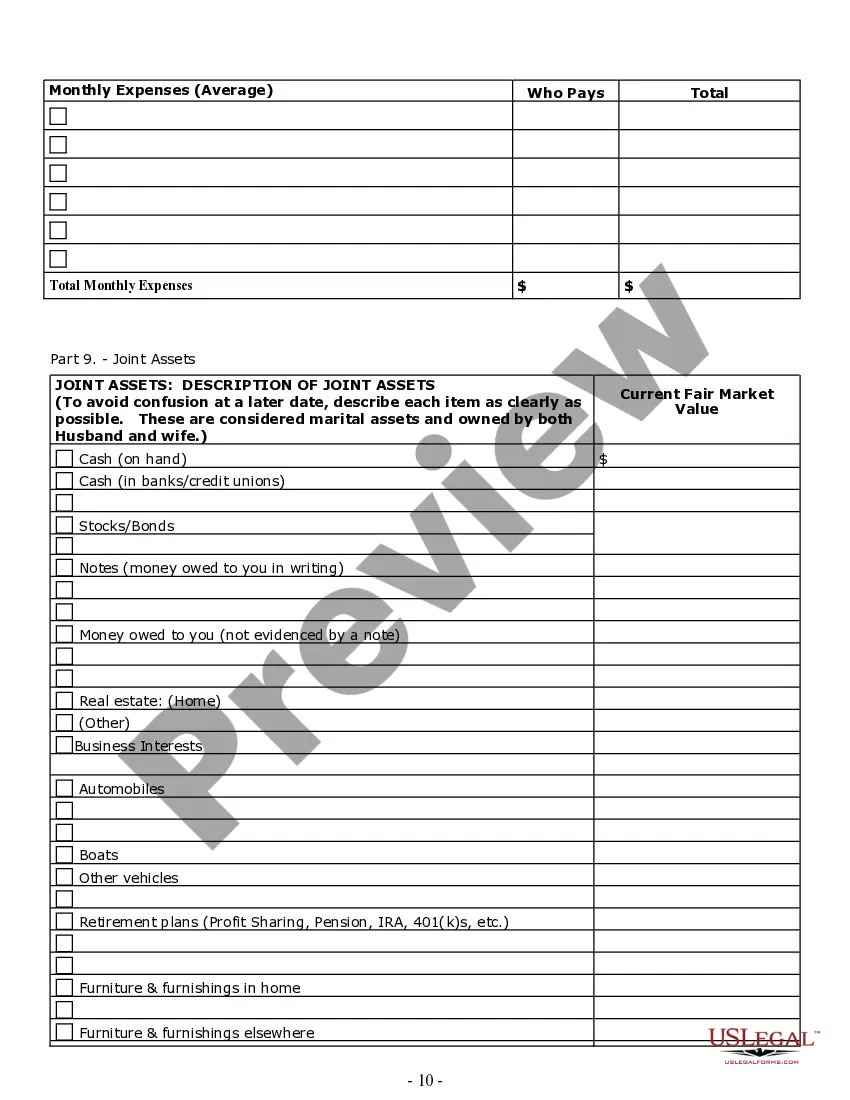
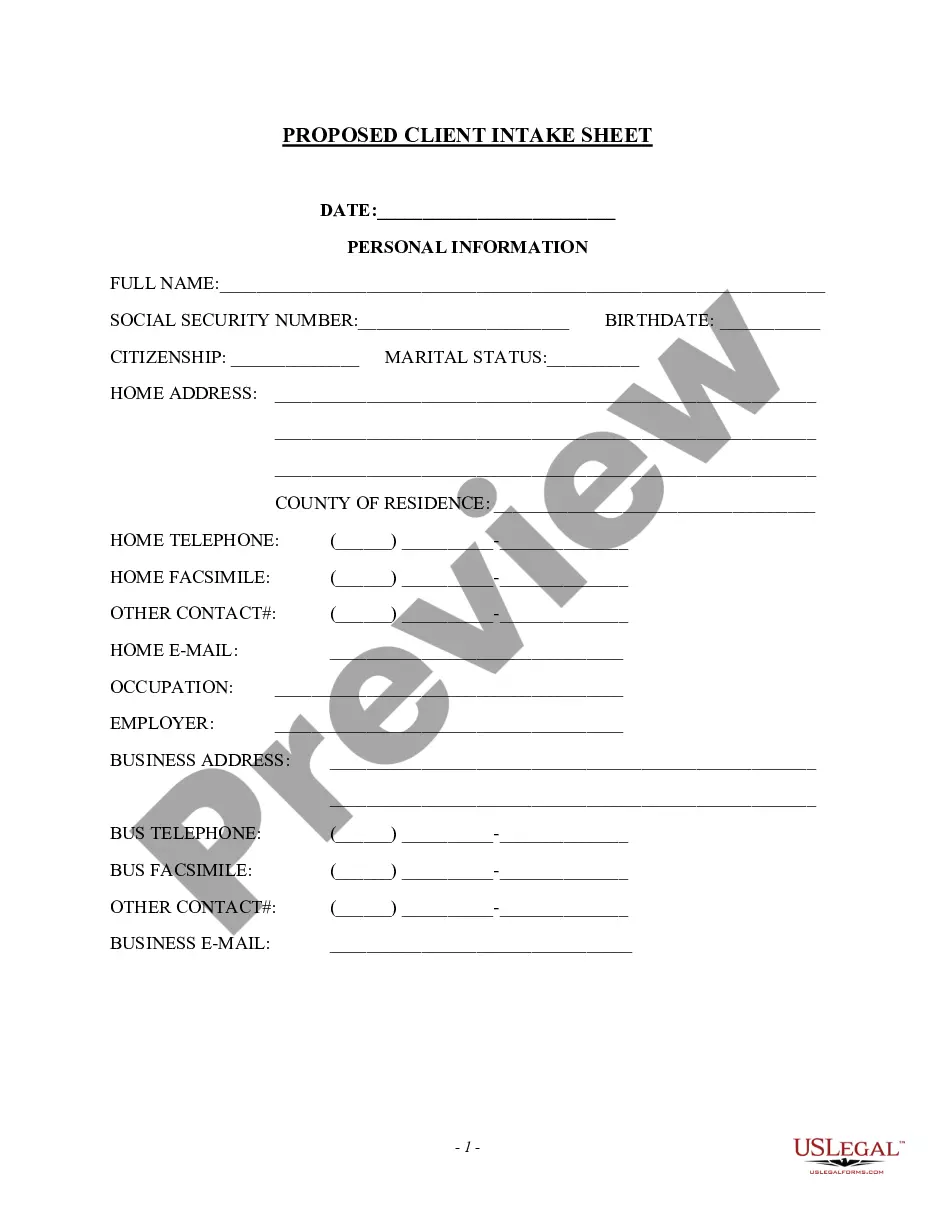
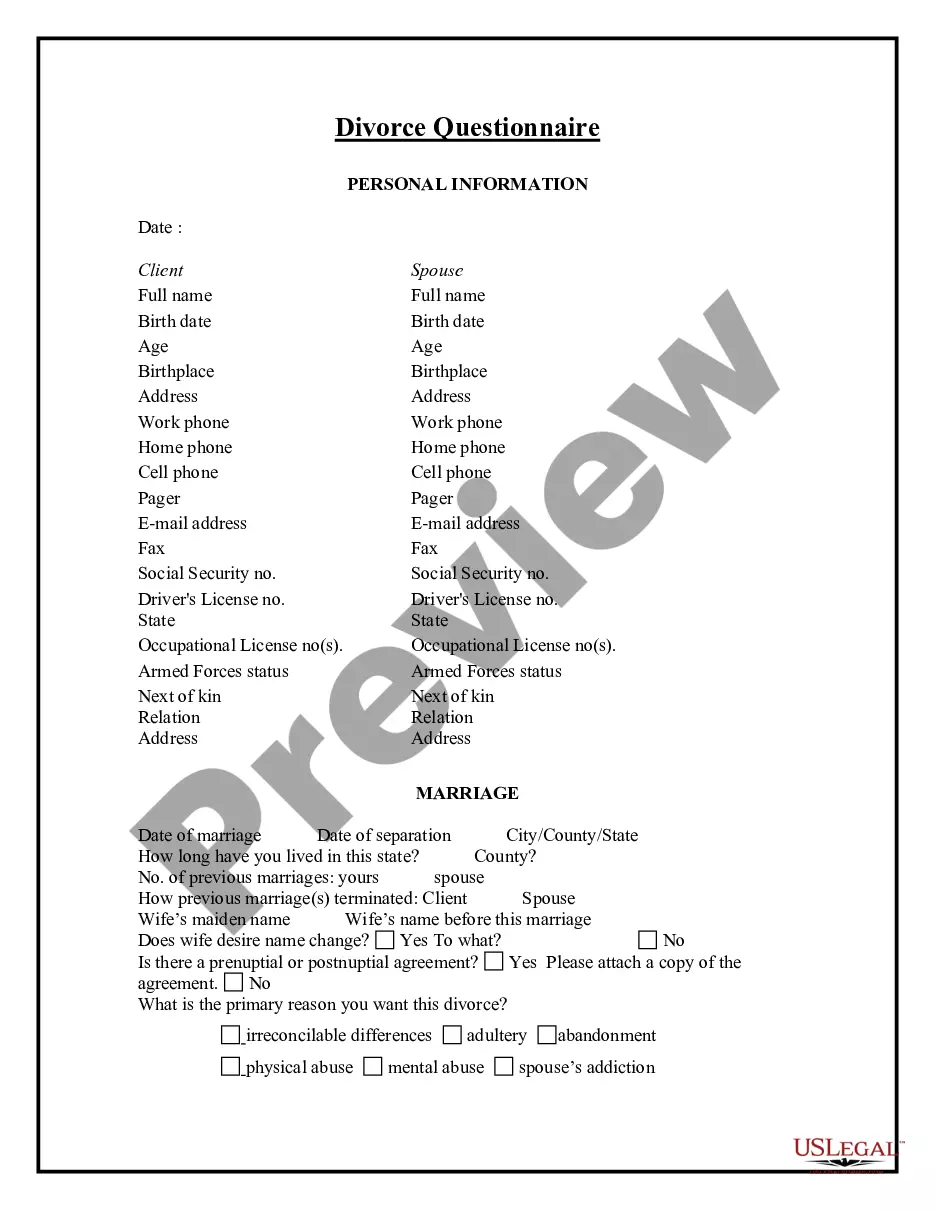
How to fill out Connecticut Divorce Worksheet And Law Summary For Contested Or Uncontested Case Of Over 25 Pages - Ideal Client Interview Form?
Regardless of whether for corporate needs or personal matters, everyone must handle legal issues at some point in their lifetime.
Filling out legal documents requires meticulous care, starting from selecting the correct form template.
Once it is downloaded, you can fill out the form using editing software or print it and complete it by hand. With an extensive US Legal Forms catalog available, you do not have to waste time searching for the suitable sample online. Utilize the library’s user-friendly navigation to find the appropriate template for any situation.
- For example, if you choose an incorrect version of a Ct Divorce Law For Spouse, it will be denied upon submission.
- Thus, it is crucial to acquire a reliable source of legal documents like US Legal Forms.
- To obtain a Ct Divorce Law For Spouse template, follow these straightforward steps.
- Locate the sample you require using the search bar or catalog browsing.
- Review the form’s details to ensure it corresponds with your circumstances, state, and county.
- Click on the form’s preview to view it.
- If it is not the correct document, return to the search feature to find the Ct Divorce Law For Spouse template you require.
- Download the file when it fits your requirements.
- If you possess a US Legal Forms account, simply click Log in to access previously stored files in My documents.
- If you do not have an account yet, you can acquire the form by clicking Buy now.
- Select the appropriate pricing option.
- Complete the account registration form.
- Choose your payment method: you can use a credit card or PayPal account.
- Select the file format you prefer and download the Ct Divorce Law For Spouse.
Form popularity
FAQ
It's important to know that they do not. In Connecticut divorces, you still must have ?Plaintiff? (the person who files first) and a ?Defendant,? (the spouse of the person who files first. But there is no implication to the court that the Plaintiff or Defendant is ?at fault? for the marriage ending.
In Connecticut, to begin a divorce, you must fill two forms i.e. the Summons Family Actions and the Divorce or Cross Complaint. Apart from asking the court for a divorce, you can also ask the court to divide your property, determine the alimony, child custody, child support and also restore your name prior to marriage.
In Connecticut, divorce courts are required by law to weigh and consider issues relating to fault. If one spouse has been unfaithful during the marriage, it can have a tremendous impact on the outcome. This factor is especially important in long-term marriages and high net worth divorce cases.
In Connecticut, all property is marital property, which is a sharp contrast to the law in neighboring states. This distinction makes Connecticut an "all-property" state, which means that everything the couple owns is fair game when it comes to dividing things up in divorce.
While filing for divorce first does not give you any inherent rights over your spouse, it does allow you more control over the situation from the beginning and could provide some strategic benefits.