Life Estate Deed Connecticut With Remainder

Description
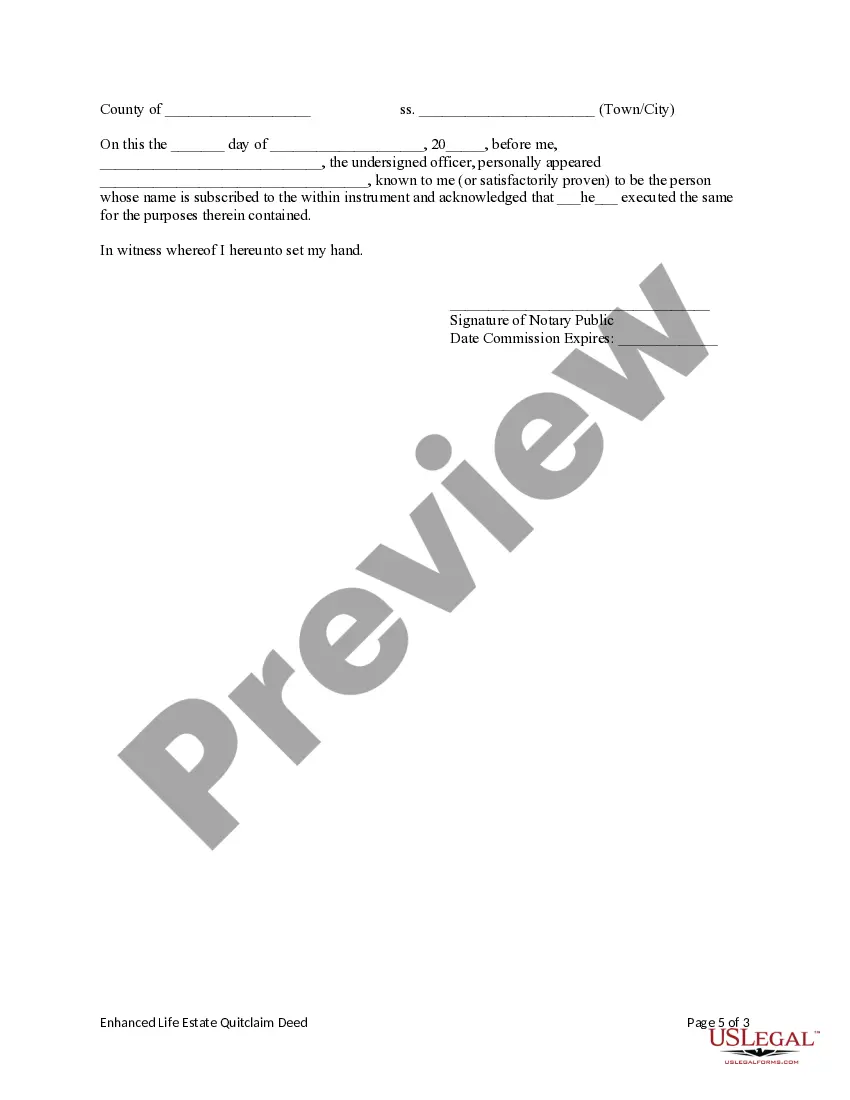
Get your form ready online
Our built-in tools help you complete, sign, share, and store your documents in one place.
Make edits, fill in missing information, and update formatting in US Legal Forms—just like you would in MS Word.
Download a copy, print it, send it by email, or mail it via USPS—whatever works best for your next step.
Sign and collect signatures with our SignNow integration. Send to multiple recipients, set reminders, and more. Go Premium to unlock E-Sign.
If this form requires notarization, complete it online through a secure video call—no need to meet a notary in person or wait for an appointment.
We protect your documents and personal data by following strict security and privacy standards.

Make edits, fill in missing information, and update formatting in US Legal Forms—just like you would in MS Word.

Download a copy, print it, send it by email, or mail it via USPS—whatever works best for your next step.

Sign and collect signatures with our SignNow integration. Send to multiple recipients, set reminders, and more. Go Premium to unlock E-Sign.

If this form requires notarization, complete it online through a secure video call—no need to meet a notary in person or wait for an appointment.

We protect your documents and personal data by following strict security and privacy standards.
Looking for another form?
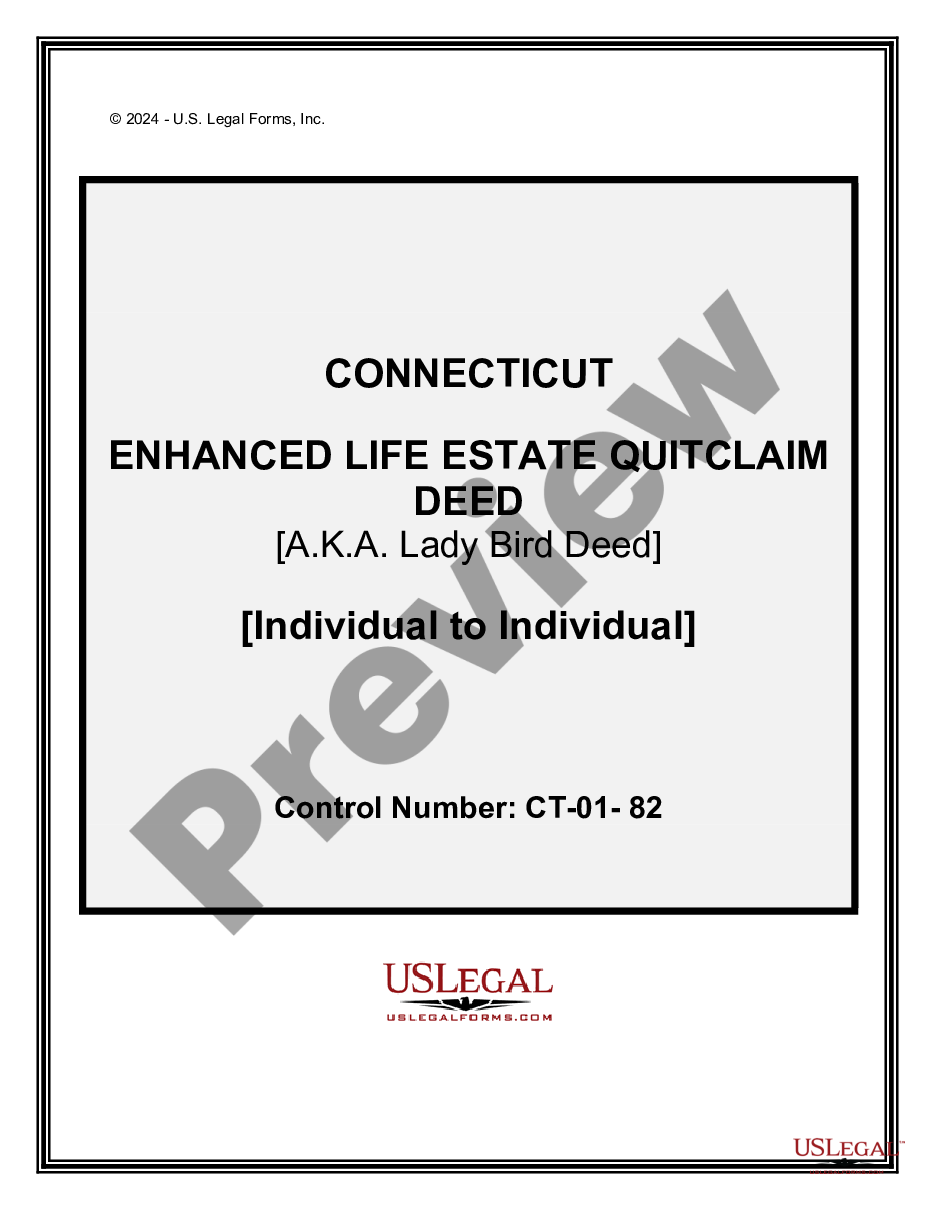
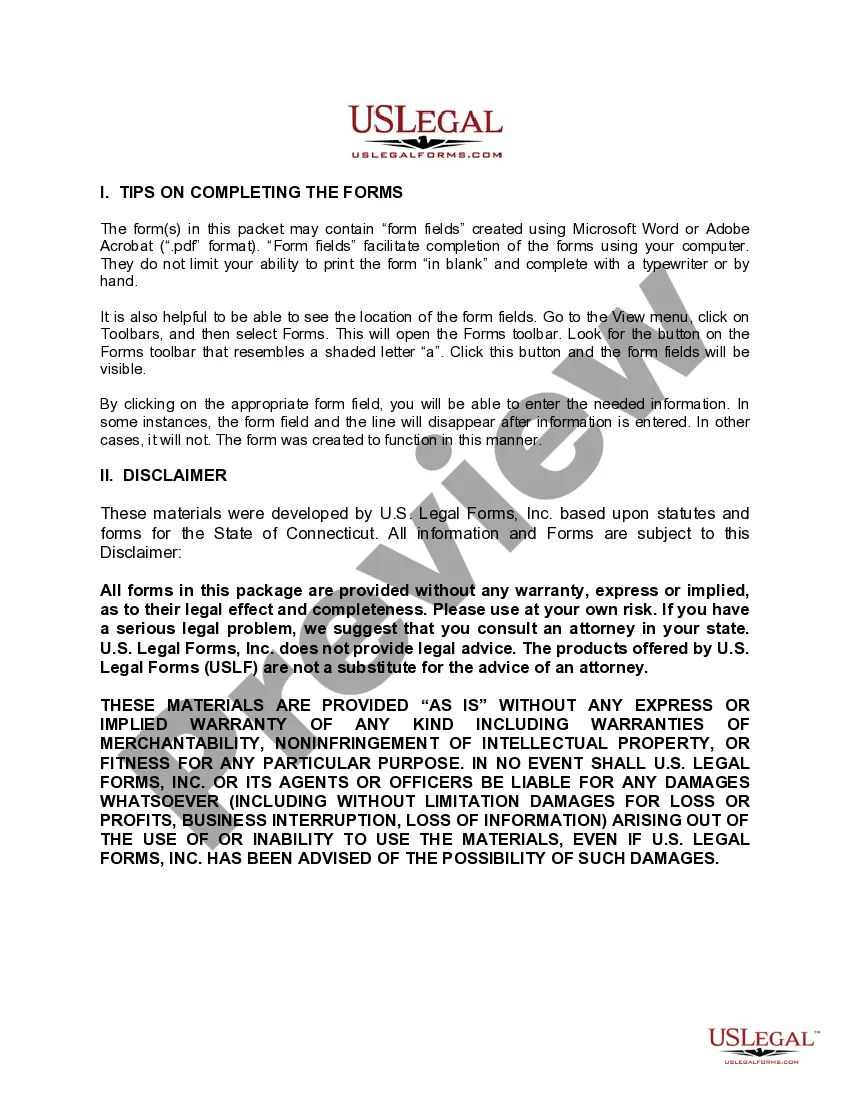
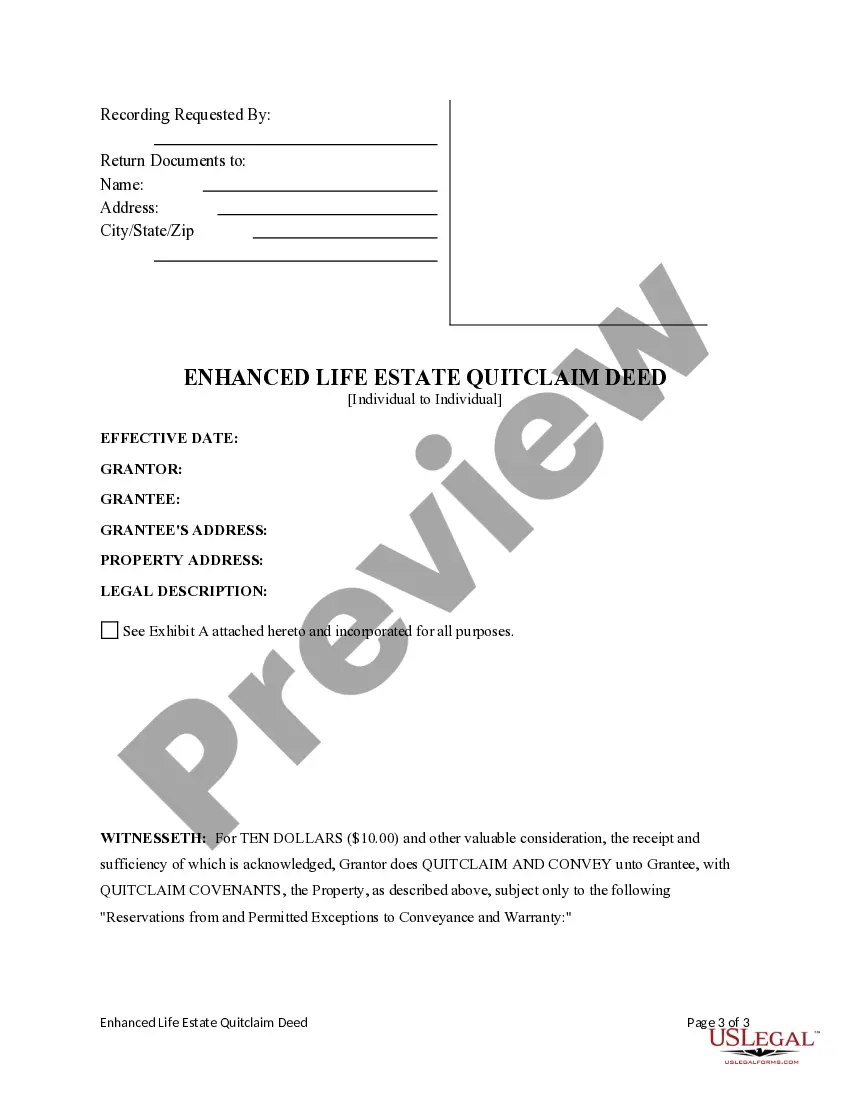
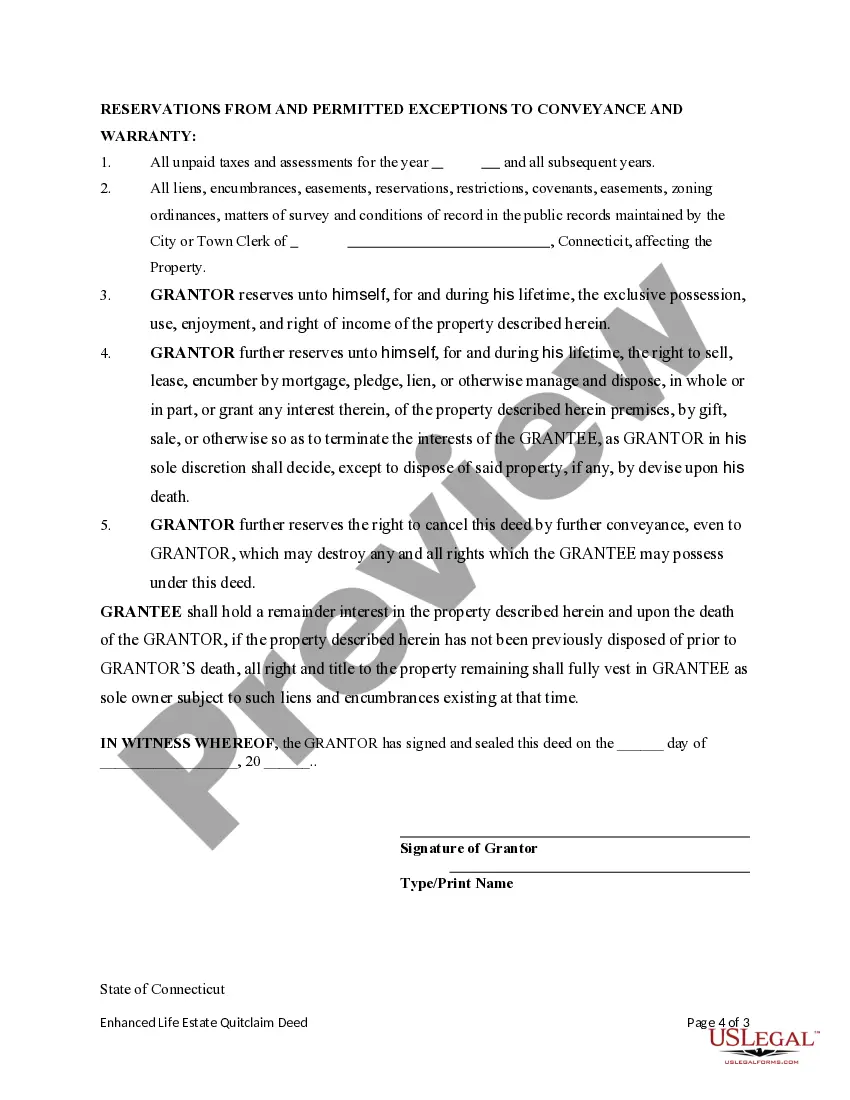
How to fill out Connecticut Enhanced Life Estate Or Lady Bird Quitclaim Deed - Individual To Individual?
When you are required to file a Life Estate Deed Connecticut With Remainder in accordance with your local state's statutes and regulations, there may be various choices available to choose from.
There’s no necessity to examine every document to confirm it meets all the legal requirements if you are a US Legal Forms member.
It is a trustworthy resource that can assist you in obtaining a reusable and current template on any topic.
Utilize the Preview mode and read the form description if available. Search for another template via the Search field in the header if necessary. Click Buy Now once you identify the appropriate Life Estate Deed Connecticut With Remainder template. Select the most appropriate pricing plan, sign in to your account or create one. Pay for a subscription (PayPal and credit card options are available). Download the template in your preferred file format (PDF or DOCX). Print the document or complete it electronically using an online editor. Obtaining properly drafted official documents becomes straightforward with US Legal Forms. Moreover, Premium users can also benefit from the robust integrated solutions for online PDF editing and signing. Give it a try today!
- US Legal Forms is the most extensive online repository with a compilation of over 85,000 ready-to-use documents for commercial and personal legal matters.
- All templates are confirmed to adhere to each state's laws.
- Consequently, when you download the Life Estate Deed Connecticut With Remainder from our platform, you can rest assured that you possess a legitimate and current document.
- Obtaining the necessary sample from our platform is remarkably simple.
- If you already have an account, just Log In to the system, verify that your subscription is valid, and save the chosen file.
- In the future, you can access the My documents section in your profile and maintain access to the Life Estate Deed Connecticut With Remainder at any time.
- If this is your first experience with our site, please adhere to the instructions below.
- Review the suggested page and check it for adherence to your criteria.
Form popularity
FAQ
To calculate remainder interest in a life estate deed Connecticut with remainder, you first need to determine the life tenant's age and life expectancy. You can use the IRS Tables or other available resources to estimate the value of the life estate. Once you have these figures, subtract the present value of the life estate from the total value of the property. This will give you the remainder interest value, which is important for estate planning and property transfer.
Yes, Connecticut allows Transfer on Death (TOD) deeds, which enable property owners to transfer real estate to a beneficiary upon their death without going through probate. This option helps simplify the estate transfer process. However, it’s essential to consider how it interacts with other estate planning tools, like a life estate deed in Connecticut with remainder, to achieve your unique goals.
The rule of survivorship states that when one co-owner of a property dies, their interest automatically passes to the remaining co-owners. This principle avoids probate delays and complications. However, this approach can eliminate opportunities to designate other heirs. Using a life estate deed in Connecticut with remainder can help you retain control over your estate while still providing for your loved ones.
In Connecticut, the right of survivorship allows co-owners to inherit each other's share of the property upon death. This means that when one owner passes away, their interest in the property automatically transfers to the surviving co-owner. This arrangement can simplify property transfer, but it also may limit other inheritance choices. A life estate deed in Connecticut with remainder can provide additional flexibility in estate planning.
No, survivorship and inheritance are not the same. In survivorship, the surviving co-owner automatically receives the deceased owner's share without going through probate. In contrast, inheritance involves transferring property through a will or by state laws, requiring legal processes. Life estate deeds in Connecticut with remainder can help clarify property distribution and avoid complications.
The right of survivorship can limit your control over how your property is distributed after death. With a life estate deed in Connecticut with remainder, you may not provide for different allocations among heirs. This means that your co-owners automatically inherit your share, potentially excluding other beneficiaries you wish to include. This restriction can create conflict among family members.
Yes, a transfer on death deed (TOD) is available in Connecticut and is a valuable tool for estate planning. With a TOD, you can designate beneficiaries to inherit your property upon your passing without the need for probate. This provides a quick and efficient way to transfer property while allowing you to retain control during your lifetime. Additionally, combining different strategies, such as using a life estate deed with remainder, can enhance your overall estate plan.
The best deed to avoid probate in Connecticut may depend on your specific circumstances, but a life estate deed with remainder is often recommended. This deed allows you to maintain the right to live in your property while ensuring that it passes directly to your beneficiaries after your death. Both life estate deeds and transfer on death deeds can offer significant benefits, but consulting with a professional can help you choose the best option for your situation.
Yes, Connecticut does allow a transfer on death deed (TOD). This deed permits you to designate beneficiaries who will automatically receive your property upon your death, avoiding the probate process. The transfer on death deed works similarly to a life estate deed with remainder, ensuring that your estate plan is honored without the complexities of probate. It simplifies property transfer and provides flexibility in your estate planning.
A life estate deed in Connecticut grants the property owner the right to live in and use the property during their lifetime, with the property transferring to designated beneficiaries, known as remaindermen, after death. This arrangement allows for the avoidance of probate since the property directly passes to the remaindermen. It provides peace of mind, as the owner retains control of the property while ensuring a seamless transition of ownership later. This deed can be an integral part of your estate planning.