Personal Representative For Trust
Description
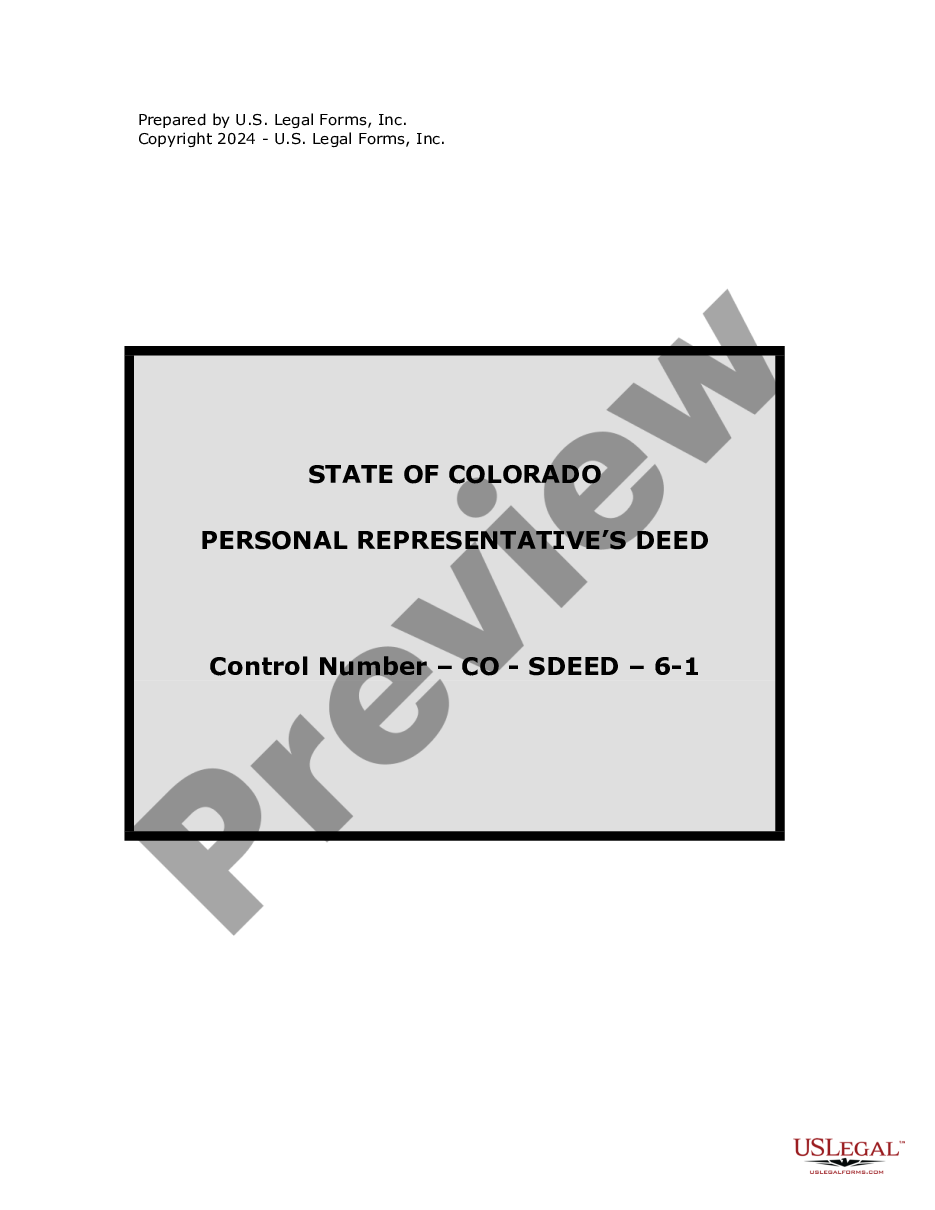
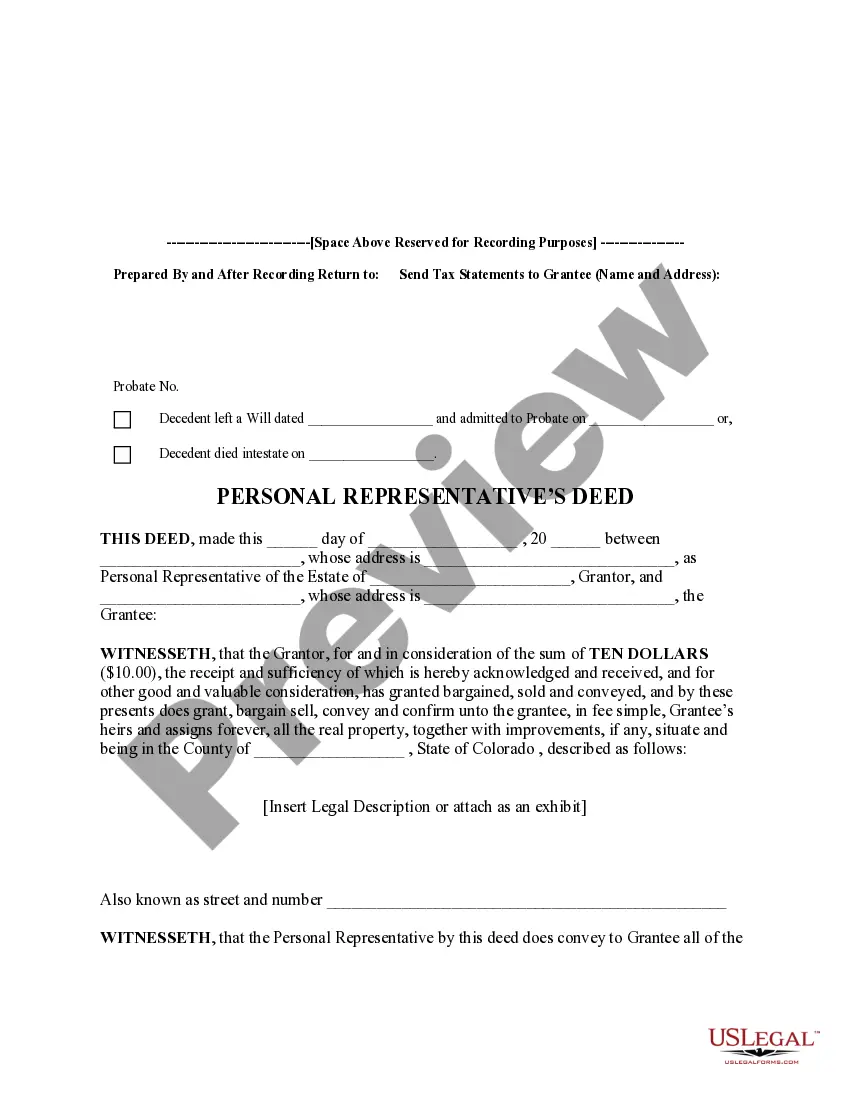

Get your form ready online
Our built-in tools help you complete, sign, share, and store your documents in one place.
Make edits, fill in missing information, and update formatting in US Legal Forms—just like you would in MS Word.
Download a copy, print it, send it by email, or mail it via USPS—whatever works best for your next step.
Sign and collect signatures with our SignNow integration. Send to multiple recipients, set reminders, and more. Go Premium to unlock E-Sign.
If this form requires notarization, complete it online through a secure video call—no need to meet a notary in person or wait for an appointment.
We protect your documents and personal data by following strict security and privacy standards.

Make edits, fill in missing information, and update formatting in US Legal Forms—just like you would in MS Word.

Download a copy, print it, send it by email, or mail it via USPS—whatever works best for your next step.

Sign and collect signatures with our SignNow integration. Send to multiple recipients, set reminders, and more. Go Premium to unlock E-Sign.

If this form requires notarization, complete it online through a secure video call—no need to meet a notary in person or wait for an appointment.

We protect your documents and personal data by following strict security and privacy standards.
Looking for another form?





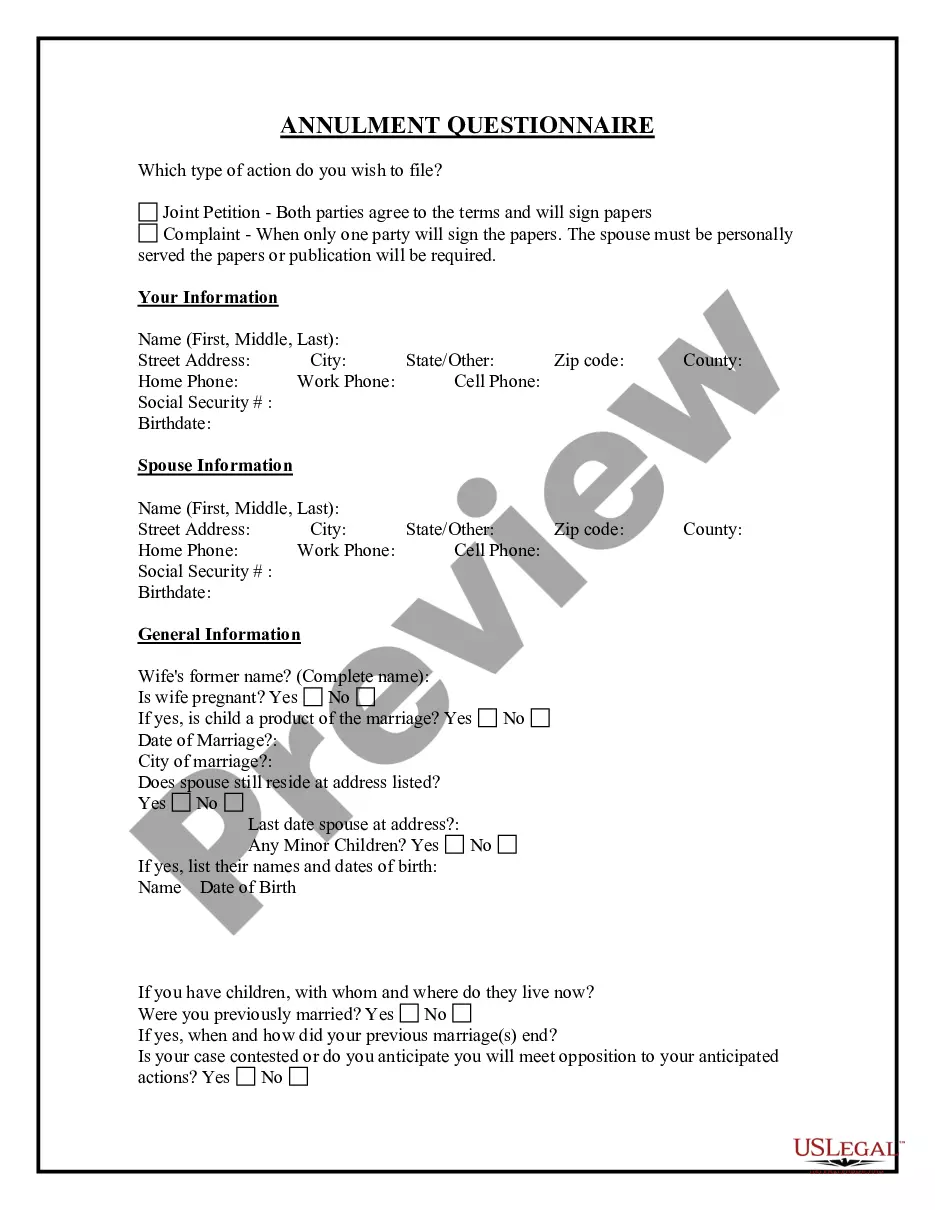


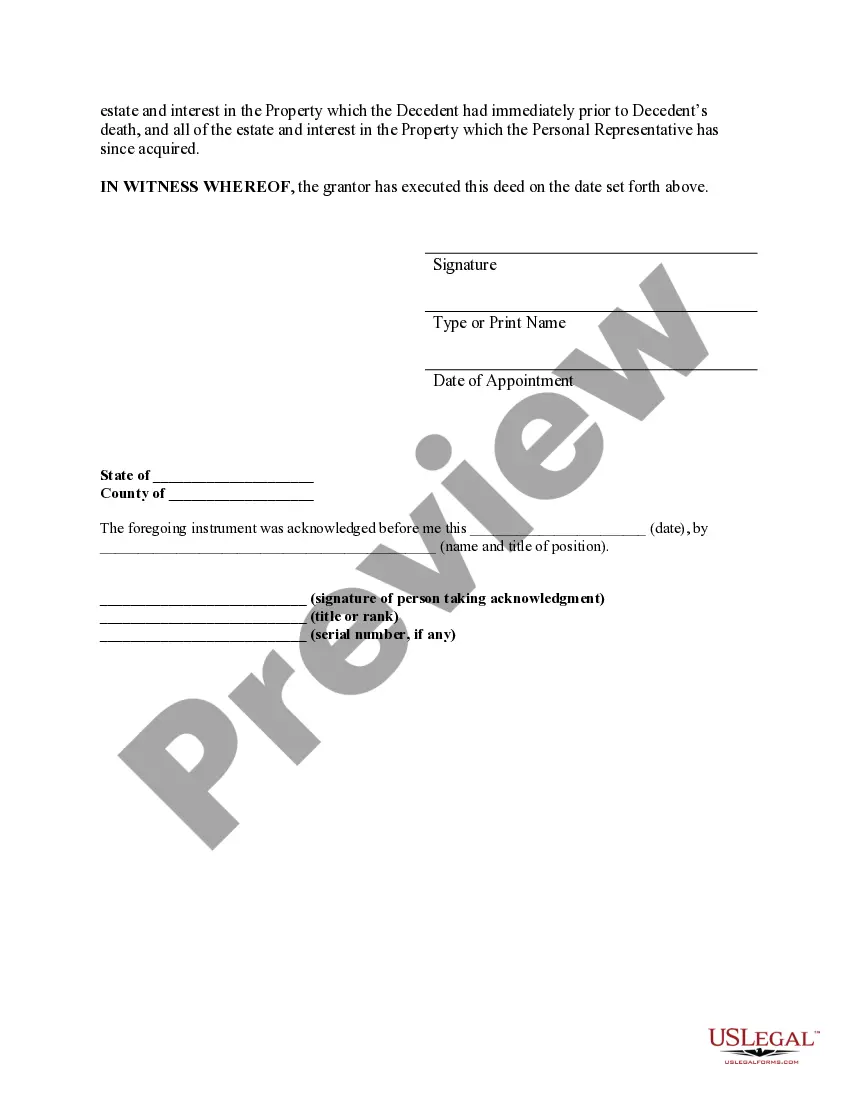
How to fill out Colorado Warranty Deed For Personal Representative?
- If you already have an account, log in to download the appropriate template. Ensure your subscription is current; if not, renew it prior to proceeding.
- If you’re new to our service, start by exploring the Preview mode and form descriptions to confirm you’ve selected the right document that aligns with your local jurisdiction’s requirements.
- If adjustments are needed, utilize the Search tab to find any alternate templates that may better suit your situation.
- Once you identify the correct form, purchase it by clicking on the Buy Now button and selecting your preferred subscription plan. You will need to create an account for full access to our resources.
- Complete your purchase by entering your credit card information or using PayPal to process your subscription.
- Finally, download the required form and save it on your device. You can also access it anytime via the My Forms menu in your profile.
In conclusion, US Legal Forms revolutionizes the way individuals and attorneys handle legal documentation by offering over 85,000 customizable and editable forms. This powerful library not only saves time but ensures precision and legal compliance.
Don’t wait any longer; start your journey towards obtaining your personal representative for trust documents today!
Form popularity
FAQ
While both a personal representative and a trustee manage assets for the benefit of others, their roles differ significantly. A personal representative for trust administers the trust according to the deceased's wishes and may be appointed in a will, while a trustee oversees the management of the trust during its lifespan. Understanding these differences allows you to make more informed decisions when creating your estate plan. For additional guidance, consider using US Legal Forms to navigate these roles effectively.
A personal representative for trust holds significant power, including the ability to manage, invest, and distribute trust assets as outlined in the trust document. Their authority extends to settling debts and filing taxes on behalf of the trust, ensuring that beneficiaries receive their rightful inheritances. However, this power comes with a duty to act in the best interests of the trust and its beneficiaries, adhering to legal responsibilities. Understanding these powers helps in making informed decisions about trust management.
To obtain a letter of personal representative for trust, you typically need to file a petition with the appropriate court after the individual's death. This letter, often called Letters Testamentary, confirms your authority to act on the trust's behalf. If you are unsure of the process, US Legal Forms offers resources and templates to guide you through obtaining the necessary documentation efficiently and effectively.
A personal representative for trust and a Power of Attorney (POA) are not the same, although they both manage decision-making duties. A personal representative administers a trust after the person's death, while a POA handles affairs during a person’s life. The roles differ in terms of authority and time frame. It's crucial to understand these distinctions when planning your estate.
When choosing a trustee, consider someone trustworthy and responsible, as they will manage the assets in the trust. It is often beneficial to select a personal representative for trust who understands financial matters and can act impartially. Family members can be appointed, but a qualified professional or financial institution may provide objectivity and expertise. Ultimately, the best trustee is someone you trust to uphold your wishes for the benefit of your beneficiaries.
A will personal representative is an individual appointed to manage and execute the terms of a will after the person's death. This position involves collecting assets, paying debts, and distributing the remaining property to beneficiaries. As you consider your estate planning options, utilize platforms like uslegalforms to streamline the process of appointing a personal representative and ensure your wishes are clearly documented.
No, a personal representative and an executor of a will are not the same, although they have overlapping duties. The executor operates under a will, following its instructions, while a personal representative for trust manages the assets of a trust according to its terms. Both roles require trust and accountability, but the legal processes involved differ.
The terms executor and personal representative refer to similar roles but in different contexts. An executor typically manages an estate under a will, while a personal representative for trust oversees trust assets according to the trust document. Both roles involve the responsibility of administering assets, but they operate under different legal frameworks.
Choosing the best person to be executor of a will depends on trust, organizational skills, and familiarity with your wishes. Ideally, this individual should be someone you trust implicitly to carry out your estate plans and manage the administrative duties. You may also consider a professional who specializes in estate management for additional expertise.
Putting personal property in a trust can offer numerous benefits. It allows you to manage assets effectively and may help avoid probate, which can streamline the transfer of your belongings after your passing. You can ensure that specific individuals receive designated personal property as you intended, making estate distribution smoother.