Notice For Rent Increase Uk
Description


Get your form ready online
Our built-in tools help you complete, sign, share, and store your documents in one place.
Make edits, fill in missing information, and update formatting in US Legal Forms—just like you would in MS Word.
Download a copy, print it, send it by email, or mail it via USPS—whatever works best for your next step.
Sign and collect signatures with our SignNow integration. Send to multiple recipients, set reminders, and more. Go Premium to unlock E-Sign.
If this form requires notarization, complete it online through a secure video call—no need to meet a notary in person or wait for an appointment.
We protect your documents and personal data by following strict security and privacy standards.

Make edits, fill in missing information, and update formatting in US Legal Forms—just like you would in MS Word.

Download a copy, print it, send it by email, or mail it via USPS—whatever works best for your next step.

Sign and collect signatures with our SignNow integration. Send to multiple recipients, set reminders, and more. Go Premium to unlock E-Sign.

If this form requires notarization, complete it online through a secure video call—no need to meet a notary in person or wait for an appointment.

We protect your documents and personal data by following strict security and privacy standards.
Looking for another form?








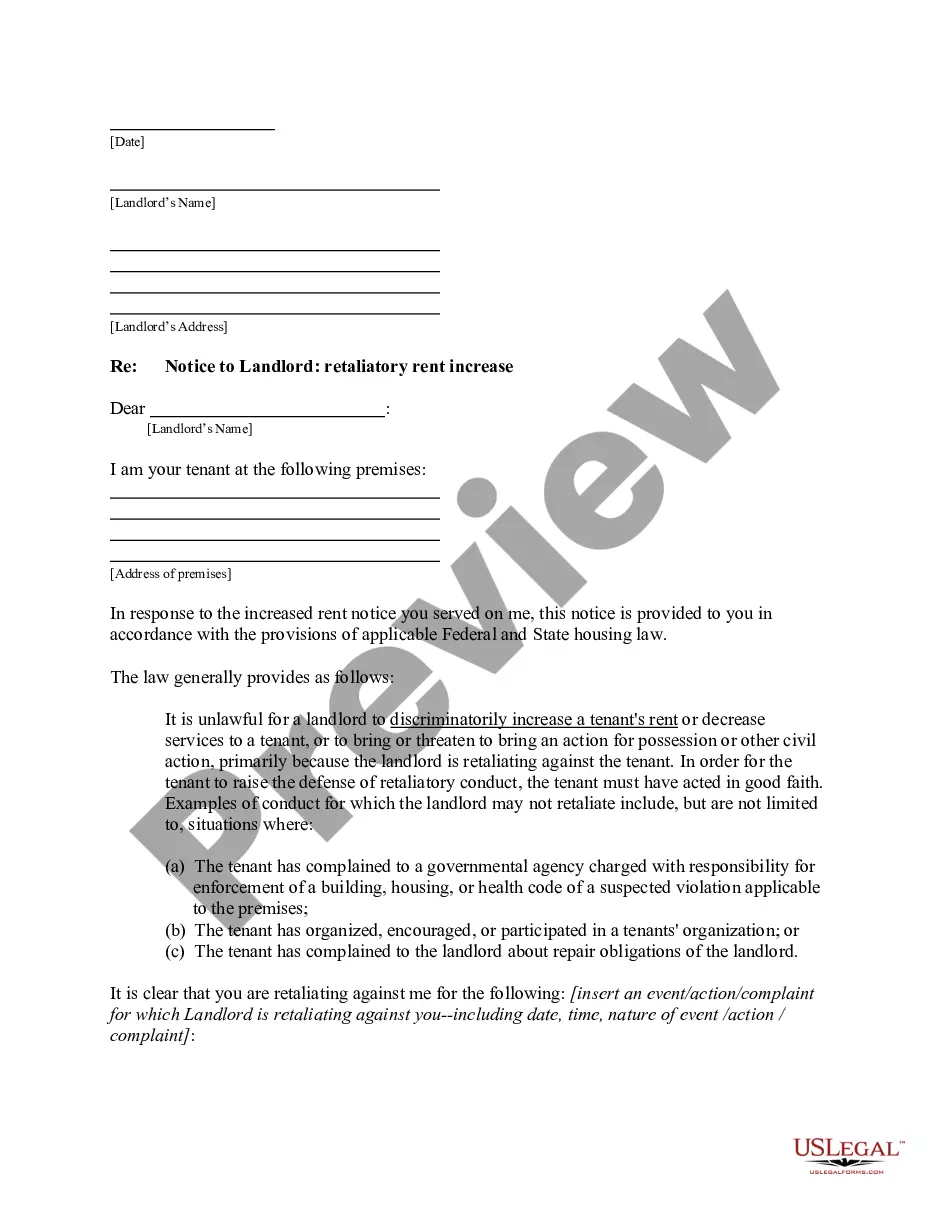
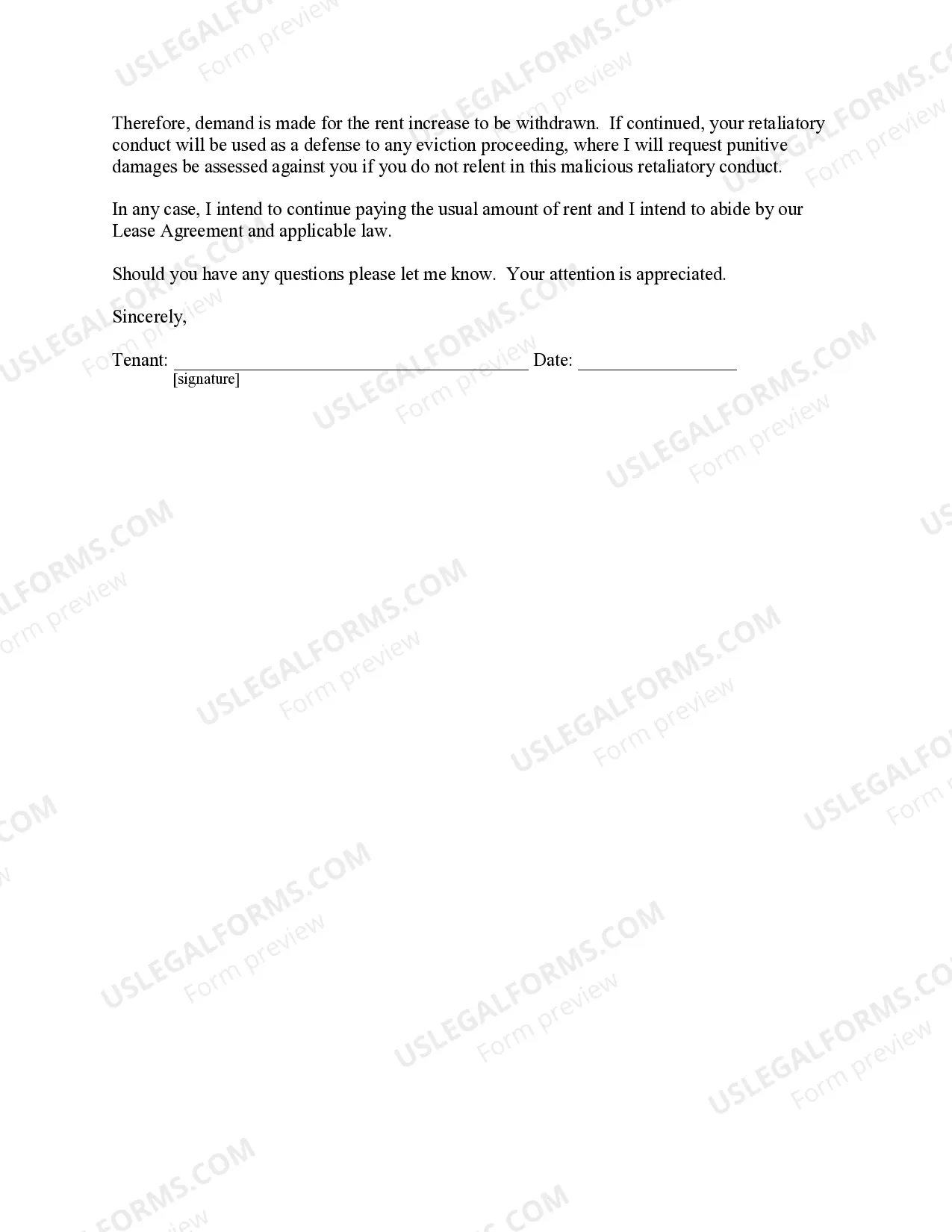
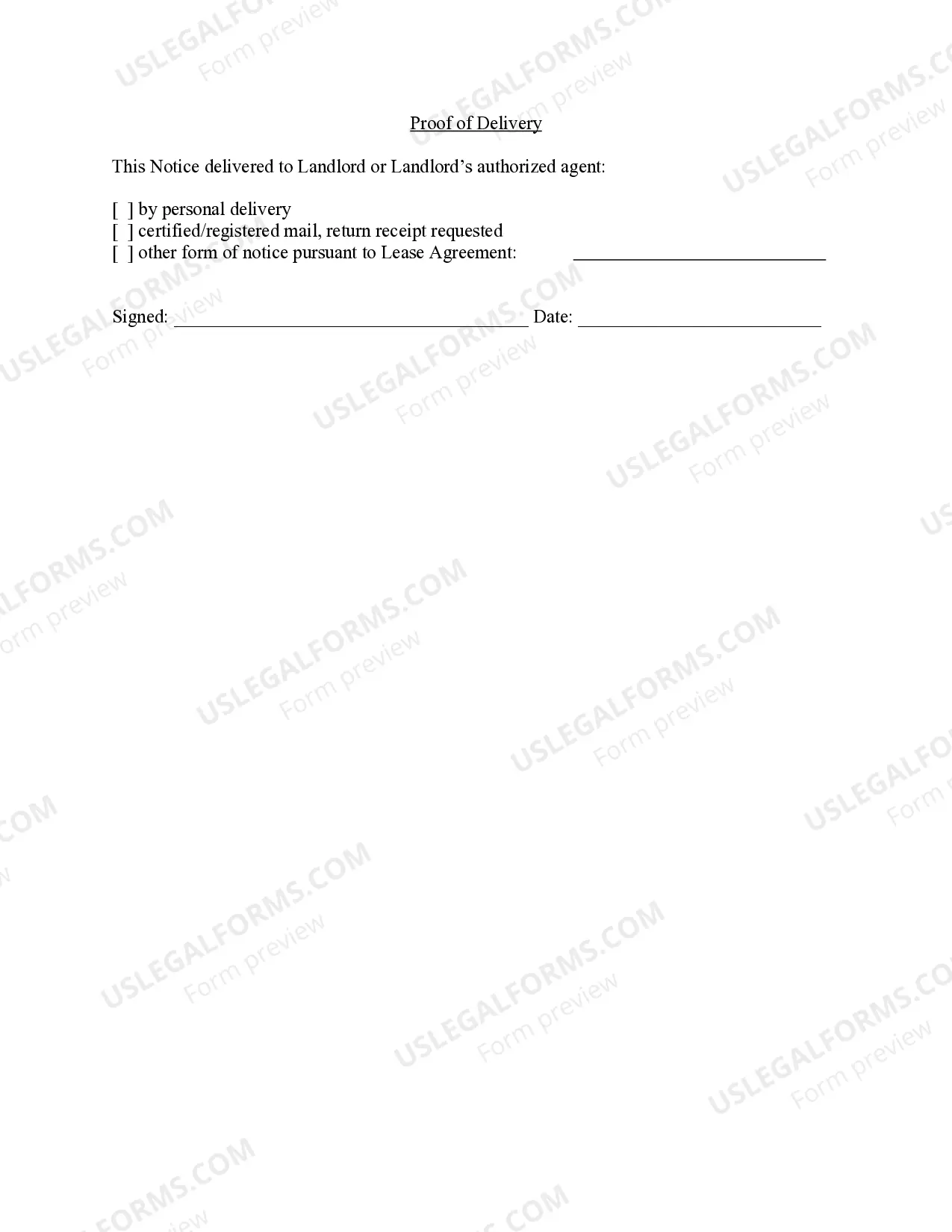
How to fill out Colorado Letter From Tenant To Landlord Containing Notice To Landlord To Withdraw Retaliatory Rent Increase?
- Log into your US Legal Forms account to download your required form template, ensuring that your subscription is current.
- For first-time users, start by checking the Preview mode and form description to confirm that you've selected the right document tailored to local jurisdiction regulations.
- If you find any discrepancies or need another template, utilize the Search tab to locate the appropriate form.
- Once you've identified the correct document, click on the Buy Now button and choose your preferred subscription plan, registering for an account if you haven't yet.
- Proceed with the purchase by providing your credit card details or using PayPal, and complete the subscription transaction.
- Finally, download your chosen form to your device, ensuring you can access it anytime through the My Forms section of your profile.
Using US Legal Forms not only provides you with access to over 85,000 editable legal documents, but it also connects you with premium experts for assistance, ensuring that your forms are accurate and legally sound.
Start today and streamline your legal documentation process with US Legal Forms. Experience the ease of managing your legal needs efficiently!
Form popularity
FAQ
An addendum on a lease is a supplementary document that modifies or adds to the original lease agreement. It allows landlords and tenants to agree on new terms, such as a rent increase, after the lease has been signed. Regarding a 'Notice for rent increase uk', this can clarify the new rental conditions and ensure all parties are informed. Always request and read the addendum carefully before signing.
In New York, the maximum rent increase is often determined by local laws and rent control regulations. A landlord must provide a 'Notice for rent increase uk' or similar notification, depending on the rental situation. Without rent control, increases can vary greatly, so it's essential to review your lease and local regulations. Consulting a legal expert can provide guidance on your specific circumstances.
A rent increase addendum is a document that outlines the new rent amount and terms following a rent increase. This addendum must be signed by both the landlord and tenant to be legally binding. In the context of a 'Notice for rent increase uk', this document ensures transparency in the rental agreement. Make sure to keep a copy for your records.
In the UK, there is no fixed limit on how much a landlord can raise the rent, but they must provide a valid 'Notice for rent increase uk'. Typically, landlords follow market trends and local laws when deciding on an increase. You should review your lease agreement for specific terms about rent adjustments. If unsure, consider seeking legal advice for clarity.
To mail a rent increase notice, print the completed letter and ensure it is signed. Use a reliable envelope and add the landlord’s address on the front. If possible, send it via recorded delivery to confirm receipt. Adhering to the correct mailing process reinforces the notice for rent increase UK and your commitment to following the regulations.
When requesting a rent increase, explain your reasons clearly. You might cite market conditions or necessary property improvements as justification for the adjustment. Be respectful and highlight the benefits that the increase brings for both of you. Remember, discussing the notice for rent increase UK process openly can lead to a mutual agreement.
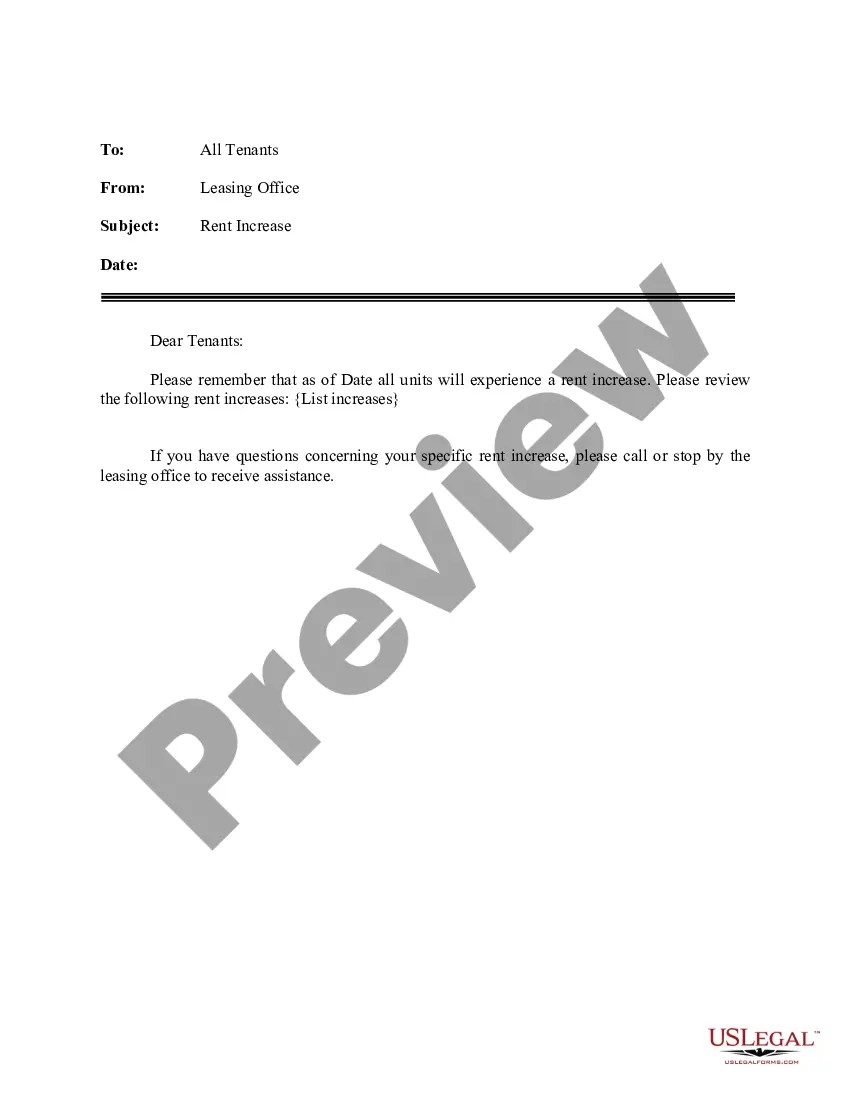
To write a notice letter for a rent increase, start with your name and address, followed by your landlord's name and address. Specify the current rent amount, the new rent amount, and the effective date of the increase. Ensure you include a polite closing statement. Crafting a clear and formal notice letter can help you navigate the notice for rent increase UK process smoothly.
When approaching your landlord about a rent increase, it is essential to communicate openly. Begin by reviewing your tenancy agreement to understand the terms regarding rent adjustments. Then, schedule a meeting or write a formal letter expressing your concerns and request a discussion. A clear approach regarding the notice for rent increase UK can facilitate a productive conversation.
Your landlord must give you written notice of a rent increase. The notice period generally ranges from one month to six months, depending on the type of tenancy you have. For periodic tenancies, at least one month’s notice is standard, while assured shorthold tenancies may require six months. Knowing the rules around notice for rent increase UK helps you plan accordingly.
In the UK, landlords typically need to provide at least one month's notice for a rent increase if the tenancy is monthly. For longer tenancies, such as a year, the notice period may extend to six months. Always check your tenancy agreement for specific terms, as they can dictate the notice required. Understanding the notice for rent increase UK is crucial to ensure compliance.