Quitclaim Deed Individuals With No Consent
Description
Get your form ready online
Our built-in tools help you complete, sign, share, and store your documents in one place.
Make edits, fill in missing information, and update formatting in US Legal Forms—just like you would in MS Word.
Download a copy, print it, send it by email, or mail it via USPS—whatever works best for your next step.
Sign and collect signatures with our SignNow integration. Send to multiple recipients, set reminders, and more. Go Premium to unlock E-Sign.
If this form requires notarization, complete it online through a secure video call—no need to meet a notary in person or wait for an appointment.
We protect your documents and personal data by following strict security and privacy standards.

Make edits, fill in missing information, and update formatting in US Legal Forms—just like you would in MS Word.

Download a copy, print it, send it by email, or mail it via USPS—whatever works best for your next step.

Sign and collect signatures with our SignNow integration. Send to multiple recipients, set reminders, and more. Go Premium to unlock E-Sign.

If this form requires notarization, complete it online through a secure video call—no need to meet a notary in person or wait for an appointment.

We protect your documents and personal data by following strict security and privacy standards.
Looking for another form?

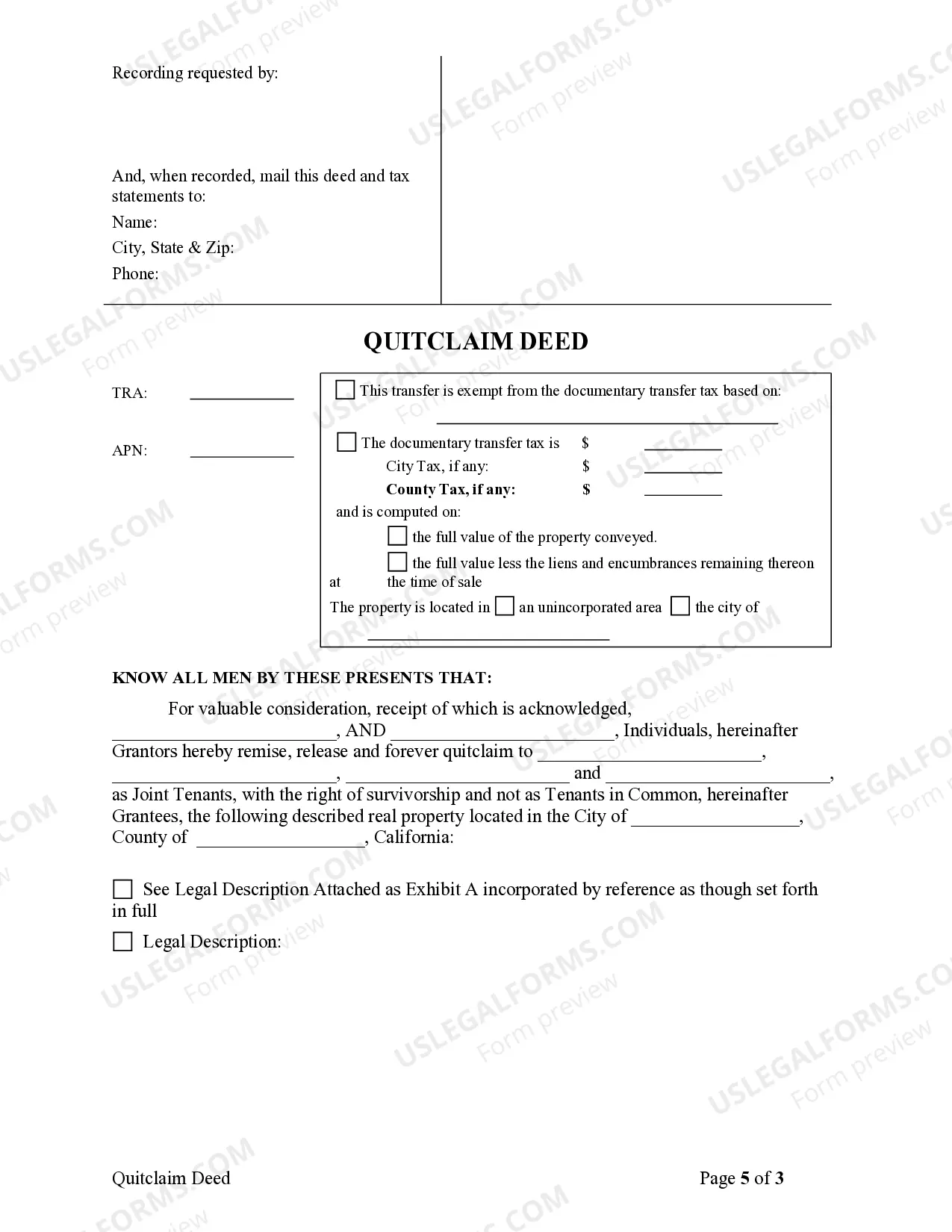
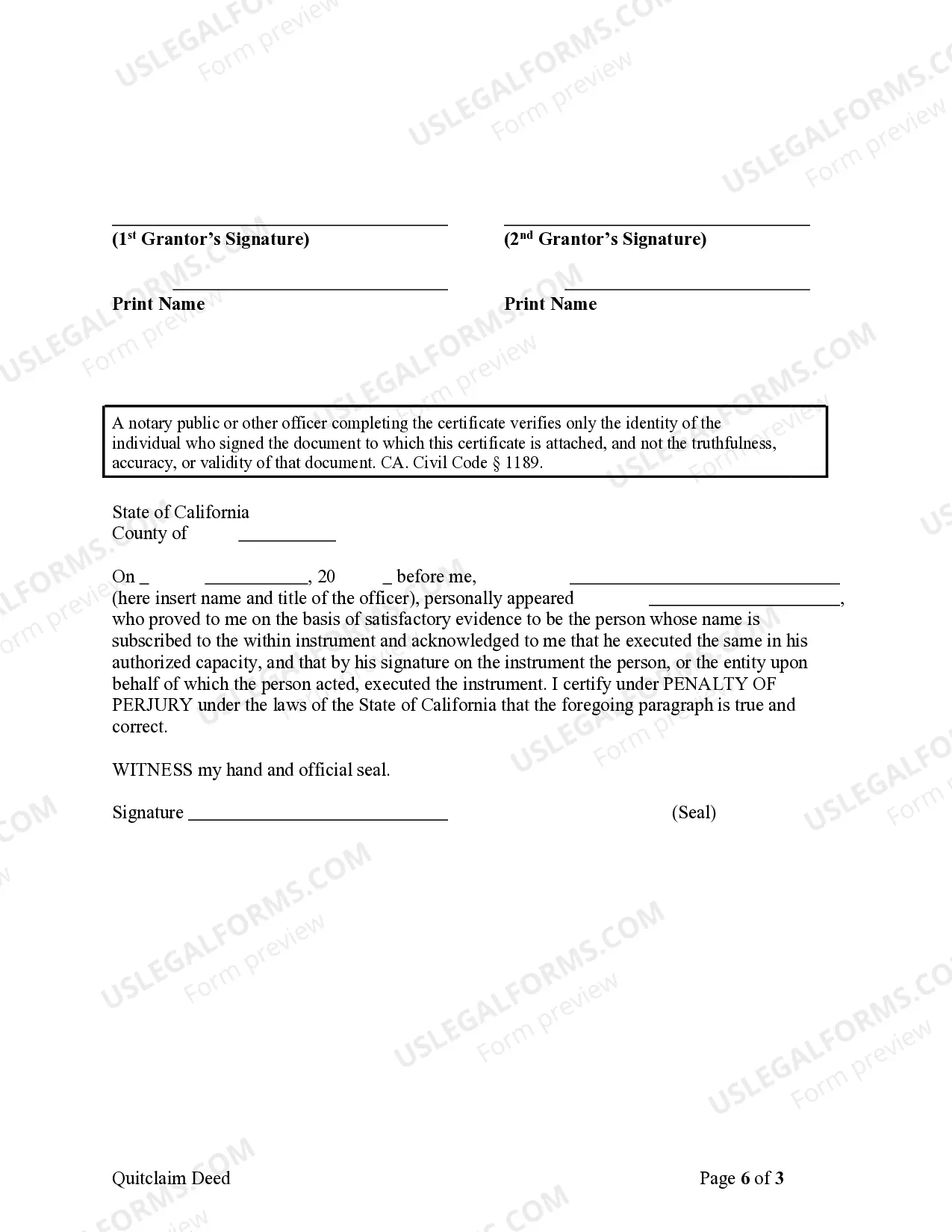
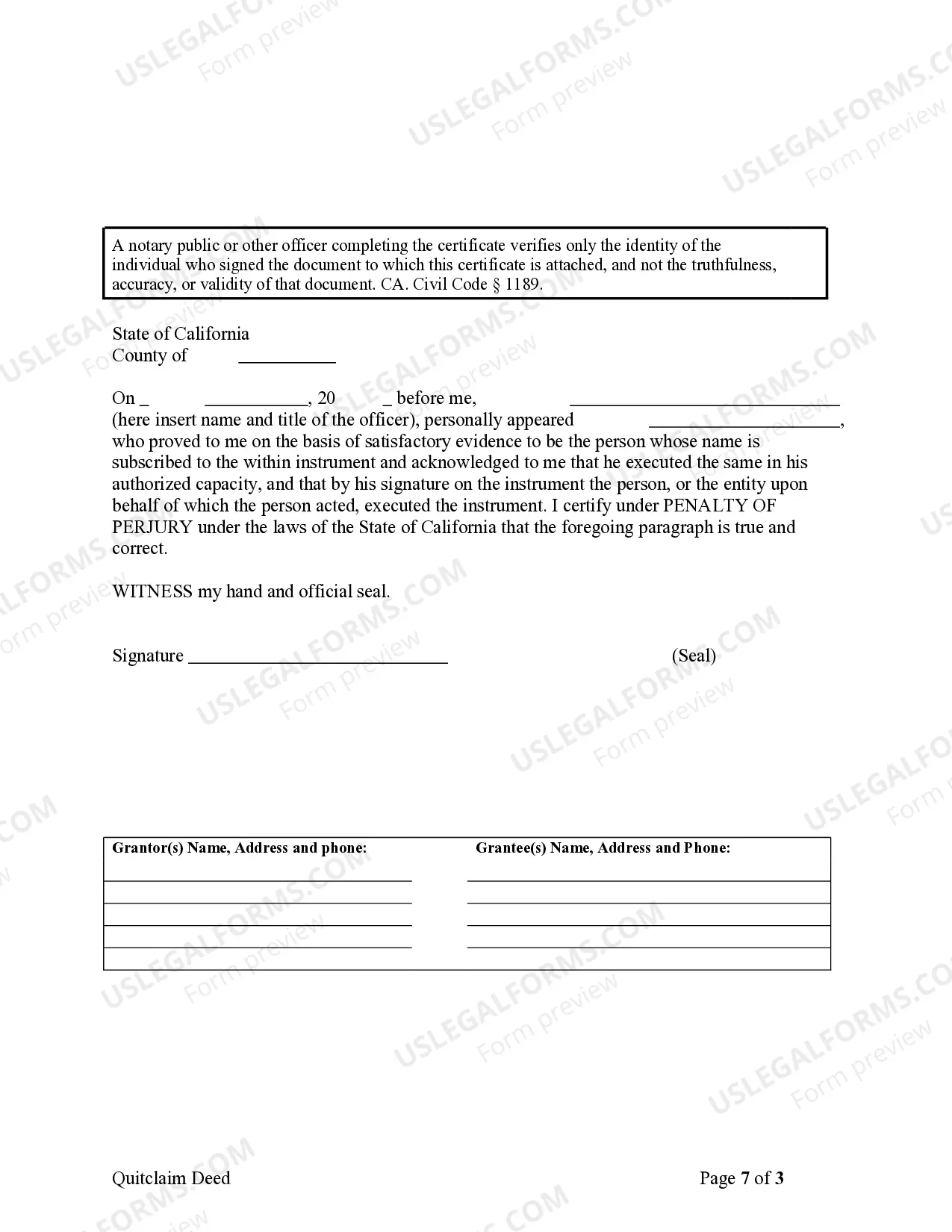
How to fill out California Quitclaim Deed From Two Individuals To Four Individuals As Joint Tenants?
- For existing users, log into your account and click the Download button for your required form template. Ensure your subscription is active; renew if necessary.
- If you're new, start by checking the Preview mode and ensure the chosen form matches your local jurisdiction requirements.
- If needed, use the Search tab to find alternative templates that better fit your needs. Move to the next step after confirming your choice.
- To purchase the document, click on the Buy Now button and select your preferred subscription plan. Registration is required for access.
- Complete your purchase by entering your payment details via credit card or PayPal.
- Finally, download the form and save it to your device. You can revisit it anytime from the My Forms menu in your profile.
With US Legal Forms, you not only gain access to a vast array of legal documents but also the support of premium experts who ensure your forms are completed accurately.
Don't miss out on the benefits of quick and efficient legal documentation. Start your journey with US Legal Forms today!
Form popularity
FAQ
To determine if someone has acquired a house in your name, you should check public property records at your local county office or online databases that track real estate transactions. Regular monitoring can reveal if a quitclaim deed has been filed using your name without consent. Additionally, maintaining good communication with local property records officials can provide clarity on any unauthorized transactions.
Several factors can void a quitclaim deed, including fraud, lack of consent, or failure to follow proper filing procedures. If someone executed a quitclaim deed without your knowledge, that deed may be contested in a court of law. Additionally, if the deed was not appropriately recorded with local authorities, it may not hold legal weight. Understanding these nuances can help you protect your property rights.
When a house is officially placed in your name, it signifies that you hold legal title to the property. However, if this transfer occurs through a quitclaim deed without your consent, you may face legal challenges. You would effectively become responsible for any obligations associated with the property, such as taxes and maintenance. Regular checks on your property ownership status can help minimize surprises.
If your name appears on the deed, you generally have the right to stay on the property. However, if someone else has legal ownership rights or if a quitclaim deed was executed without your consent, complications may arise. In such cases, the rights to the property can become confusing, potentially leading to eviction. Understanding your legal standing is crucial in these scenarios.
Yes, it is possible for someone to use a quitclaim deed to transfer a house into your name without your consent. This type of deed allows a person to transfer their interest in a property without guaranteeing clear title. Therefore, if someone has access to the necessary documents, they could execute a quitclaim deed without informing you. It's essential to monitor your property records to avoid unexpected changes.
Yes, a quitclaim deed can be voided under certain circumstances. If it was executed without the consent of all individuals involved or if there are errors in the document, challenges can arise. Additionally, grounds for voiding may include fraud or misrepresentation during the transaction. To navigate these complexities, consider consulting platforms like US Legal Forms, which provide legal insights on quitclaim deeds involving individuals with no consent.
Individuals involved in property transfers, especially family members or friends, often benefit the most from quitclaim deeds. They allow for quick ownership transfer without lengthy processes, which is ideal in situations where consent may not be fully achievable. This instrument is also beneficial for settling joint property ownership, such as in divorce situations. For guidance, you can explore resources offered by US Legal Forms to streamline the process.
Repeating the question can lead to confusion, so it's important to clarify that a quit claim deed can be deemed invalid due to deficiencies in execution. If any parties involved did not provide consent, or if required information is missing, the deed's validity may be compromised. Furthermore, improper notarization can also render the document ineffective. Always consult legal resources or platforms like US Legal Forms to understand the requirements for valid quitclaim deeds.
Filling out a quitclaim deed requires careful attention to detail. Begin by entering the names of the individuals involved in the transaction, making sure to include any necessary information, such as the property address and legal description. To avoid issues, it's crucial to have all parties involved, including those who may not provide consent, sign the document before a notary public. Consider using platforms like US Legal Forms to access templates and guides tailored for individuals with no consent.
A quitclaim deed can become invalid due to several factors. If it lacks proper signatures or does not include necessary information like the property description or the names of the parties involved, it may be deemed invalid. Additionally, a quitclaim deed involving individuals with no consent raises legal concerns, leading to potential invalidity. Always ensure that all parties provide consent and that the document meets legal requirements.