Grant Deed California With Us
Description
Get your form ready online
Our built-in tools help you complete, sign, share, and store your documents in one place.
Make edits, fill in missing information, and update formatting in US Legal Forms—just like you would in MS Word.
Download a copy, print it, send it by email, or mail it via USPS—whatever works best for your next step.
Sign and collect signatures with our SignNow integration. Send to multiple recipients, set reminders, and more. Go Premium to unlock E-Sign.
If this form requires notarization, complete it online through a secure video call—no need to meet a notary in person or wait for an appointment.
We protect your documents and personal data by following strict security and privacy standards.

Make edits, fill in missing information, and update formatting in US Legal Forms—just like you would in MS Word.

Download a copy, print it, send it by email, or mail it via USPS—whatever works best for your next step.

Sign and collect signatures with our SignNow integration. Send to multiple recipients, set reminders, and more. Go Premium to unlock E-Sign.

If this form requires notarization, complete it online through a secure video call—no need to meet a notary in person or wait for an appointment.

We protect your documents and personal data by following strict security and privacy standards.
Looking for another form?
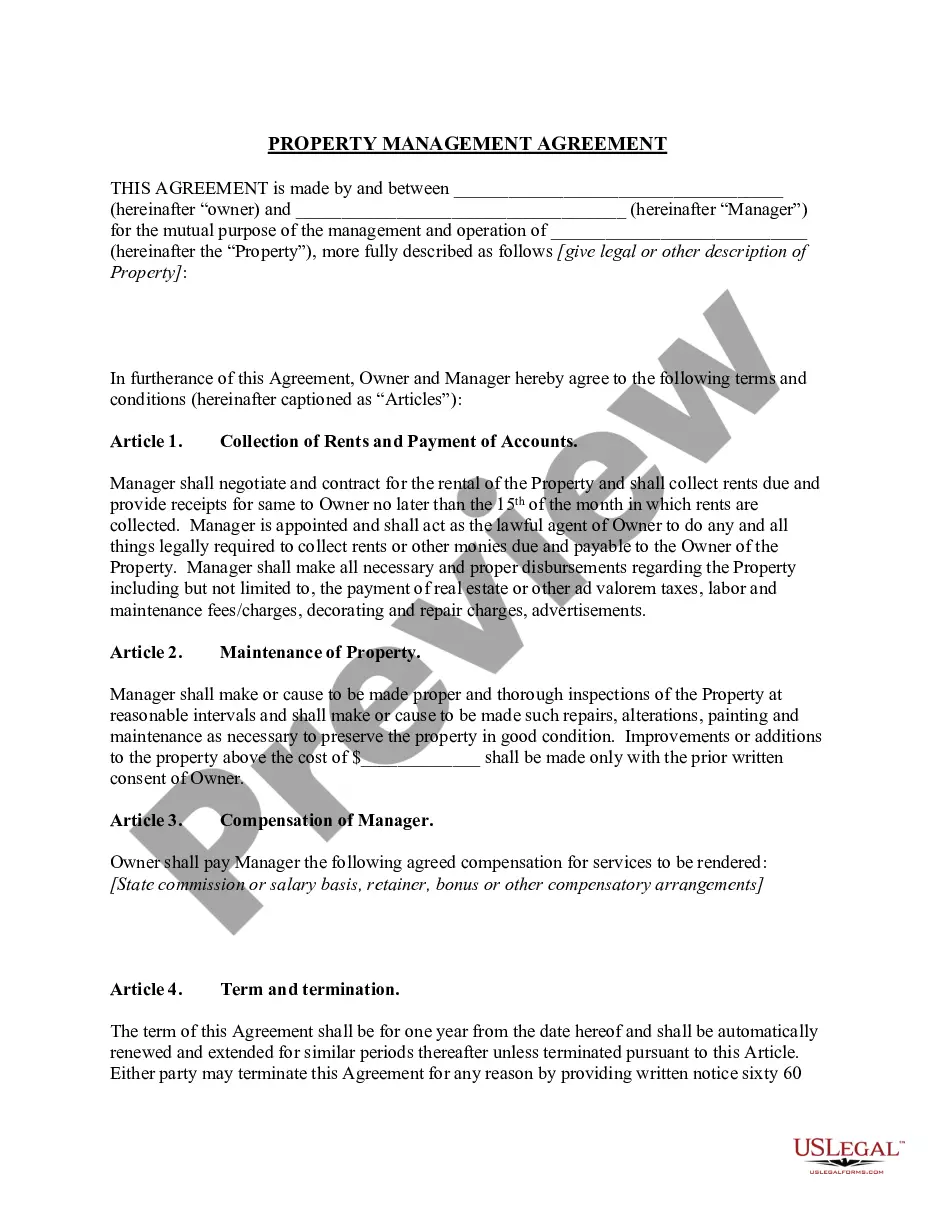



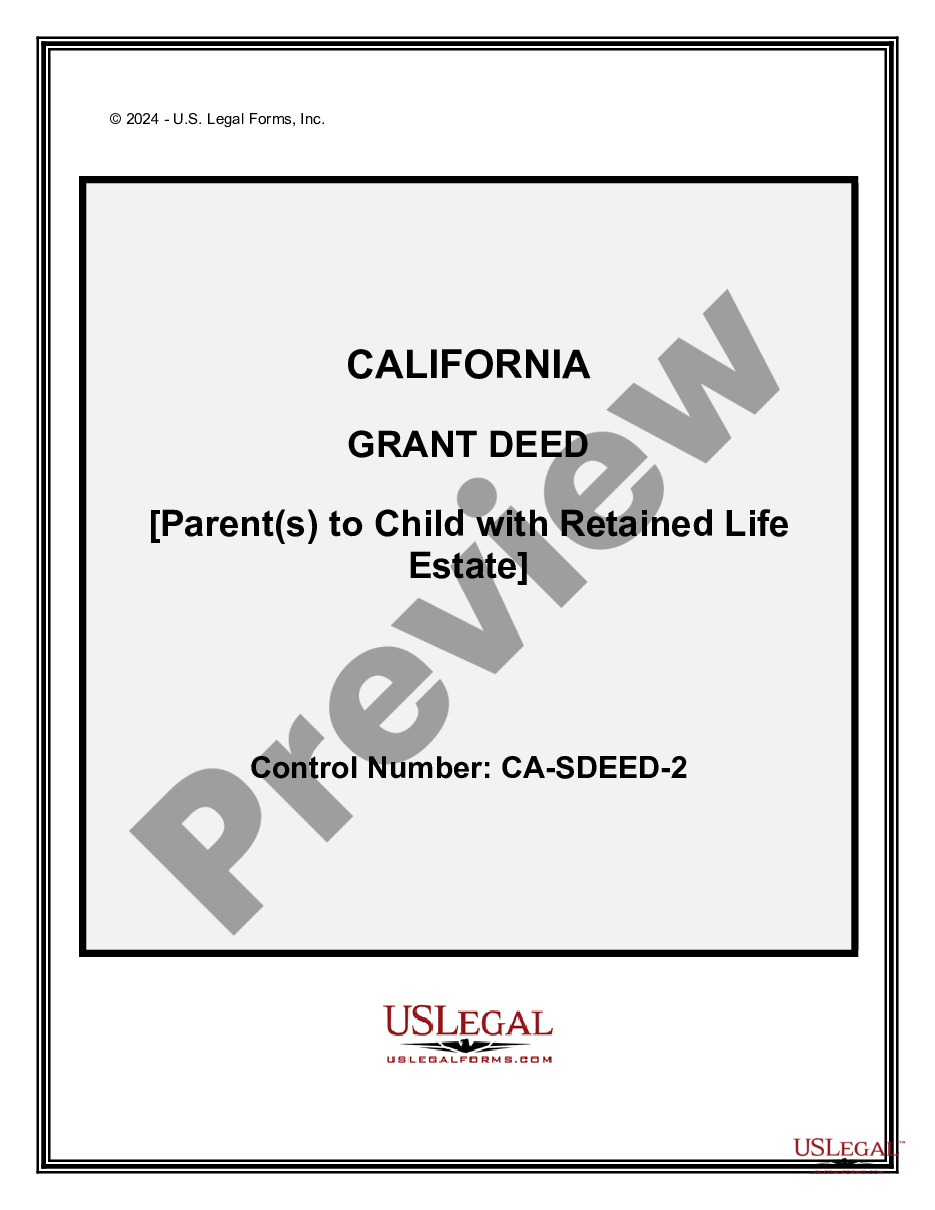
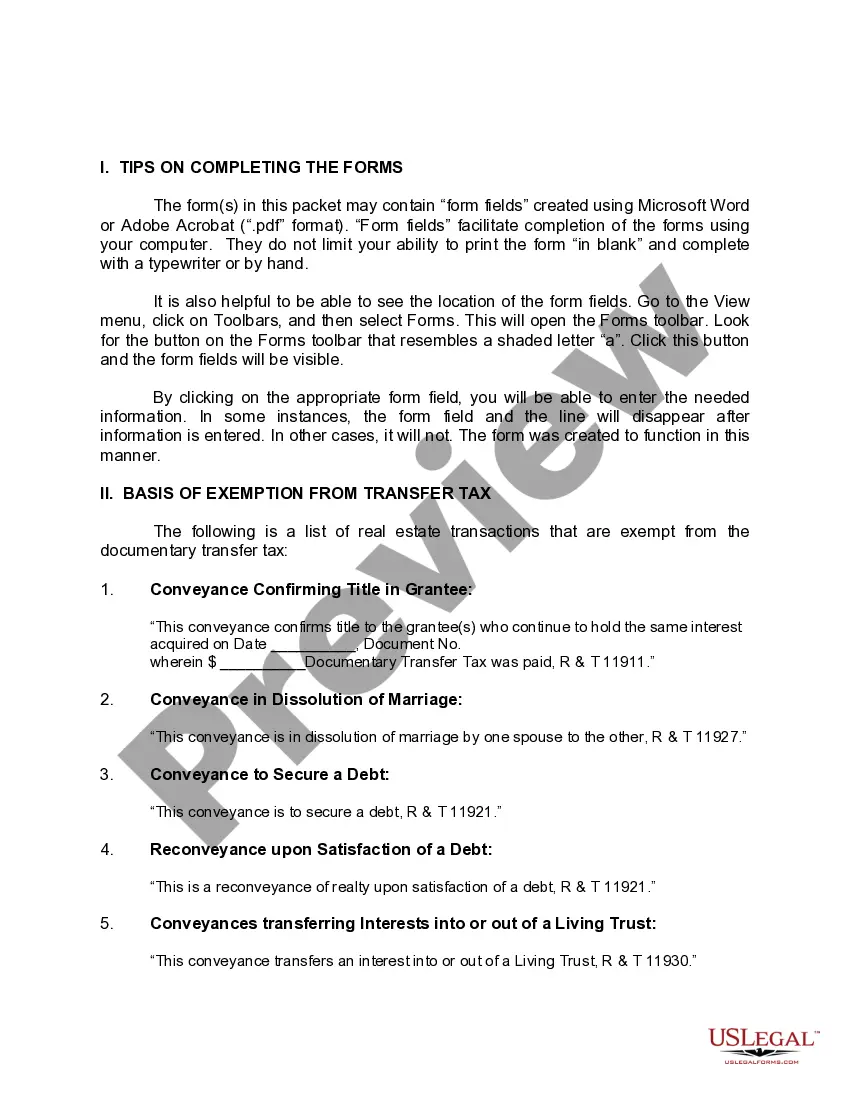
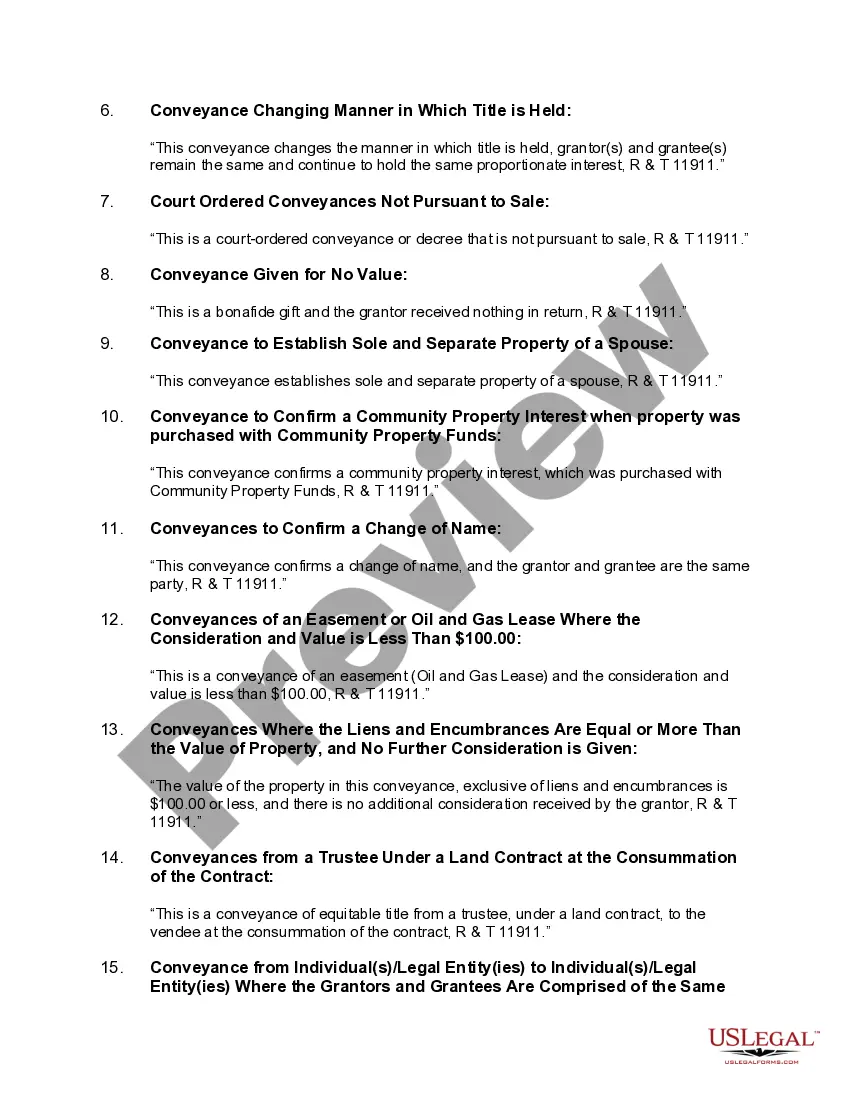
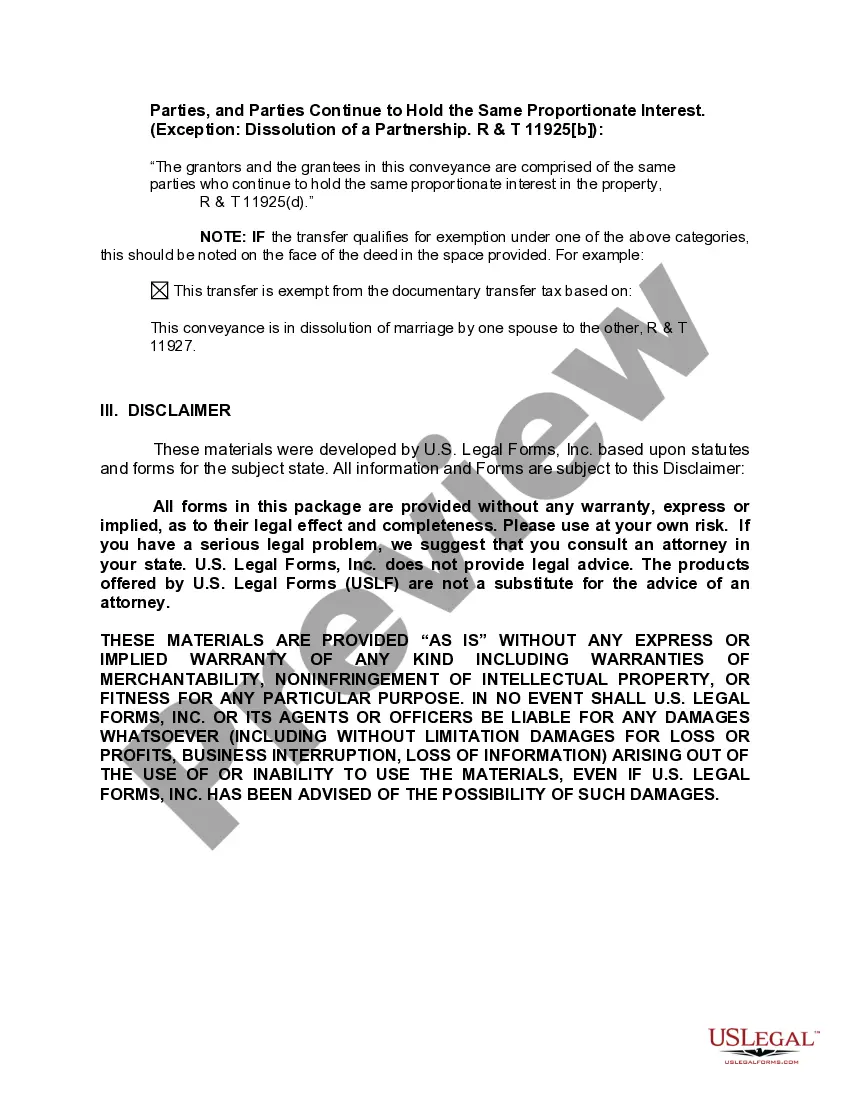
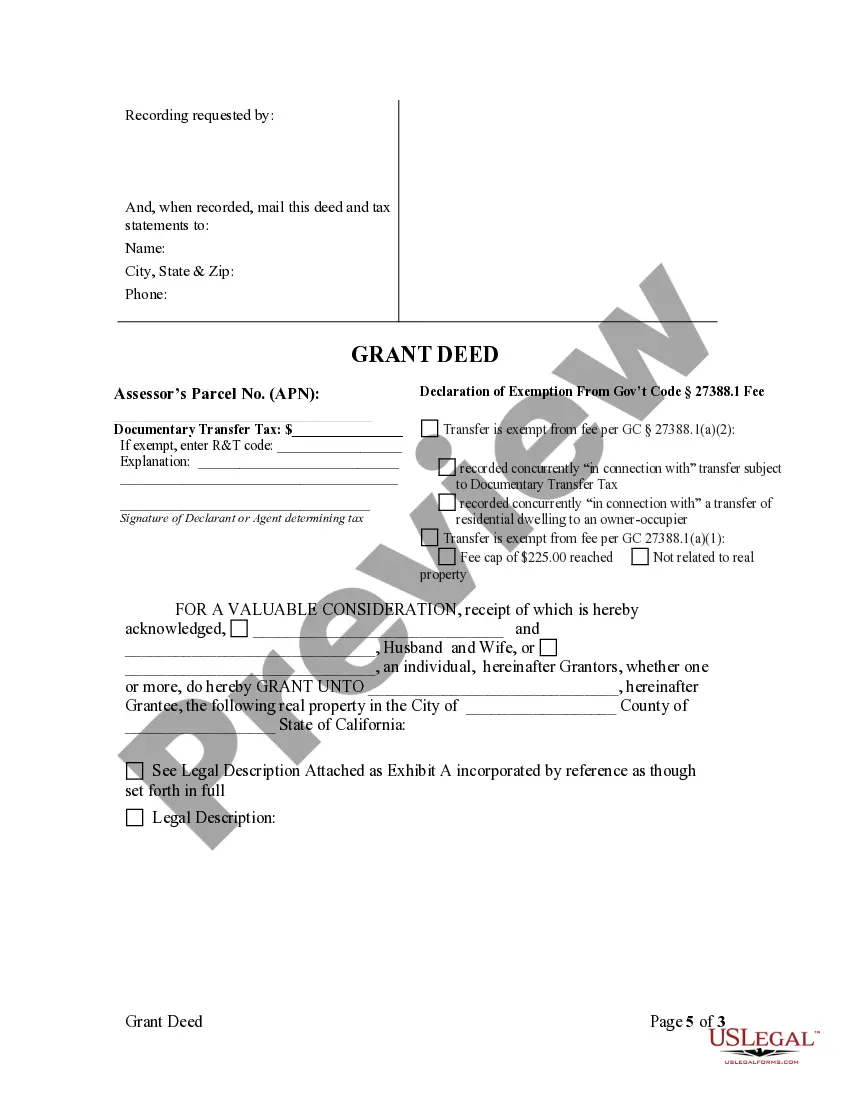
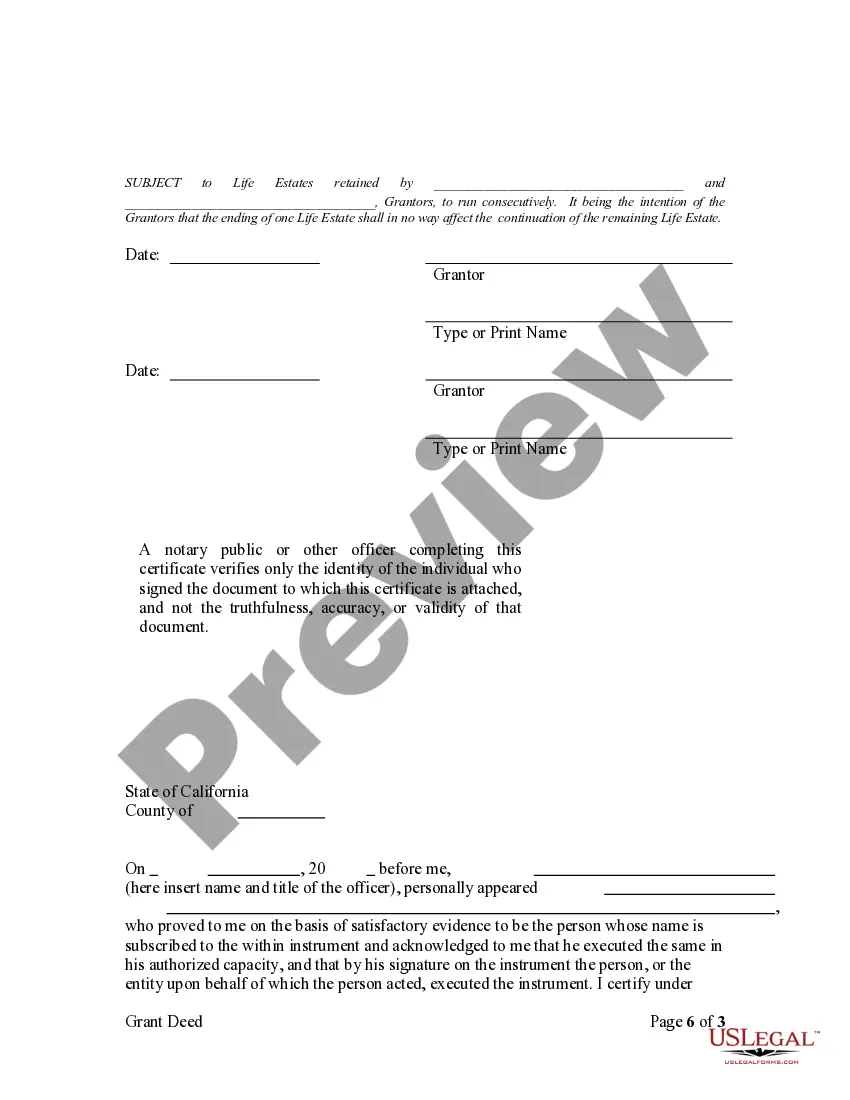
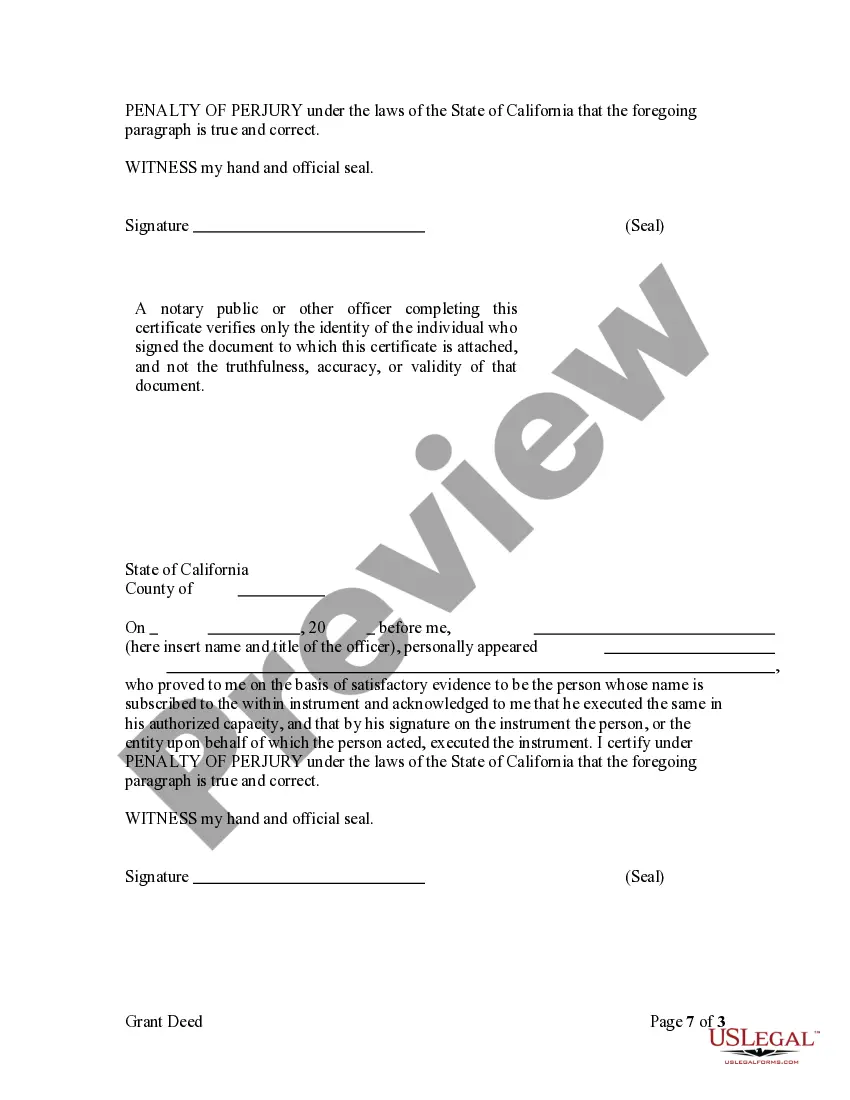
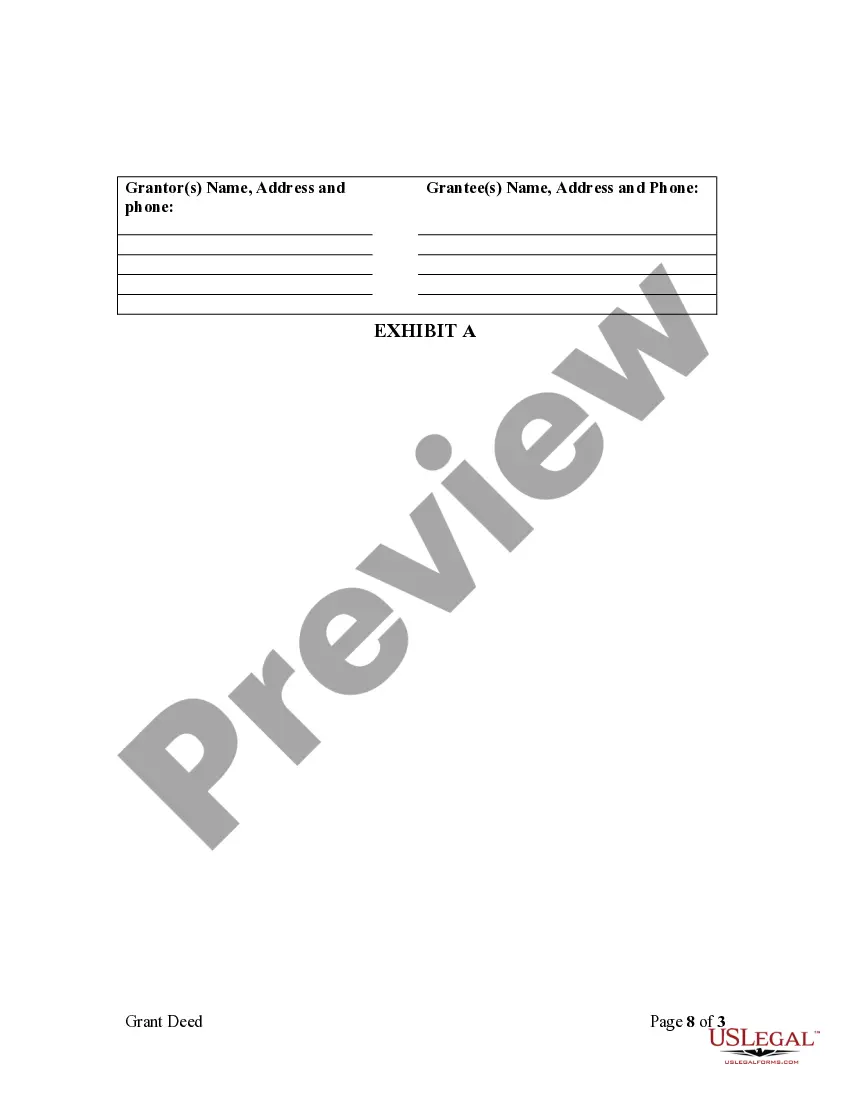
How to fill out California Grant Deed - Parents To Child With Reservation Of Life Estate?
- Log into your US Legal Forms account, ensuring your subscription is active. Click the Download button to retrieve your desired grant deed template.
- Explore the Preview mode and description of the grant deed to confirm it meets California's jurisdiction requirements and suits your needs.
- If the template isn't suitable, conduct a search using the Search tab to find the appropriate form.
- Once you find the correct document, select the Buy Now button and choose your preferred subscription plan. Create an account if you're a new user.
- Complete your purchase by entering your payment information, either via credit card or PayPal.
- Download the grant deed and save it to your device. You can also access it later through the My Forms section of your profile.
US Legal Forms stands out with its extensive library of over 85,000 legal templates, making it easier for users to find the exact forms they need. Coupled with access to premium experts, you can receive guidance for completing your documents correctly.
Streamline your legal document process today by leveraging US Legal Forms. Start your journey towards accurate and efficient legal solutions now!
Form popularity
FAQ
To amend a grant deed in California, you typically need to file an entirely new grant deed that reflects the changes you wish to make. This new deed must be properly signed, notarized, and recorded at your local county recorder's office. It is wise to keep all parties notified of these changes. For additional assistance, uSlegalforms provides a variety of templates and resources that can guide you through amending your grant deed.
Adding a name to a grant deed in California involves creating a new grant deed that includes both the original and new owners. You should ensure that all necessary information is included and that the document is properly signed and notarized. Once this is complete, file the new deed with the county recorder's office. You can easily access relevant templates through uSlegalforms to streamline this process.
To add a name to a deed without refinancing, you can file a grant deed or quitclaim deed to transfer ownership. This method allows you to change ownership without altering your mortgage terms. Remember to have the document notarized and filed with your county recorder’s office. Making this process smoother is possible with the help of uSlegalforms.
You do not necessarily need a lawyer to add someone to a deed in California. However, consulting with a lawyer can provide clarity on legal implications and ensure you follow the correct process. If you prefer a DIY approach, using uSlegalforms can help you navigate the steps with ease. Ultimately, weigh your options based on your comfort level and the complexity of your situation.
In California, the grantor, who is the current property owner, must sign the grant deed. If there are multiple owners, all grantors must provide their signatures. The grantee, the person receiving the property, does not need to sign the deed but should be clearly identified. For assistance with the signing process, consider using uSlegalforms to stay organized.
A grant deed is considered valid in California when it meets specific requirements. First, it must be in writing, signed by the grantor, and contain a clear description of the property. Additionally, the grantor must have the legal authority to transfer the property. When you follow these guidelines, you can confidently use your grant deed California with us.
To record a grant deed in California, you must first complete the deed with detailed information about the property and the parties involved. Afterward, you must sign the deed in front of a notary public. Finally, file the completed document with the county recorder's office. You can make this process easier by utilizing uSlegalforms for templates and instructions.
When you add someone to a deed in California, it can trigger a reassessment of property taxes. This change may lead to a higher tax bill based on the new ownership structure. Therefore, it is crucial to understand the potential tax implications before proceeding. Consider discussing this with a tax professional or using uSlegalforms for guidance on your specific situation.
While it is not legally required to record a grant deed in California, doing so is highly advisable. Recording provides legal protection and establishes public notice of the property transfer. For a seamless experience, you can rely on US Legal Forms to assist you in generating and recording your grant deed California with us accurately.
The correct statement about recording a grant deed is that it needs to be submitted to the county recorder's office where the property is located. Recording the deed provides public notice of the ownership and protects the grantee's rights. Trust US Legal Forms to help you navigate this process efficiently, ensuring your grant deed California with us is properly recorded.