California Corporation Forms With Child
Description
Get your form ready online
Our built-in tools help you complete, sign, share, and store your documents in one place.
Make edits, fill in missing information, and update formatting in US Legal Forms—just like you would in MS Word.
Download a copy, print it, send it by email, or mail it via USPS—whatever works best for your next step.
Sign and collect signatures with our SignNow integration. Send to multiple recipients, set reminders, and more. Go Premium to unlock E-Sign.
If this form requires notarization, complete it online through a secure video call—no need to meet a notary in person or wait for an appointment.
We protect your documents and personal data by following strict security and privacy standards.

Make edits, fill in missing information, and update formatting in US Legal Forms—just like you would in MS Word.

Download a copy, print it, send it by email, or mail it via USPS—whatever works best for your next step.

Sign and collect signatures with our SignNow integration. Send to multiple recipients, set reminders, and more. Go Premium to unlock E-Sign.

If this form requires notarization, complete it online through a secure video call—no need to meet a notary in person or wait for an appointment.

We protect your documents and personal data by following strict security and privacy standards.
Looking for another form?








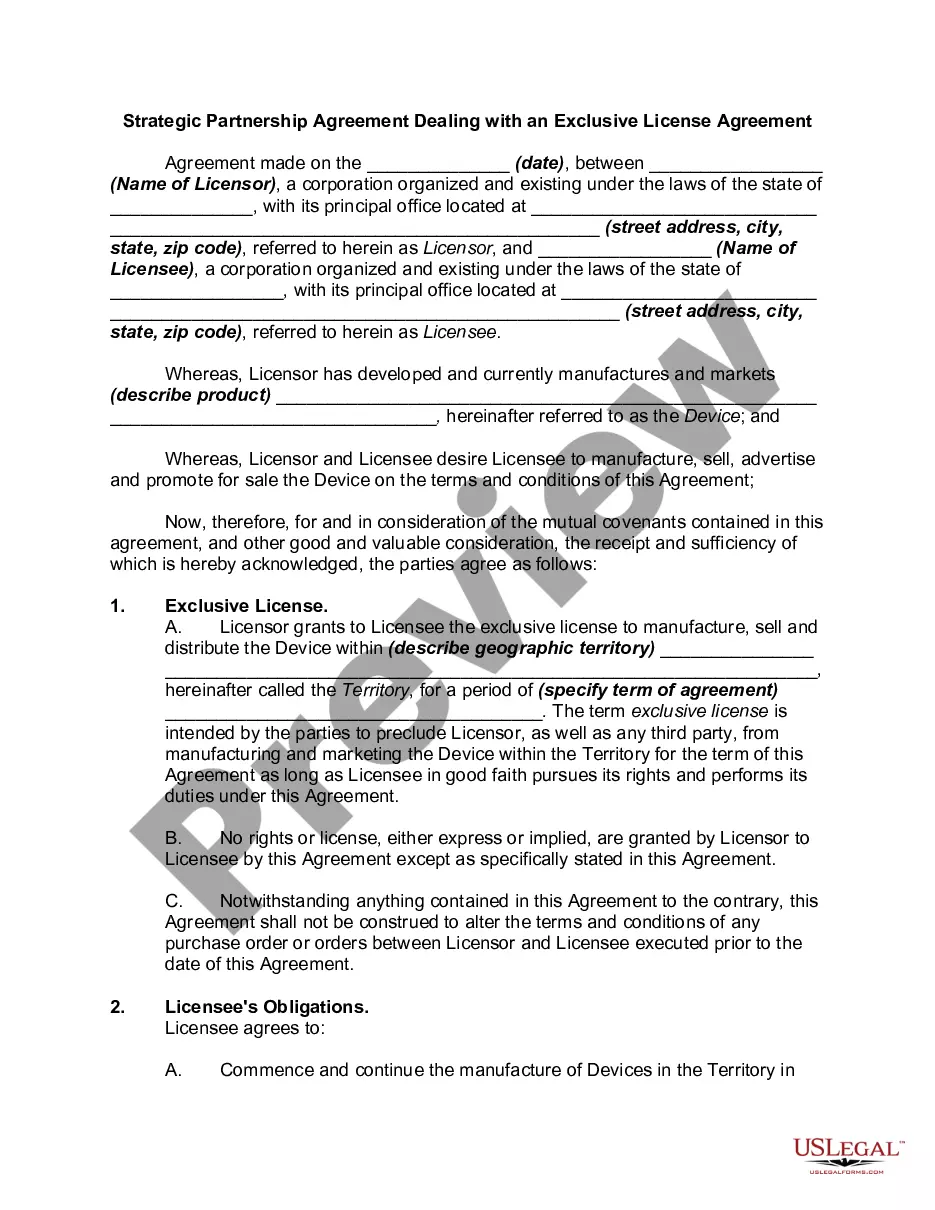
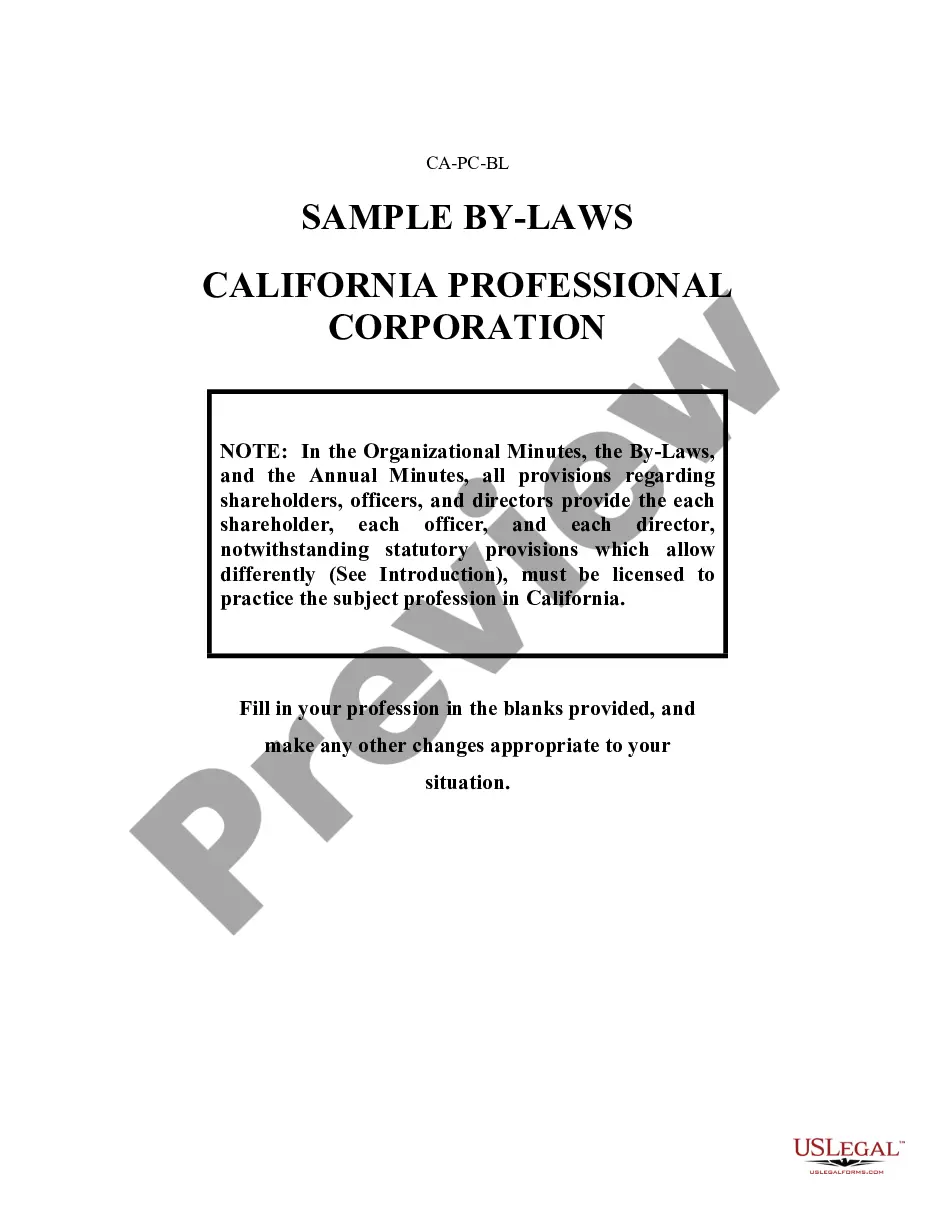
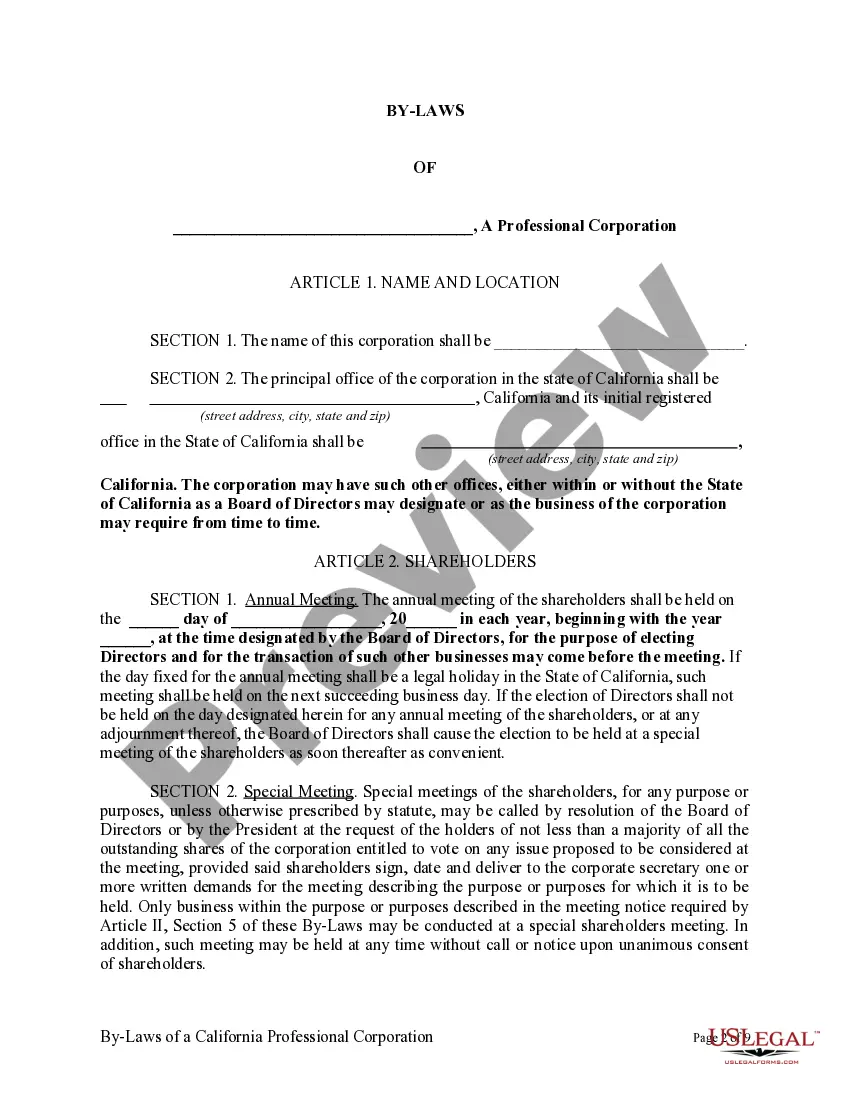
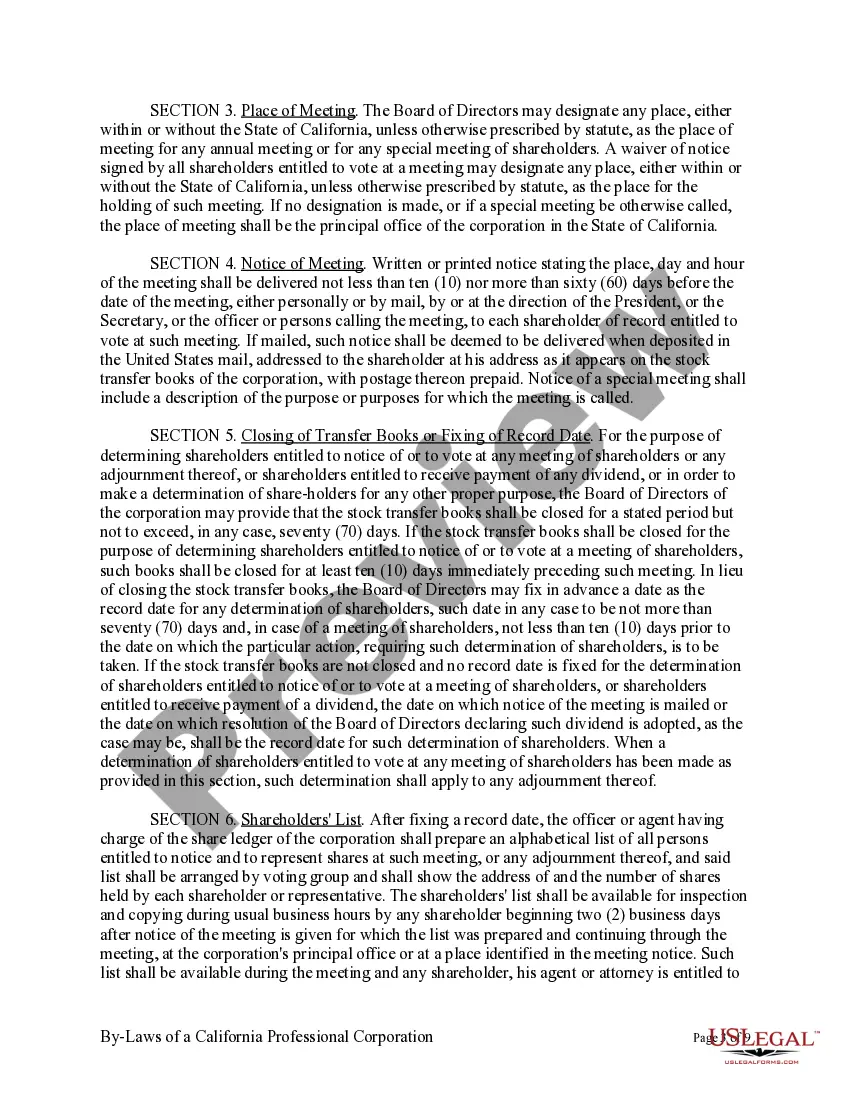
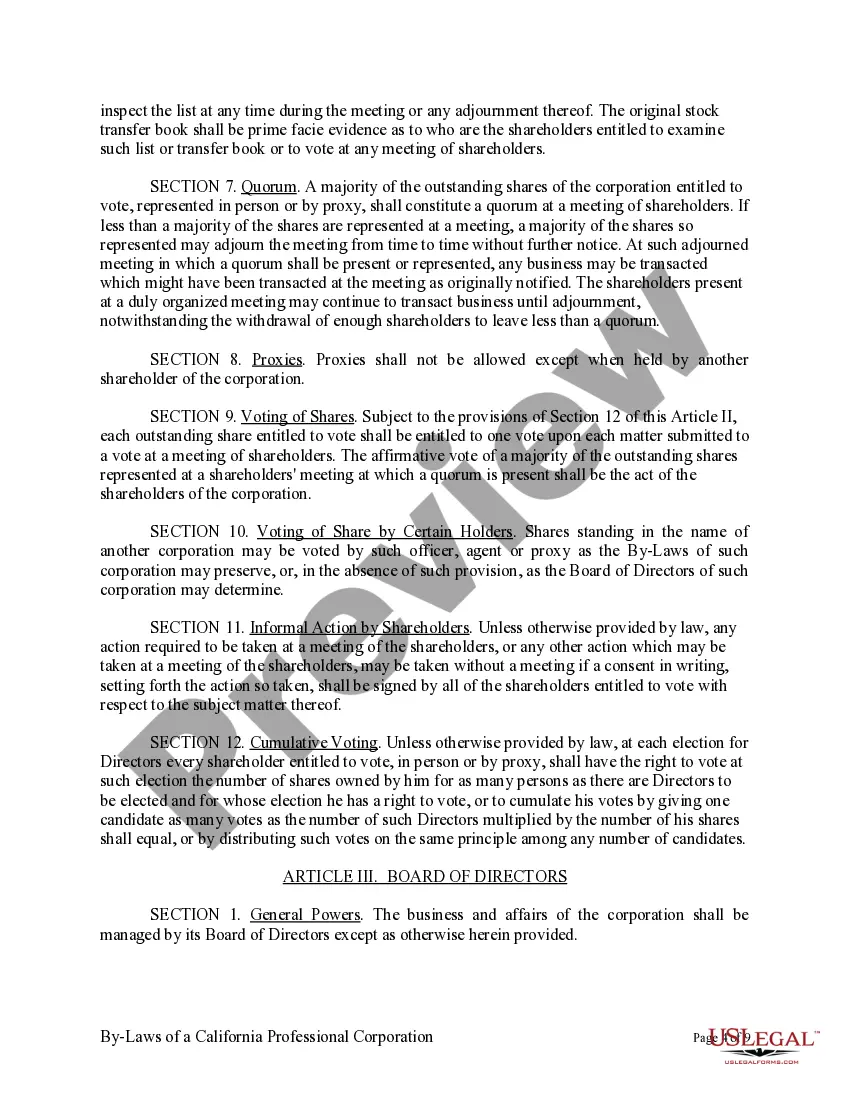
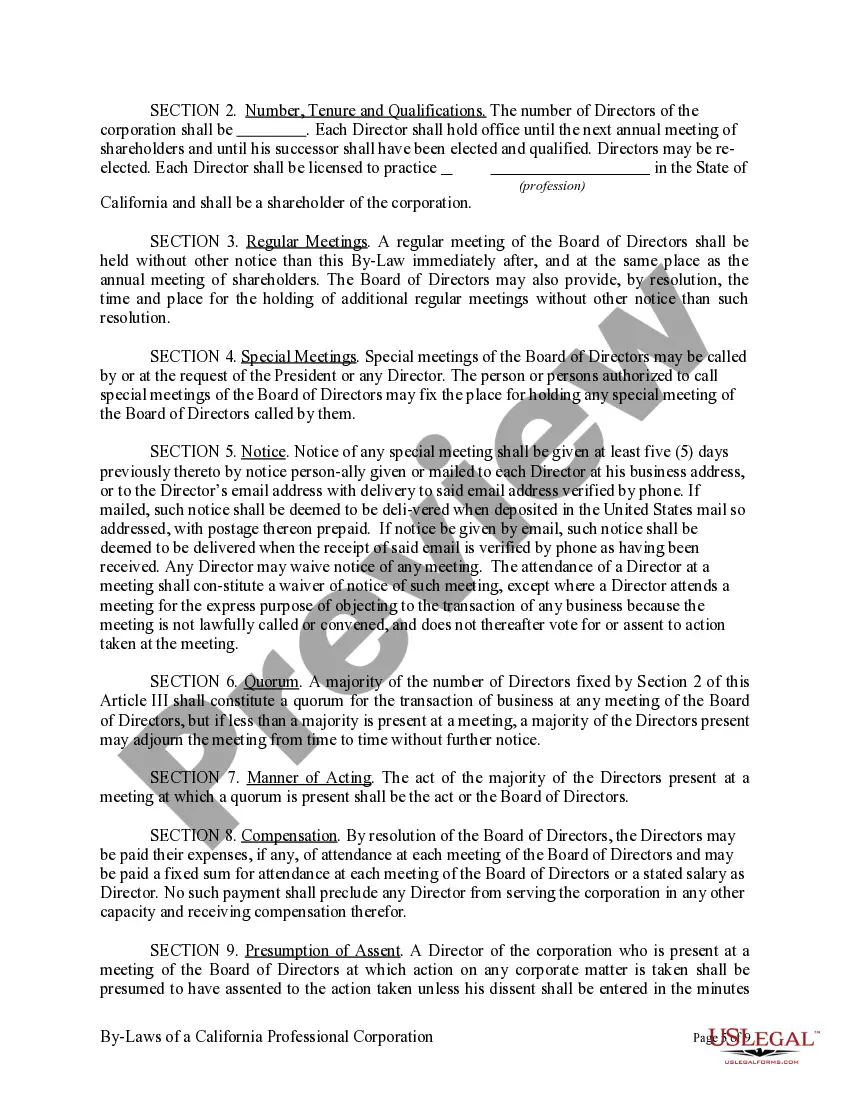
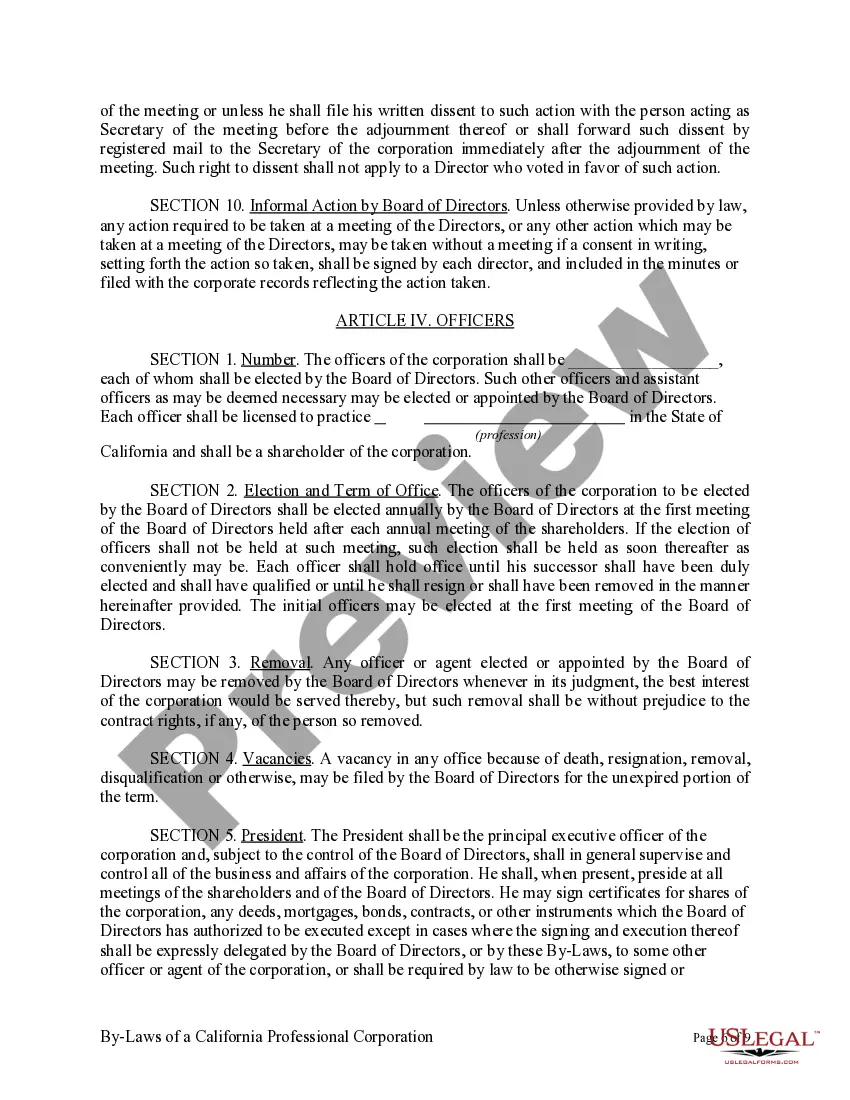
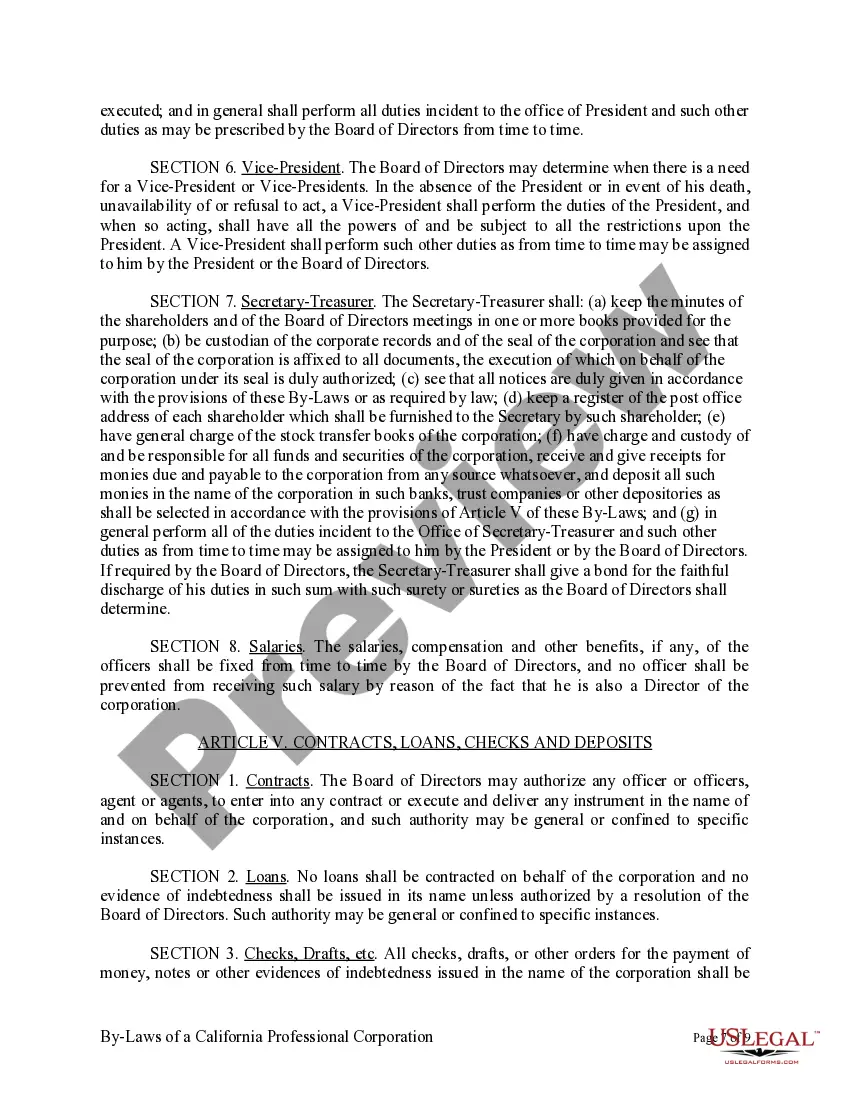
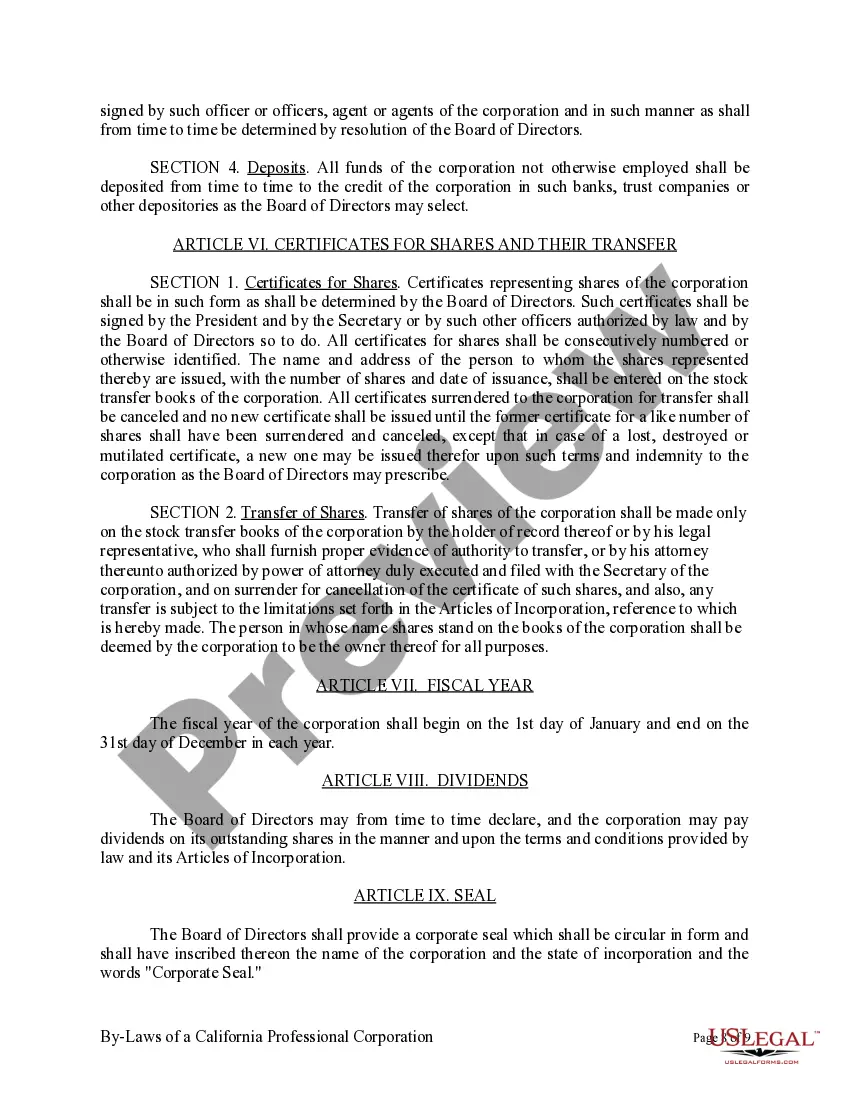
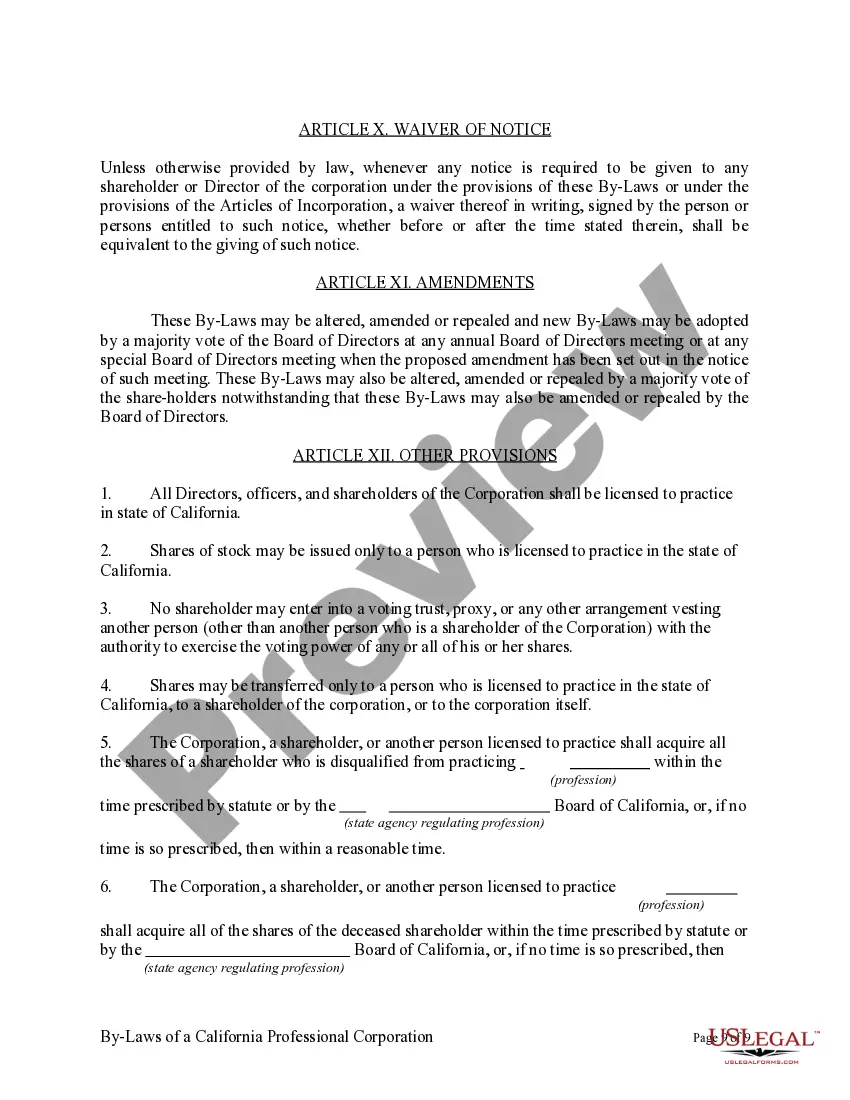
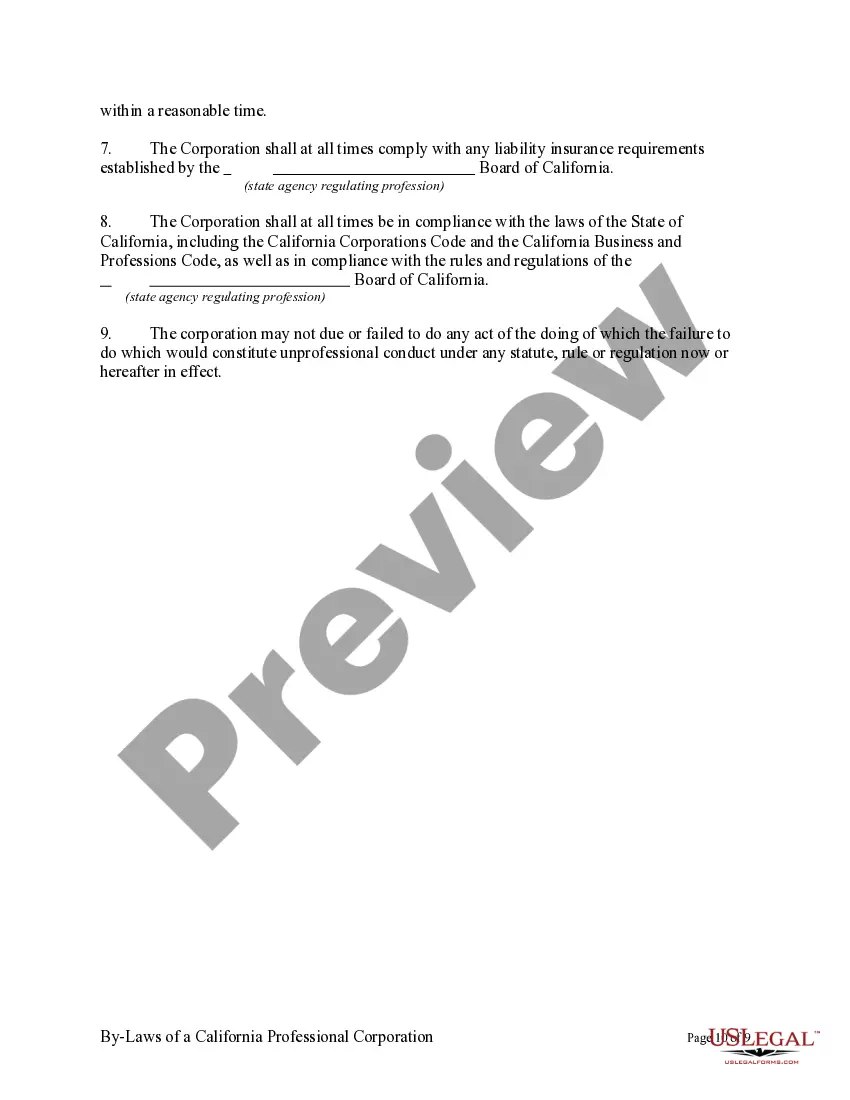
How to fill out Sample Bylaws For A California Professional Corporation?
It’s clear that you cannot transform into a legal expert instantly, nor can you swiftly learn how to prepare California Corporation Forms With Child without having a specialized background.
Drafting legal documents is a lengthy process that necessitates specific education and expertise. So why not entrust the development of the California Corporation Forms With Child to the professionals.
With US Legal Forms, one of the most extensive legal template collections, you can discover everything from court documents to templates for internal communication.
You can regain access to your forms from the My documents section at any time. If you are an existing customer, you can simply Log In, and find and download the template from the same section.
No matter the intention of your documentation—whether financial, legal, or personal—our website has you covered. Give US Legal Forms a try today!
- Locate the form you require using the search bar at the top of the page.
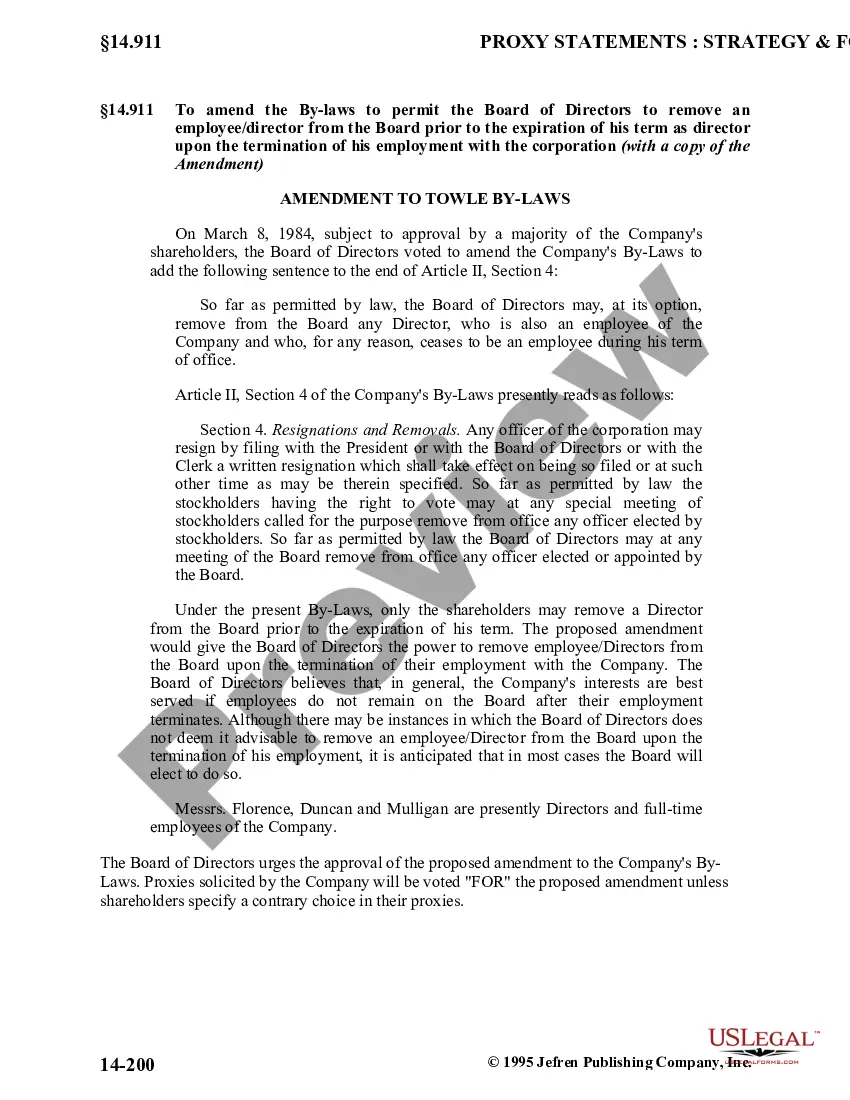
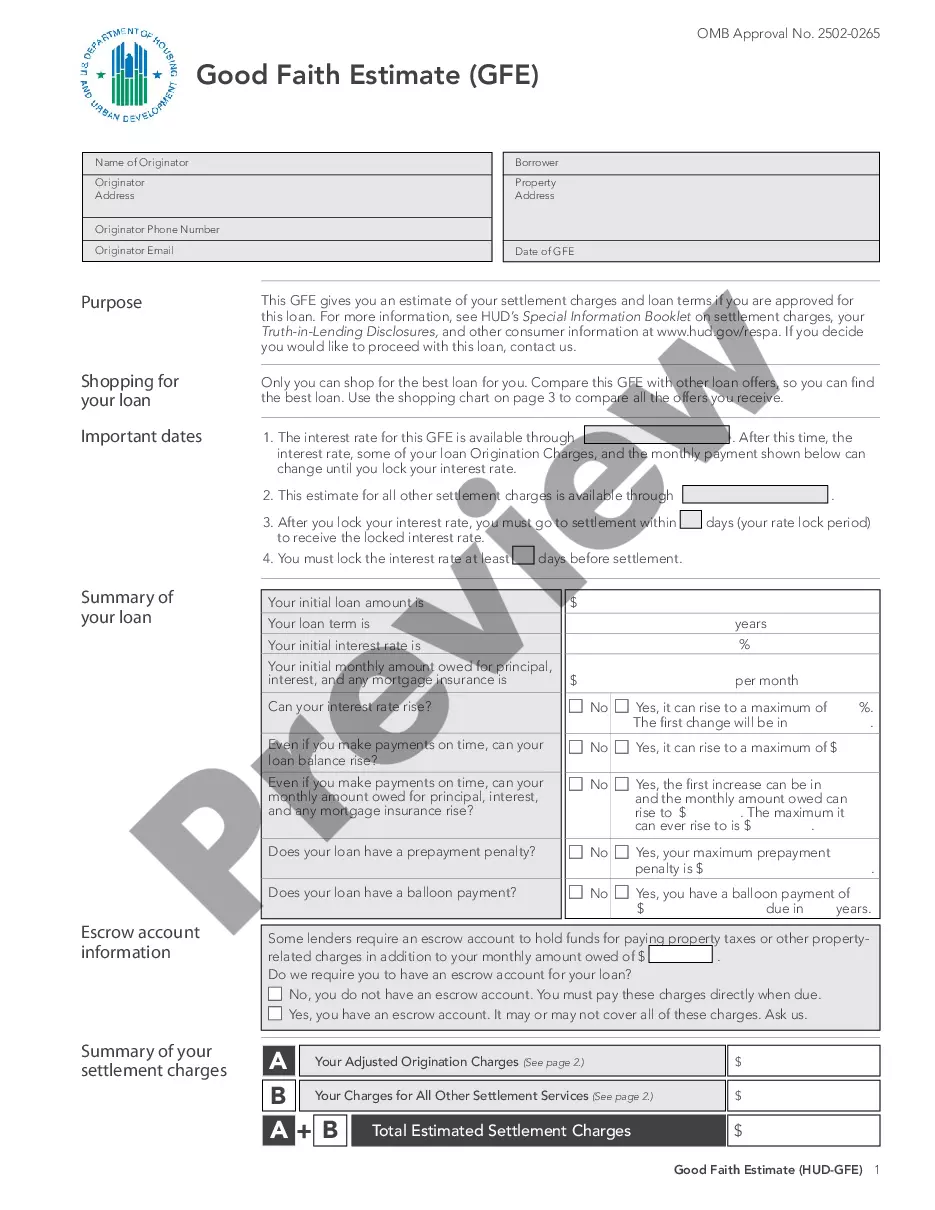
- View it (if this option is available) and read the accompanying description to ascertain if California Corporation Forms With Child is what you are looking for.
- Begin your search anew if you seek another template.
- Create a free account and choose a subscription plan to acquire the template.
- Select Buy now. Once the payment is finalized, you can obtain the California Corporation Forms With Child, complete it, print it, and deliver it by post to the specified individuals or entities.
Form popularity
FAQ
The Advantages of S Corps The major difference that exists between a California S Corp and an LLC is the 1.5% S Corp tax and LLC fee. The 1.5% S Corp tax is based on the California net-taxable income, while the LLC fee is based on the California annual gross receipts.
You are single and your total income is less than or equal to $17,252. You are married/RDP filing jointly or a qualifying surviving spouse/RDP and your total income is less than or equal to $34,554. You are head of household and your total income is less than or equal to $24,454.
Form 540 is used by California residents to file their state income tax every April. This form should be completed after filing your federal taxes, such as Form 1040, Form 1040A, or Form 1040EZ, because information from your federal taxes will be used to help fill out Form 540.
If there will be multiple people involved in running the company, an S-Corp would be better than an LLC since there would be oversight via the board of directors. Also, members can be employees, and an S-Corp allows the members to receive cash dividends from company profits, which can be a great employee perk.
All corporations subject to the franchise tax, including banks, financial corporations, RICs, REITs, FASITs, corporate general partners of partnerships, and corporate members of LLCs doing business in California, must file Form 100 and pay at least the minimum franchise tax as required by law.