Legal Planning Estate With A Good
Description

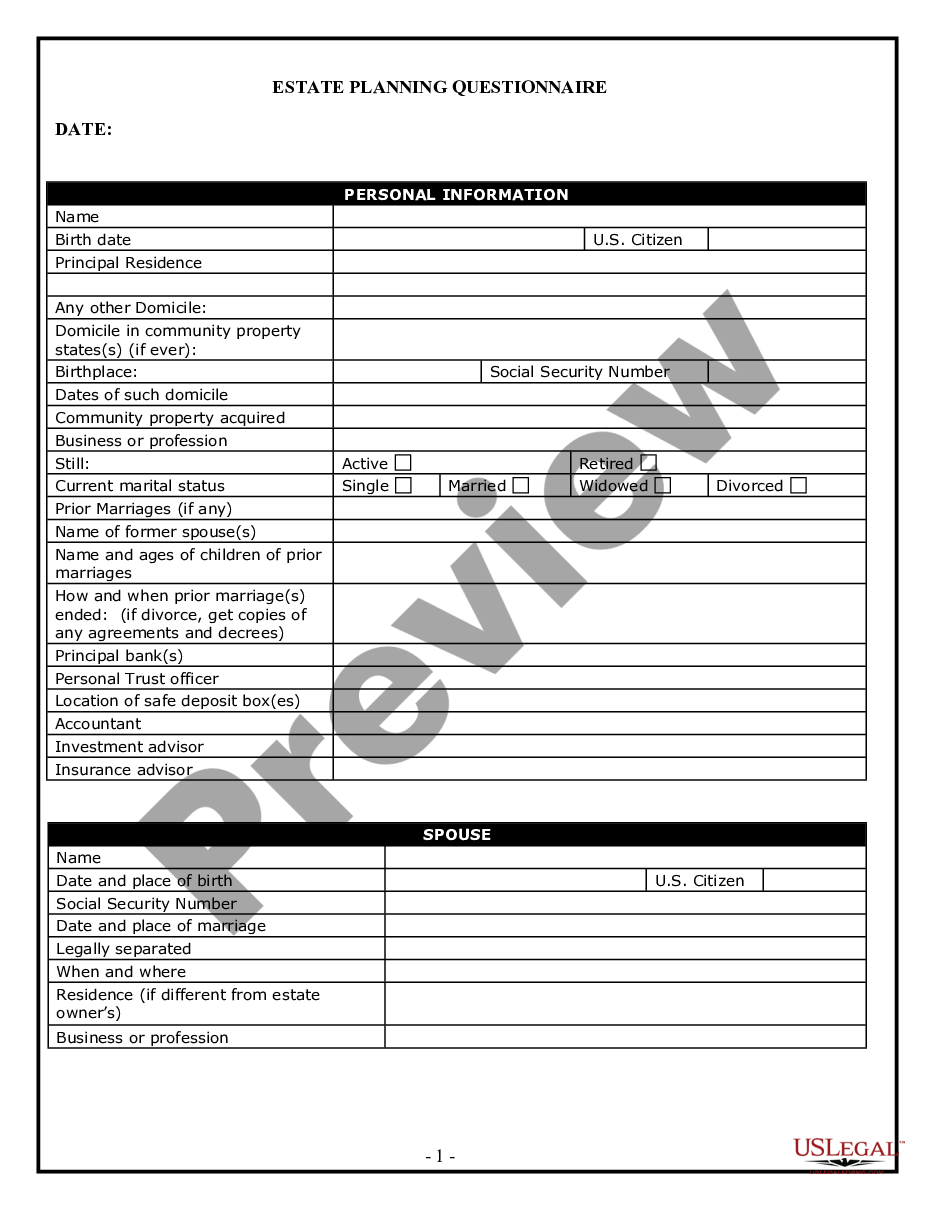
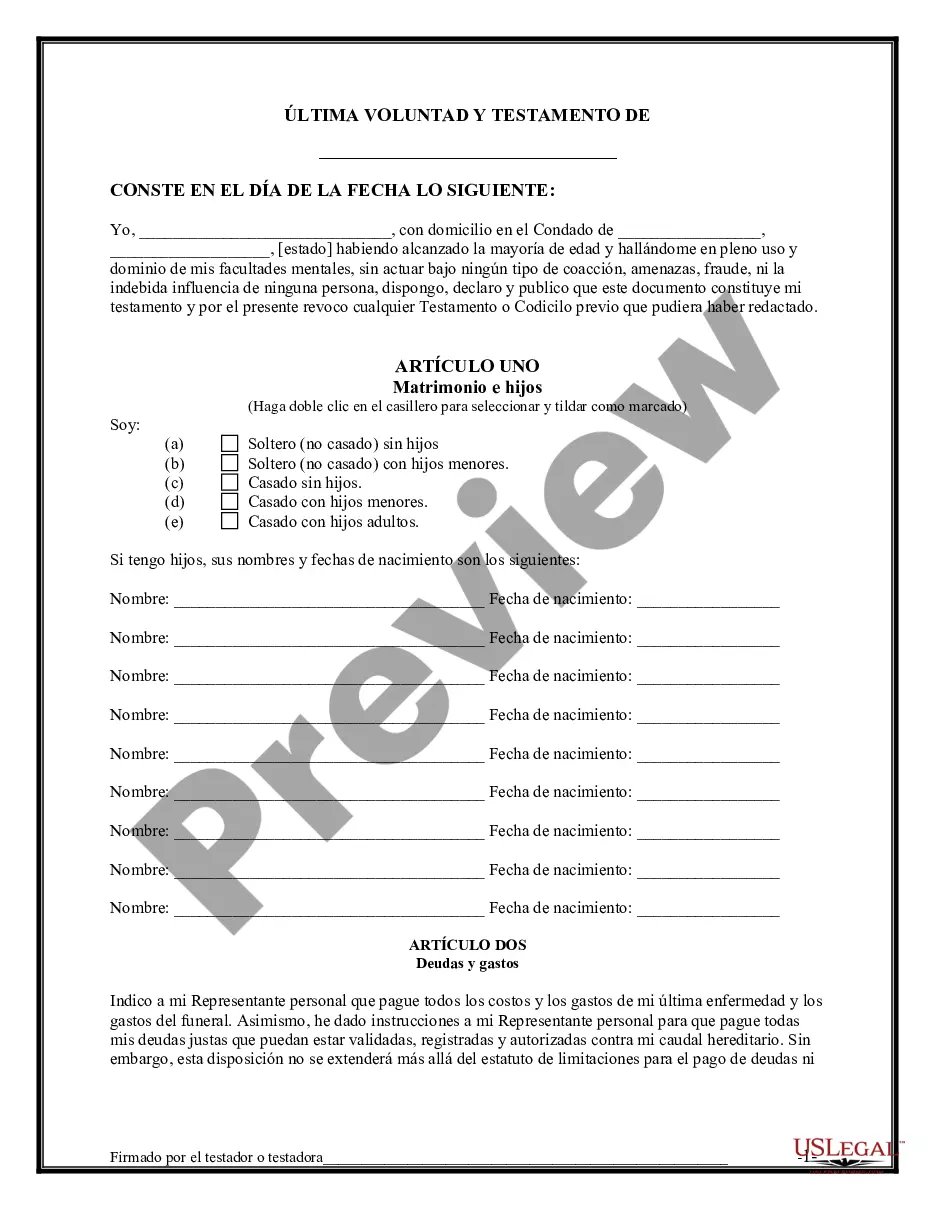
Get your form ready online
Our built-in tools help you complete, sign, share, and store your documents in one place.
Make edits, fill in missing information, and update formatting in US Legal Forms—just like you would in MS Word.
Download a copy, print it, send it by email, or mail it via USPS—whatever works best for your next step.
Sign and collect signatures with our SignNow integration. Send to multiple recipients, set reminders, and more. Go Premium to unlock E-Sign.
If this form requires notarization, complete it online through a secure video call—no need to meet a notary in person or wait for an appointment.
We protect your documents and personal data by following strict security and privacy standards.

Make edits, fill in missing information, and update formatting in US Legal Forms—just like you would in MS Word.

Download a copy, print it, send it by email, or mail it via USPS—whatever works best for your next step.

Sign and collect signatures with our SignNow integration. Send to multiple recipients, set reminders, and more. Go Premium to unlock E-Sign.

If this form requires notarization, complete it online through a secure video call—no need to meet a notary in person or wait for an appointment.

We protect your documents and personal data by following strict security and privacy standards.
Looking for another form?
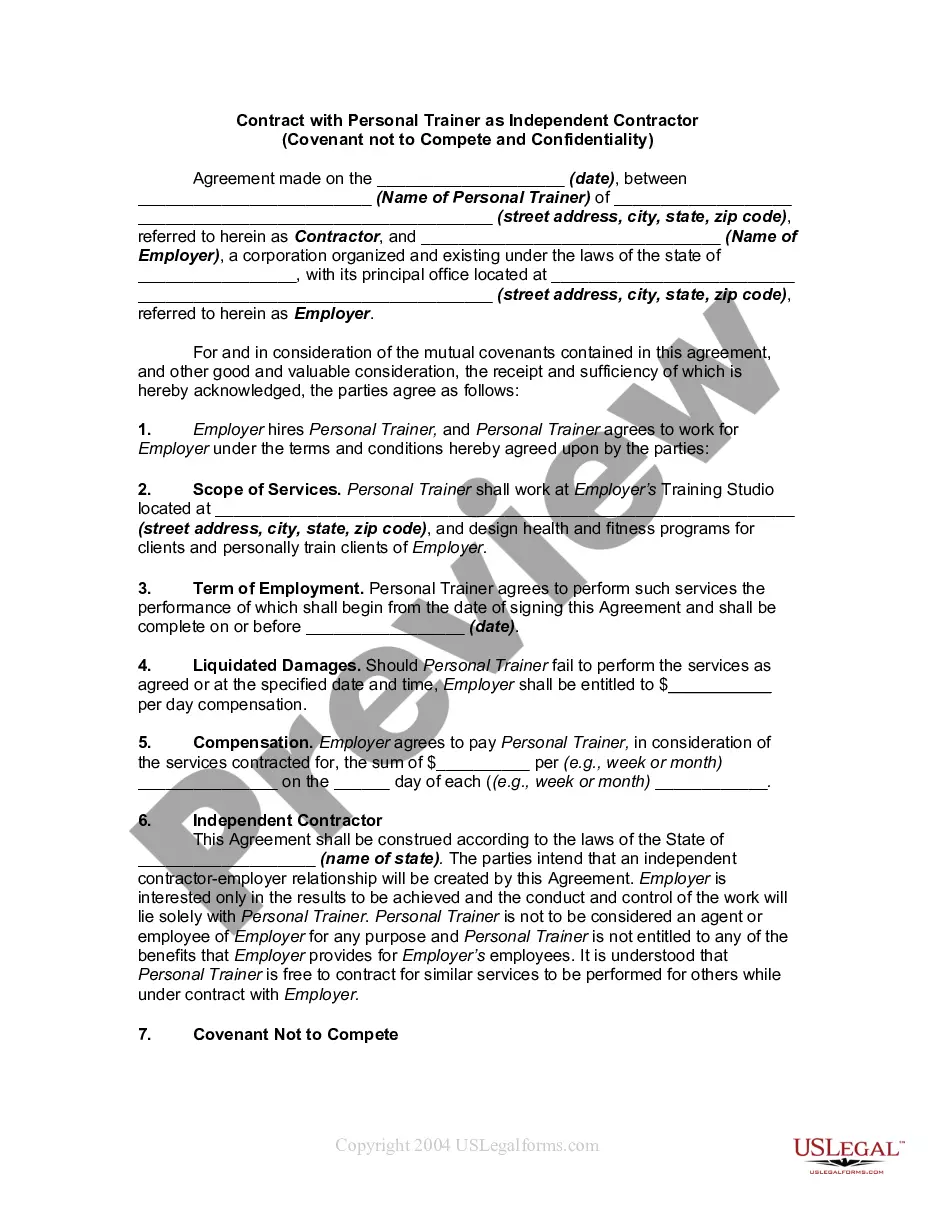








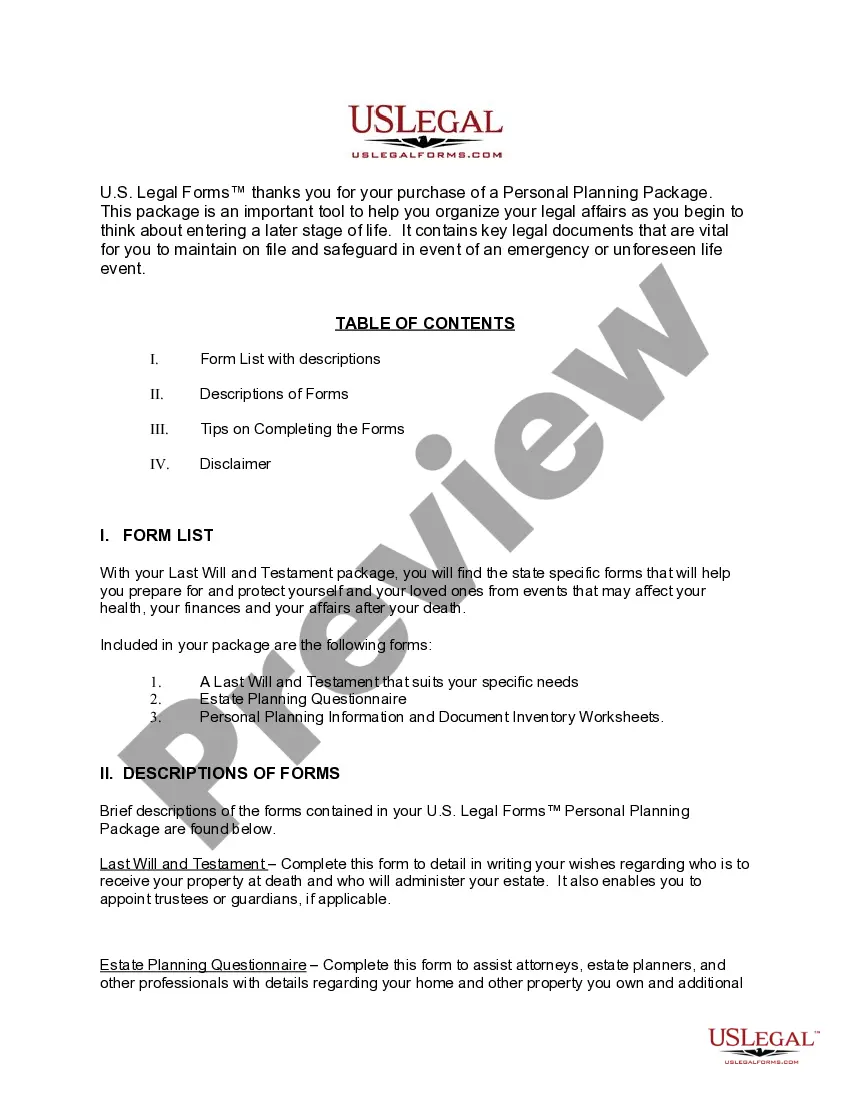
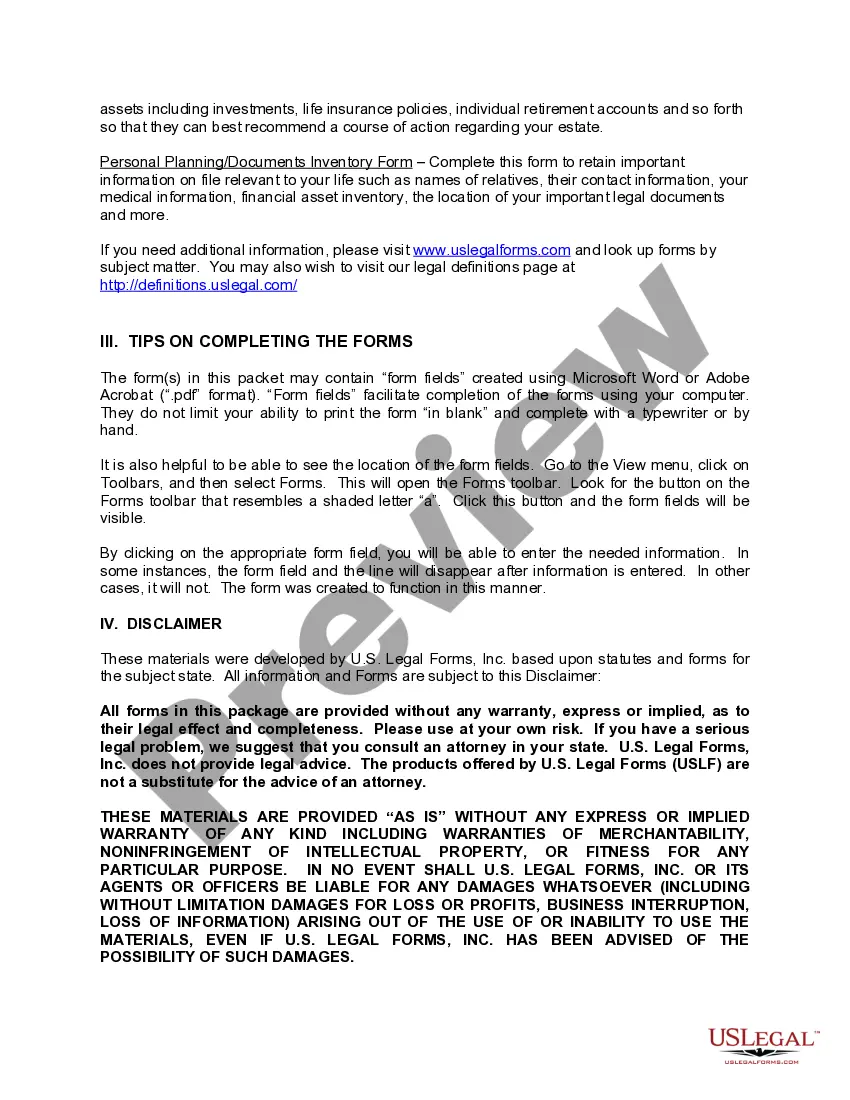
How to fill out California Last Will And Testament Package?
- If you're a returning user, simply log in to your account. Check your subscription status to ensure it’s active; if not, renew it based on your payment plan.
- For first-time users, start by exploring the Preview mode to review the form descriptions. Make sure you've selected the correct form that meets your specific requirements and aligns with your jurisdiction.
- If discrepancies arise, navigate to the Search tab to locate the appropriate template. Once you’ve found the suitable document, proceed to the next step.
- Purchase the desired document by clicking on the Buy Now button, and select the subscription plan that best fits your needs. You'll need to create an account for full access.
- Complete the payment process by entering your credit card information or utilizing your PayPal account.
- Lastly, download the form to your device for completion. You can also find it later in the My Forms section of your profile.
In conclusion, US Legal Forms provides an invaluable resource for those seeking reliable legal documentation. With a robust collection of forms and access to expert assistance, you are well-equipped to ensure your estate planning is effectively managed.
Start organizing your estate today and experience the ease and efficiency that comes with US Legal Forms.
Form popularity
FAQ
Yes, legal planning estate with a good strategy is essential for anyone who wants to secure their assets and ensure their wishes are honored after their passing. By proactively preparing your estate, you can avoid potential disputes among family members and reduce the tax burden on your heirs. Additionally, having a solid estate plan can provide peace of mind knowing that your loved ones will be taken care of. Using platforms like US Legal Forms can simplify this process, providing you with the necessary tools to create an effective estate plan tailored to your needs.
The 3 year rule operates by assessing gifts made by an individual within three years of their death. If you give away assets during that timeframe, their value may be included in your overall estate valuation, potentially increasing estate taxes. This rule encourages careful legal planning estate with a good focus to ensure that your wealth is preserved while still allowing generosity. Consulting resources like uslegalforms can guide you through this complex terrain, helping you navigate your estate planning effectively.
The 3 year rule in estate planning pertains to gifts made shortly before death that may be subject to estate taxes. If you make a gift and pass away within three years of that gift, its value could be included in your estate for tax purposes. This highlights the importance of timing when making significant gifts. Employing effective legal planning estate with a good approach can help you minimize potential tax liability related to this rule.
The 5 and 5 rule refers to a gift tax provision that allows individuals to give gifts to beneficiaries without incurring federal gift taxes. Under this rule, you can give up to $15,000 annually to different individuals without any tax complications. Additionally, if you can gift a total of $5,000 from trust assets each year, tax implications become more manageable. Utilizing this knowledge can be quite beneficial for effective legal planning estate with a good strategy, helping you preserve your wealth.
The estate planning process consists of seven essential steps. First, you should determine your goals for your estate. Next, gather all necessary documents, such as wills, trusts, and titles. Afterward, consider the tax implications of your plans and decide on your beneficiaries. Following that, choose an executor to manage your estate. Then, review your plan regularly to make adjustments as needed. Lastly, communicate your estate plan with your family to ensure everyone understands your wishes. Remember, effective legal planning estate with a good strategy can simplify this entire process.
In the context of legal planning estate with a good, the planning process starts with establishing your objectives. Follow that by gathering all relevant information about your assets and family situation. Next, evaluate your options for legal documents and strategies. Choose skilled professionals to help you implement your plan. Regularly review your plan to adapt to any changes in your life or laws. Communication with beneficiaries is essential throughout the process. Lastly, ensure everything is documented and easily accessible to your family.
The seven steps in the legal planning estate with a good process begin with setting clear goals. Next, assess your current assets to understand what you have. Then, choose the right estate planning tools like wills or trusts. After that, select a trusted person to carry out your wishes. It's also crucial to review and update your plan regularly. Additionally, you should seek professional advice to make informed decisions. Finally, communicate your plans with your loved ones to ensure everyone understands your intentions.
The 5 or 5 rule functions similarly to the 5 by 5 rule, allowing trust beneficiaries certain withdrawals from the trust each year. Beneficiaries can take out either $5,000 or 5% of the trust's value annually, which can ease financial strain while maintaining tax efficiency. Incorporating the 5 or 5 rule into your estate plan is a strategic move for effective legal planning estate with a good. It’s beneficial to seek legal advice to ensure your estate planning documents align with your financial goals.
The 5 by 5 rule is a provision in estate planning that gives beneficiaries specified access to trust assets without incurring unexpected taxes. Essentially, it allows beneficiaries to withdraw a portion of the trust each year, easing financial burdens while preserving the integrity of the trust. By implementing this rule, you bolster your strategy for legal planning estate with a good, fostering peace of mind for both you and your heirs. Engaging professionals can enhance your understanding and application of this rule.
The 5 by 5 rule allows beneficiaries of a trust to withdraw up to $5,000 each year or 5% of the trust’s value, whichever is greater, without triggering tax implications. This rule encourages flexibility within estate plans, enabling beneficiaries to access funds as needed while maintaining the tax benefits afforded by trusts. It’s essential to include this provision for effective legal planning estate with a good, ensuring that the heirs have the resources they need. Consulting with experts can help you tailor these rules to your specific circumstances.