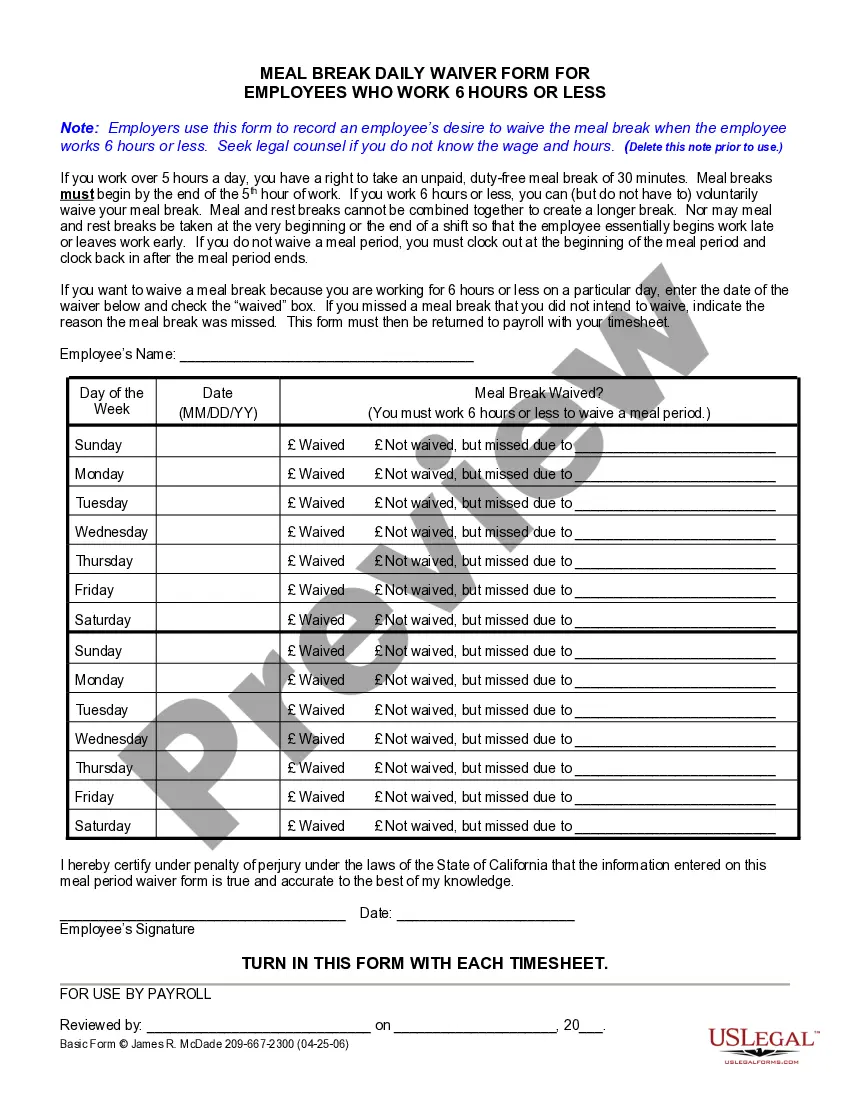
Lunch Break For Employees
Description
Get your form ready online
Our built-in tools help you complete, sign, share, and store your documents in one place.
Make edits, fill in missing information, and update formatting in US Legal Forms—just like you would in MS Word.
Download a copy, print it, send it by email, or mail it via USPS—whatever works best for your next step.
Sign and collect signatures with our SignNow integration. Send to multiple recipients, set reminders, and more. Go Premium to unlock E-Sign.
If this form requires notarization, complete it online through a secure video call—no need to meet a notary in person or wait for an appointment.
We protect your documents and personal data by following strict security and privacy standards.

Make edits, fill in missing information, and update formatting in US Legal Forms—just like you would in MS Word.

Download a copy, print it, send it by email, or mail it via USPS—whatever works best for your next step.

Sign and collect signatures with our SignNow integration. Send to multiple recipients, set reminders, and more. Go Premium to unlock E-Sign.

If this form requires notarization, complete it online through a secure video call—no need to meet a notary in person or wait for an appointment.

We protect your documents and personal data by following strict security and privacy standards.
Looking for another form?






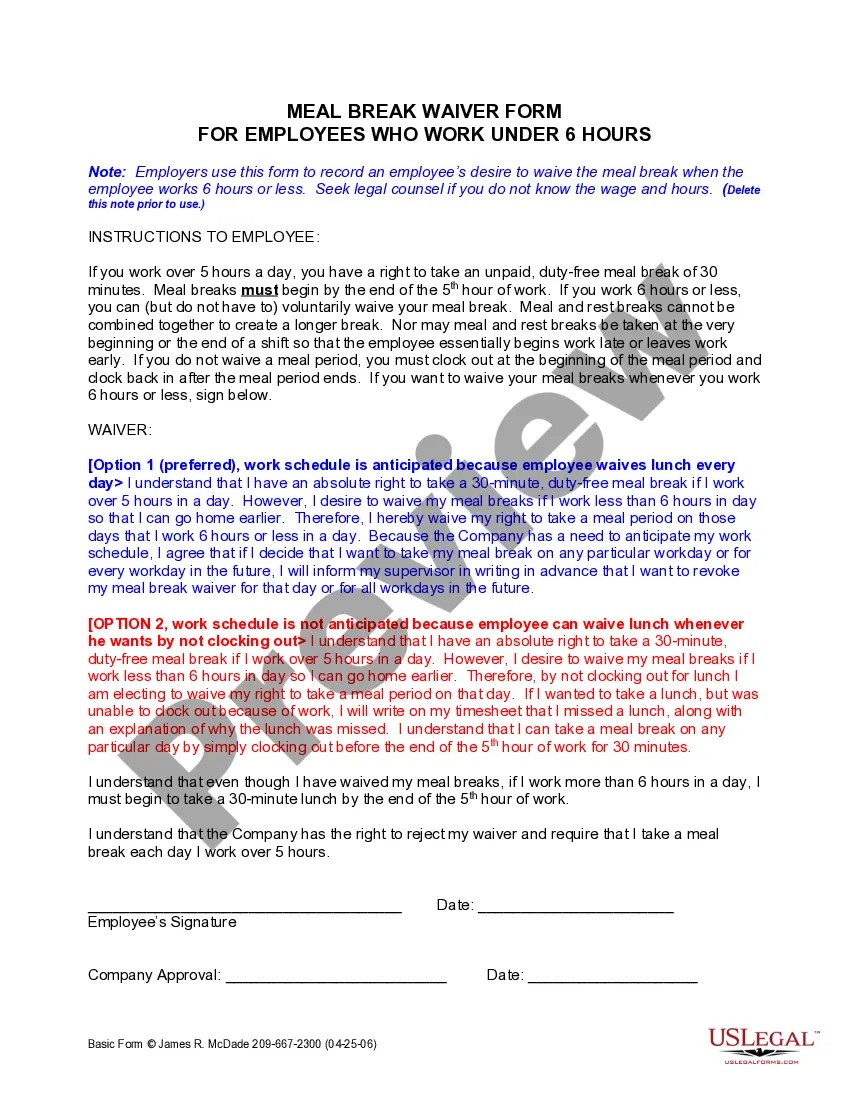
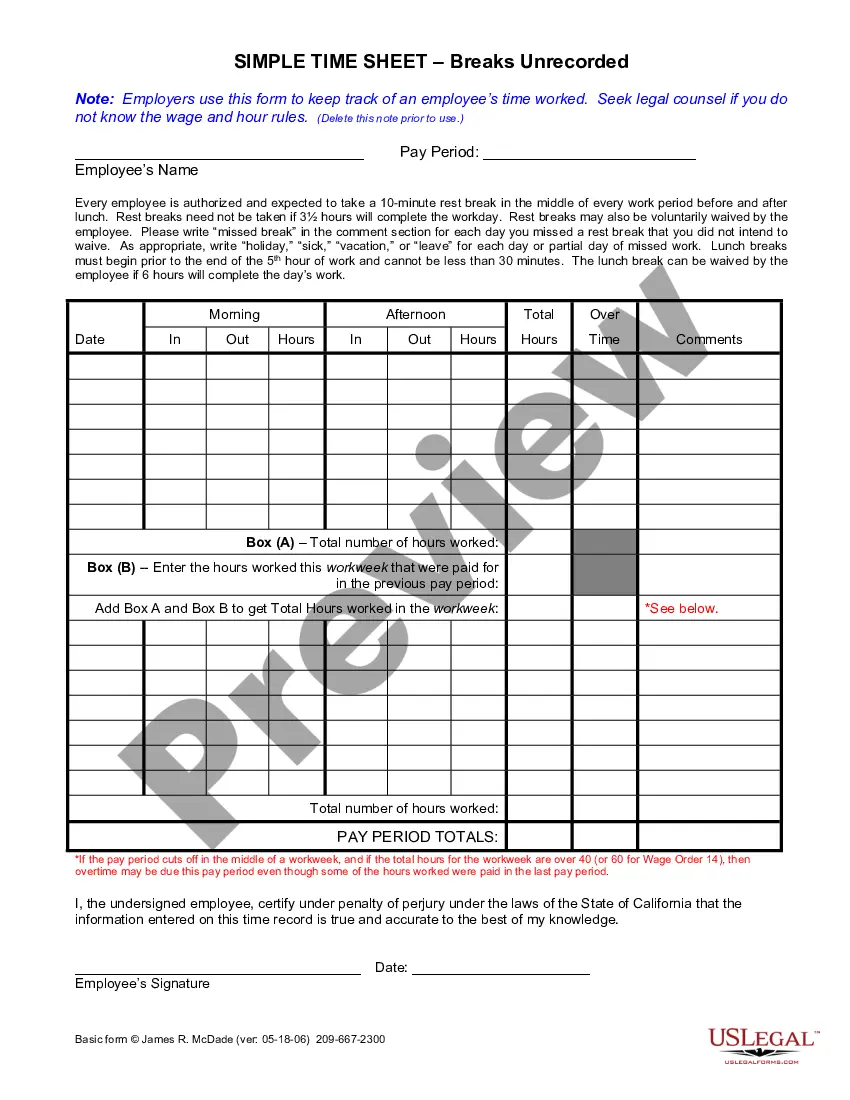
How to fill out California Meal Break Daily Waiver For 6 Hour Employees?
- Visit the US Legal Forms website and log in to your existing account. Ensure your subscription is active; if not, renew it immediately.
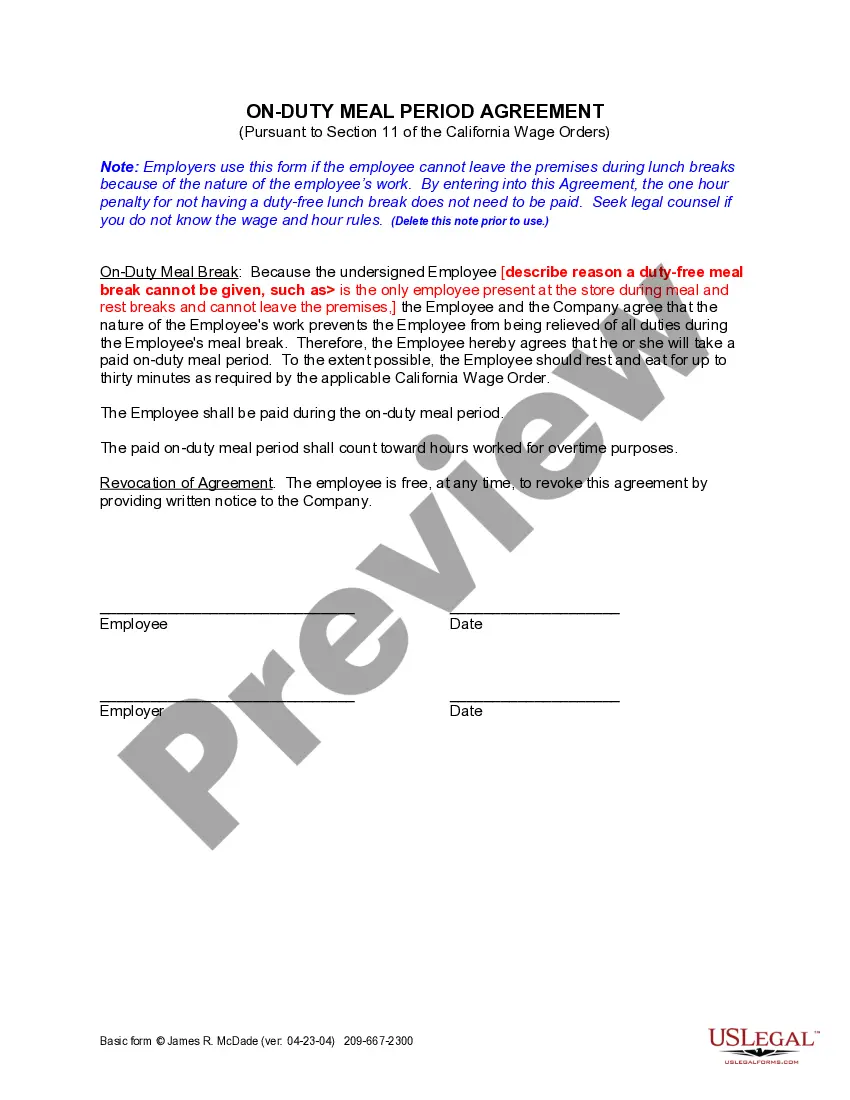
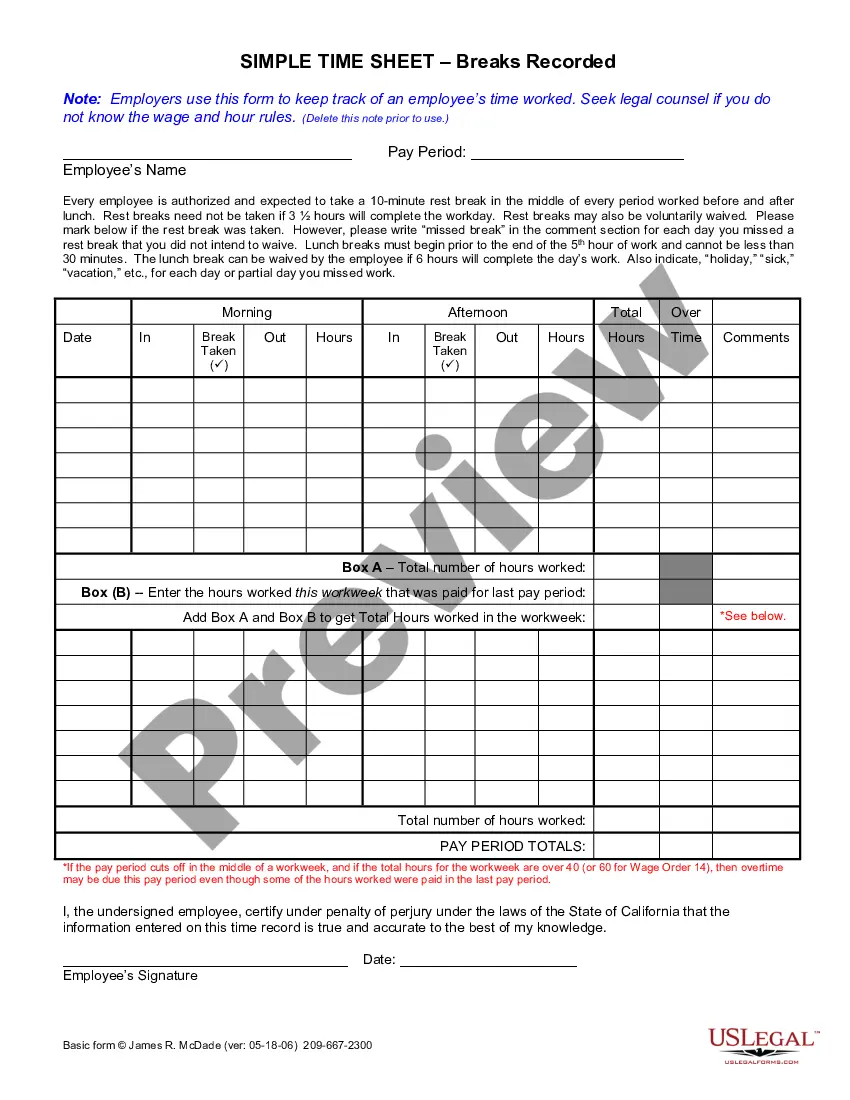
- If you're a first-time user, explore the extensive library of over 85,000 legal forms available. Preview the lunch break policies to find the one that fits your organization's needs.
- If necessary, use the search function to locate specific templates. Review their descriptions to guarantee they meet your jurisdictional requirements.
- Once you've selected the appropriate form, click on 'Buy Now' and choose a subscription plan that works for you. You’ll need to create an account if you’re new.
- Complete your purchase by entering your payment information or using PayPal. This step grants you full access to download the form.
- Save the template to your device. You can always revisit it through the 'My Forms' section in your account for future use.
In summary, US Legal Forms streamlines the process of developing authoritative policies for lunch breaks, empowering both employers and employees. With a vast selection of templates and expert assistance available, you'll ensure compliance and clarity.
Start your journey towards efficient policies today by exploring US Legal Forms!
Form popularity
FAQ
Tennessee does not have a state law requiring specific break or meal periods for employees. However, many employers voluntarily provide lunch breaks as a best practice. A lunch break for employees can play a crucial role in maintaining a healthy work-life balance. For accurate information about your rights and responsibilities in Tennessee, uslegalforms can be a valuable resource.
Generally, in most workplaces, an 8-hour workday excludes the lunch break. Employees usually receive a designated amount of time for lunch, which is considered off the clock. This structure can vary by employer, so confirming specific lunch break policies is always a good idea. If you're uncertain about your rights regarding lunch breaks for employees, consider checking with uslegalforms for comprehensive employee resources.
Typically, an 8-hour workday does not include a lunch break. Employers often schedule a lunch break for employees, usually lasting about 30 minutes to an hour. This means employees remain on the clock for their work hours and take unpaid time to eat and recharge. It's vital to clarify this policy with your employer to understand how your work time is structured.
In Iowa, there is no state law mandating a lunch break for employees. However, employers are encouraged to provide reasonable breaks, especially during long shifts. A lunch break for employees can enhance productivity and workplace morale. If you need guidance on this matter, uslegalforms offers resources to clarify employee rights and employer responsibilities.
An 8-hour workday usually does not include the lunch break for employees. When lunch is treated as a separate break, the total hours worked can extend beyond 8 hours. Each company can have its own approach, so it's essential to familiarize yourself with your employer's specific policies. Understanding this distinction can help you plan breaks effectively throughout your workday.
In most cases, an 8-hour workday does not include time taken for lunch breaks for employees. Many employers designate lunch as a separate period, thus requiring employees to work longer if they wish to make up for the time. It’s always a good idea to clarify your organization’s specific policies regarding lunch breaks and total work hours. Knowing these details can help you better understand your work schedule.
In an 8-hour shift, you typically receive one lunch break and possibly two short breaks. The lunch break for employees is generally 30 minutes to an hour, while rest breaks may last 10 to 15 minutes. Again, these specifics can vary based on company policies and local regulations. It’s vital to understand your workplace's break structure to manage your time effectively.
The Occupational Safety and Health Administration (OSHA) does not mandate lunch breaks for employees in all cases. However, they do emphasize the importance of breaks to maintain a safe and healthy work environment. Employers are encouraged to implement policies that provide lunch breaks for employees, which can prevent fatigue and promote overall wellness. Always check OSHA guidelines and your local laws for specific requirements.
Yes, a 9 to 5 schedule typically constitutes an 8-hour workday, excluding breaks. It’s important to remember that lunch breaks for employees may vary depending on the company’s policies. Some organizations include lunch as part of the shift, while others may treat it separately. Understanding these details can help you plan your day better.
It’s essential to foster an environment where taking a lunch break for employees is encouraged. You can remind your employees verbally, through company announcements, or by posting reminders in common areas. Providing a designated time for lunch can also help employees feel more comfortable about stepping away from their duties. Clear communication helps everyone balance work and rest effectively.