Revocable Living Trust Tax Filing Requirements
Description
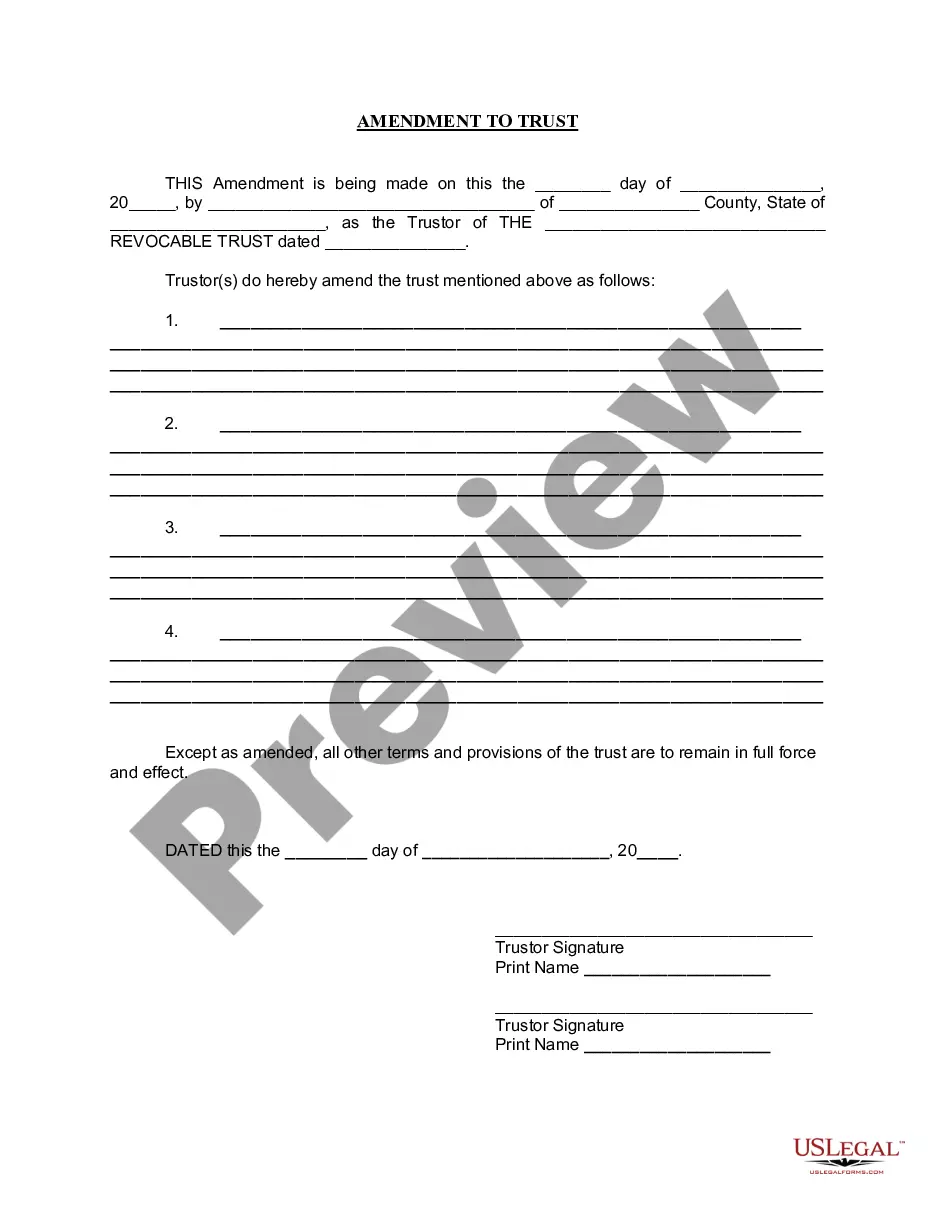


Get your form ready online
Our built-in tools help you complete, sign, share, and store your documents in one place.
Make edits, fill in missing information, and update formatting in US Legal Forms—just like you would in MS Word.
Download a copy, print it, send it by email, or mail it via USPS—whatever works best for your next step.
Sign and collect signatures with our SignNow integration. Send to multiple recipients, set reminders, and more. Go Premium to unlock E-Sign.
If this form requires notarization, complete it online through a secure video call—no need to meet a notary in person or wait for an appointment.
We protect your documents and personal data by following strict security and privacy standards.

Make edits, fill in missing information, and update formatting in US Legal Forms—just like you would in MS Word.

Download a copy, print it, send it by email, or mail it via USPS—whatever works best for your next step.

Sign and collect signatures with our SignNow integration. Send to multiple recipients, set reminders, and more. Go Premium to unlock E-Sign.

If this form requires notarization, complete it online through a secure video call—no need to meet a notary in person or wait for an appointment.

We protect your documents and personal data by following strict security and privacy standards.
Looking for another form?









How to fill out California Amendment To Living Trust?
Finding a reliable venue to obtain the latest and pertinent legal templates is a significant part of dealing with bureaucracy.
Selecting the appropriate legal documents necessitates accuracy and meticulousness, which is why it is crucial to derive samples of Revocable Living Trust Tax Filing Requirements solely from trustworthy sources, such as US Legal Forms. An incorrect template can squander your time and delay your situation.
Once you have the form on your device, you may modify it with the editor or print it and complete it manually. Remove the stress associated with your legal documentation. Browse the extensive catalog of US Legal Forms where you can discover legal samples, assess their relevance to your situation, and download them instantly.
- Utilize the library navigation or search bar to find your template.
- Examine the form’s details to verify if it aligns with the requirements of your state and locality.
- Check the form preview, if available, to ensure it is the one you seek.
- Return to the search to find the suitable document if the Revocable Living Trust Tax Filing Requirements does not meet your needs.
- If you are confident about the form’s relevance, download it.
- If you are a registered user, click Log in to verify your identity and access your chosen forms in My documents.
- If you have not created an account yet, click Buy now to acquire the form.
- Choose the pricing option that fits your requirements.
- Proceed with registration to complete your purchase.
- Finalize your transaction by selecting a payment method (credit card or PayPal).
- Choose the file format for downloading Revocable Living Trust Tax Filing Requirements.
Form popularity
FAQ
You must file Form 1041 for a domestic trust that has: Any taxable income for the tax year. Gross income of $600 or more (regardless of taxable income) A beneficiary who is a non-resident alien.
Beneficiaries of a trust typically pay taxes on the distributions they receive from a trust's income rather than the trust paying the tax. However, beneficiaries aren't subject to taxes on distributions from the trust's principal, the original sum of money put into the trust.
Revocable Trusts Typically during the creator's lifetime, the taxpayer identification number of the trust will be the creator's Social Security number. All items of income, deduction and credit will be reported on the creator's personal income tax return, and no return will be filed for the trust itself.
When trust beneficiaries receive distributions from the trust's principal balance, they don't have to pay taxes on this disbursement. The Internal Revenue Service (IRS) assumes this money was taxed before being placed into the trust. Gains on the trust are taxable as income to the beneficiary or the trust.
Q: Do trusts have a requirement to file federal income tax returns? A: Trusts must file a Form 1041, U.S. Income Tax Return for Estates and Trusts, for each taxable year where the trust has $600 in income or the trust has a non-resident alien as a beneficiary.