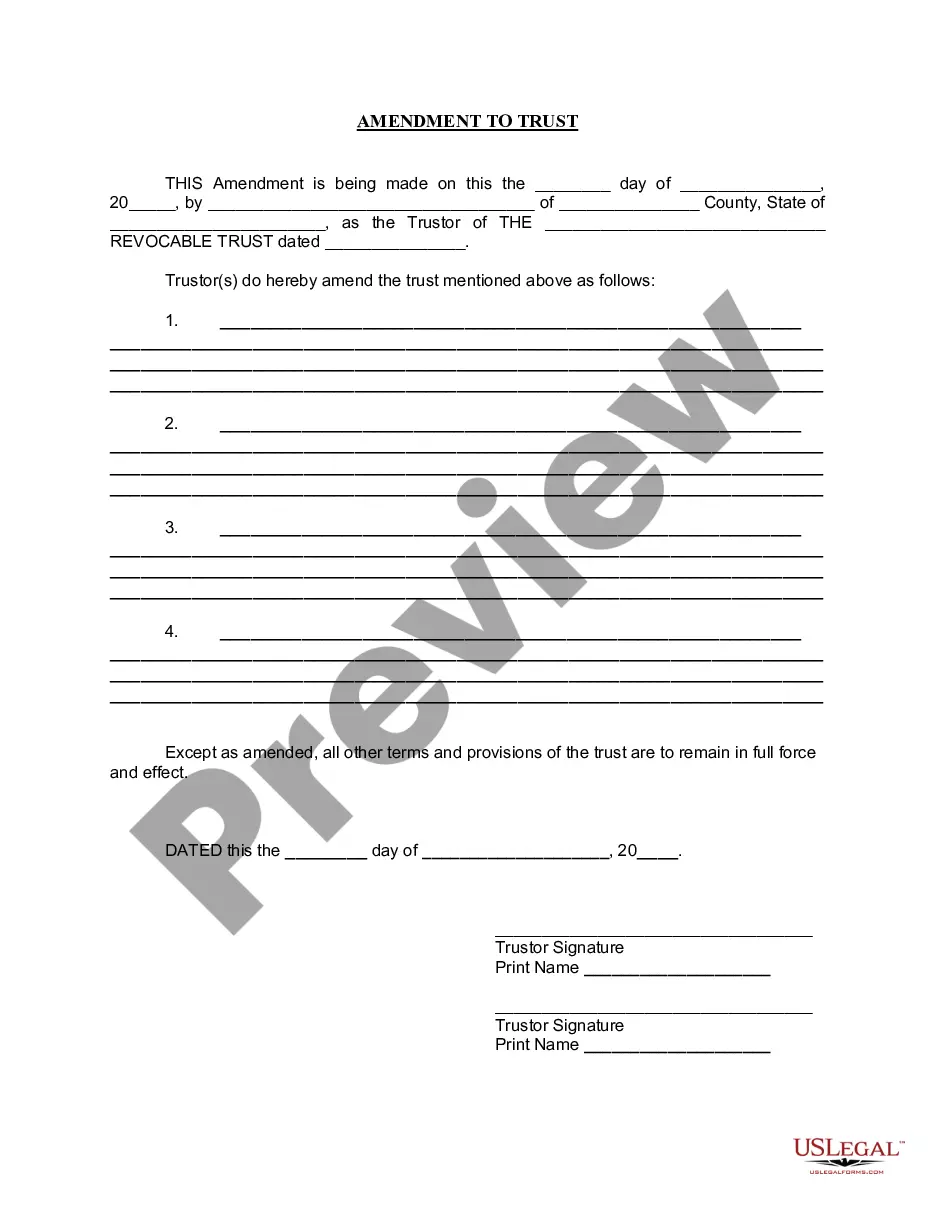
Living Trust Form Sample For A Child
Description


Get your form ready online
Our built-in tools help you complete, sign, share, and store your documents in one place.
Make edits, fill in missing information, and update formatting in US Legal Forms—just like you would in MS Word.
Download a copy, print it, send it by email, or mail it via USPS—whatever works best for your next step.
Sign and collect signatures with our SignNow integration. Send to multiple recipients, set reminders, and more. Go Premium to unlock E-Sign.
If this form requires notarization, complete it online through a secure video call—no need to meet a notary in person or wait for an appointment.
We protect your documents and personal data by following strict security and privacy standards.

Make edits, fill in missing information, and update formatting in US Legal Forms—just like you would in MS Word.

Download a copy, print it, send it by email, or mail it via USPS—whatever works best for your next step.

Sign and collect signatures with our SignNow integration. Send to multiple recipients, set reminders, and more. Go Premium to unlock E-Sign.

If this form requires notarization, complete it online through a secure video call—no need to meet a notary in person or wait for an appointment.

We protect your documents and personal data by following strict security and privacy standards.
Looking for another form?
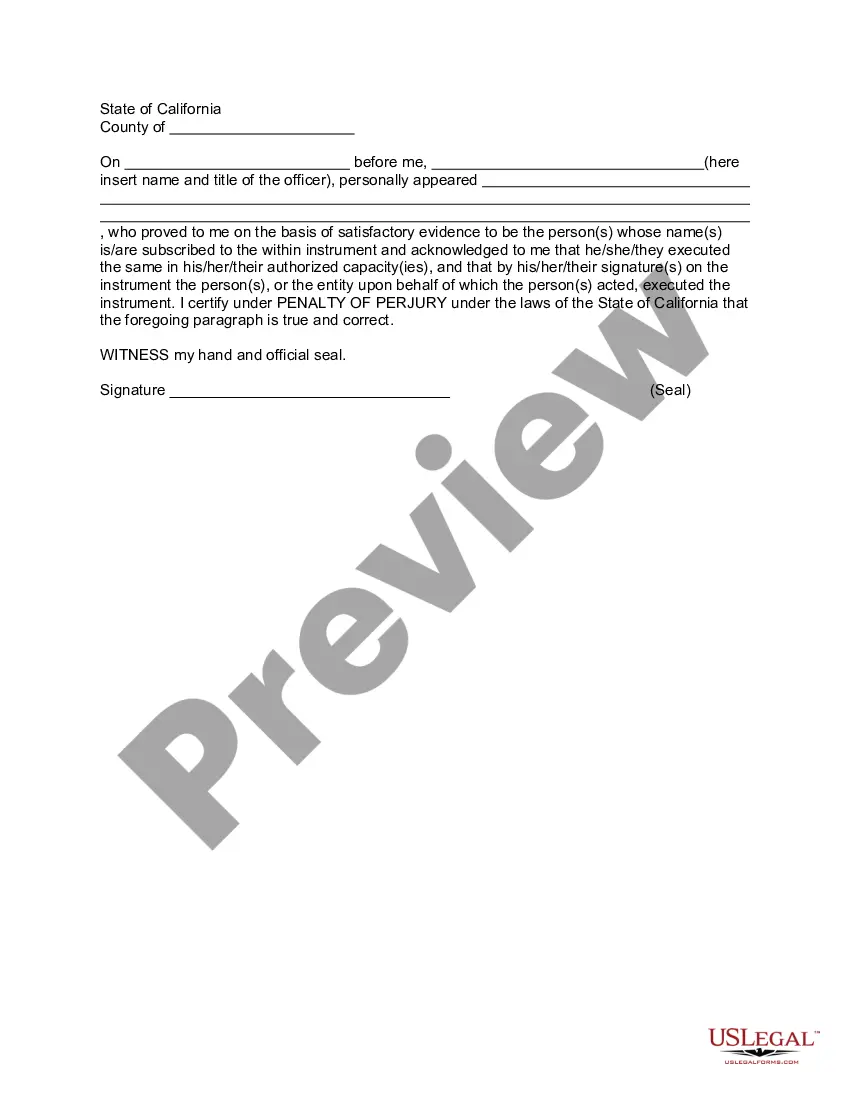
How to fill out California Amendment To Living Trust?
- Visit the US Legal Forms website and log into your account if you are a returning user. Ensure your subscription is active, or renew it if necessary.
- For first-time users, browse the extensive online library. Start by checking the Preview mode of the living trust form sample to match your needs and state regulations.
- If adjustments are needed, utilize the Search feature to find the correct form that aligns with your local jurisdiction requirements.
- Select the chosen living trust form sample and click on the Buy Now button. Choose your preferred subscription plan and create an account for full access.
- Complete your purchase by entering your payment details, either through credit card or PayPal.
- Finally, download the living trust form to your device and access it any time via the My Forms menu in your profile.
In conclusion, using US Legal Forms streamlines the process of obtaining essential legal documents. Their extensive library ensures you can find the exact forms you need with expert support available for added peace of mind.
Start securing your child’s future today by downloading your living trust form sample from US Legal Forms!
Form popularity
FAQ
The primary downfall of having a trust lies in its complexities and maintenance. Setting up a trust requires careful planning and can involve substantial legal fees. In some cases, individuals mistakenly overlook the need to fund the trust, which defeats its purpose. Using a living trust form sample for a child can simplify this process and ensure that your trust operates as intended.
Certain assets may not need to be included in a trust, such as retirement accounts or life insurance policies with designated beneficiaries. Additionally, personal property that does not hold significant value might be better left out. Keep in mind that assets requiring special management might complicate the trust's administration. It's wise to assess what belongs in a trust carefully and consider our living trust form sample for a child to help identify the right assets.
Whether your parents should put their assets in a trust depends on their specific financial situation and goals. A trust can help manage their estate more efficiently and protect their assets. However, it also requires careful planning and may not be necessary for everyone. Consulting with estate planning professionals can provide guidance tailored to their needs, and a living trust form sample for a child can serve as a helpful starting point.
One disadvantage of a family trust is that it can lead to disputes among family members if not properly managed. Misunderstandings about distributions or responsibilities may occur, which can strain relationships. Additionally, family trusts can require ongoing management, which might burden your loved ones. Using a living trust form sample for a child can help clarify terms and reduce potential conflicts.
Filling out a living trust involves gathering essential documentation, like your property details and beneficiary information. Start with your living trust form sample for a child, then carefully input your specifics, ensuring all details are accurate. Once completed, you must sign the document in front of witnesses to ensure its legality. Each step is crucial, so take your time to avoid errors.
While a living trust can help avoid probate, one downside is the potential loss of control over assets. Once you transfer assets to a trust, you might feel limited in how you manage those assets. Additionally, creating a trust involves legal expenses and ongoing administrative tasks, like tax filings. Consider our living trust form sample for a child to simplify the process for your family.
You can certainly make your own certificate of trust as long as you include the required information and follow state laws. It is often advisable to look at templates or samples, such as a living trust form sample for a child, to guide you. This ensures that your document will be legally sound and effective.
Yes, you can create your own certificate of trust, but accuracy and legality are essential. Make sure to include all necessary information, such as trustee details and trust terms. Utilizing a living trust form sample for a child can streamline this process and ensure you cover all important aspects.
Setting up a trust for a minor child involves specifying the child's needs and how the trust's assets will be managed until they reach adulthood. You will need to select a responsible trustee who can manage the funds appropriately. For further guidance, you can refer to a living trust form sample for a child, which can outline the essential elements needed for effective setup.
Creating a living trust by yourself can be a straightforward process if you follow the right steps. Start by researching and gathering necessary information, such as assets and beneficiaries. Many people find it helpful to use a living trust form sample for a child, which can guide them through the creation process more efficiently.