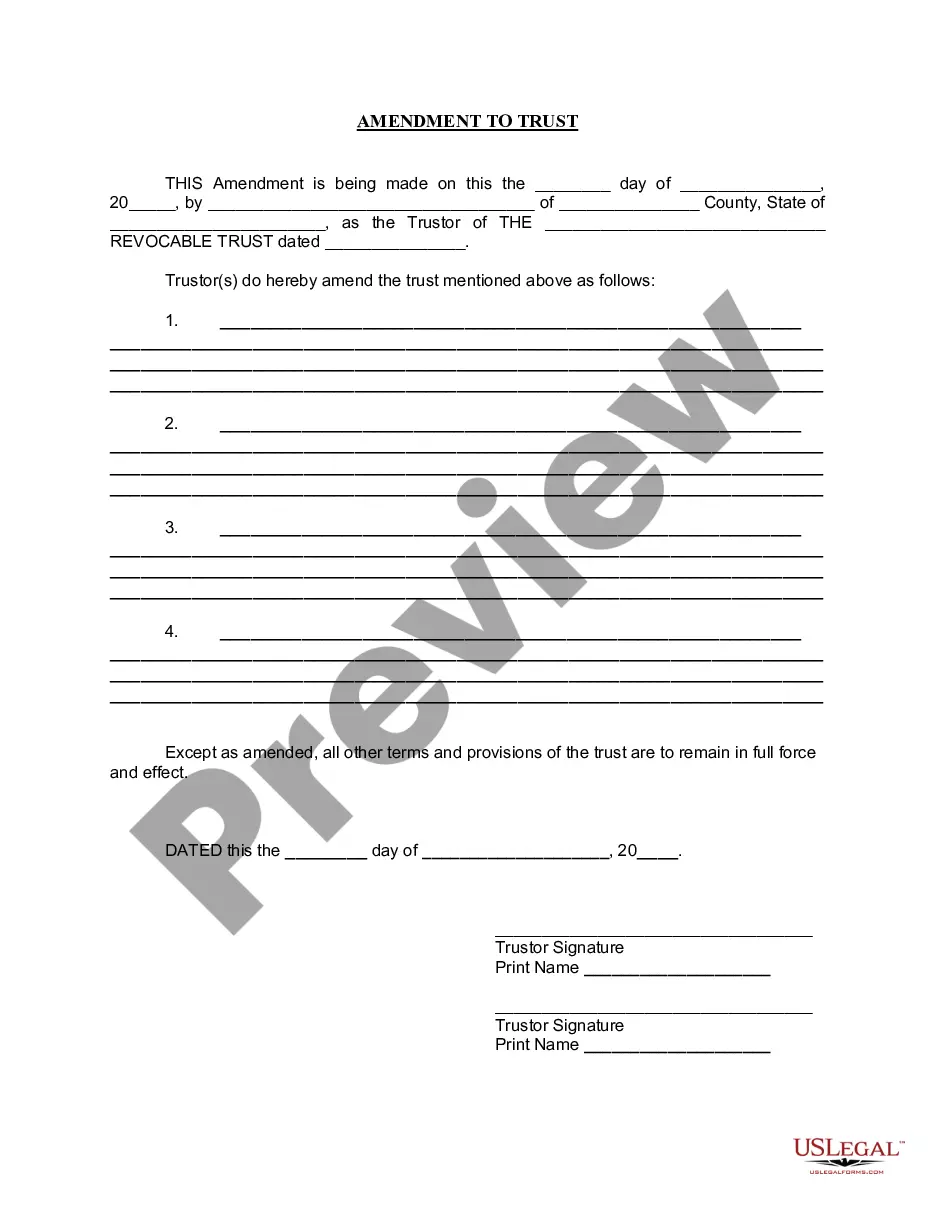
Amendment To A Trust Form With 2 Points
Description


Get your form ready online
Our built-in tools help you complete, sign, share, and store your documents in one place.
Make edits, fill in missing information, and update formatting in US Legal Forms—just like you would in MS Word.
Download a copy, print it, send it by email, or mail it via USPS—whatever works best for your next step.
Sign and collect signatures with our SignNow integration. Send to multiple recipients, set reminders, and more. Go Premium to unlock E-Sign.
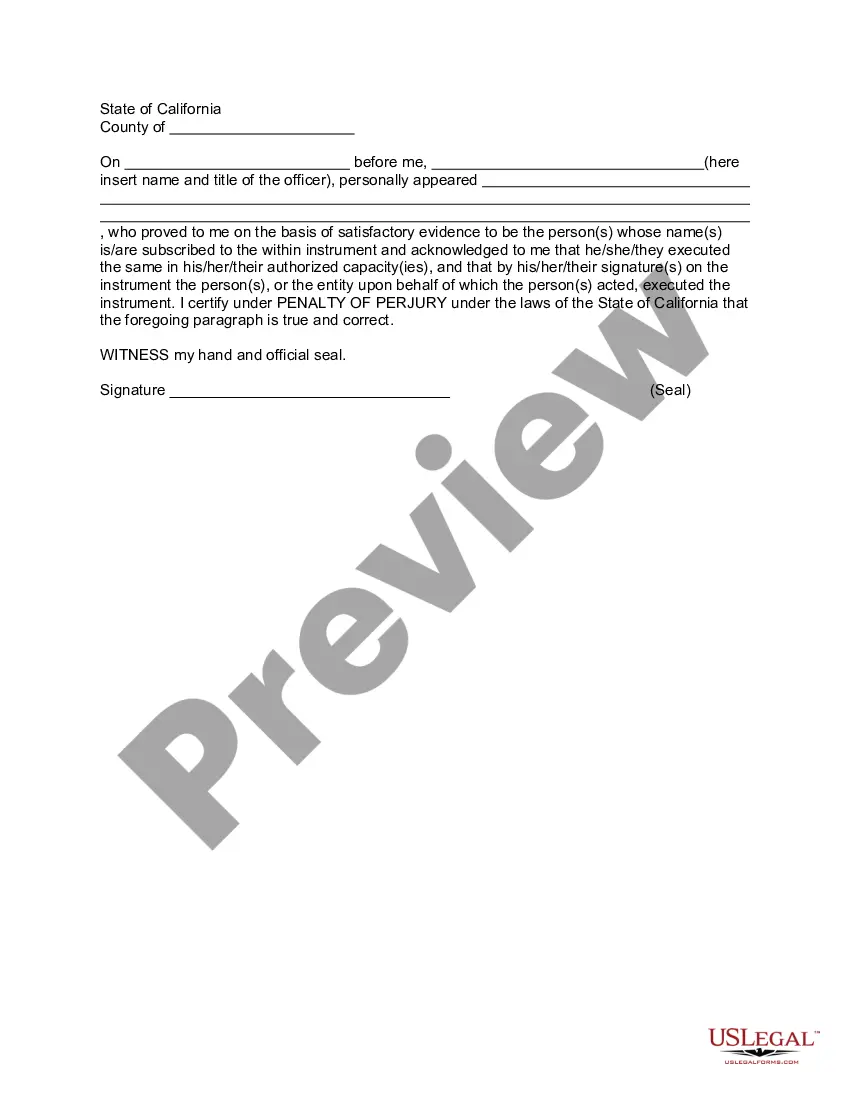
If this form requires notarization, complete it online through a secure video call—no need to meet a notary in person or wait for an appointment.
We protect your documents and personal data by following strict security and privacy standards.

Make edits, fill in missing information, and update formatting in US Legal Forms—just like you would in MS Word.

Download a copy, print it, send it by email, or mail it via USPS—whatever works best for your next step.

Sign and collect signatures with our SignNow integration. Send to multiple recipients, set reminders, and more. Go Premium to unlock E-Sign.

If this form requires notarization, complete it online through a secure video call—no need to meet a notary in person or wait for an appointment.

We protect your documents and personal data by following strict security and privacy standards.
Looking for another form?







How to fill out California Amendment To Living Trust?
Regardless of whether for corporate objectives or personal matters, everyone must manage legal circumstances at some stage in their existence. Filling out legal documents requires meticulous carefulness, starting from choosing the correct form template.
For example, if you select an incorrect version of the Amendment To A Trust Form With 2 Points, it will be rejected upon submission. Hence, it's crucial to have a trustworthy source for legal documents such as US Legal Forms.
With an extensive catalog from US Legal Forms available, you never have to waste time searching for the suitable template across the internet. Utilize the library's simple navigation to find the appropriate document for any circumstance.
- Locate the template you require by navigating through the search field or catalog.
- Review the form’s details to confirm it fits your situation, state, and locality.
- Click on the form’s preview to examine it.
- If it turns out to be the wrong document, return to the search feature to find the Amendment To A Trust Form With 2 Points template you need.
- Download the template if it aligns with your requirements.
- If you already have a US Legal Forms account, click Log in to access previously saved documents in My documents.
- If you do not possess an account yet, you may acquire the form by clicking Buy now.
- Select the appropriate pricing option.
- Fill out the profile registration form.
- Choose your payment method: either a credit card or PayPal.
- Select the desired file format and download the Amendment To A Trust Form With 2 Points.
- Once downloaded, you can fill out the form using editing software or print it and complete it by hand.
Form popularity
FAQ
To add an amendment to a trust, you start by identifying the sections of the trust that need modification. You can then fill out an amendment to a trust form, which will specify the changes you intend to make. After completing the form, make sure to sign and date it appropriately, and consider having it notarized for added legal validity. Platforms like US Legal Forms offer user-friendly templates that help you create an effective amendment, ensuring your trust remains up-to-date and reflective of your wishes.
To add an amendment to a trust, you first need to review the original trust document to understand the specific amendment process outlined within it. Next, you can create an amendment to a trust form that details the changes you wish to implement. Finally, ensure that the amendment is signed and dated by the trust creator, and if required, have it notarized. Using a reliable platform like US Legal Forms can simplify this process, providing templates and guidance to ensure your amendment is legally sound.
To make an amendment to a trust, start by drafting a document titled 'Amendment to a Trust Form.' Clearly state the original trust's name and date for reference. Detail the desired changes, ensuring they are easy to understand. Lastly, be sure to have all necessary parties sign the document, as this step is crucial for the amendment’s validity, and consider using US Legal Forms for professional guidance and templates.
When writing an amendment to a trust, you should begin with a heading that includes 'Amendment to a Trust Form.' It is essential to reference the original trust document, specifying its name and creation date. Clearly outline the specific changes you desire to make, and ensure that all parties involved understand these modifications. Using a platform like US Legal Forms can simplify this process by providing templates that guide you through creating an effective amendment.
To write an amendment format, start by clearly stating the title, which should include the phrase 'Amendment to a Trust Form.' Next, identify the trust being amended by including the original trust's name and date. Then, specify the changes you wish to make in a clear and concise manner. Finally, make sure to include signatures and dates from all relevant parties to validate the amendment.
An amendment to a trust refers to any change made to the original terms of a trust. This can include adding or removing beneficiaries, changing distribution instructions, or altering trustee powers. Using an amendment to a trust form will help you document these changes clearly and legally. It’s important to follow proper legal protocols to ensure your amendments hold up in court.
The key difference lies in their purpose; a codicil is used to modify a will, while an amendment to a trust is intended for updating trust documents. When you need to adjust the terms of your trust, it’s crucial to use the appropriate amendment to a trust form. This ensures that your changes are recognized and valid. Understanding this distinction will help you navigate your estate planning effectively.
To amend a declaration of trust, you will need to draft an amendment to a trust form that outlines the specific changes you wish to make. Include details such as the date, your name, and the changes you want to implement. After completing the form, ensure you sign it and follow any witnessing requirements to make it legally binding. Consulting a legal resource can provide additional guidance during this process.
An amendment is used to change a trust or a will, while a codicil is exclusively for amending a will. When you need to adjust a trust, you should focus on creating an amendment to a trust form. This form serves the purpose of updating the trust’s terms effectively. Understanding this distinction can help you choose the right document for your estate planning needs.
Yes, you can amend your trust without a lawyer if you feel comfortable doing so. Utilizing an amendment to a trust form can simplify the process and ensure you include the necessary details. However, it is wise to consult with a legal professional if you have any doubts about your amendments. This can help you avoid potential issues in the future.