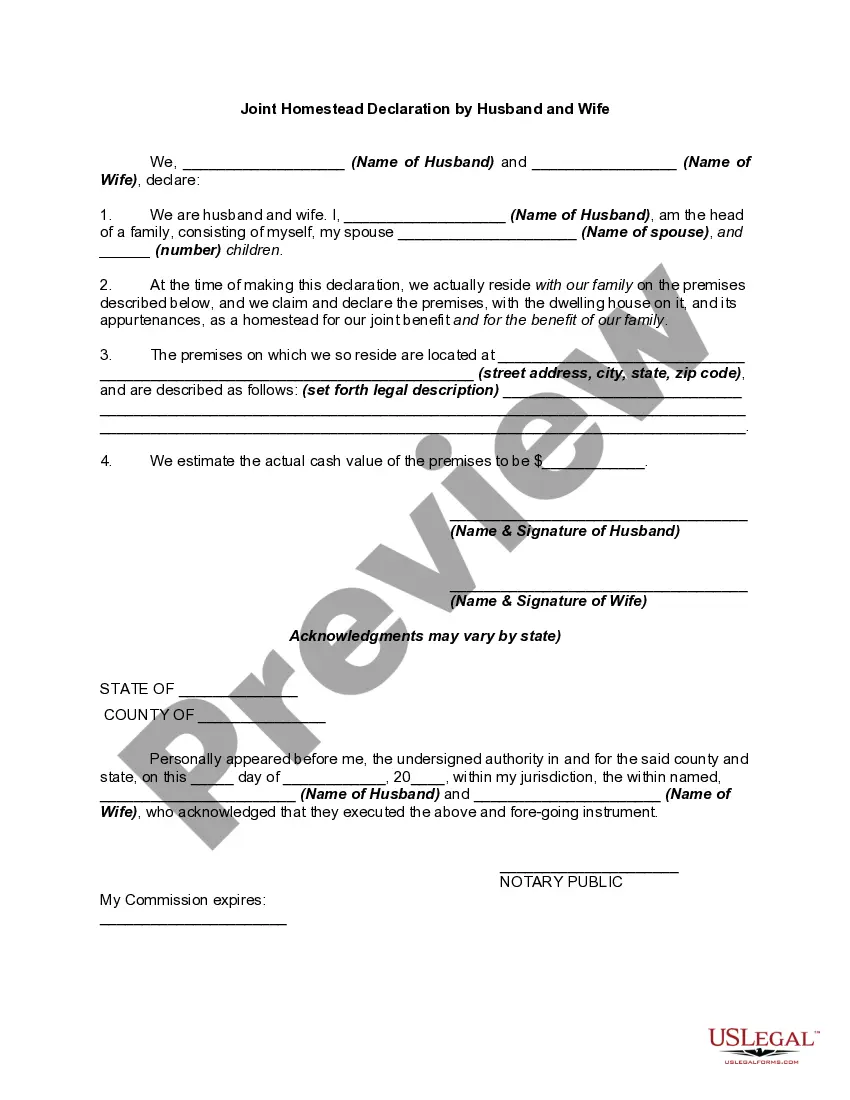
California Homestead Exemption Form For Texas
Description
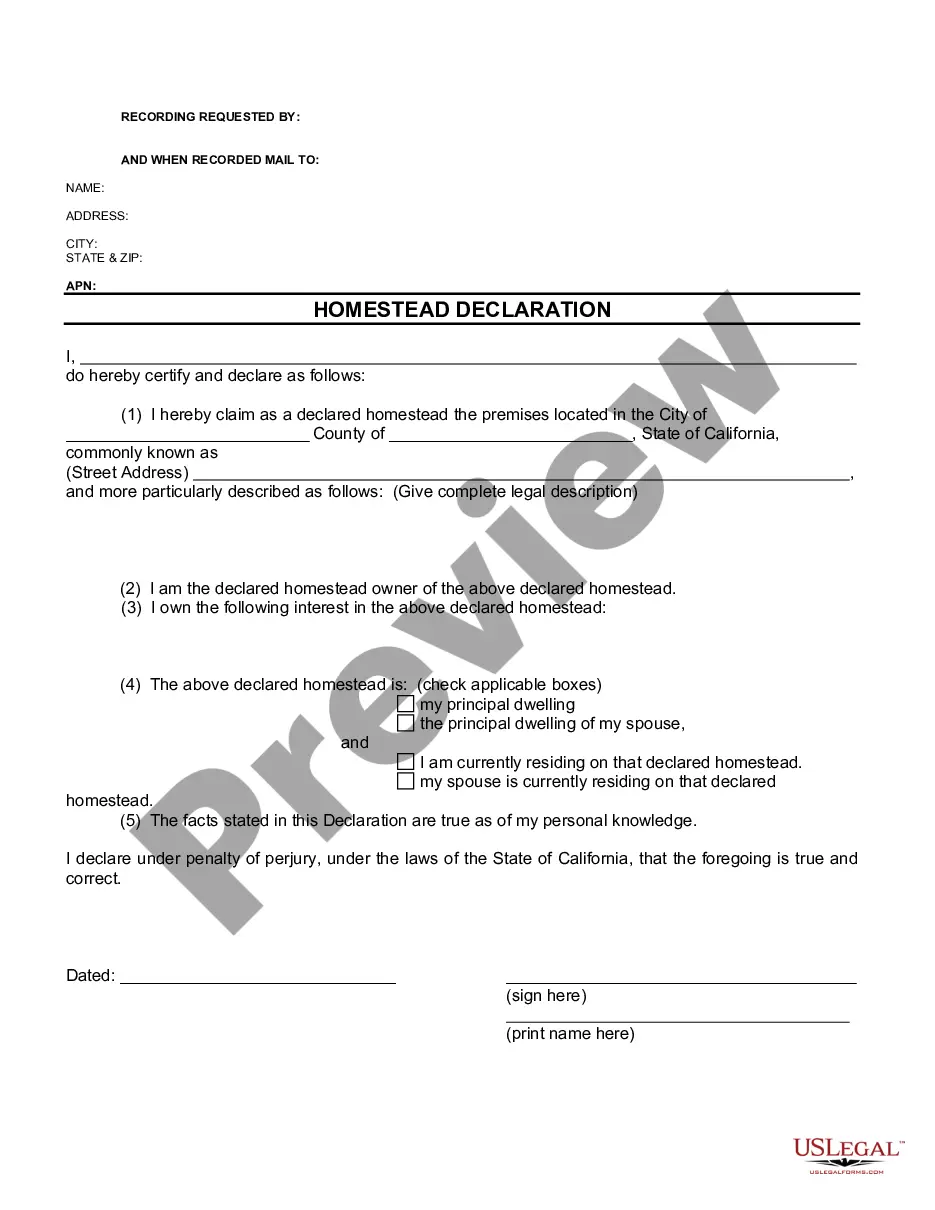
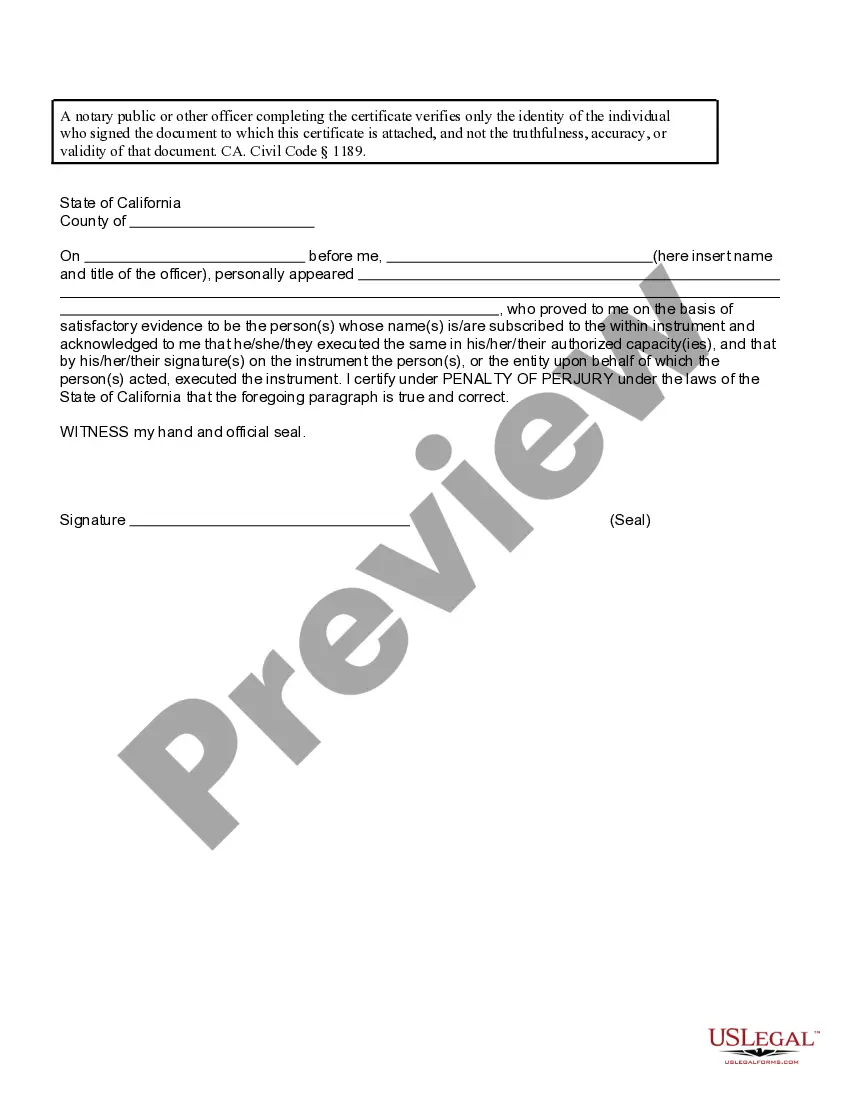
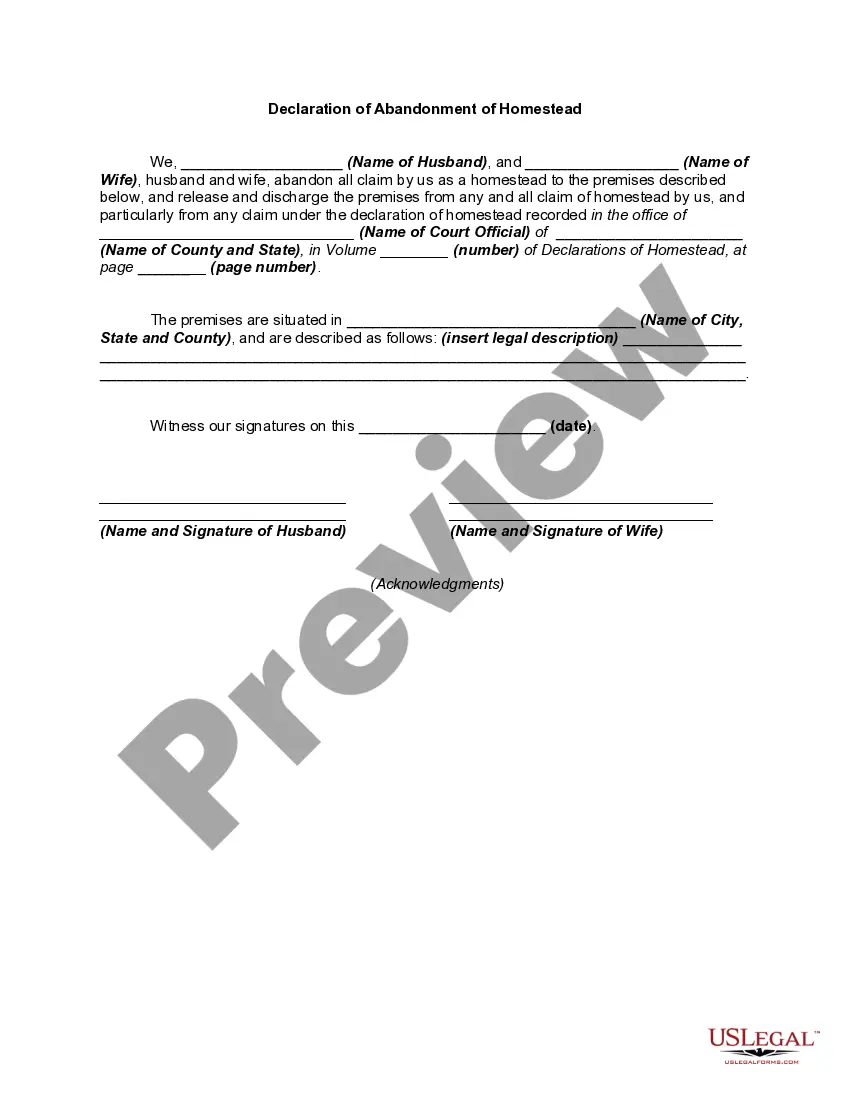
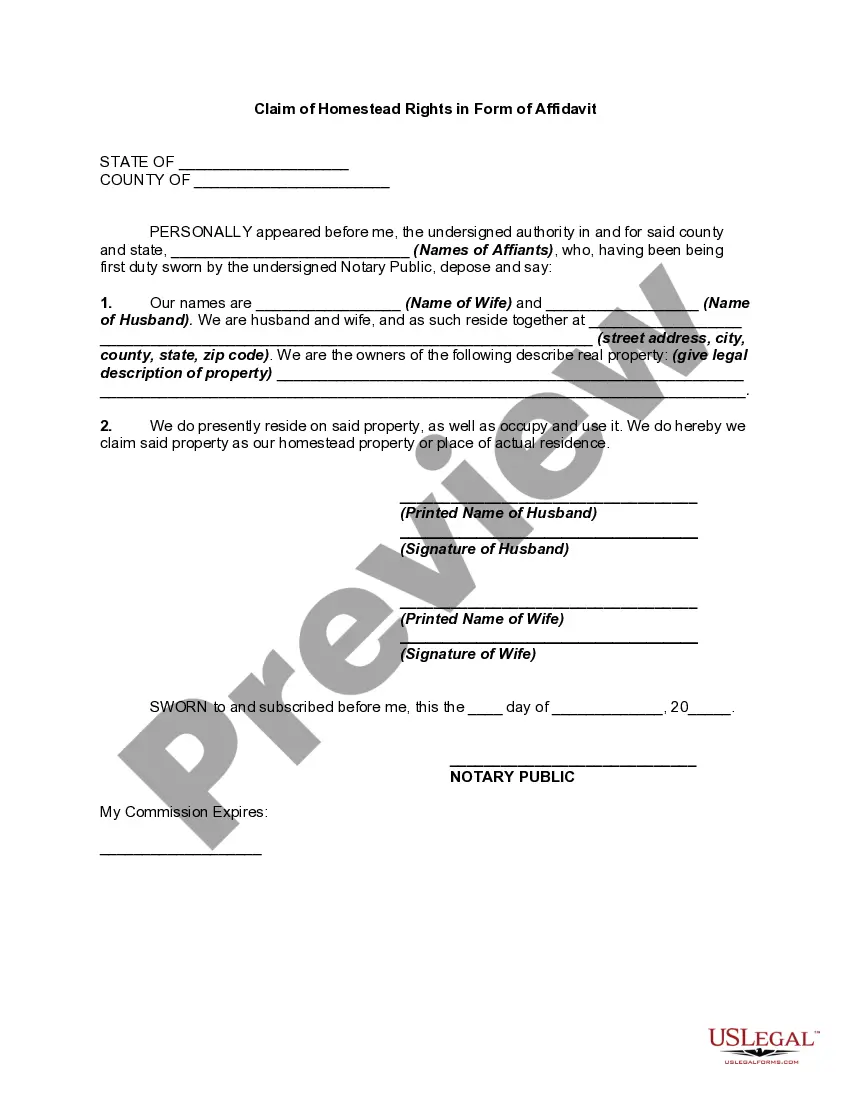
Get your form ready online
Our built-in tools help you complete, sign, share, and store your documents in one place.
Make edits, fill in missing information, and update formatting in US Legal Forms—just like you would in MS Word.
Download a copy, print it, send it by email, or mail it via USPS—whatever works best for your next step.
Sign and collect signatures with our SignNow integration. Send to multiple recipients, set reminders, and more. Go Premium to unlock E-Sign.
If this form requires notarization, complete it online through a secure video call—no need to meet a notary in person or wait for an appointment.
We protect your documents and personal data by following strict security and privacy standards.

Make edits, fill in missing information, and update formatting in US Legal Forms—just like you would in MS Word.

Download a copy, print it, send it by email, or mail it via USPS—whatever works best for your next step.

Sign and collect signatures with our SignNow integration. Send to multiple recipients, set reminders, and more. Go Premium to unlock E-Sign.

If this form requires notarization, complete it online through a secure video call—no need to meet a notary in person or wait for an appointment.

We protect your documents and personal data by following strict security and privacy standards.
Looking for another form?

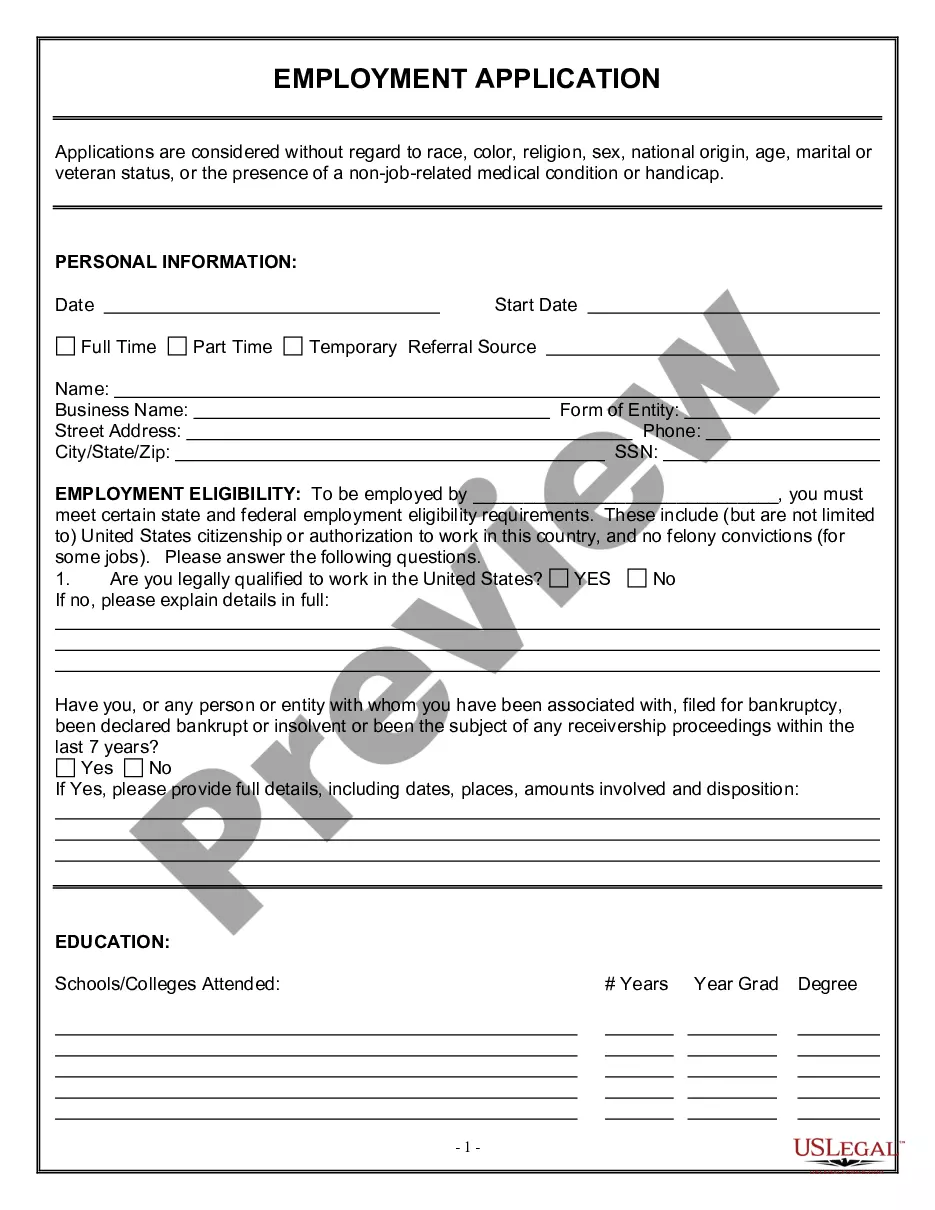


How to fill out California Homestead Declaration For Single Person?
Getting a go-to place to access the most recent and relevant legal samples is half the struggle of handling bureaucracy. Discovering the right legal papers requirements accuracy and attention to detail, which is the reason it is crucial to take samples of California Homestead Exemption Form For Texas only from reliable sources, like US Legal Forms. A wrong template will waste your time and delay the situation you are in. With US Legal Forms, you have little to be concerned about. You may access and see all the details concerning the document’s use and relevance for the circumstances and in your state or county.
Take the following steps to finish your California Homestead Exemption Form For Texas:
- Use the catalog navigation or search field to find your template.
- View the form’s description to ascertain if it matches the requirements of your state and county.
- View the form preview, if there is one, to ensure the template is the one you are searching for.
- Get back to the search and look for the correct document if the California Homestead Exemption Form For Texas does not match your needs.
- When you are positive about the form’s relevance, download it.
- When you are an authorized customer, click Log in to authenticate and access your selected templates in My Forms.
- If you do not have a profile yet, click Buy now to get the form.
- Select the pricing plan that suits your needs.
- Go on to the registration to finalize your purchase.
- Complete your purchase by picking a transaction method (bank card or PayPal).
- Select the file format for downloading California Homestead Exemption Form For Texas.
- Once you have the form on your device, you can modify it using the editor or print it and finish it manually.
Remove the inconvenience that comes with your legal documentation. Explore the extensive US Legal Forms catalog where you can find legal samples, check their relevance to your circumstances, and download them on the spot.
Form popularity
FAQ
(3) You must be a United States citizen, you must have lived in the State of Texas for the past year, and you must be 18 years or older. To meet the ownership requirements, you must own the home and it must be your legal residence in Texas.
Attach a copy of property owner's driver's license or state-issued personal identification certificate. The address listed on the driver's license or state-issued personal identification certificate must correspond to the property address for which the exemption is requested.
If your home is worth more money than you owe on it, you have equity. For example, if your home is worth $350,000 and you owe $300,000, you have $50,000 in equity. A homestead can protect the $50,000. There are two types of homesteads, automatic and declared.
You must apply with your county appraisal district to get a homestead exemption. Applying is free and only needs to be filed once. You can find forms on your appraisal district website or you can use the Texas Comptroller forms. General Exemption Form 50-114.
The home must have been the principal place of residence of the owner on the lien date, January 1st. To claim the exemption, the homeowner must make a one-time filing with the county assessor where the property is located.