Certificate Of Occupancy For Tenants
Description

Get your form ready online
Our built-in tools help you complete, sign, share, and store your documents in one place.
Make edits, fill in missing information, and update formatting in US Legal Forms—just like you would in MS Word.
Download a copy, print it, send it by email, or mail it via USPS—whatever works best for your next step.
Sign and collect signatures with our SignNow integration. Send to multiple recipients, set reminders, and more. Go Premium to unlock E-Sign.
If this form requires notarization, complete it online through a secure video call—no need to meet a notary in person or wait for an appointment.
We protect your documents and personal data by following strict security and privacy standards.

Make edits, fill in missing information, and update formatting in US Legal Forms—just like you would in MS Word.

Download a copy, print it, send it by email, or mail it via USPS—whatever works best for your next step.

Sign and collect signatures with our SignNow integration. Send to multiple recipients, set reminders, and more. Go Premium to unlock E-Sign.

If this form requires notarization, complete it online through a secure video call—no need to meet a notary in person or wait for an appointment.

We protect your documents and personal data by following strict security and privacy standards.
Looking for another form?



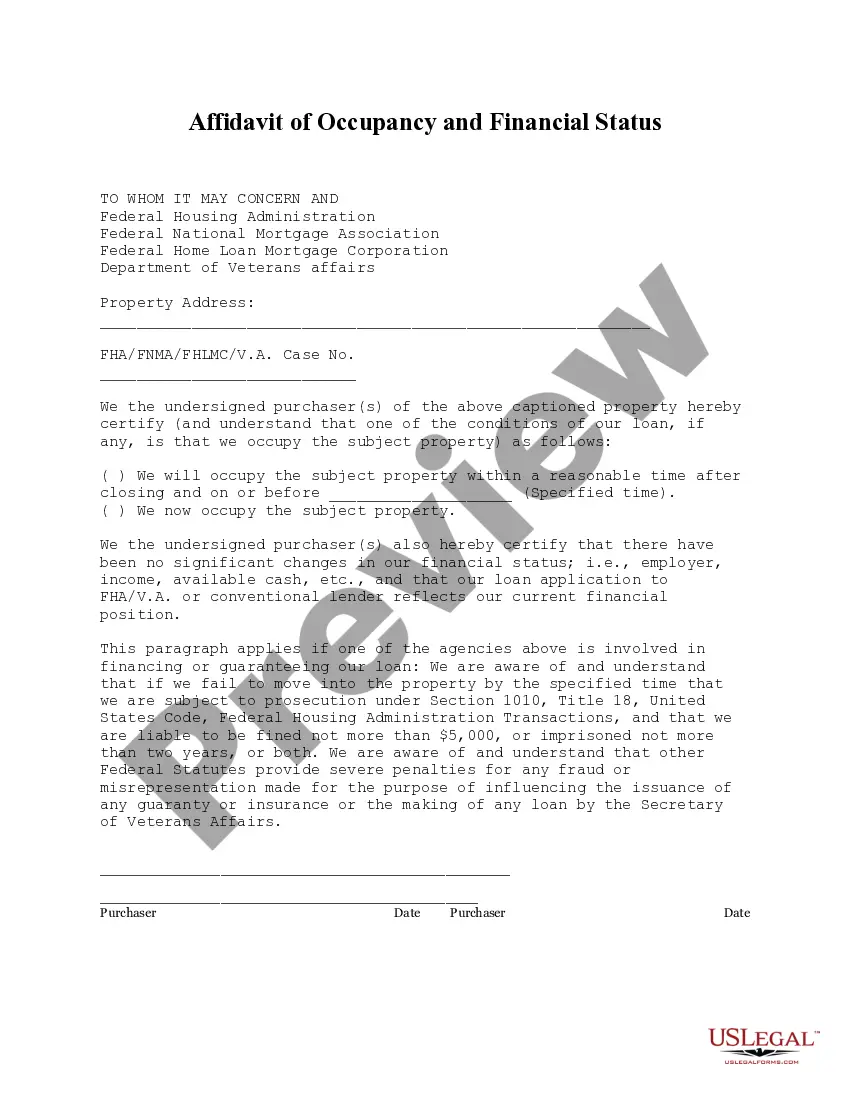
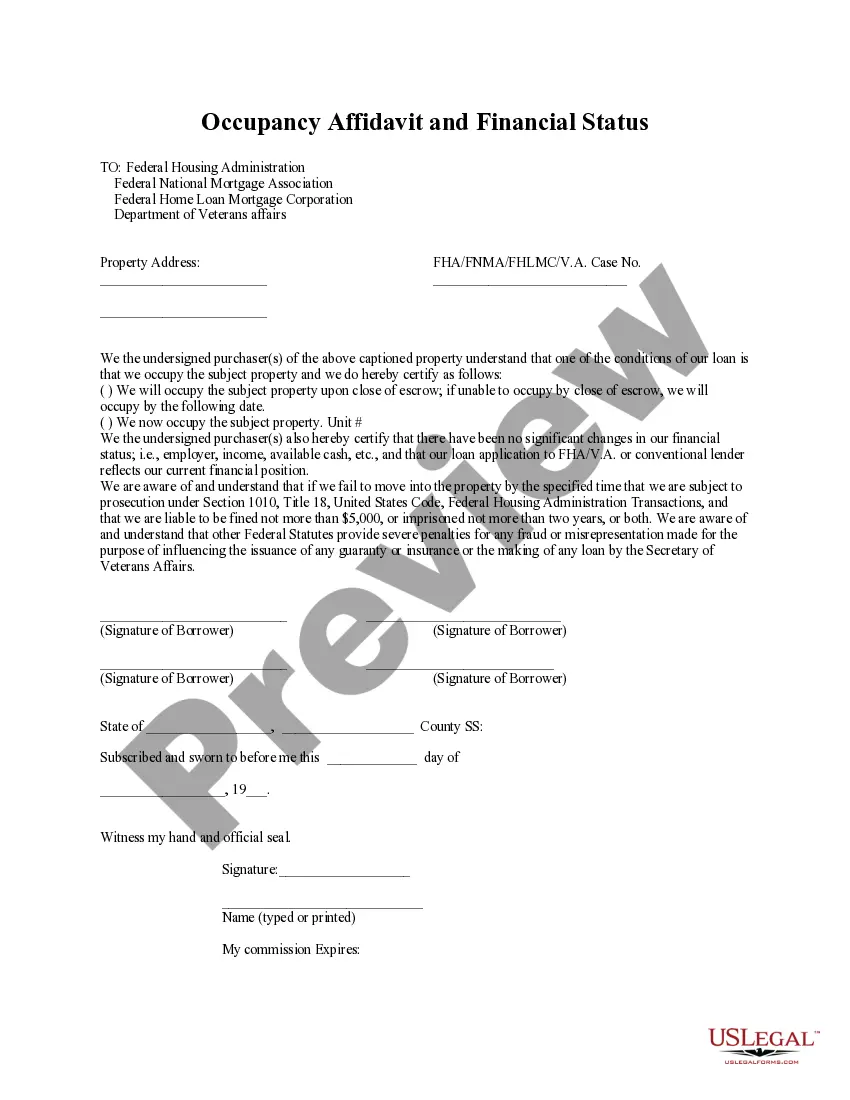
How to fill out California Affidavit Of Occupancy And Financial Status?
- If you're an existing customer, log in to your account and download the essential template by clicking the Download button. Ensure your subscription is up to date; renew if necessary.
- For new users, start by previewing the form details. Confirm it's suitable for your needs and adheres to your local jurisdiction's requirements.
- If not the right template, utilize the Search tab to find an alternative that meets your specifications.
- Purchase the desired document. Choose a subscription plan and create an account to access the legal library.
- Complete your transaction. Provide your payment details using a credit card or PayPal to finalize the purchase.
- Download the document. Save the form to your device and access it later in the My Forms section of your profile.
Obtaining your certificate of occupancy for tenants through US Legal Forms streamlines the often complicated legal paperwork. Our platform is not just about forms; it's about providing you with confidence and accuracy in all your legal documents.
No more guesswork—get started today with US Legal Forms and secure the necessary documents for a seamless tenant experience!
Form popularity
FAQ
Moving into a house without a certificate of occupancy is not advisable. Doing so can expose tenants to unsafe living conditions and legal complications. Landlords are required to obtain this certificate to prove that the property meets local standards. If you find yourself in this situation, consider reaching out to USLegalForms to learn how to protect your rights as a tenant.
If your landlord lacks a certificate of occupancy, it is essential to address this issue immediately. Tenants should discuss the situation with the landlord and seek to resolve it promptly, as living in a property without this certification poses risks. You can contact a legal advisor or use USLegalForms to understand your rights and explore options for securing a safe living environment. Protecting yourself is a priority, so take action.
Not having a certificate of occupancy for tenants can result in serious legal issues for both landlords and tenants. Without this certification, landlords may face fines or legal penalties, while tenants may need to vacate the premises. Additionally, the property may lack compliance with important safety and health standards. It's crucial to ensure the property you are renting has a valid certificate.
Moving in before an inspection can lead to significant risks for tenants. Without a certificate of occupancy for tenants, you may face safety hazards or legal complications later on. Inspections ensure that the property meets local safety codes, so bypassing this step means you could be living in unsafe conditions. It is always best to wait for a proper inspection and receive the certificate.
In New Jersey, a landlord cannot legally collect rent without a valid certificate of occupancy for tenants. This certificate ensures that the property meets local safety and habitability standards. Without it, tenants may have grounds to withhold rent or take legal action. For landlords, obtaining a certificate of occupancy is crucial to avoid potential disputes and maintain a positive rental experience.
Moving in without an occupancy permit can result in legal complications for both landlords and tenants. You may find yourself facing fines or being forced to vacate the property. Additionally, living in an unpermitted space can expose you to safety hazards. To avoid these issues, always secure the necessary certificate of occupancy for tenants before moving in.
Renting a house without a certificate of occupancy may lead to serious legal issues. Many states require this certificate to ensure that homes are safe for tenants. Without it, you could face fines and may have difficulty finding tenants. It's best to obtain a certificate of occupancy for tenants’ peace of mind and compliance.
In Wisconsin, a certificate of occupancy is usually needed when a structure is constructed or modified. This requirement helps ensure that the building complies with safety and zoning laws. For tenants, having this certificate guarantees a safe living environment. Always verify local laws, as different municipalities may have varying rules.
Yes, in Illinois, a certificate of occupancy is typically required for new buildings and significant renovations. This certificate ensures that the property is safe and ready for use. It protects tenants by confirming that the space meets all necessary codes and standards. Therefore, always check local regulations to avoid complications.
Moving in without a certificate of occupancy can lead to serious consequences, including fines or eviction. Additionally, the property may not meet safety codes, putting your health at risk. It is crucial to ensure that you have a valid certificate of occupancy for tenants before moving in to secure your rights and safety as a resident.