Certificate Of Occupancy For Pool
Description

Get your form ready online
Our built-in tools help you complete, sign, share, and store your documents in one place.
Make edits, fill in missing information, and update formatting in US Legal Forms—just like you would in MS Word.
Download a copy, print it, send it by email, or mail it via USPS—whatever works best for your next step.
Sign and collect signatures with our SignNow integration. Send to multiple recipients, set reminders, and more. Go Premium to unlock E-Sign.
If this form requires notarization, complete it online through a secure video call—no need to meet a notary in person or wait for an appointment.
We protect your documents and personal data by following strict security and privacy standards.

Make edits, fill in missing information, and update formatting in US Legal Forms—just like you would in MS Word.

Download a copy, print it, send it by email, or mail it via USPS—whatever works best for your next step.

Sign and collect signatures with our SignNow integration. Send to multiple recipients, set reminders, and more. Go Premium to unlock E-Sign.

If this form requires notarization, complete it online through a secure video call—no need to meet a notary in person or wait for an appointment.

We protect your documents and personal data by following strict security and privacy standards.
Looking for another form?







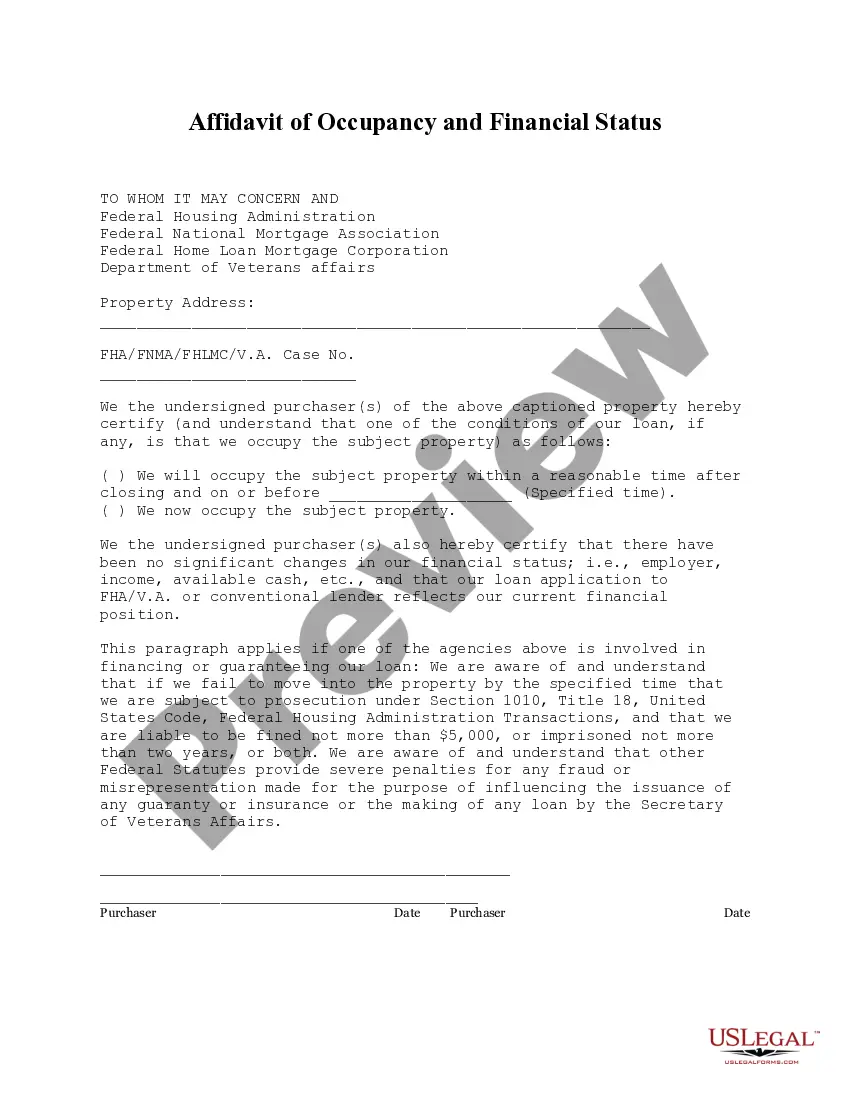
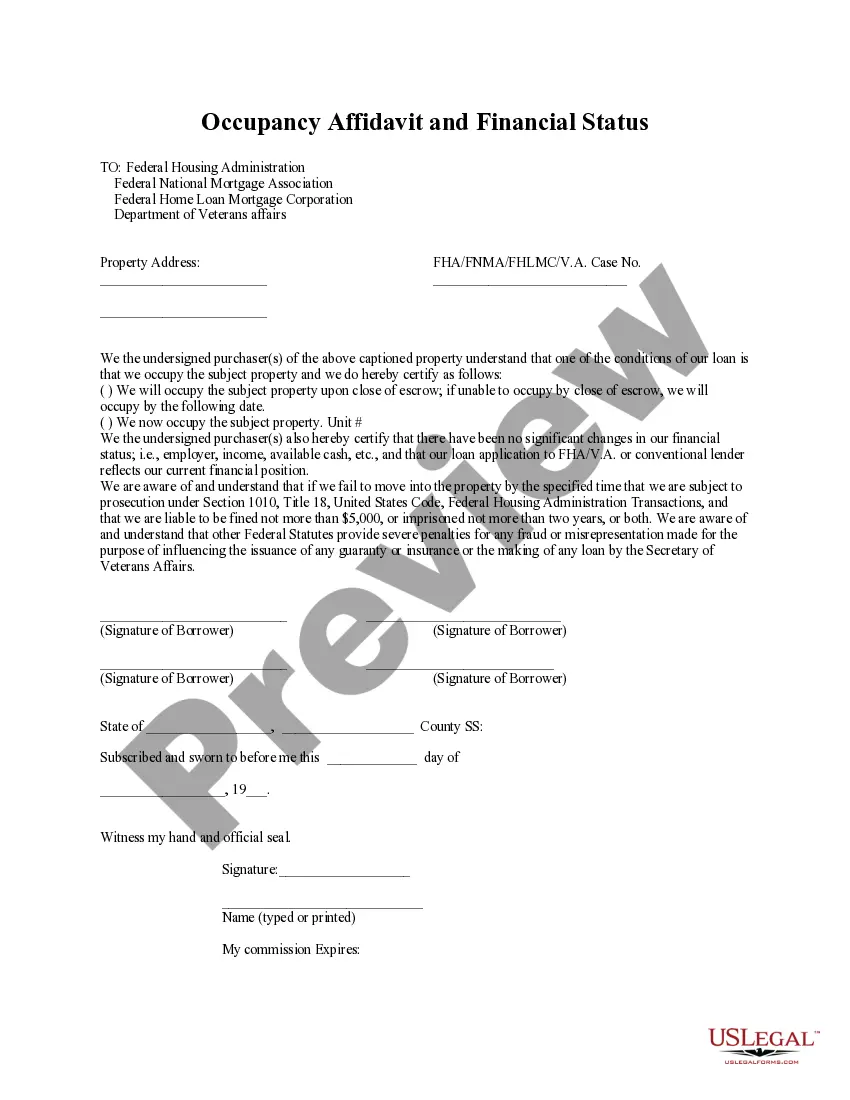
How to fill out California Affidavit Of Occupancy And Financial Status?
- Access your US Legal Forms account. If you’ve used the service before, simply [log in](https://www.us and check your subscription status. Ensure it is active; if not, renew according to your plan.
- Preview the form. Browse the legal document for the certificate of occupancy for your pool. Verify that it aligns with your requirements and adheres to local laws.
- Search for alternatives. If you identify any discrepancies, utilize the search feature to find the correct form that meets your criteria.
- Purchase the document. After finding the right template, click the 'Buy Now' button and select a suitable subscription plan to access the full library.
- Make your payment. Enter your payment details, either via credit card or your PayPal account, to finalize the transaction.
- Download your form. Once purchased, save the template to your device and access it anytime via the 'My Forms' section of your profile.
In conclusion, the US Legal Forms service provides a vast selection of legal templates, making it easy to procure essential documents like a certificate of occupancy for your pool. With user-friendly features and expert assistance available, getting legally compliant documents has never been simpler.
Take the first step today and ensure your pool is up to code with US Legal Forms!
Form popularity
FAQ
A temporary certificate of occupancy in New Jersey allows residents to occupy a building that is not fully completed. This certificate indicates that essential safety requirements have been met, while some minor items may still need attention. If you are in the process of installing a pool, consider applying for a certificate of occupancy for pool to facilitate your planning and use.
Yes, a certificate of occupancy is generally required in California for newly constructed or modified homes. This certificate affirms that the property is safe to inhabit and complies with local building codes. When you apply for a certificate of occupancy for pool, you contribute to ensuring safety and compliance in your housing situation.
Moving into a house without a certificate of occupancy in California is not advisable and can lead to legal complications. State regulations often necessitate this certificate to assure the property is safe for habitation. If you're considering such a move, it’s essential to obtain a certificate of occupancy for pool to protect yourself and ensure legality.
If you move into a house without a certificate of occupancy, you expose yourself to legal risks and safety hazards. You may not have legal recourse if issues arise, and local officials might require you to vacate the property. To avoid such circumstances, ensure you secure a certificate of occupancy for pool before moving in.
Yes, a certificate of occupancy is regarded as a type of permit that confirms a building meets required safety standards before occupancy. It verifies that the property complies with local zoning laws and health regulations. Thus, when considering a certificate of occupancy for pool, it acts as a crucial document that protects both you and your tenants.
In California, failing to obtain a certificate of occupancy can result in hefty fines and legal repercussions. Local authorities may issue citations or stop-work orders for non-compliance, affecting your property’s value and legality. To avoid penalties, securing a certificate of occupancy for pool is vital before renting or utilizing your property.
Renting your house without a certificate of occupancy can lead to significant legal issues. Most jurisdictions require this certificate to ensure that a property meets safety and habitability standards. Without it, both you and your tenants may face penalties. It's crucial to check your local laws and consider obtaining a certificate of occupancy for pool to ensure compliance.
If a building lacks a certificate of occupancy, it may be deemed unsafe for occupancy by local authorities. This can lead to shutdowns, fines, or legal actions against the owner. It is essential to apply for a certificate of occupancy for pool and all other structures to avoid these repercussions and ensure a safe living environment.
Yes, Ohio does require a certificate of occupancy for various residential and commercial properties, including those with pools. This certificate verifies that the construction and renovations comply with local codes. Ensuring your property has a valid certificate of occupancy for pool is vital for safety and legal compliance.
Moving in without a certificate of occupancy can result in severe consequences, including fines and legal troubles. Additionally, insurance companies may deny claims if the property lacks necessary documentation. It is crucial to obtain a certificate of occupancy for pool and all living spaces to protect yourself and ensure compliance with local laws.