Apartment Policy For A Resident
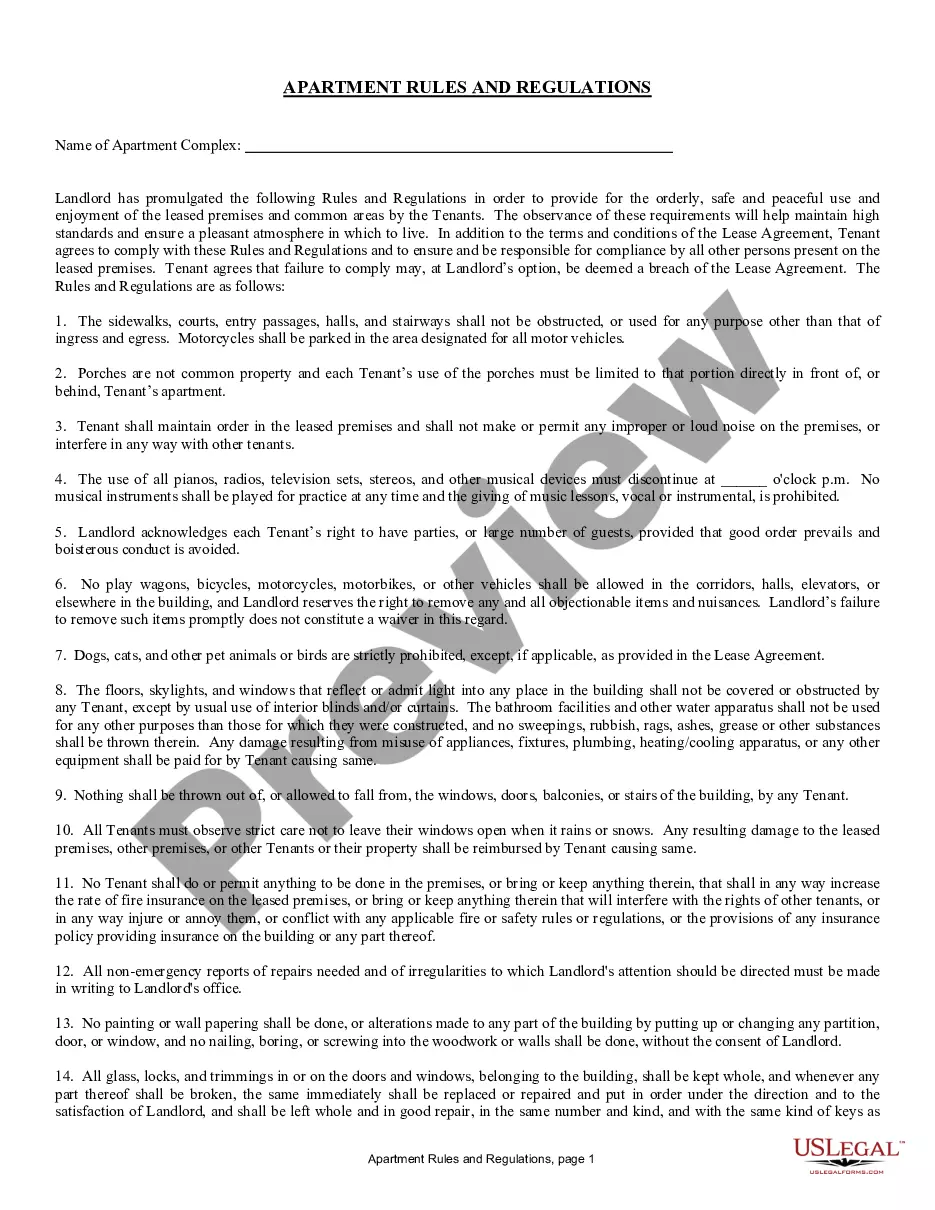
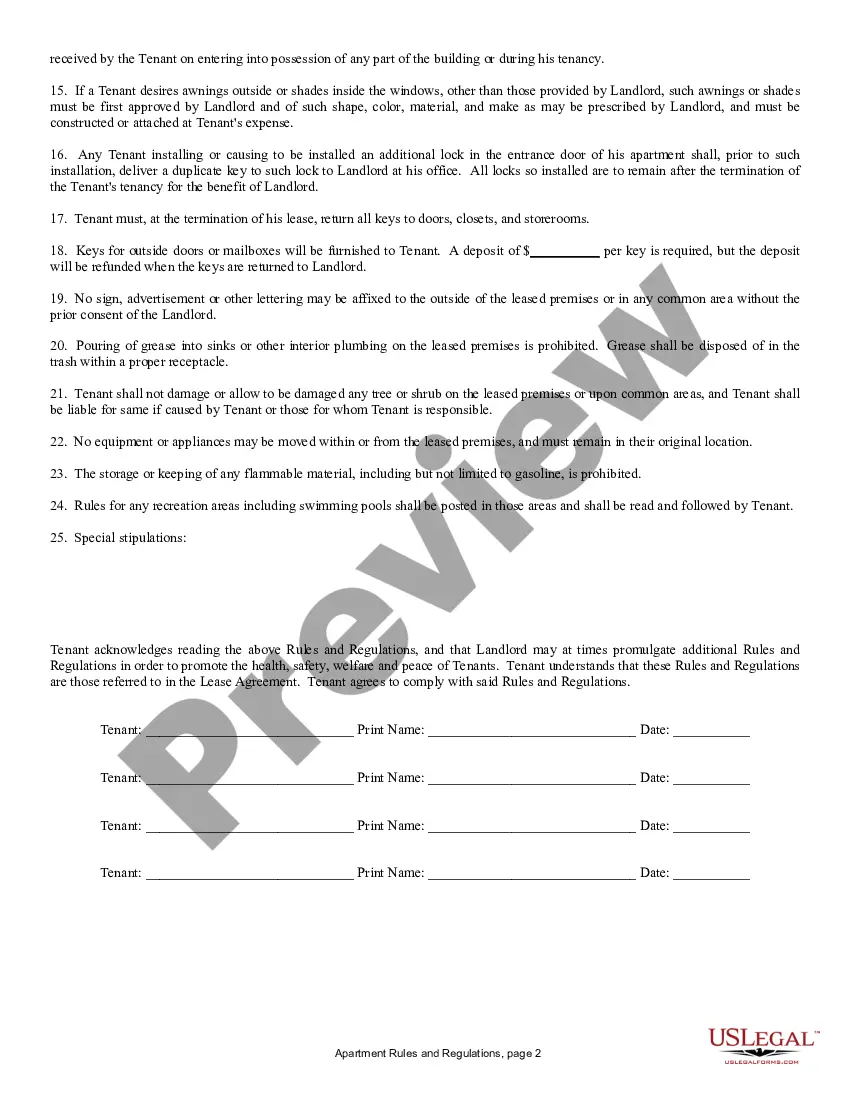
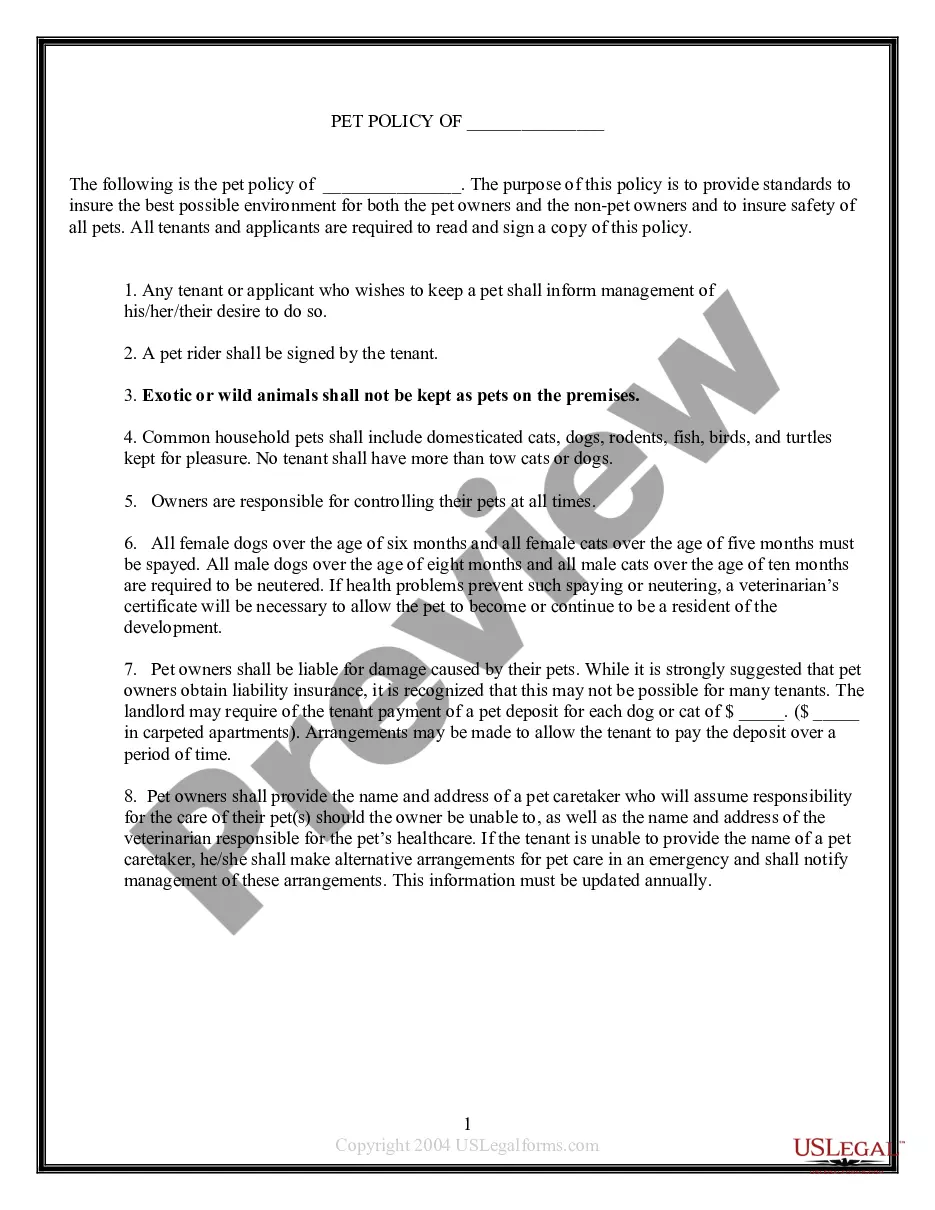
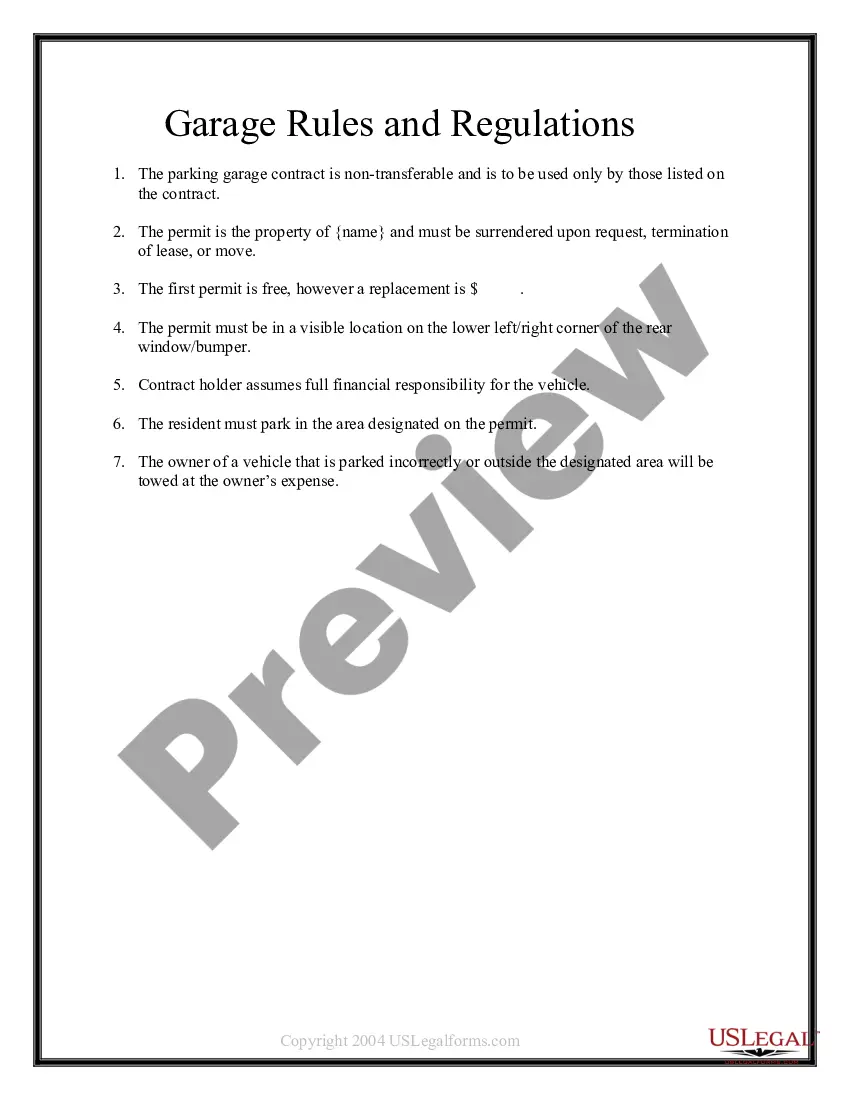
Description
Get your form ready online
Our built-in tools help you complete, sign, share, and store your documents in one place.
Make edits, fill in missing information, and update formatting in US Legal Forms—just like you would in MS Word.
Download a copy, print it, send it by email, or mail it via USPS—whatever works best for your next step.
Sign and collect signatures with our SignNow integration. Send to multiple recipients, set reminders, and more. Go Premium to unlock E-Sign.
If this form requires notarization, complete it online through a secure video call—no need to meet a notary in person or wait for an appointment.
We protect your documents and personal data by following strict security and privacy standards.

Make edits, fill in missing information, and update formatting in US Legal Forms—just like you would in MS Word.

Download a copy, print it, send it by email, or mail it via USPS—whatever works best for your next step.

Sign and collect signatures with our SignNow integration. Send to multiple recipients, set reminders, and more. Go Premium to unlock E-Sign.

If this form requires notarization, complete it online through a secure video call—no need to meet a notary in person or wait for an appointment.

We protect your documents and personal data by following strict security and privacy standards.
Looking for another form?








How to fill out California Apartment Rules And Regulations?
- If you're a returning user, simply log in to your account and download the desired form template.
- Ensure your subscription is active; if it's expired, renew based on your plan.
- For first-time users, start by exploring the form descriptions and previews to select one that fits your local jurisdiction requirements.
- Need an alternative template? Utilize the Search tab to find an appropriate match and move forward.
- Once you've found the right document, click on the Buy Now button to select a subscription plan and create an account.
- Proceed with payment using your credit card or PayPal to complete your purchase.
- Finally, download your form to your device and access it through the My Forms menu whenever needed.
By leveraging US Legal Forms, you benefit from a rich collection of over 85,000 easily editable legal templates, ensuring you find exactly what you need without unnecessary challenges.
Don’t hesitate—start simplifying your apartment policy processes today with US Legal Forms!
Form popularity
FAQ
To qualify for an apartment in California, you should demonstrate sufficient income, a positive credit history, and reliable references. Having these documents ready can significantly speed up your application. Understanding the apartment policy for a resident gives you key insights into what landlords prioritize during their selection process.
Income requirements vary by region, but a common guideline is that your income should be three times the monthly rent. This ensures you can comfortably cover your living expenses. Checking the apartment policy for a resident can provide clarity on specific income requirements set by individual landlords or property management companies.
The requirements for renting an apartment in California generally include completing a rental application, providing income verification, and showing a valid ID. Additionally, landlords may look into your credit history. It is wise to familiarize yourself with the apartment policy for a resident to ensure you have everything in order before applying.
Affording an apartment on a $2000 monthly income requires considering various factors, including location and housing costs. Many experts recommend that your rent should not exceed 30% of your monthly income. Therefore, you should target rentals around $600. Utilize US Legal Forms to explore different apartment policies for a resident that fit your budget.
Generally, this depends on your apartment policy for a resident. Most leases have specific clauses that address subletting or having additional occupants. Before making any arrangements, review your lease agreement to ensure compliance. If needed, you can consult with US Legal Forms to understand your rights and obligations.
To add a resident to your apartment, first review your lease and the apartment policy for a resident regarding changes to occupancy. You will generally need to obtain consent from your landlord to formally add someone to the lease. This process often involves filling out an application and possibly a background check. Platforms like uslegalforms can provide the necessary documents and guidance to smoothly complete this process, ensuring everything is legal and orderly.
Generally, an apartment policy for a resident does not automatically require all tenants to have renters insurance, but it is highly recommended. Renters insurance can protect you from personal property loss, liability claims, and other unexpected events. Some landlords might even stipulate this requirement in your lease, so it’s crucial to review your contract thoroughly. By obtaining renters insurance, you can gain peace of mind and financial security.
Typically, an apartment policy for a resident allows a guest to stay for a limited period, often up to 30 consecutive days, without being added to the lease. After this time, guests may need to be officially included on the lease to comply with the complex's rules. It's essential to check the specific terms outlined in your rental agreement, as policies can vary by location. To avoid complications, it's advisable to notify your landlord or property manager about any long-term guests.
Proof of address generally includes documents like utility bills, bank statements, or a government-issued ID that clearly state your current residential address. Landlords often require this to confirm your residency as part of their apartment policy for a resident. Organizing these documents in advance can streamline your rental application process.
A tenant is someone who has signed a lease and has legal rights under that contract, while a resident may not have a formal lease but still lives in the property. All tenants are residents, but not all residents are tenants. Knowing the rights and responsibilities associated with your status is essential within the apartment policy for a resident.