Lease Transfer For Car
Description
Get your form ready online
Our built-in tools help you complete, sign, share, and store your documents in one place.
Make edits, fill in missing information, and update formatting in US Legal Forms—just like you would in MS Word.
Download a copy, print it, send it by email, or mail it via USPS—whatever works best for your next step.
Sign and collect signatures with our SignNow integration. Send to multiple recipients, set reminders, and more. Go Premium to unlock E-Sign.
If this form requires notarization, complete it online through a secure video call—no need to meet a notary in person or wait for an appointment.
We protect your documents and personal data by following strict security and privacy standards.

Make edits, fill in missing information, and update formatting in US Legal Forms—just like you would in MS Word.

Download a copy, print it, send it by email, or mail it via USPS—whatever works best for your next step.

Sign and collect signatures with our SignNow integration. Send to multiple recipients, set reminders, and more. Go Premium to unlock E-Sign.

If this form requires notarization, complete it online through a secure video call—no need to meet a notary in person or wait for an appointment.

We protect your documents and personal data by following strict security and privacy standards.
Looking for another form?
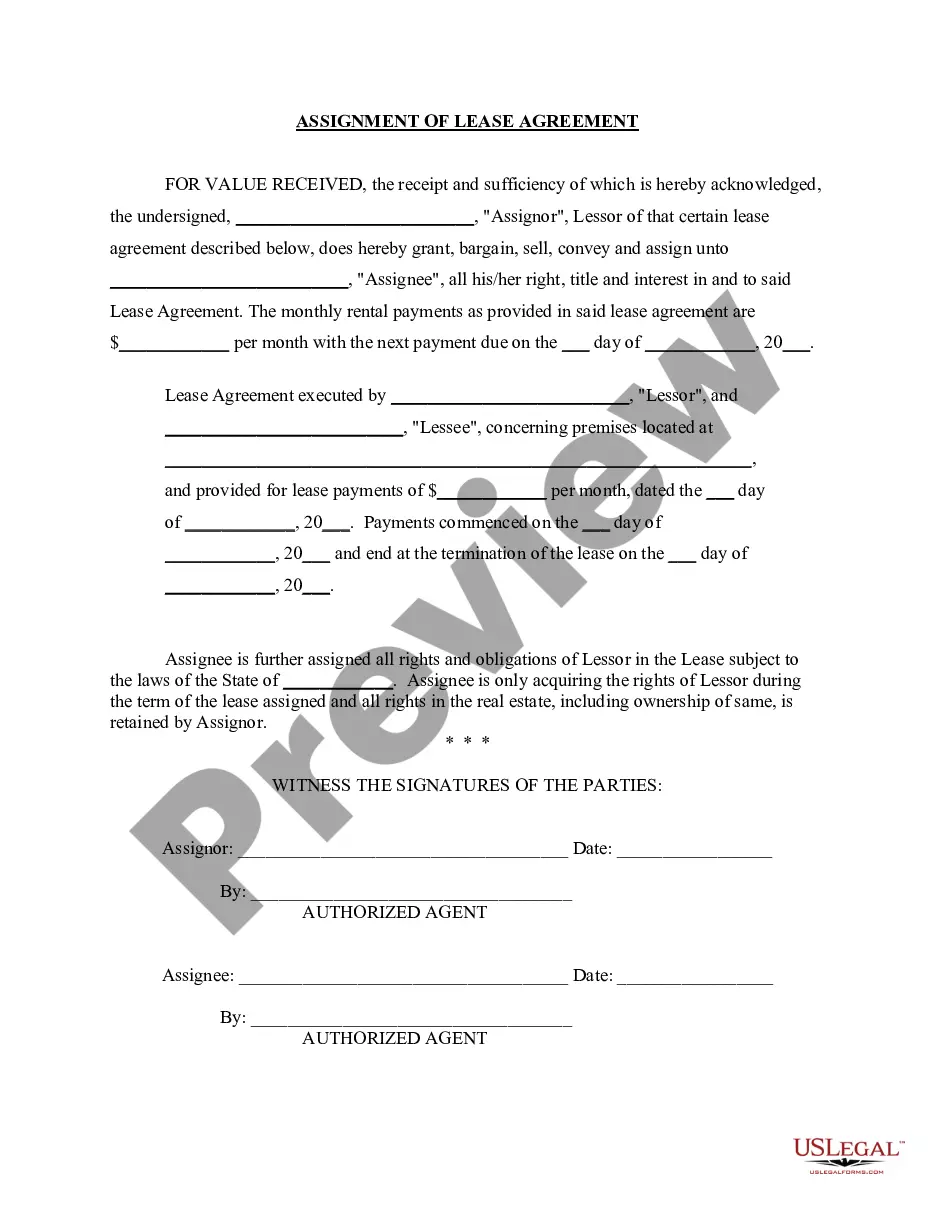
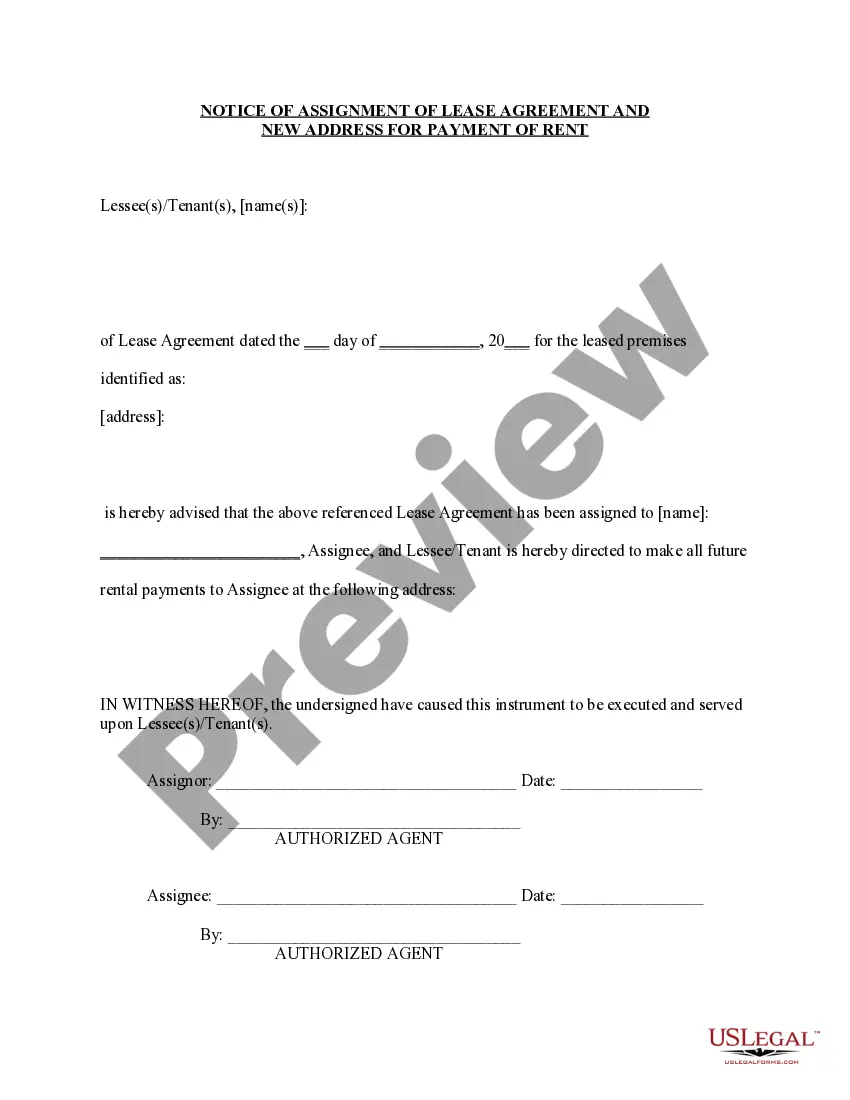
How to fill out California Assignment Of Lease From Lessor With Notice Of Assignment?
Dealing with legal documents and processes can be a lengthy addition to your entire day.
Lease Transfer For Car and similar forms typically necessitate that you search for them and figure out how to fill them out properly.
Thus, regardless of whether you are managing financial, legal, or personal affairs, utilizing a comprehensive and user-friendly online catalog of forms will be extremely beneficial.
US Legal Forms represents the top online resource for legal templates, hosting over 85,000 state-specific forms alongside various tools to help you finalize your documents with ease.
Is this your first time using US Legal Forms? Sign up and create your account in a matter of minutes, and you’ll gain access to the form catalog and Lease Transfer For Car. Then, follow the steps outlined below to fill out your form.
- Browse the catalog of relevant documents accessible with just a single click.
- US Legal Forms provides state- and county-specific forms available at all times for download.
- Protect your document management procedures with a premium service that enables you to prepare any form in minutes without any extra or concealed fees.
- Simply Log In to your account, locate Lease Transfer For Car, and obtain it immediately from the My documents section.
- You can also review previously saved forms.
Form popularity
FAQ
Completing a lease transfer generally involves a few key steps. First, the original lessee needs to contact the leasing company to get approval for the transfer. Afterward, the original and new lessee will complete the required paperwork. Using platforms like USLegalForms can simplify this process by providing the necessary documentation and guidance for a smooth lease transfer for car.
Yes, Microsoft Word has a free lease agreement template that you can customize to create your own contract and minimize any potential problems between tenant and landlord.
With our website, you can have an effective rental agreement and easily hand it out to your new tenants confidently simply by downloading our Rental Agreement Template in Google Docs. They are professionally written by our legal team to strictly comply with the legalities it intends to bind.
I promise to pay 1/__ of the monthly rent. This amounts to $____. The total amount my roommate(s) and I are liable for over the period of the lease is $____, of which my share is $____. I understand that we, as a group and as individuals, are responsible to our landlord for the total rent for the term of the agreement.
What a Tenancy Agreement Should Contain Tenant's identity and address for the Landlord. The property address. The commencement and termination dates of the tenancy/lease. The rent amount. Additional charges, such as legal fees, agency commissions, security deposits, service charges, etc. Tenant and landlord obligations.