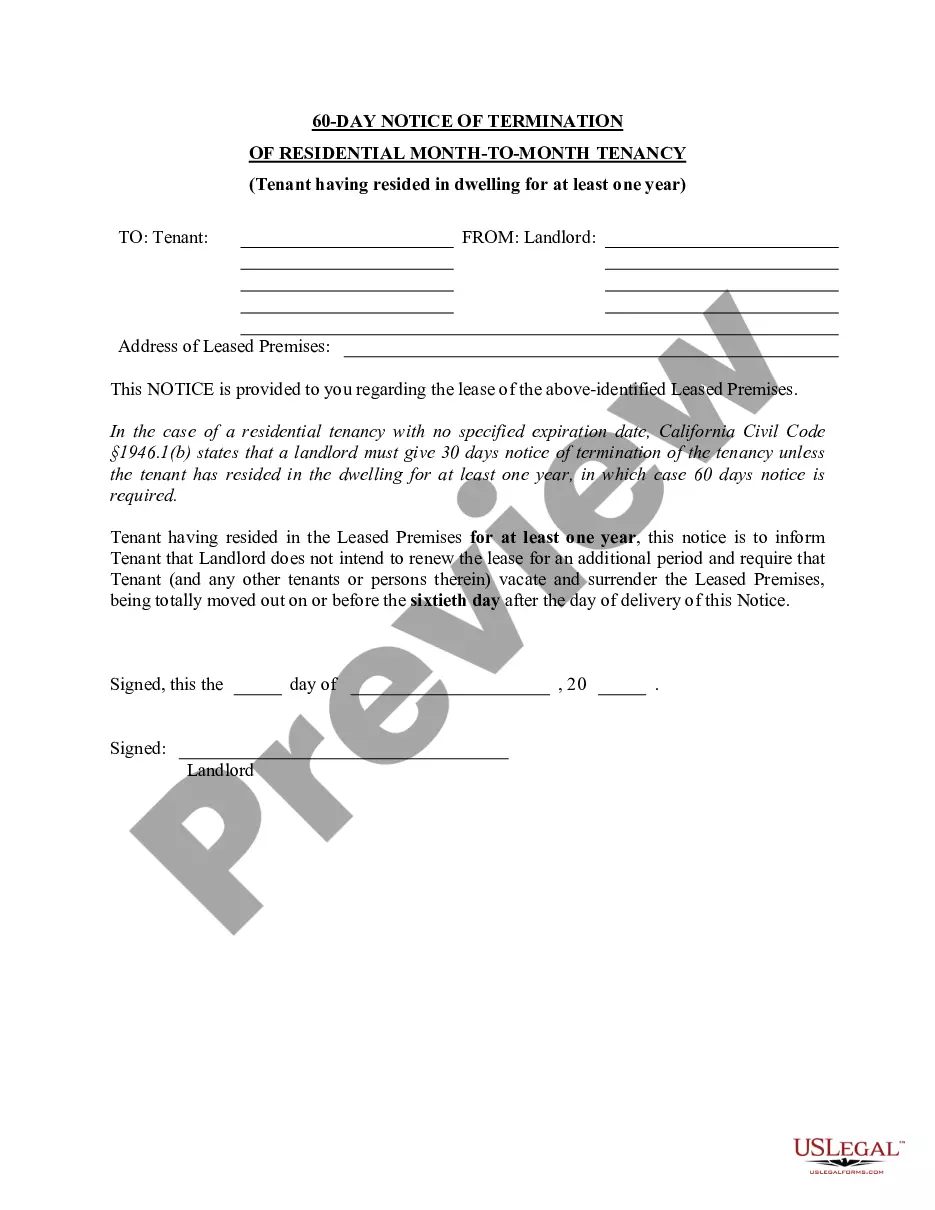
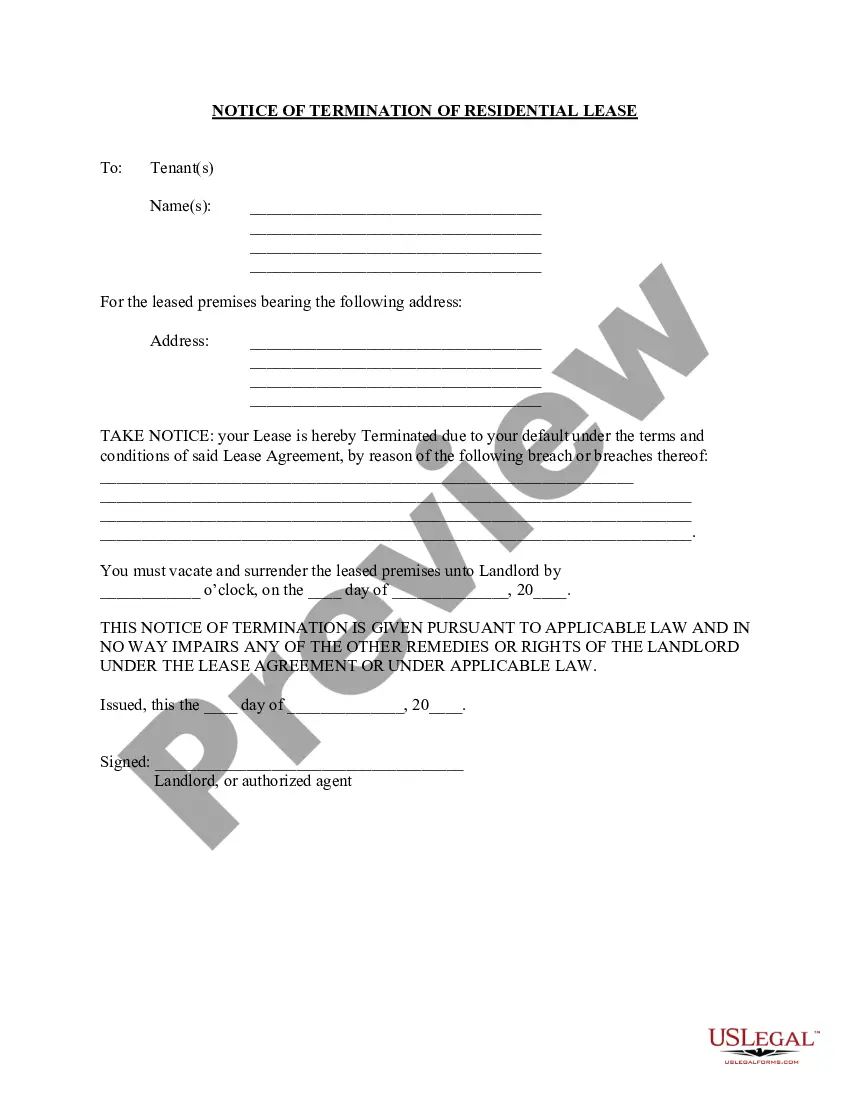
Ca Termination Tenancy California Form 60-day Notice
Description

Get your form ready online
Our built-in tools help you complete, sign, share, and store your documents in one place.
Make edits, fill in missing information, and update formatting in US Legal Forms—just like you would in MS Word.
Download a copy, print it, send it by email, or mail it via USPS—whatever works best for your next step.
Sign and collect signatures with our SignNow integration. Send to multiple recipients, set reminders, and more. Go Premium to unlock E-Sign.
If this form requires notarization, complete it online through a secure video call—no need to meet a notary in person or wait for an appointment.
We protect your documents and personal data by following strict security and privacy standards.

Make edits, fill in missing information, and update formatting in US Legal Forms—just like you would in MS Word.

Download a copy, print it, send it by email, or mail it via USPS—whatever works best for your next step.

Sign and collect signatures with our SignNow integration. Send to multiple recipients, set reminders, and more. Go Premium to unlock E-Sign.

If this form requires notarization, complete it online through a secure video call—no need to meet a notary in person or wait for an appointment.

We protect your documents and personal data by following strict security and privacy standards.
Looking for another form?
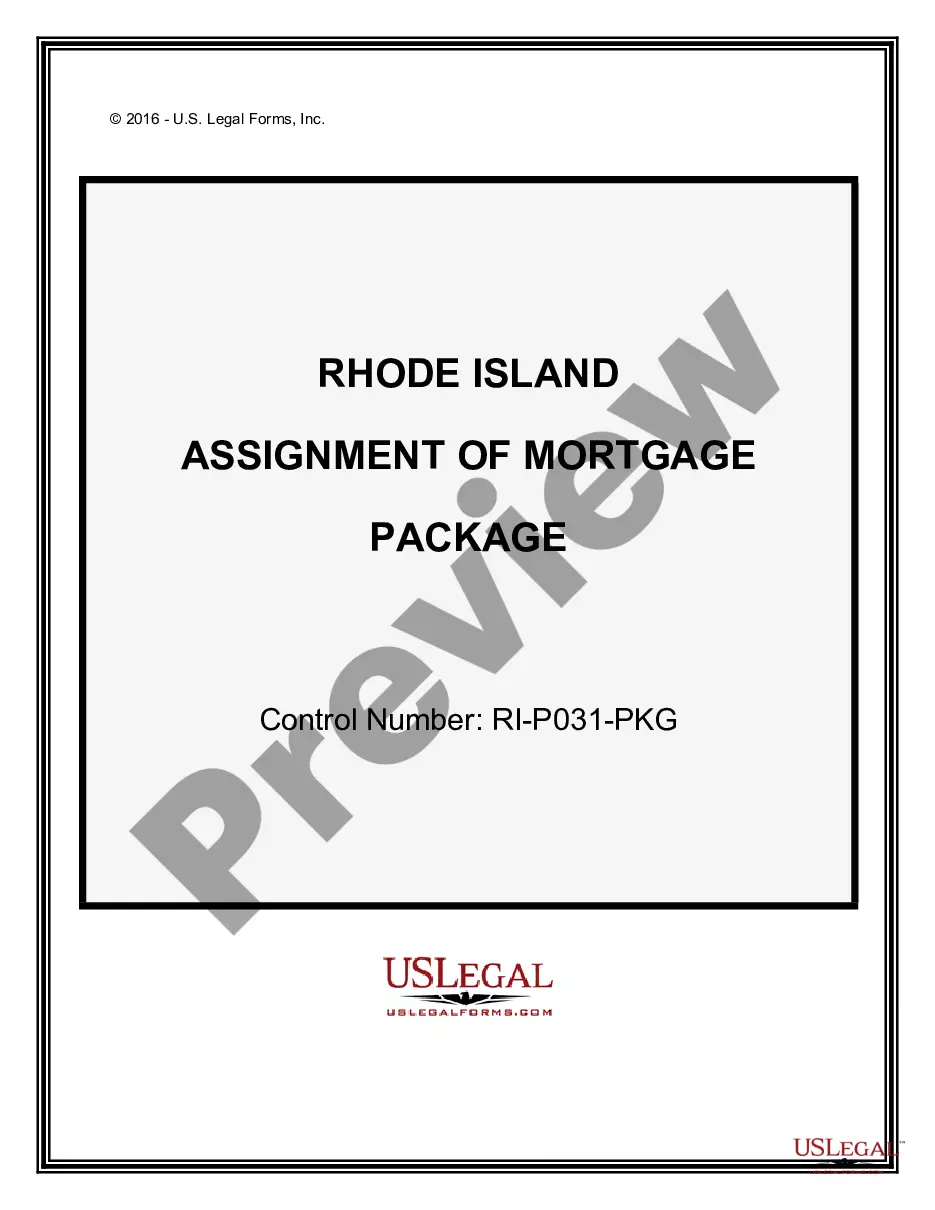




How to fill out California 60 Day Notice Of Termination - Residential Month-to-Month Tenancy?
It's clear that you cannot instantly become a legal authority, nor can you quickly understand how to draft the Ca Termination Tenancy California Form 60-day Notice without possessing a specialized skill set.
Creating legal documents is a lengthy process that demands specific education and expertise.
So why not leave the formulation of the Ca Termination Tenancy California Form 60-day Notice to the specialists.
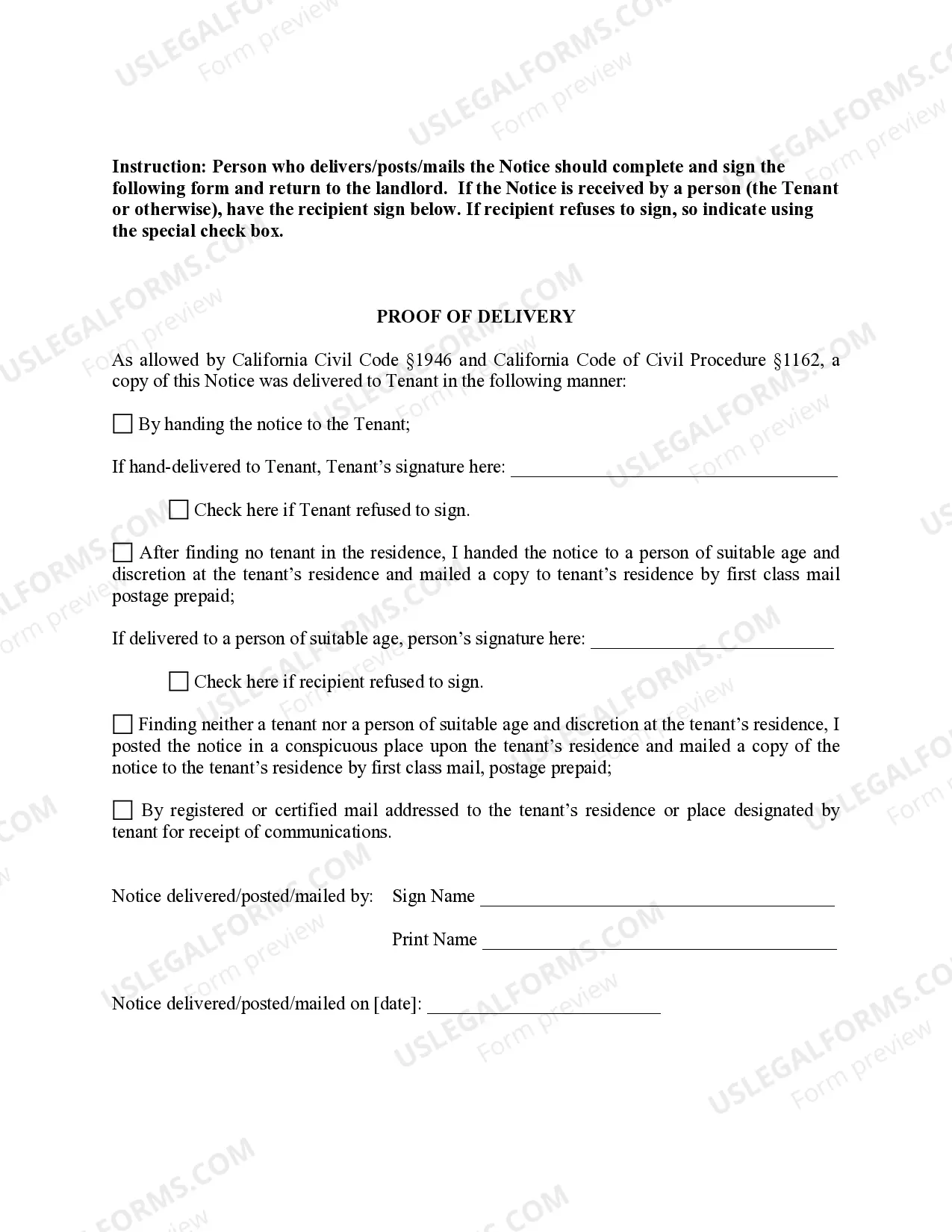
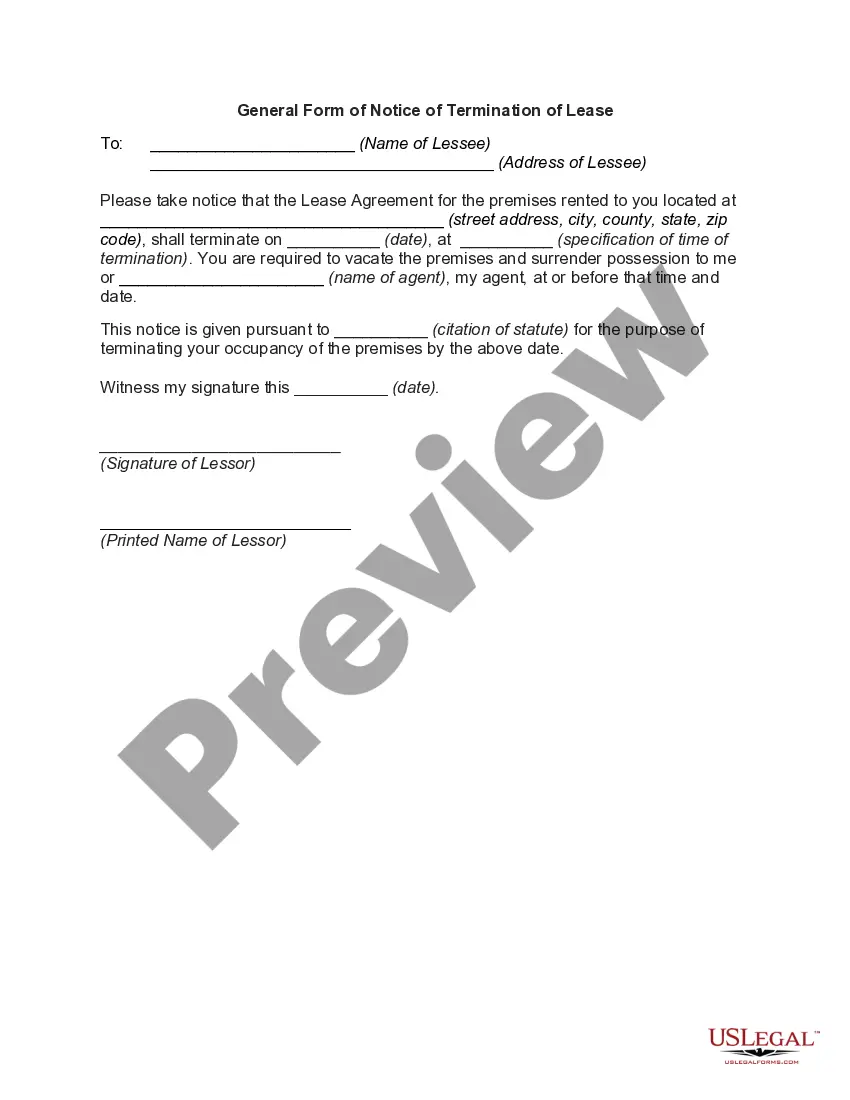
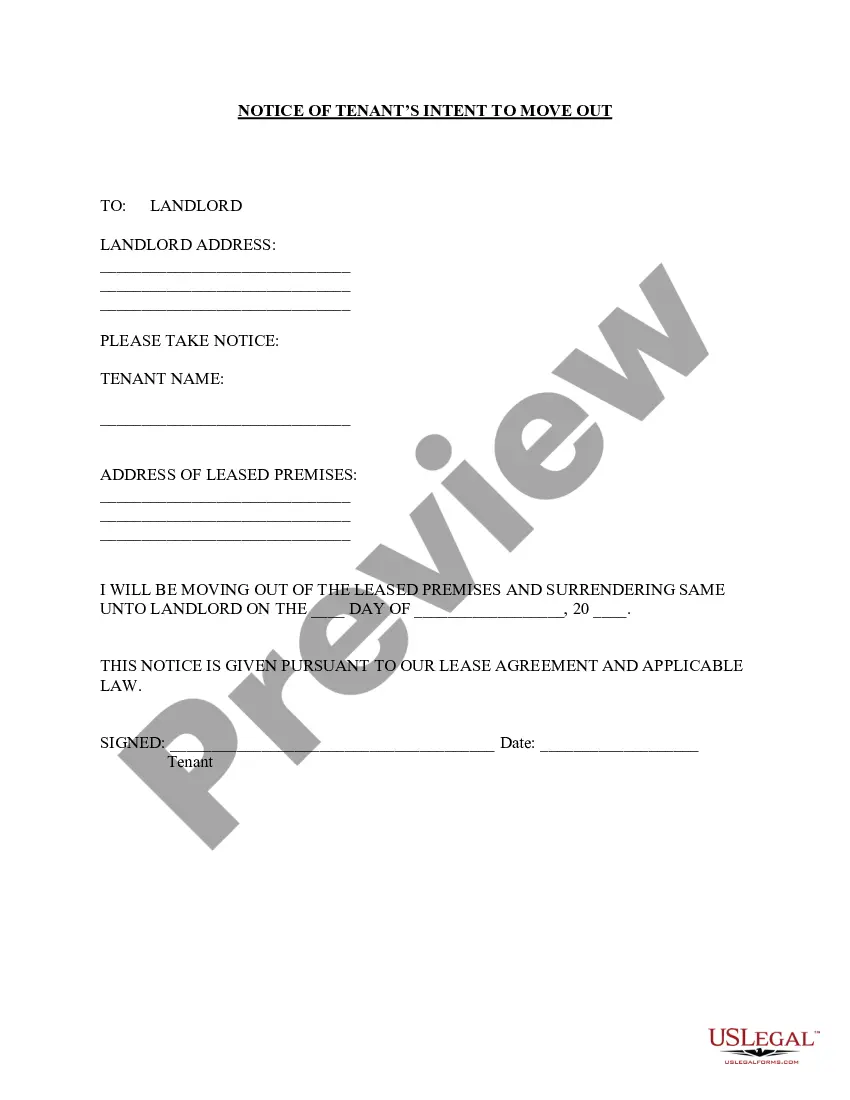
Preview it (if this option is available) and read the accompanying description to determine if the Ca Termination Tenancy California Form 60-day Notice is what you are looking for.
If you need any other template, restart your search.
- With US Legal Forms, one of the most extensive libraries of legal templates, you can find anything from court documents to templates for internal corporate communication.
- We recognize how crucial compliance and adherence to federal and state legislation are.
- That's why, on our site, all forms are location-specific and current.
- Begin with our platform and obtain the document you need in just minutes.
- Use the search bar at the top of the page to discover the document you need.
Form popularity
FAQ
The Truth in Lending Act, or TILA, also known as regulation Z, requires lenders to disclose information about all charges and fees associated with a loan. This 1968 federal law was created to promote honesty and clarity by requiring lenders to disclose terms and costs of consumer credit.
The Home Mortgage Disclosure Act requires certain financial institutions to collect, report, and disclose information about their mortgage lending activity. HMDA was originally enacted by the Congress in 1975 and is implemented by Regulation C (12 CFR Part 1003).
In a mortgage loan, the borrower always creates two documents: a note and a mortgage.
Lenders require a few documents that can serve as proof of your identity and financial information to approve you for a loan. Some of the documents you'll be asked to provide include, copies of your state- or government-issued ID, copies of paystubs, tax returns or bank statements.
A lender can get a good sense of your likelihood of being approved by checking out your recent pay stubs, bank statements, W-2 forms and tax returns. Depending on your financial situation, here are seven mortgage documents you might need when applying for a home loan.
MDIA. Timing Requirements ? The ?3/7/3 Rule? The initial Truth in Lending Statement must be delivered to the consumer within 3 business days of the receipt of the loan application by the lender. The TILA statement is presumed to be delivered to the consumer 3 business days after it is mailed.
Your income, your Social Security number (so the lender can pull a credit report), the property address, an estimate of the value of the property, and.
In-person or phone interviews: Loan officers conduct in-person or phone interviews with customers and key the data into the internal systems. Paper forms: Customers fill out paper forms, which are then scanned and inputted into the system.