Notice Rental Agreement Format
Description

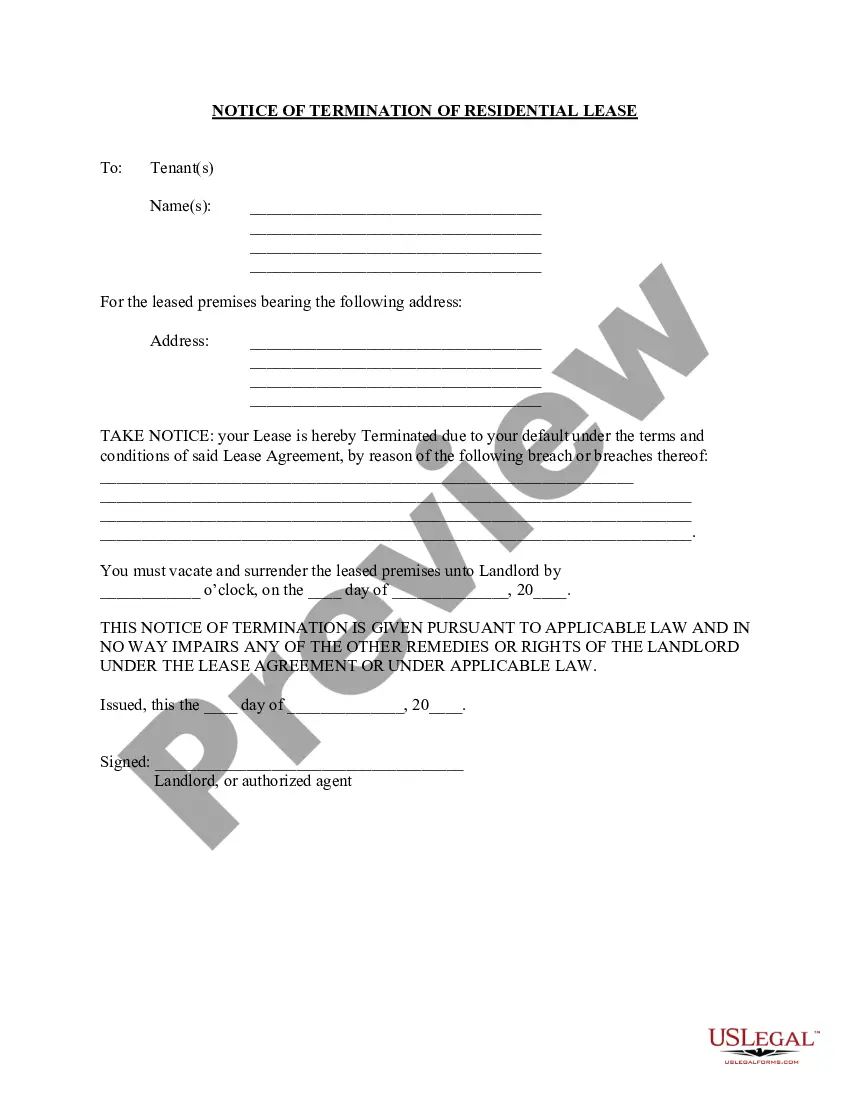
Get your form ready online
Our built-in tools help you complete, sign, share, and store your documents in one place.
Make edits, fill in missing information, and update formatting in US Legal Forms—just like you would in MS Word.
Download a copy, print it, send it by email, or mail it via USPS—whatever works best for your next step.
Sign and collect signatures with our SignNow integration. Send to multiple recipients, set reminders, and more. Go Premium to unlock E-Sign.
If this form requires notarization, complete it online through a secure video call—no need to meet a notary in person or wait for an appointment.
We protect your documents and personal data by following strict security and privacy standards.

Make edits, fill in missing information, and update formatting in US Legal Forms—just like you would in MS Word.

Download a copy, print it, send it by email, or mail it via USPS—whatever works best for your next step.

Sign and collect signatures with our SignNow integration. Send to multiple recipients, set reminders, and more. Go Premium to unlock E-Sign.

If this form requires notarization, complete it online through a secure video call—no need to meet a notary in person or wait for an appointment.

We protect your documents and personal data by following strict security and privacy standards.
Looking for another form?





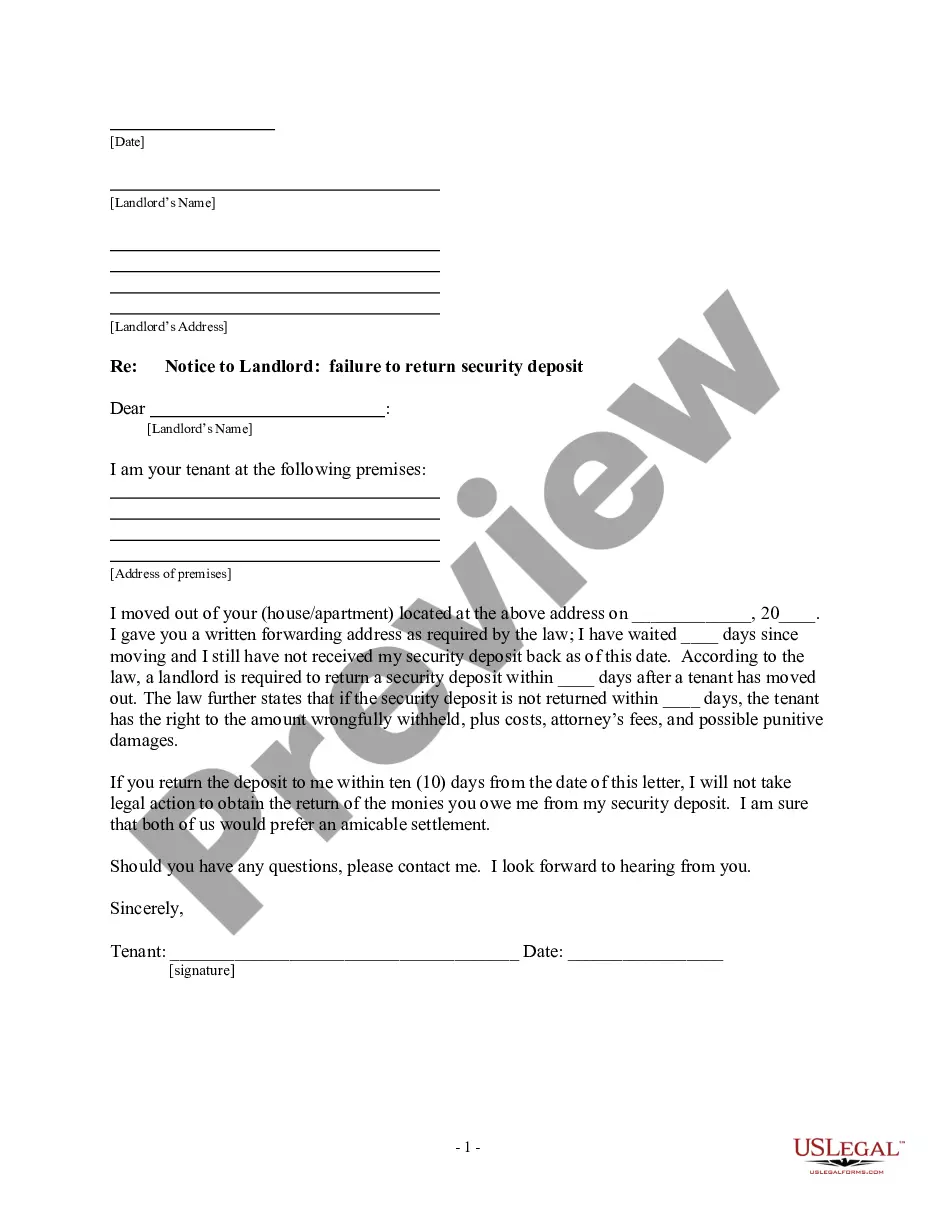

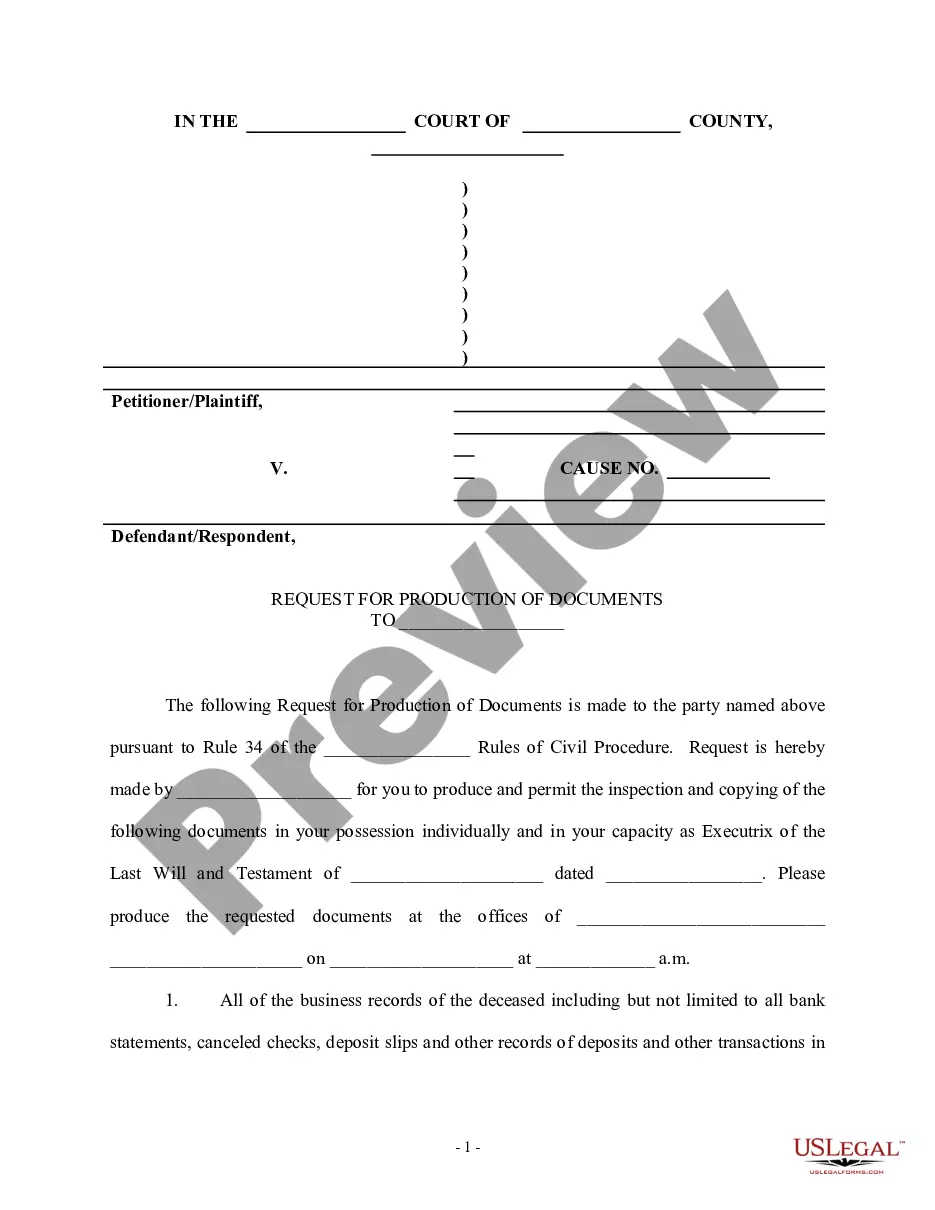

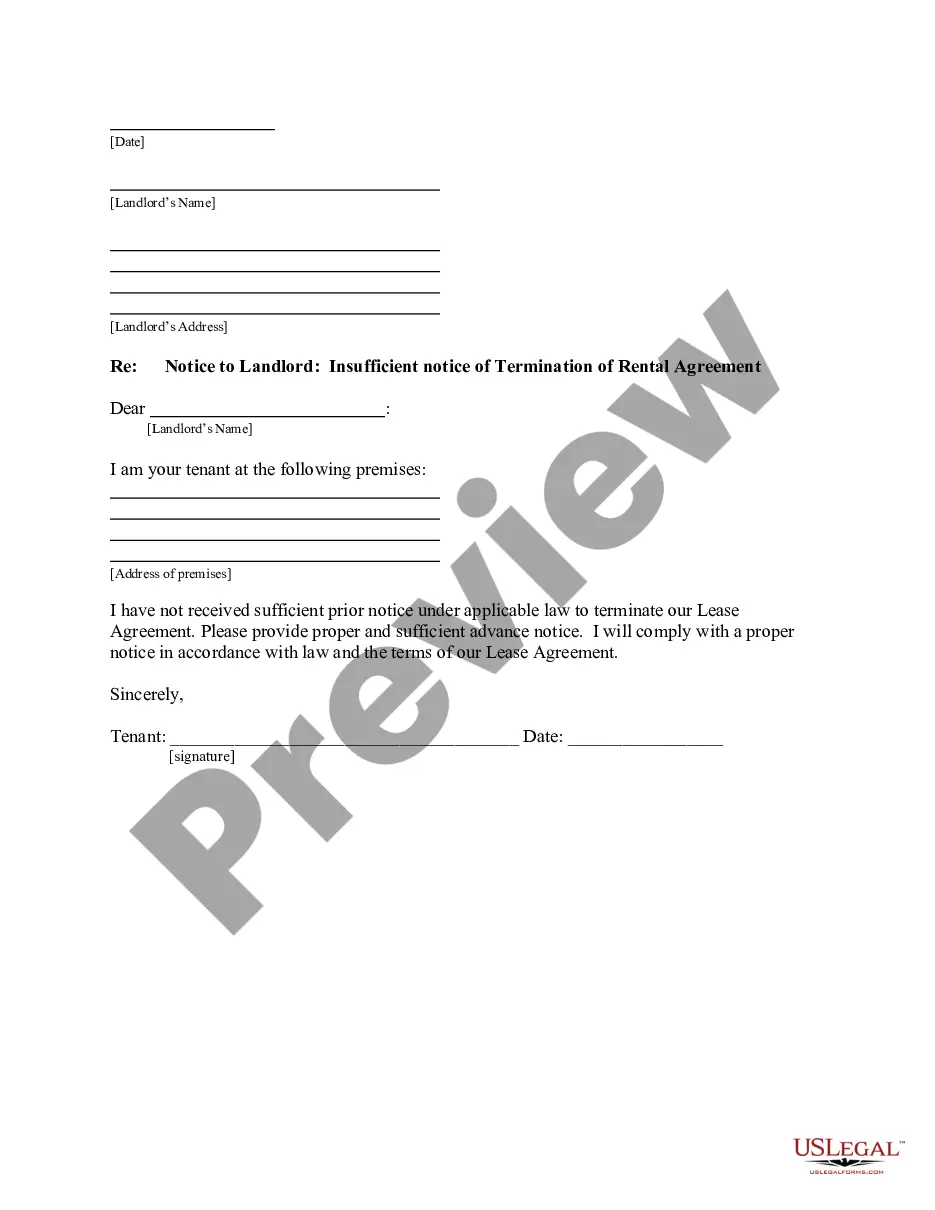
How to fill out California Letter From Tenant To Landlord About Insufficient Notice To Terminate Rental Agreement?
The Notice Rental Agreement Template you observe on this site is a reusable official format created by experienced attorneys in accordance with national and regional regulations.
For over 25 years, US Legal Forms has offered individuals, companies, and lawyers more than 85,000 authenticated, state-specific documents for various business and personal occasions. It’s the fastest, easiest, and most trustworthy method to acquire the paperwork you require, as the service ensures the utmost level of data security and anti-malware safeguards.
Choose the format you desire for your Notice Rental Agreement Template (PDF, DOCX, RTF) and save the document on your device. Complete and sign the documents. Print the template to fill it out manually. Alternatively, utilize an online versatile PDF editor to quickly and accurately complete and sign your form with an eSignature. Re-download your documents as needed. Access the My documents tab in your profile to retrieve any forms you have previously downloaded. Register for US Legal Forms to access verified legal templates for all of life’s situations at your fingertips.
- Search for the document you require and examine it.
- Browse through the example you sought and preview it or verify the form description to confirm it meets your criteria. If it doesn’t, utilize the search bar to discover the suitable one. Click Buy Now once you have found the template you need.
- Register and Log In.
- Select the pricing plan that fits you and create an account. Use PayPal or a credit card to make a swift payment. If you already possess an account, Log In and verify your subscription to proceed.
- Acquire the fillable template.
Form popularity
FAQ
No, in Vermont, you do not need to notarize your will to make it legal. However, Vermont allows you to make your will "self-proving" and you'll need to go to a notary if you want to do that. A self-proving will speeds up probate because the court can accept the will without contacting the witnesses who signed it.
You must sign the will in front of two witnesses who must watch you and each other sign the document. A person who will get something under your will cannot be a witness.
Do All Estates Have to Go Through Probate in Vermont? Most estates in Vermont will need to go through probate. Unless they are included in a living trust, they will need to go through a legal process to have the assets transferred to the heirs.
You can contact the court by phone, in writing, in person, or by sending an email to JUD.VJB@vermont.gov. A motion is a request in writing asking the court to consider doing something specific in your case. All motions must identify the request and give specific reasons for the request.
Go to the Probate Division in the county where the decedent lived at the time of death. The court will appoint the ?executor.? It is the executor's job to locate and gather all of the assets, and then pay debts and distribute property ing to the terms of a will. The probate court will supervise this process.
You may file your will for safekeeping with the probate court in the county in which you reside. You may also file any amendments to the original will (codicils). There is a fee to file your will with the court. See the Probate section of the Fees web page for the amount.
You may file your will for safekeeping with the probate court in the county in which you reside. You may also file any amendments to the original will (codicils). There is a fee to file your will with the court. See the Probate section of the Fees web page for the amount.