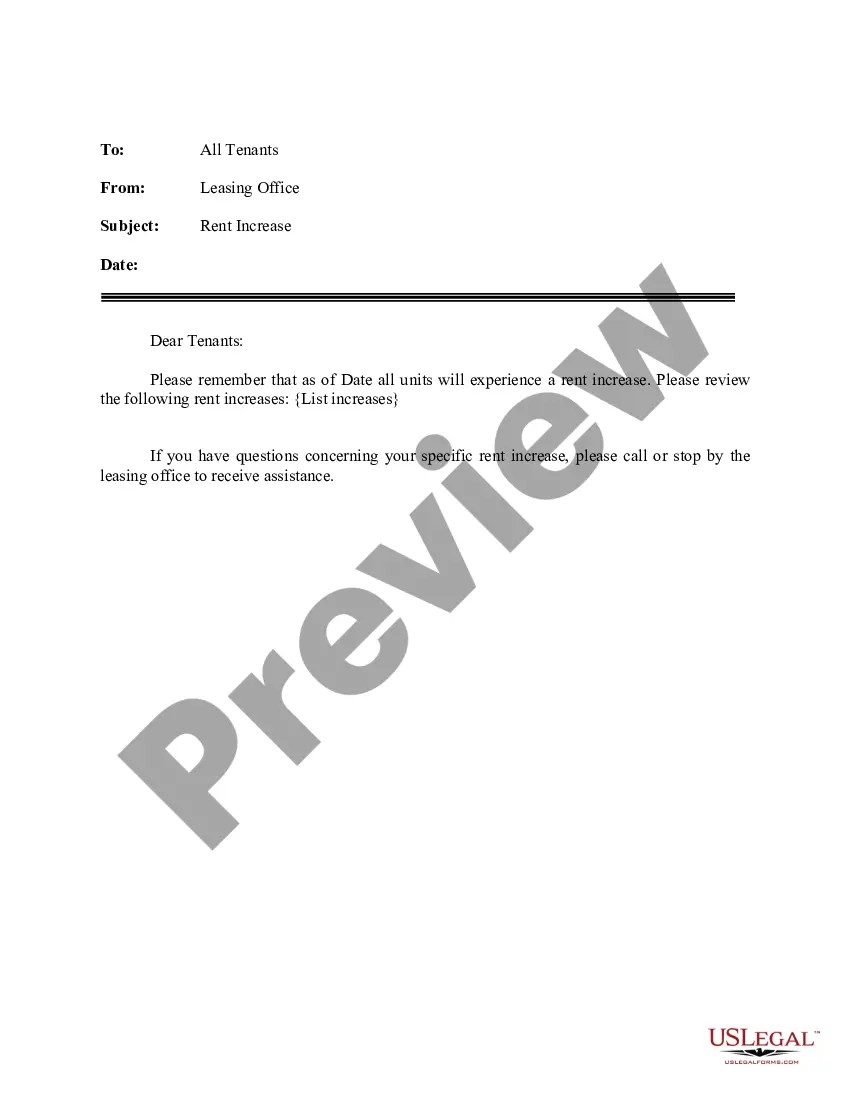
Rent Stabilization Ordinance In Florida
Description

Get your form ready online
Our built-in tools help you complete, sign, share, and store your documents in one place.
Make edits, fill in missing information, and update formatting in US Legal Forms—just like you would in MS Word.
Download a copy, print it, send it by email, or mail it via USPS—whatever works best for your next step.
Sign and collect signatures with our SignNow integration. Send to multiple recipients, set reminders, and more. Go Premium to unlock E-Sign.
If this form requires notarization, complete it online through a secure video call—no need to meet a notary in person or wait for an appointment.
We protect your documents and personal data by following strict security and privacy standards.

Make edits, fill in missing information, and update formatting in US Legal Forms—just like you would in MS Word.

Download a copy, print it, send it by email, or mail it via USPS—whatever works best for your next step.

Sign and collect signatures with our SignNow integration. Send to multiple recipients, set reminders, and more. Go Premium to unlock E-Sign.

If this form requires notarization, complete it online through a secure video call—no need to meet a notary in person or wait for an appointment.

We protect your documents and personal data by following strict security and privacy standards.
Looking for another form?









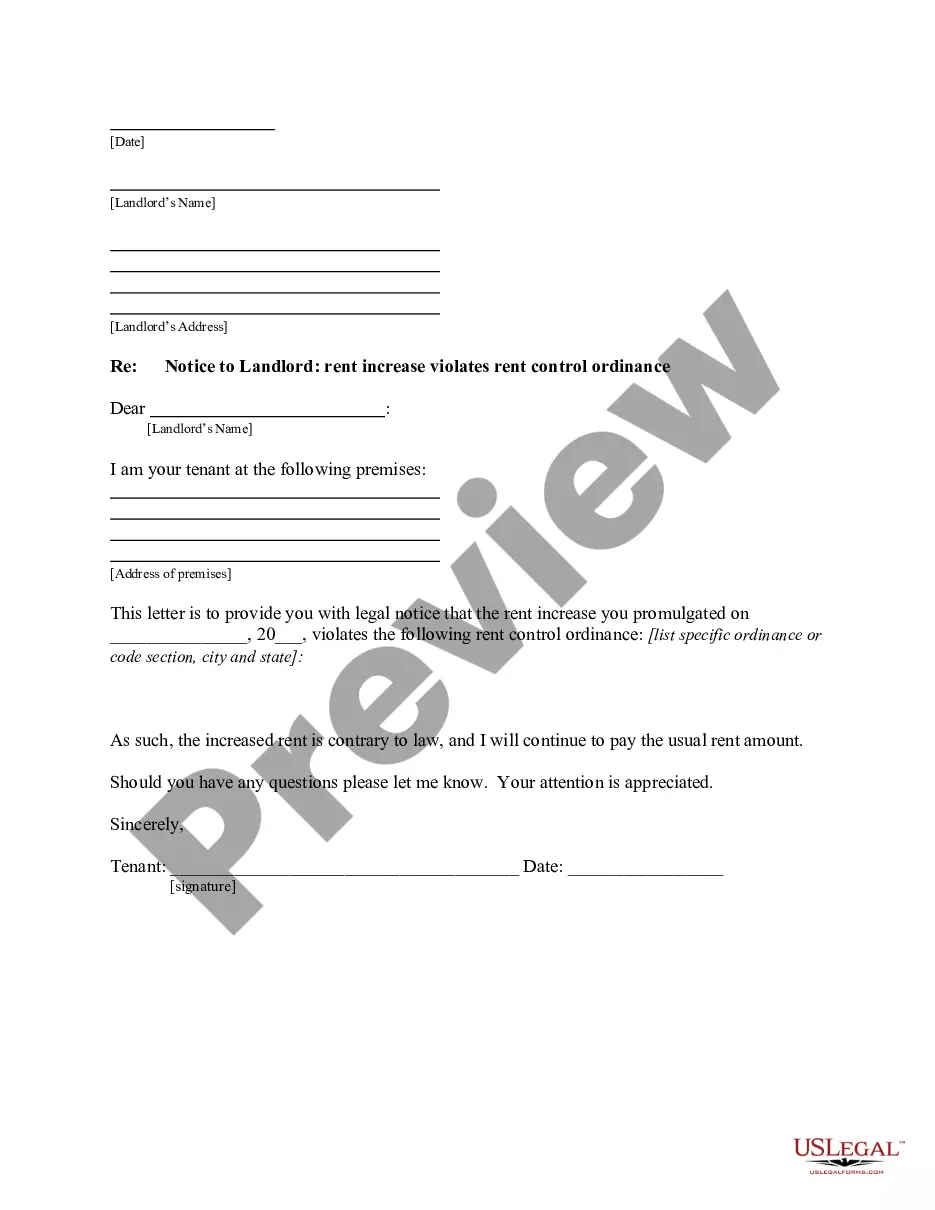
How to fill out California Letter From Tenant To Landlord Containing Notice To Landlord To Withdraw Improper Rent Increase Due To Violation Of Rent Control Ordinance?
Finding a reliable source for obtaining the latest and most suitable legal templates is a significant part of navigating bureaucracy.
Selecting the appropriate legal documents requires precision and meticulousness, which is why it's essential to acquire samples of the Rent Stabilization Ordinance in Florida solely from trustworthy sources, such as US Legal Forms. An incorrect template may squander your time and hinder the matter at hand. With US Legal Forms, you can worry very little.
Eliminate the hassle related to your legal documentation. Browse through the extensive catalog at US Legal Forms to discover legal samples, assess their relevance to your situation, and download them immediately.
- Utilize the library navigation or search function to locate your sample.
- Review the description of the form to verify it meets the specifications of your state and locality.
- If available, open the form preview to confirm that the template is indeed what you need.
- If the Rent Stabilization Ordinance in Florida does not match your requirements, return to search for the correct template.
- If you are certain about the form's applicability, download it.
- As an authorized user, click Log in to verify your identity and access your selected templates in My documents.
- If you have yet to create a profile, click Buy now to acquire the form.
- Choose the pricing option that suits your needs.
- Proceed to registration to complete your purchase.
- Finalize your payment method (credit card or PayPal).
- Select the document format for downloading the Rent Stabilization Ordinance in Florida.
- After obtaining the form on your device, you can edit it with the editor or print it and complete it manually.
Form popularity
FAQ
Yes, while there is no comprehensive rent stabilization across the entire state, certain cities in Florida have enacted their own rent stabilization ordinances. These ordinances aim to protect tenants by limiting rent increases, thus promoting housing affordability in areas where it’s needed most. It's crucial for both renters and landlords to familiarize themselves with these local regulations. For a clearer understanding of how these laws impact you, consider visiting US Legal Forms for guidance and necessary documents.
Currently, Florida does not have a statewide rent stabilization law. However, some local municipalities have implemented their own rent stabilization ordinances in Florida to control rental prices within their jurisdictions. These local laws vary significantly, so it is essential for tenants and landlords to understand the specific rules in their area. If you need assistance navigating these local ordinances, US Legal Forms offers resources and templates to help you stay informed.
In Florida, landlords can generally raise rent as much as they wish if there is no rent stabilization ordinance in Florida governing the increase. However, the landlord must provide proper notice, typically 30 days, based on the rental agreement. It is crucial to review your lease to understand any stipulations regarding rent increases. For further assistance, consider visiting US Legal Forms for the correct documentation and information.
Yes, your landlord can raise your rent by $300, but the legality of this increase depends on various factors. If there is no rent stabilization ordinance in Florida affecting your property, the landlord has the right to set the rent amount. Keep in mind that you should receive proper notice regarding any rent increase, so check your lease agreement and local laws for specifics. Using services like US Legal Forms can help you navigate any disputes regarding rent increases.
In Florida, there is no statewide rent control law that includes a cap on lot rent increases. However, some local jurisdictions may have implemented a rent stabilization ordinance in Florida that could limit increases. It's important to check your local laws and regulations, as they can vary widely. You may also want to consult with a legal expert or use resources like US Legal Forms for guidance on your specific situation.
In Florida, there is generally no limit on how much rent can be increased unless local rent stabilization ordinances apply. However, many landlords typically follow a reasonable increase percentage based on local market conditions. To keep up-to-date with regulations, consider checking local guidelines related to the rent stabilization ordinance in Florida.
The 3x rent rule in Florida mandates that potential tenants earn at least three times the rent amount to qualify for a rental lease. This rule helps landlords mitigate the risk of non-payment. Understanding this guideline, along with the rent stabilization ordinance in Florida, can pave the way for a smoother rental process.
When considering whether you make three times your rent, it generally refers to your gross income, which is your income before taxes are deducted. This calculation helps landlords ensure that tenants have sufficient income to cover rent even after tax deductions. Under the rent stabilization ordinance in Florida, this standard is an important factor for potential renters.
To afford a $1500 rent comfortably, your monthly income should typically be around $4500. This amount allows you to adhere to the common standard of spending no more than one-third of your income on housing. According to the rent stabilization ordinance in Florida, maintaining this balance is essential for financial stability.