Tenant Landlord Building For Lease
Description


Get your form ready online
Our built-in tools help you complete, sign, share, and store your documents in one place.
Make edits, fill in missing information, and update formatting in US Legal Forms—just like you would in MS Word.
Download a copy, print it, send it by email, or mail it via USPS—whatever works best for your next step.
Sign and collect signatures with our SignNow integration. Send to multiple recipients, set reminders, and more. Go Premium to unlock E-Sign.
If this form requires notarization, complete it online through a secure video call—no need to meet a notary in person or wait for an appointment.
We protect your documents and personal data by following strict security and privacy standards.

Make edits, fill in missing information, and update formatting in US Legal Forms—just like you would in MS Word.

Download a copy, print it, send it by email, or mail it via USPS—whatever works best for your next step.

Sign and collect signatures with our SignNow integration. Send to multiple recipients, set reminders, and more. Go Premium to unlock E-Sign.

If this form requires notarization, complete it online through a secure video call—no need to meet a notary in person or wait for an appointment.

We protect your documents and personal data by following strict security and privacy standards.
Looking for another form?
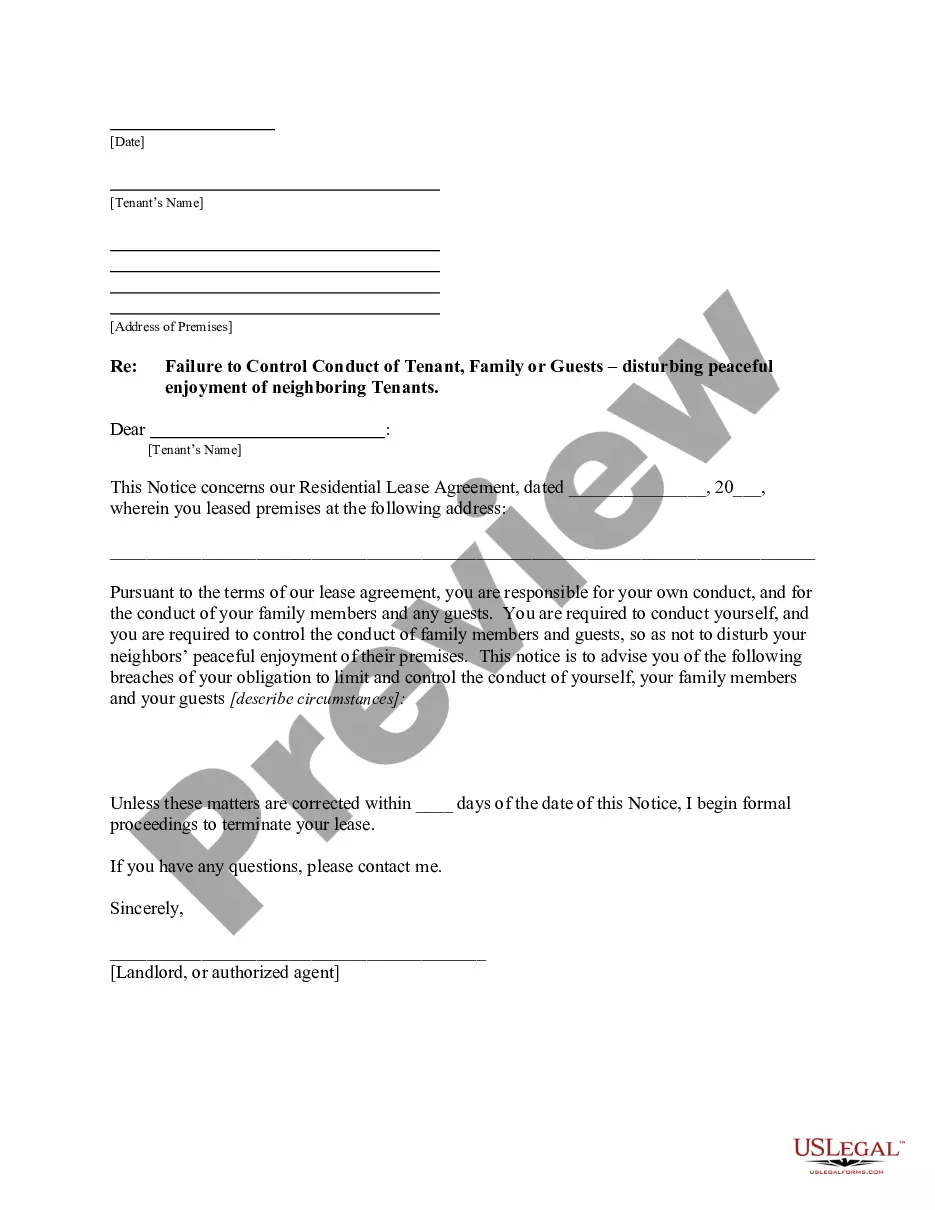









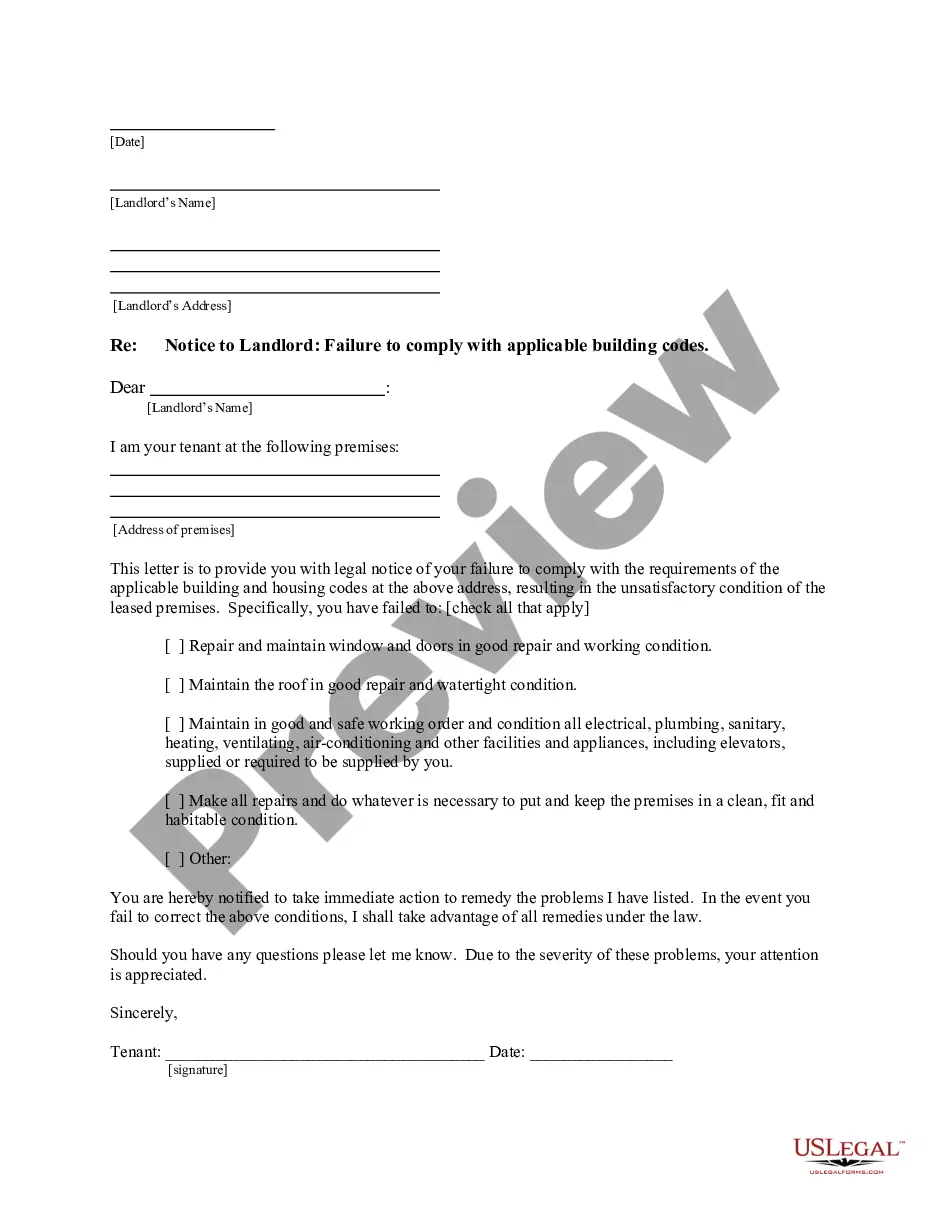
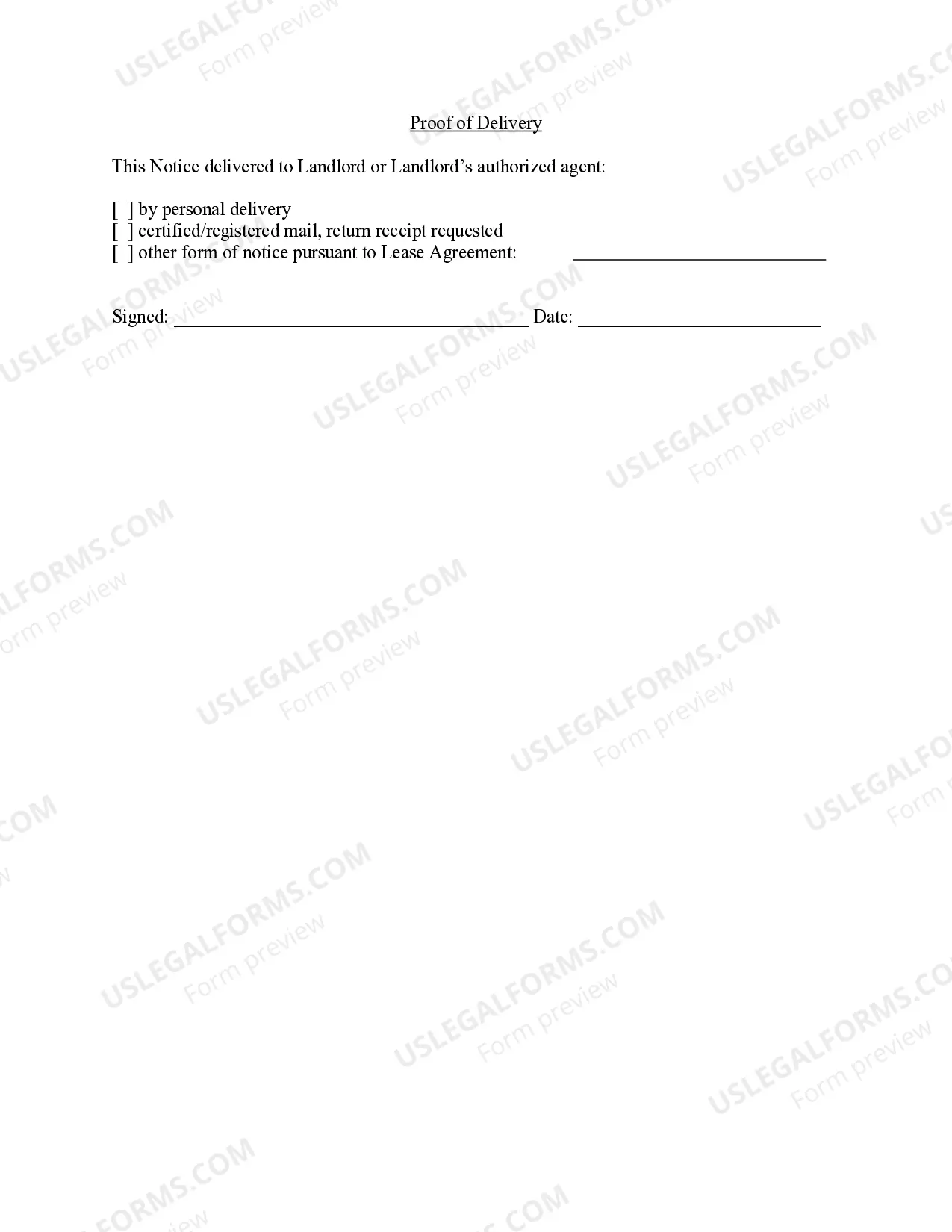
How to fill out California Letter From Tenant To Landlord For Failure Of Landlord To Comply With Building Codes Affecting Health And Safety Or Resulting In Untenantable Condition - Demand For Remedy?
- Log in to your US Legal Forms account to access your previously used templates. Ensure that your subscription remains active; renew if necessary.
- For first-time users, begin by browsing the extensive collection of forms. Use the Preview mode to examine the forms and verify they meet your specific needs.
- If you need alternate templates, utilize the Search feature at the top of the page to locate more options. Select the most suitable one.
- Proceed to purchase the chosen document. Click on the Buy Now button and select your desired subscription plan, which requires account registration.
- Complete your transaction by providing payment details through credit card or PayPal.
- Download your form and save it to your device. You can also find it later in the My Forms section of your profile.
US Legal Forms offers an unparalleled collection of legal documents, empowering users—from individuals to attorneys—to create precise, legally sound agreements effortlessly.
Start simplifying your leasing process today. Explore the US Legal Forms library and secure the documents you need with confidence!
Form popularity
FAQ
The primary difference between leasing and renting a tenant landlord building for lease lies in the duration and commitment of the agreement. Leasing usually spans years with defined terms, while renting permits a more flexible, shorter time commitment. Understand these distinctions to determine which option aligns best with your lifestyle and financial plans. Evaluating your situation will lead to a more informed decision.
Leasing a building is not the same as renting, though both terms apply to a tenant landlord building for lease. Leasing often involves a longer-term contract with more detailed obligations, while renting is typically more informal and short-term. When choosing between them, assess your needs and timeline. Having clarity on rental dynamics can greatly influence your decision.
In Memphis, Tennessee, renters have specific rights designed to protect them when renting a tenant landlord building for lease. These rights include the right to a safe and habitable dwelling, privacy, and proper notice before entry by landlords. Understanding local laws is essential for both tenants and landlords to create a fair rental agreement. For comprehensive resources, consider exploring platforms like USLegalForms for guidance on tenant rights.
For a landlord, a long-term lease may be the most beneficial choice when managing a tenant landlord building for lease, as it provides stability and predictable income. Many landlords prefer lease agreements that cover longer periods, ensuring less turnover. However, shorter leases can be advantageous in certain situations, allowing for adjustments in rental rates. Knowing your market and evaluating tenant options will help you choose the best lease type.
Though often used interchangeably, renting and leasing have distinct meanings in the context of a tenant landlord building for lease. Renting usually refers to a short-term agreement, while leasing tends to imply a long-term contract with more rigorous terms. Both options have their advantages; choose based on how long you plan to stay and your financial considerations. Make sure you understand the terms to pick the best option for your circumstances.
When a tenant landlord building for lease is marked as available, it indicates that the property owner is seeking tenants to occupy the space under a formal agreement. Leasing typically involves a contract that outlines the terms and conditions for using the property. Understanding the lease details is vital to ensure it meets your needs. Always review the lease agreement carefully before signing.
When deciding between leasing and renting a tenant landlord building for lease, consider your specific needs. Leasing typically involves a longer-term commitment and often provides more stability, while renting offers more flexibility. If you plan to stay in one place for a longer period, leasing may be the better option. If you prefer to keep your options open, renting might suit you best.
In North Carolina, the notice period a landlord must provide to tenants generally depends on the reason for the notice. For lease terminations, laws typically require a notice of 30 days, though this can change if there is a breach of lease. It's important for both landlords and tenants to familiarize themselves with local regulations. Tools from US Legal Forms can also provide clarity on tenant landlord building for lease in North Carolina.
If your landlord refuses to provide a lease, it may put you in a precarious position. You still have certain rights as a tenant under local laws, even without a formal agreement. Documenting all communications and agreements with your landlord is essential. Consulting resources such as US Legal Forms can guide you on how to protect your interests while dealing with tenant landlord building for lease.
Yes, a landlord can pursue legal action even if there is no formal lease in place. This usually happens when there is a dispute regarding unpaid rent or property damage. The landlord must provide evidence of the tenancy and any agreements made. Platforms like US Legal Forms can help you navigate your rights and responsibilities in these situations concerning tenant landlord building for lease.