Tenant Failure Health With Ta
Description


Get your form ready online
Our built-in tools help you complete, sign, share, and store your documents in one place.
Make edits, fill in missing information, and update formatting in US Legal Forms—just like you would in MS Word.
Download a copy, print it, send it by email, or mail it via USPS—whatever works best for your next step.
Sign and collect signatures with our SignNow integration. Send to multiple recipients, set reminders, and more. Go Premium to unlock E-Sign.
If this form requires notarization, complete it online through a secure video call—no need to meet a notary in person or wait for an appointment.
We protect your documents and personal data by following strict security and privacy standards.

Make edits, fill in missing information, and update formatting in US Legal Forms—just like you would in MS Word.

Download a copy, print it, send it by email, or mail it via USPS—whatever works best for your next step.

Sign and collect signatures with our SignNow integration. Send to multiple recipients, set reminders, and more. Go Premium to unlock E-Sign.

If this form requires notarization, complete it online through a secure video call—no need to meet a notary in person or wait for an appointment.

We protect your documents and personal data by following strict security and privacy standards.
Looking for another form?








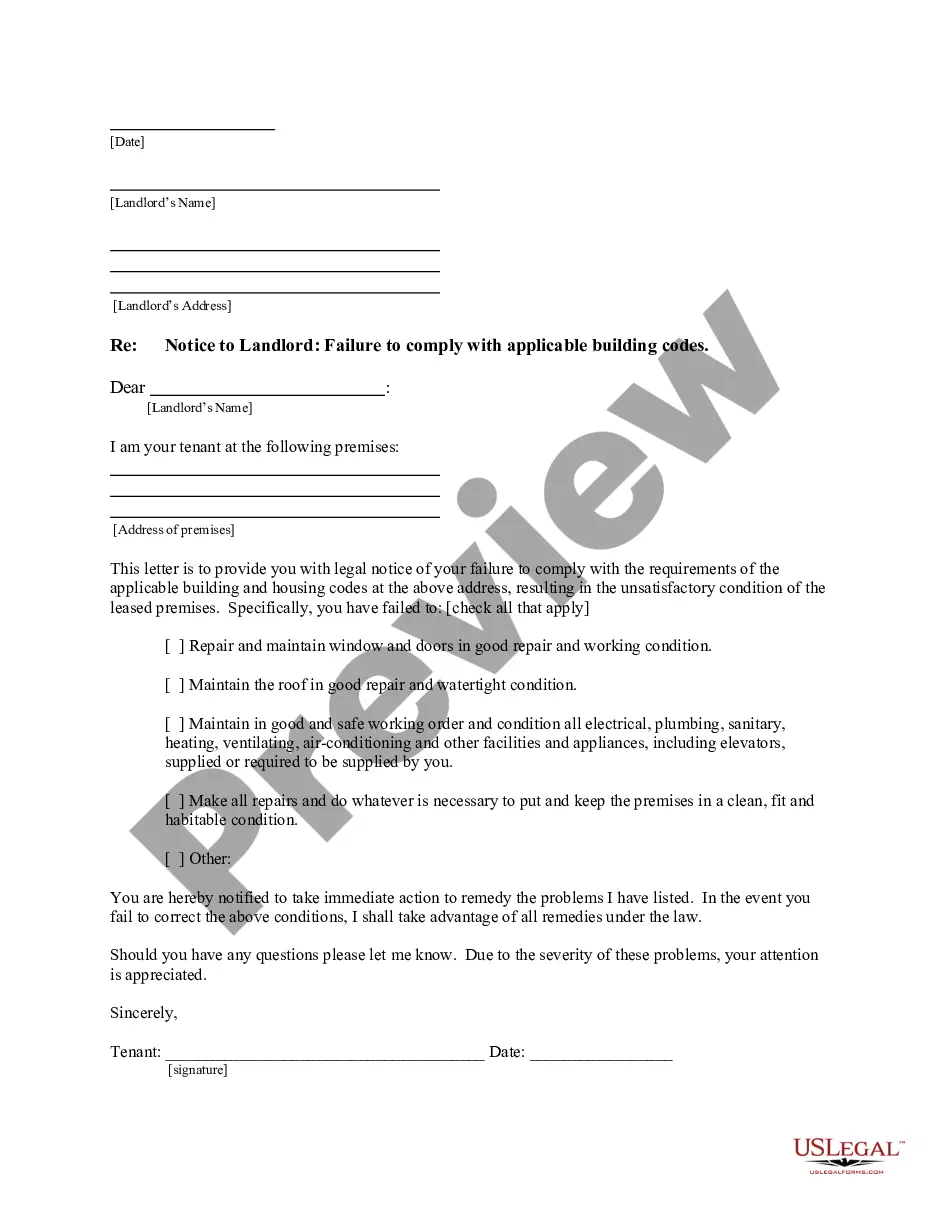
How to fill out California Letter From Tenant To Landlord For Failure Of Landlord To Comply With Building Codes Affecting Health And Safety Or Resulting In Untenantable Condition - Demand For Remedy?
- Begin by logging into your account on the US Legal Forms website and ensure your subscription is active. If it’s expired, easily renew it following your payment plan.
- Browse through the Preview mode and descriptions of the forms to ensure you select the one that meets your needs and complies with your local jurisdiction.
- If you don’t find what you need, use the Search feature to locate additional templates that may better suit your requirements.
- Once you’ve made a selection, click on the Buy Now button to proceed and choose the appropriate subscription plan. An account registration will be necessary for access.
- Complete your purchase by entering your payment details or using your PayPal account, finalizing your acquisition.
- Finally, download your chosen form to your device. You can always return to the My Forms section of your profile for future reference.
By following these steps, you will efficiently access the necessary legal documents tailored to address your tenant challenges.
Don’t wait—get started today to ensure you have the best legal support at your fingertips!
Form popularity
FAQ
Yes, tenants can report their landlord to the health department if the property presents unsafe living conditions. Filing a report helps initiate inspections and ensures that necessary improvements are made. This step promotes tenant failure health with ta and holds landlords accountable for their responsibilities.
In an apartment, health hazards include mold growth, pest infestations, and access to unsanitary conditions. These factors can adversely affect tenant health and well-being. Being aware of these issues enables tenants to take action and prioritize tenant failure health with ta.
A health hazard can include anything that may cause illness or injury. Examples include poor ventilation, mold, or the presence of harmful chemicals. Understanding these hazards is crucial for maintaining tenant failure health with ta and ensuring a safe living environment.
Typically, guests can stay for a limited period, often 30 days, without being added to the lease. However, this may vary based on the lease agreement and local laws. It's important for tenants to understand these regulations to ensure compliance and protect tenant failure health with ta.
Handling noncompliance requires clear communication and documentation of the issue. It's essential to inform the tenant of the violations and provide them a chance to correct their behavior. This approach helps maintain a healthy living environment and supports tenant failure health with ta.
Yes, tenants can sue their apartment complex for unsafe living conditions if the landlord fails to address health hazards. Documenting all communication regarding these issues is vital. If unresolved, legal action may help tenants reclaim damages and safeguard tenant failure health with ta.
Hazardous conditions in an apartment may involve exposed wiring, leaking gas, or the presence of toxic substances like lead paint. Such hazards can lead to serious health issues for tenants. It’s crucial to recognize these risks and take appropriate actions to ensure tenant failure health with ta in their living spaces.
In Texas, uninhabitable living situations include severe issues such as lack of hot water, mold growth, pest infestations, or broken heating and cooling systems. These conditions pose risks to tenant health and violate legal standards. Tenants experiencing these problems may seek assistance and protect their rights by understanding tenant failure health with ta.
Yes, you may have grounds to break a lease if mental health issues impact your ability to live in a rental. However, it’s important to communicate with your landlord and provide any necessary documentation. Seeking legal advice is advisable to understand your rights fully. Protecting tenant failure health with ta ensures you handle this situation appropriately.
In Florida, uninhabitable conditions include severe pest infestations, lack of running water, and exposure to toxic mold. Also, failure to provide essential utilities, such as heat or electricity, can make a property uninhabitable. Tenants need to report these issues promptly to ensure their safety and rights. Addressing tenant failure health with ta can help you navigate these situations legally.