Tenant With Landlord
Description



Get your form ready online
Our built-in tools help you complete, sign, share, and store your documents in one place.
Make edits, fill in missing information, and update formatting in US Legal Forms—just like you would in MS Word.
Download a copy, print it, send it by email, or mail it via USPS—whatever works best for your next step.
Sign and collect signatures with our SignNow integration. Send to multiple recipients, set reminders, and more. Go Premium to unlock E-Sign.
If this form requires notarization, complete it online through a secure video call—no need to meet a notary in person or wait for an appointment.
We protect your documents and personal data by following strict security and privacy standards.

Make edits, fill in missing information, and update formatting in US Legal Forms—just like you would in MS Word.

Download a copy, print it, send it by email, or mail it via USPS—whatever works best for your next step.

Sign and collect signatures with our SignNow integration. Send to multiple recipients, set reminders, and more. Go Premium to unlock E-Sign.

If this form requires notarization, complete it online through a secure video call—no need to meet a notary in person or wait for an appointment.

We protect your documents and personal data by following strict security and privacy standards.
Looking for another form?






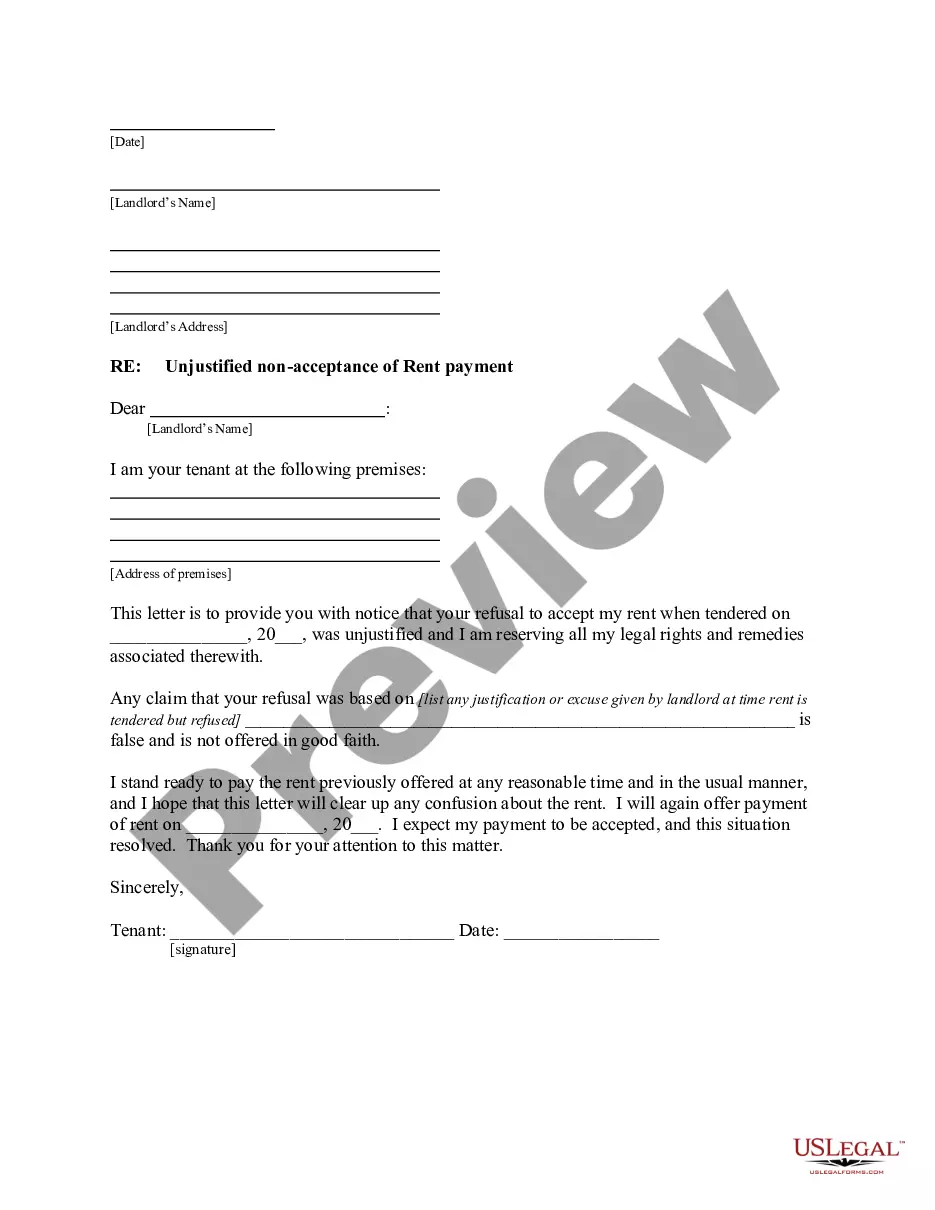
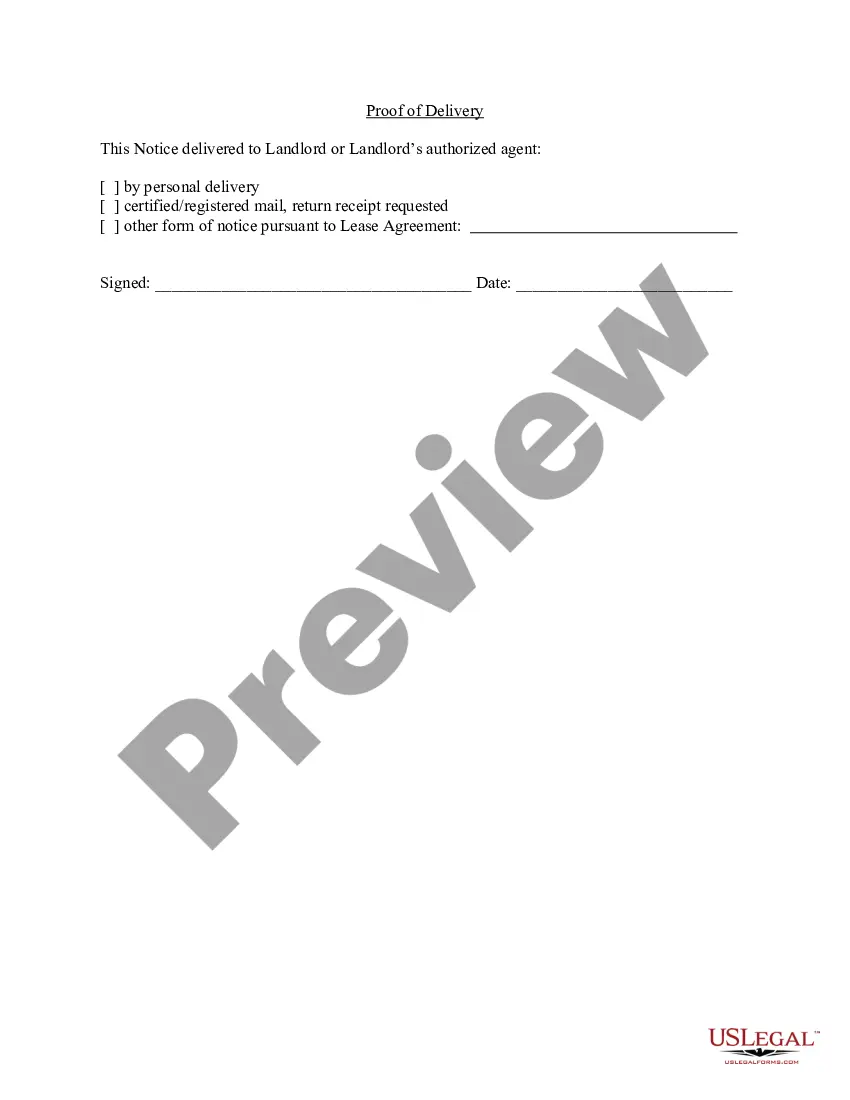
How to fill out California Letter From Tenant To Landlord Containing Notice To Cease Unjustified Nonacceptance Of Rent?
- Log into your existing US Legal Forms account and check your subscription status. If needed, renew your plan to maintain access to the forms library.
- Explore the Preview mode and review the form description to ensure you select the correct document for your requirements and local regulations.
- If the desired form is not suitable, utilize the Search feature to find a more appropriate template that fits your needs.
- Once you find the correct document, click on the Buy Now button and select your preferred subscription plan, creating an account if it's your first time.
- Complete your purchase by entering your payment information, either through credit card or PayPal.
- Download the form directly to your device and access it anytime through the My Forms menu in your profile.
By following these simple steps, you can efficiently manage your tenant with landlord agreements. US Legal Forms offers a robust collection of over 85,000 legal documents, helping you ensure that your agreements are both comprehensive and legally compliant.
Start your journey today by visiting US Legal Forms to find the perfect templates for your needs!
Form popularity
FAQ
In New Jersey, tenants have several rights including the right to a habitable living environment and protections against unlawful eviction. Landlords must maintain property standards and respect tenants' privacy. If you believe your rights are being violated, you can seek legal assistance or contact tenant advocacy organizations for guidance. Understanding your rights empowers you as a tenant with landlord.
To file legal action against your landlord, gather all necessary documentation including your lease and any written communication. Consult with an attorney who specializes in landlord-tenant law to guide you through the legal process. When ready, you can submit your claim in the appropriate legal venue. This will establish your rights as a tenant with landlord.
Dealing with an irresponsible landlord requires clear communication and documentation. Begin by formally notifying your landlord of the issues you face, allowing them the chance to resolve the matter. If they remain unresponsive, escalate your concerns to local authorities or consider legal consultations. Addressing these issues effectively upholds your rights as a tenant with landlord.
To file a complaint against a landlord in Kansas, start by collecting documentation that supports your case, including emails and photographs. Next, reach out to your local housing authority to understand the complaint process. It may involve submitting a written complaint detailing your issues. This proactive approach enhances your standing as a tenant with landlord.
In New Jersey, tenants can report landlords to the Department of Community Affairs or local housing and building inspectors. If you encounter issues that affect your living conditions, it’s advisable to contact these authorities for assistance. You may also engage with local tenant organizations for added support. This can reinforce your position as a tenant with landlord.
Landlord negligence refers to the failure of a landlord to meet their legal obligations regarding property maintenance and safety. This can include inadequate repairs, failure to provide necessary utilities, or ignoring health codes. If you face issues stemming from landlord negligence, document all incidents to substantiate your claims. Taking action can protect your rights as a tenant with landlord.
To file legal action against a landlord, begin by gathering all relevant evidence, such as lease agreements and correspondence. Next, consider consulting with a lawyer who specializes in tenant rights to evaluate your case properly. If you choose to proceed without legal counsel, you can file a complaint in the appropriate court. This process can help you assert your rights as a tenant with landlord.
In Kansas, tenants can report their landlords to the Kansas Department of Health and Environment or the local housing authority. If you experience issues such as unsafe living conditions, it’s important to document the problems thoroughly. You can also seek assistance from local tenant advocacy groups. This ensures that your concerns about the tenant with landlord relationship are addressed properly.
To write a notice from a tenant to a landlord, formulate your message clearly and concisely. Include your address, a date, and specify the reason for the notice, such as requests for repairs or lease termination. A well-structured notice fosters better communication, ensuring your rights as a tenant with a landlord are upheld.
Filling out a landlord application requires several key steps. Begin by providing your personal information, rental history, and references. Ensure you answer all questions clearly and honestly, which establishes trust as you navigate your relationship as a tenant with a landlord.