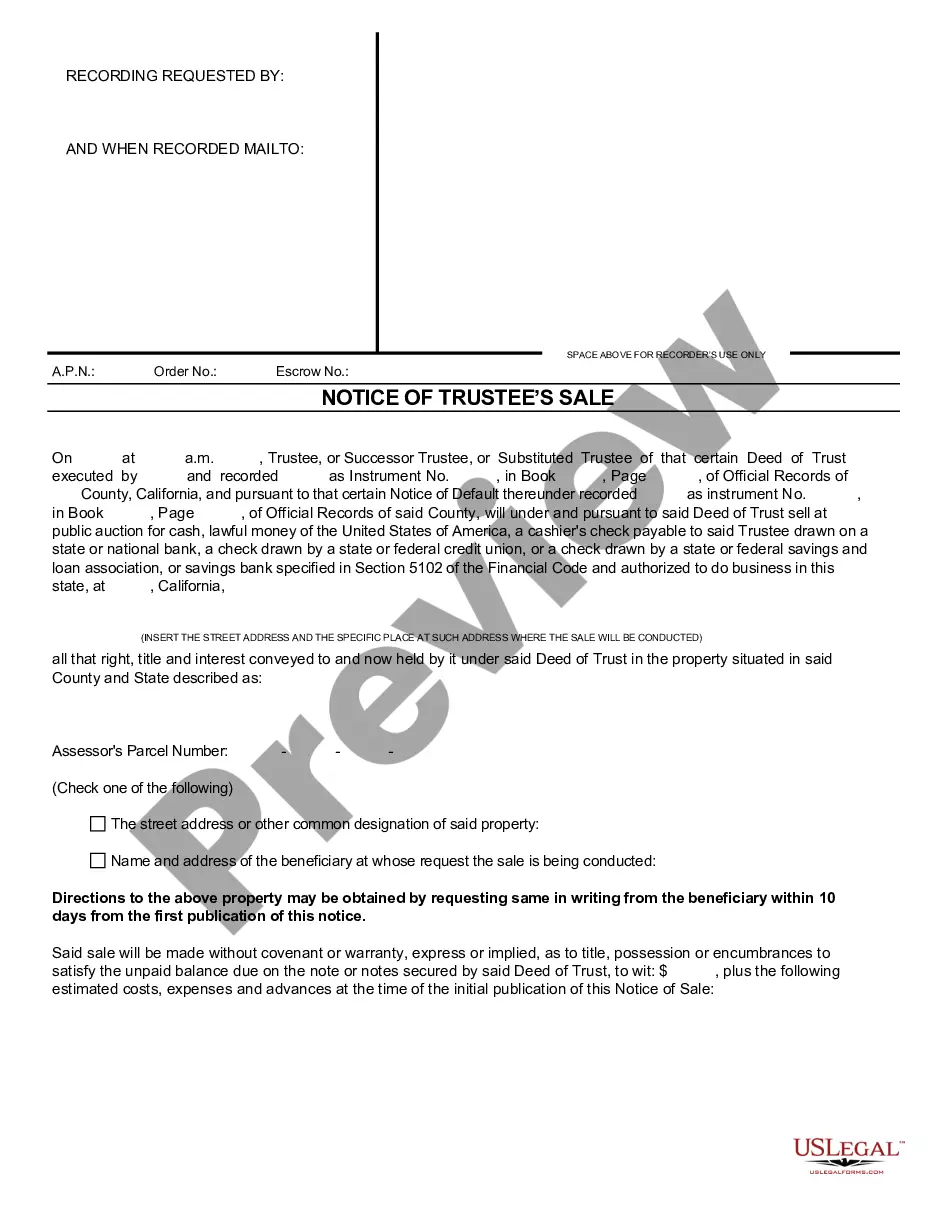
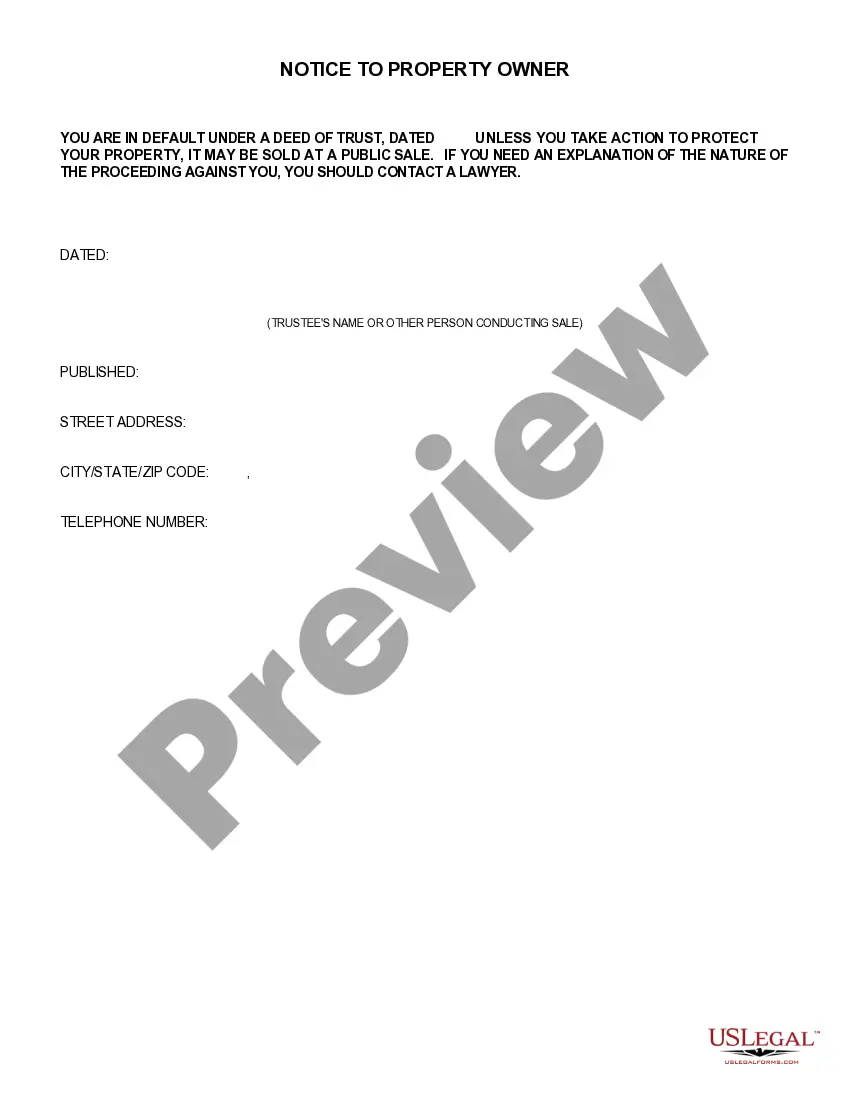
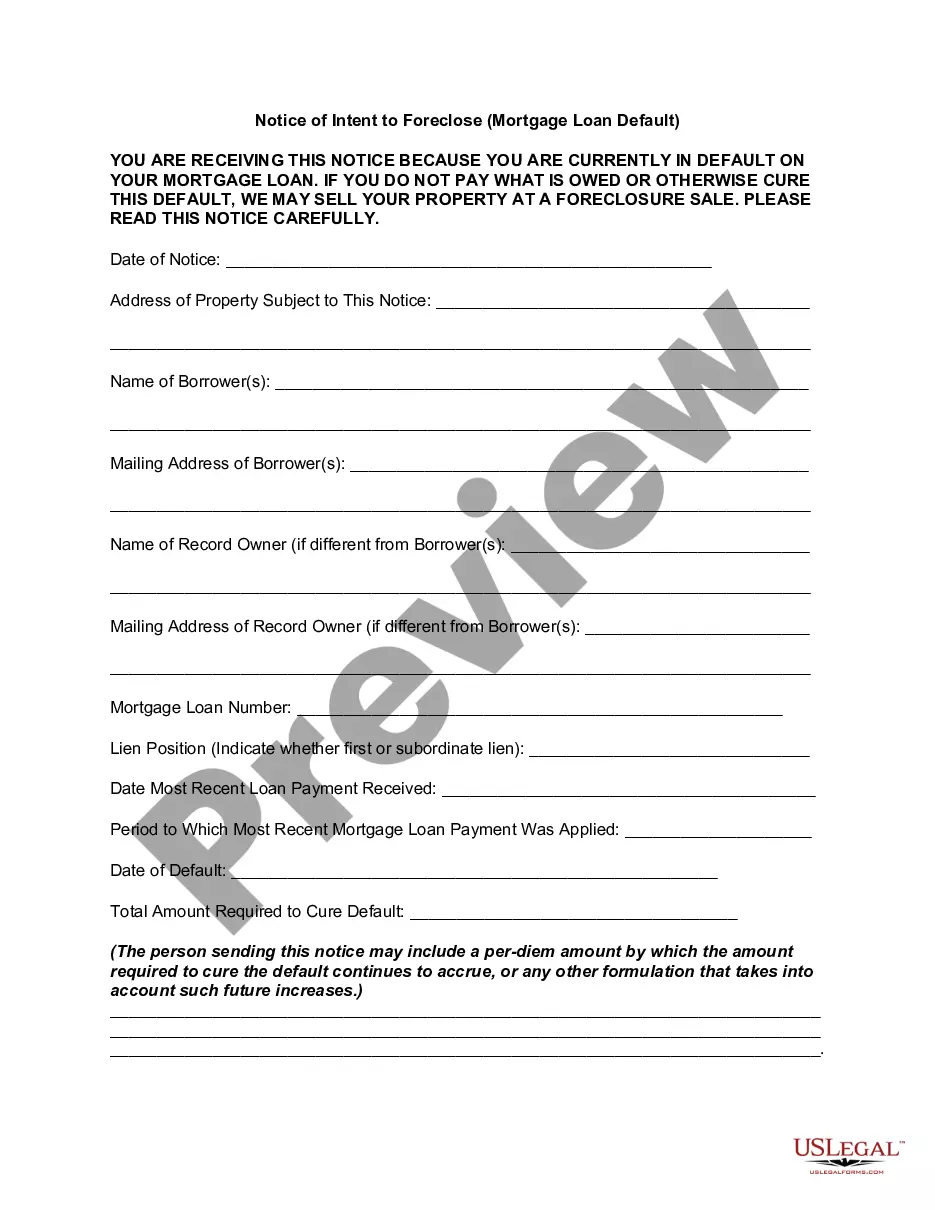
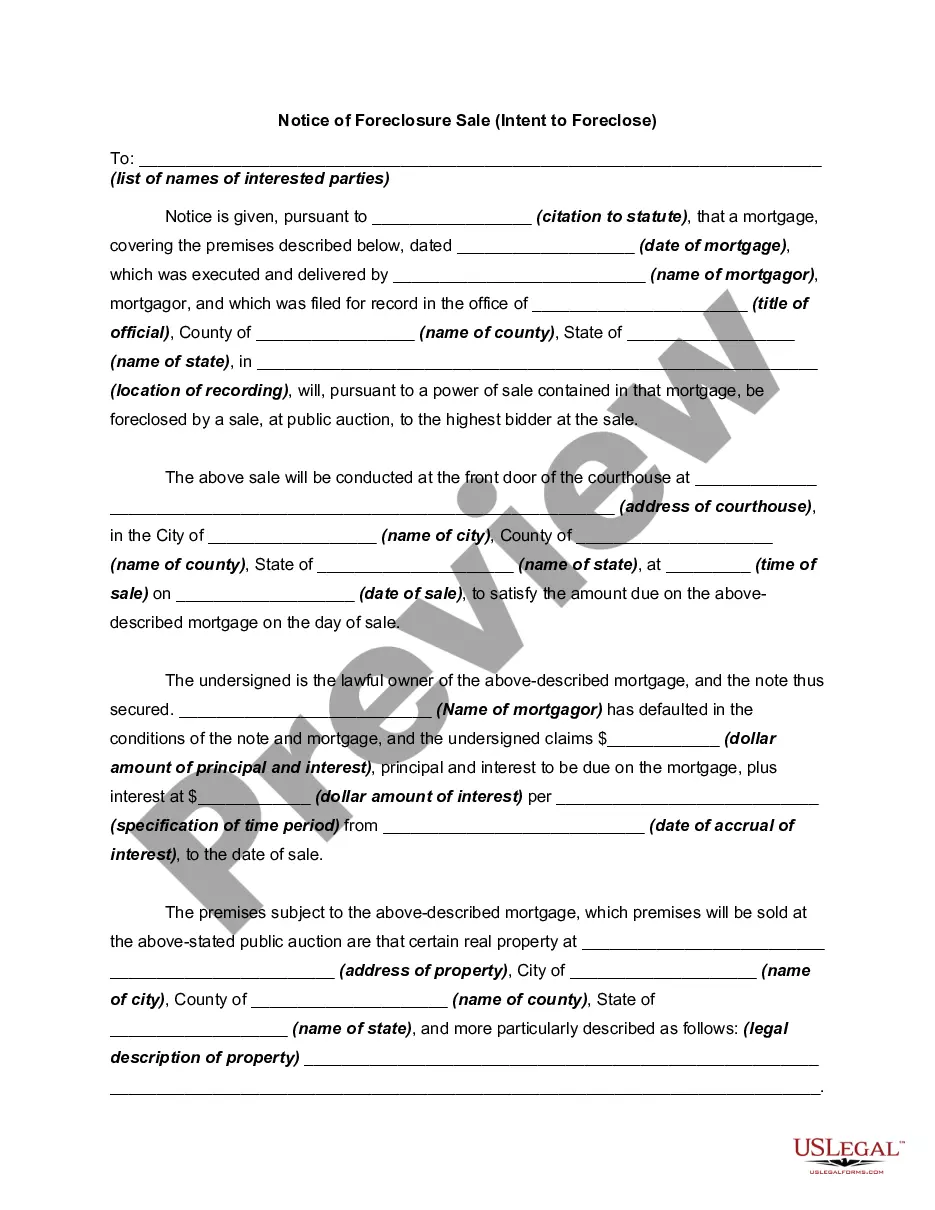
Notice Trustee Sale With Texas
Description

Get your form ready online
Our built-in tools help you complete, sign, share, and store your documents in one place.
Make edits, fill in missing information, and update formatting in US Legal Forms—just like you would in MS Word.
Download a copy, print it, send it by email, or mail it via USPS—whatever works best for your next step.
Sign and collect signatures with our SignNow integration. Send to multiple recipients, set reminders, and more. Go Premium to unlock E-Sign.
If this form requires notarization, complete it online through a secure video call—no need to meet a notary in person or wait for an appointment.
We protect your documents and personal data by following strict security and privacy standards.

Make edits, fill in missing information, and update formatting in US Legal Forms—just like you would in MS Word.

Download a copy, print it, send it by email, or mail it via USPS—whatever works best for your next step.

Sign and collect signatures with our SignNow integration. Send to multiple recipients, set reminders, and more. Go Premium to unlock E-Sign.

If this form requires notarization, complete it online through a secure video call—no need to meet a notary in person or wait for an appointment.

We protect your documents and personal data by following strict security and privacy standards.
Looking for another form?







How to fill out California Notice Of Trustee's Sale?
The Notice Trustee Sale With Texas present on this page is a reusable official template crafted by expert attorneys in accordance with federal and local regulations.
For over 25 years, US Legal Forms has supplied individuals, organizations, and legal practitioners with more than 85,000 verified, state-specific documents for any business and personal circumstance. It’s the quickest, most straightforward, and most reliable method to acquire the paperwork you need, as the service ensures bank-level data protection and anti-malware safeguards.
Register for US Legal Forms to have verified legal templates for all of life's circumstances at your fingertips.
- Browse for the document you require and review it.
- Select the appropriate pricing plan and create an account.
- Choose the file format you desire for your Notice Trustee Sale With Texas (PDF, Word, RTF) and download the template to your device.
- Complete and sign the document.
- Use the same document again whenever necessary.
Form popularity
FAQ
Non-Judicial Foreclosure The most common foreclosure process in Texas is non-judicial, which means the lender can foreclose without going to court, so long as the deed of trust contains a power of sale clause. A power of sale clause is a paragraph in the deed of trust that authorizes the non-judicial foreclosure sale.
After the auction, you do not have a right to buy back your property from the new owner unless it is being sold by a government entity, a tax lender, or for nonpayment of homeowner's association fees. There are time limits involved, and in some cases, you must pay a redemption fee.
In Texas, there are three ways in which a lienholder can foreclose on a property: Judicial Foreclosure. A judicial foreclosure requires the lienholder to file a civil lawsuit against the homeowner. ... Non-Judicial Foreclosure. ... Expedited Foreclosure.
In a non-judicial foreclosure, after the 20-day "right to reinstate" period has expired and at least 21 days before the sale, the servicer must provider the borrower with a Notice of Sale, letting them know the date and earliest time of the sale.
This notice provides information about the debt, the legal description of the property, and sets a three-hour period during which the sale will be conducted. Because a trustee's power to sell the property is derived directly from the deed of trust and the statute (Prop. Code Sec.