Physician Letter Of Incompetence With Sinus Node
Description
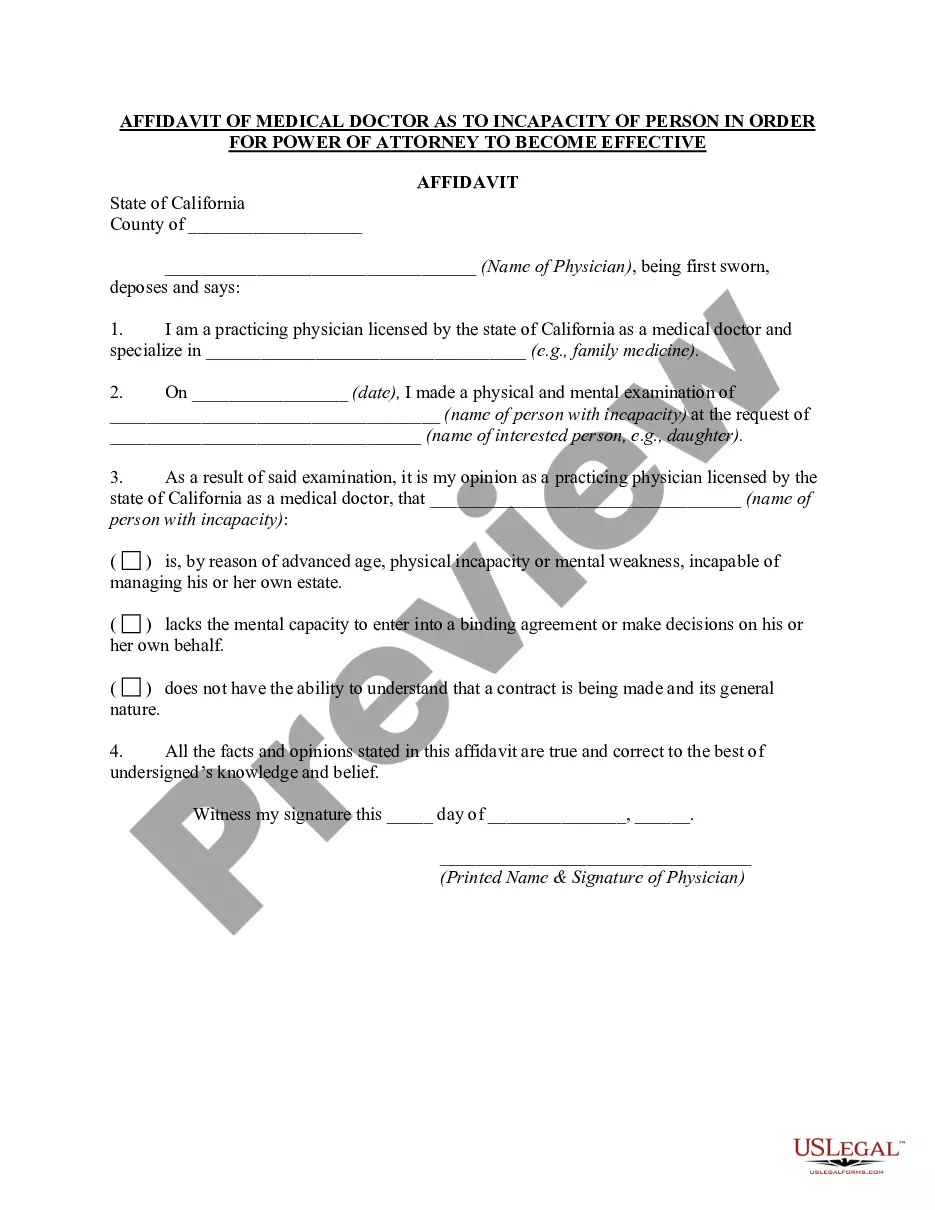
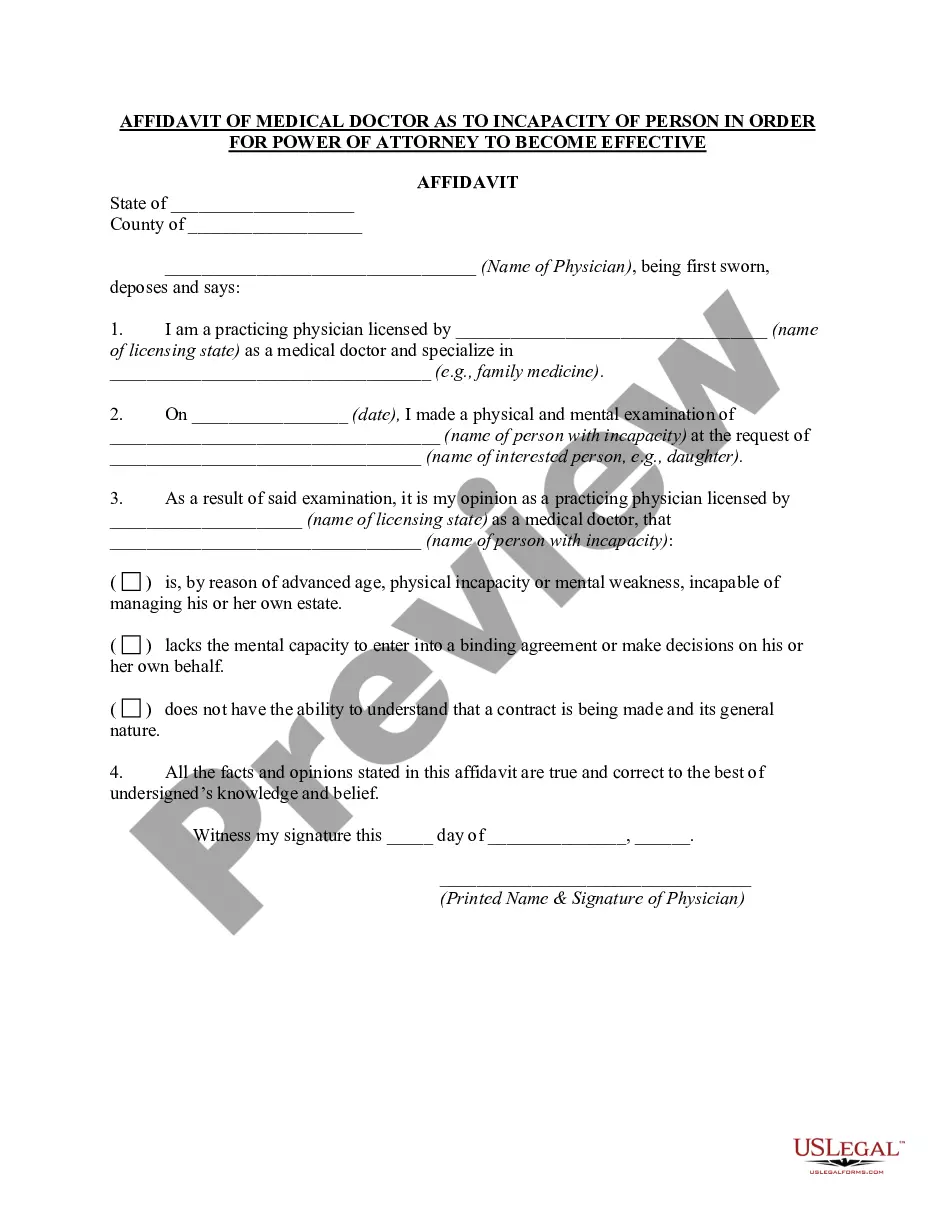
Get your form ready online
Our built-in tools help you complete, sign, share, and store your documents in one place.
Make edits, fill in missing information, and update formatting in US Legal Forms—just like you would in MS Word.
Download a copy, print it, send it by email, or mail it via USPS—whatever works best for your next step.
Sign and collect signatures with our SignNow integration. Send to multiple recipients, set reminders, and more. Go Premium to unlock E-Sign.
If this form requires notarization, complete it online through a secure video call—no need to meet a notary in person or wait for an appointment.
We protect your documents and personal data by following strict security and privacy standards.

Make edits, fill in missing information, and update formatting in US Legal Forms—just like you would in MS Word.

Download a copy, print it, send it by email, or mail it via USPS—whatever works best for your next step.

Sign and collect signatures with our SignNow integration. Send to multiple recipients, set reminders, and more. Go Premium to unlock E-Sign.

If this form requires notarization, complete it online through a secure video call—no need to meet a notary in person or wait for an appointment.

We protect your documents and personal data by following strict security and privacy standards.
Looking for another form?









How to fill out California Affidavit Of Medical Doctor As To Incapacity Of Person In Order For Power Of Attorney To Become Effective?
Whether for commercial reasons or personal matters, everyone must handle legal issues at some stage in their lives. Completing legal documentation requires meticulous attention, starting from selecting the correct form template.
For example, if you select an incorrect version of the Physician Letter Of Incompetence With Sinus Node, it will be declined once you submit it. Thus, it is essential to have a trustworthy source of legal documents like US Legal Forms.
With a vast US Legal Forms catalog available, you will never need to waste time searching for the correct sample across the internet. Use the library’s straightforward navigation to find the right form for any situation.
- Obtain the sample you require by utilizing the search bar or catalog navigation.
- Review the form’s details to ensure it fits your case, state, and area.
- Click on the form’s preview to view it.
- If it is the wrong document, return to the search function to find the Physician Letter Of Incompetence With Sinus Node template you need.
- Acquire the template when it matches your requirements.
- If you already possess a US Legal Forms account, simply click Log in to access previously stored files in My documents.
- If you do not have an account yet, you can obtain the form by clicking Buy now.
- Select the appropriate pricing option.
- Complete the account registration form.
- Choose your payment method: you can use a credit card or PayPal account.
- Select the document format you prefer and download the Physician Letter Of Incompetence With Sinus Node.
- Once it is downloaded, you can fill out the form using editing software or print it and complete it manually.
Form popularity
FAQ
Prognosis of sinus node dysfunction is mixed; without treatment, mortality is about 2%/year, primarily resulting from an underlying structural heart disorder. Each year, about 5% of patients develop AF with its risks of heart failure and stroke.
SND may also manifest as chronotropic incompetence with inappropriate heart rate responses to physiologic demands during activity. SND can also be accompanied by AV nodal conduction disturbances and by atrial tachyarrhythmias as part of the tachycardia-bradycardia syndrome.
Sick sinus syndrome is a type of heart rhythm disorder. It affects the heart's natural pacemaker (sinus node), which controls the heartbeat. Sick sinus syndrome causes slow heartbeats, pauses (long periods between heartbeats) or irregular heartbeats (arrhythmias).
Sinus node dysfunction, also known by its historical name sick sinus syndrome, is the inability of the SA node to produce an adequate heart rate that meets the physiologic needs of the individual.
Coronary heart disease, high blood pressure, and aortic and mitral valve diseases may occur with sick sinus syndrome. However, these diseases may have nothing to do with the syndrome. Sick sinus syndrome is uncommon, but not rare. It is the most common reason people need to have an artificial pacemaker implanted.