Formation Of California
Description

Get your form ready online
Our built-in tools help you complete, sign, share, and store your documents in one place.
Make edits, fill in missing information, and update formatting in US Legal Forms—just like you would in MS Word.
Download a copy, print it, send it by email, or mail it via USPS—whatever works best for your next step.
Sign and collect signatures with our SignNow integration. Send to multiple recipients, set reminders, and more. Go Premium to unlock E-Sign.
If this form requires notarization, complete it online through a secure video call—no need to meet a notary in person or wait for an appointment.
We protect your documents and personal data by following strict security and privacy standards.

Make edits, fill in missing information, and update formatting in US Legal Forms—just like you would in MS Word.

Download a copy, print it, send it by email, or mail it via USPS—whatever works best for your next step.

Sign and collect signatures with our SignNow integration. Send to multiple recipients, set reminders, and more. Go Premium to unlock E-Sign.

If this form requires notarization, complete it online through a secure video call—no need to meet a notary in person or wait for an appointment.

We protect your documents and personal data by following strict security and privacy standards.
Looking for another form?

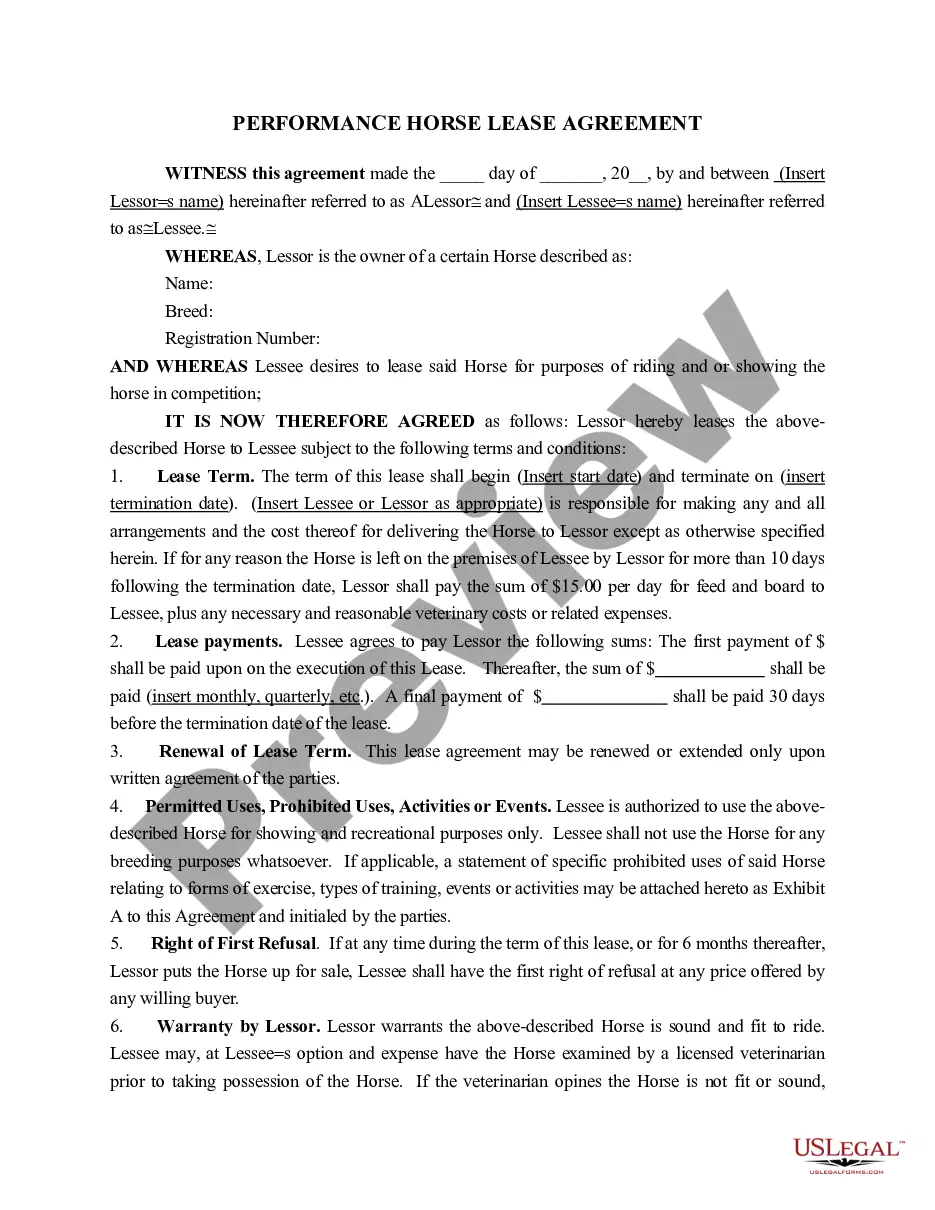







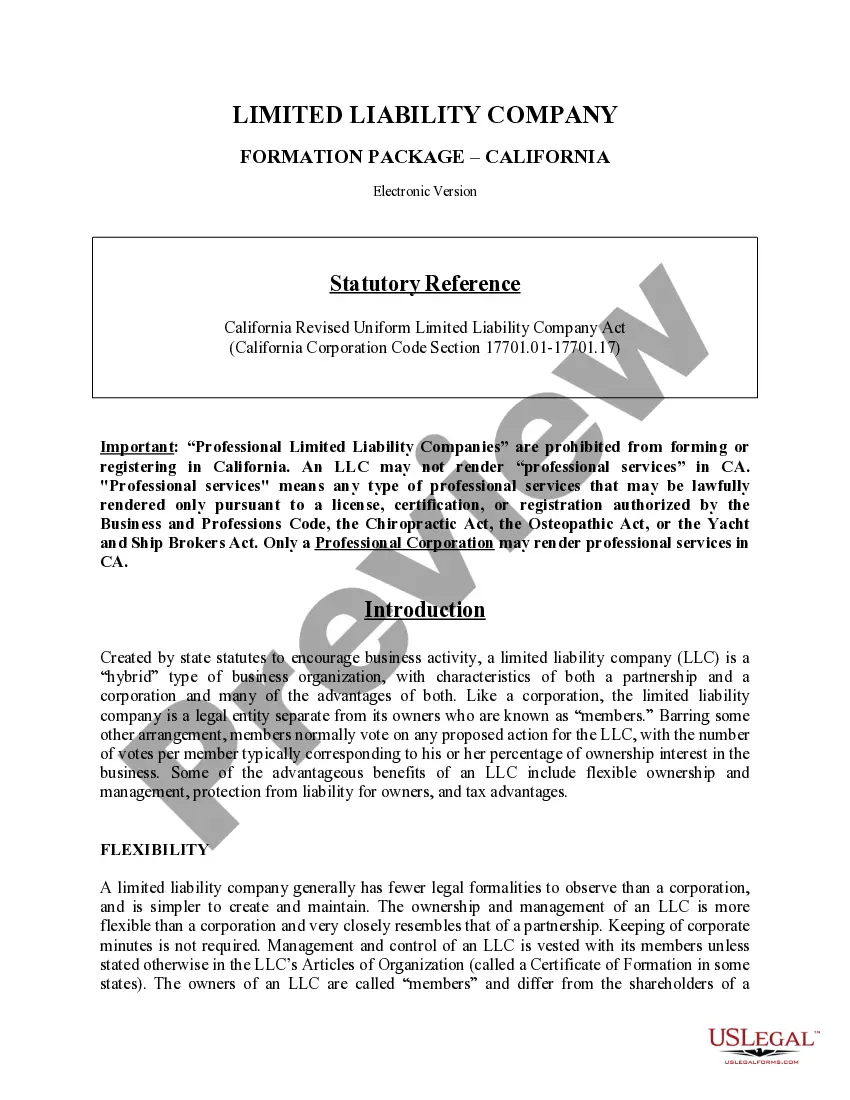
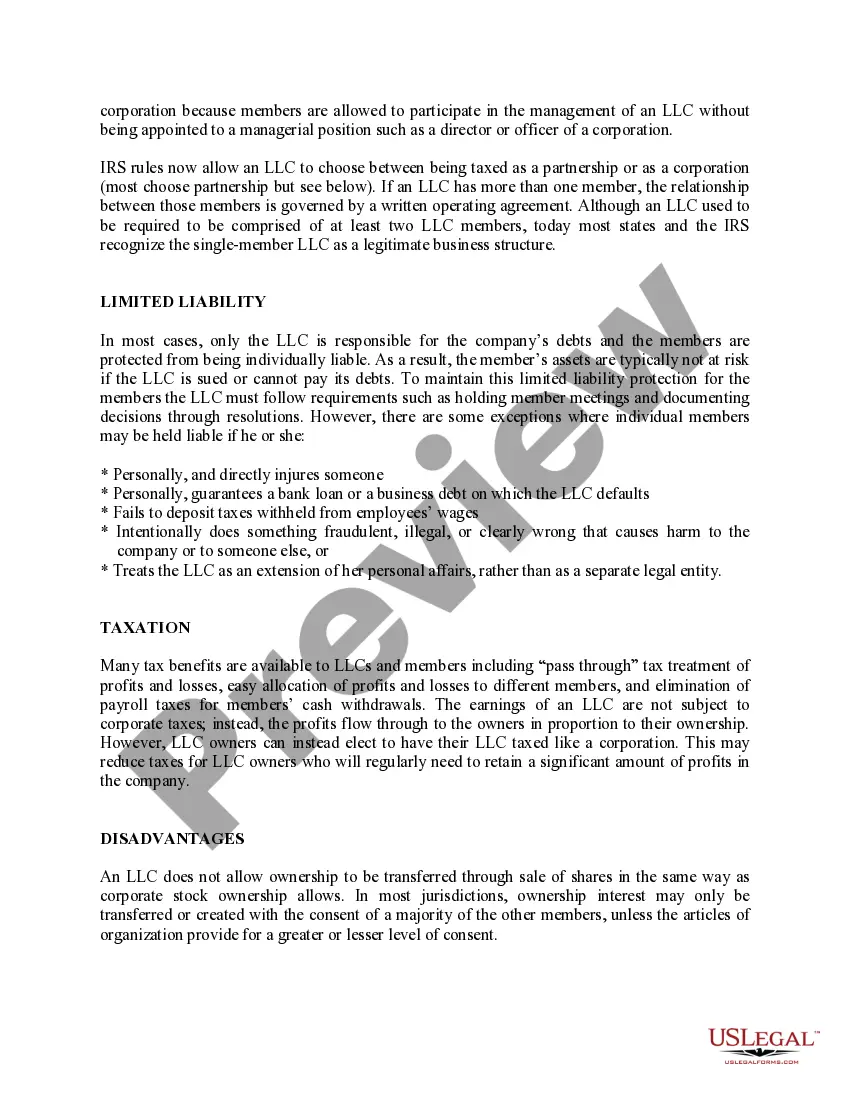
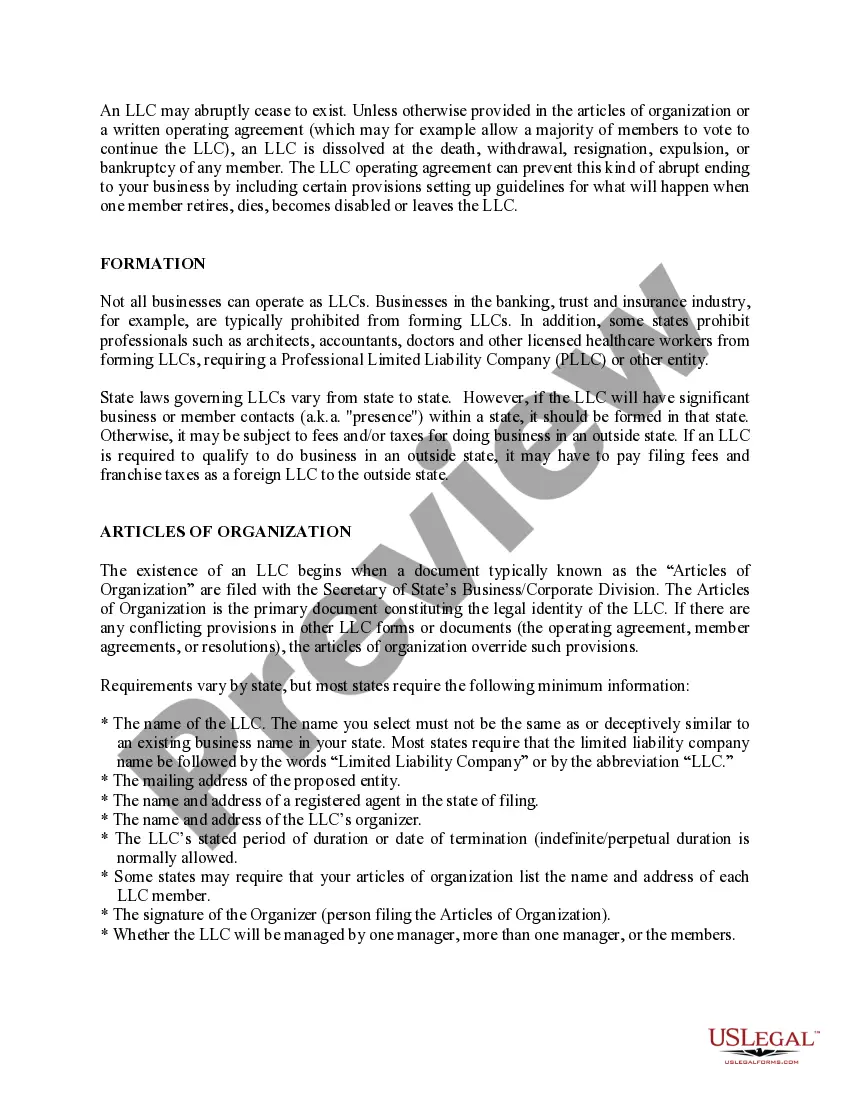
How to fill out California Limited Liability Company LLC Formation Package?
Managing legal documentation and processes can be a lengthy addition to your schedule.
Formation Of California and similar forms typically necessitate you to hunt for them and navigate how to fill them out correctly.
Thus, whether you are addressing financial, legal, or personal issues, utilizing a comprehensive and user-friendly online directory of forms at your disposal will significantly aid.
US Legal Forms is the top online source for legal templates, providing over 85,000 state-specific documents and numerous tools to help you complete your paperwork with ease.
If you’re new to US Legal Forms, register and create a free account in just a few minutes to access the form catalog and Formation Of California. Then, follow the steps outlined below to complete your form.
- Browse the directory of relevant documents available with just a single click.
- US Legal Forms offers state- and county-specific documents accessible at any time for download.
- Streamline your document management processes with a premium service that allows you to prepare any form in minutes without extra or hidden fees.
Form popularity
FAQ
The purpose of a formation certificate is to officially establish your business entity with the state. This document serves as proof of your business's legal existence, allowing you to operate and engage in activities like opening a bank account or signing contracts. In the formation of California, having a formation certificate is essential for compliance and legitimacy in the business world.
While both a Certificate of Formation and incorporation relate to establishing a business, they are not the same. The Certificate of Formation specifically pertains to forming an LLC or similar entity, whereas incorporation refers to the process of creating a corporation. It's important to understand these distinctions when considering the formation of California to ensure you choose the correct path for your business.
The Certificate of Formation and an LLC agreement serve different purposes in the formation of California. The Certificate of Formation registers your business with the state, while the LLC agreement outlines the internal operations and management structure of the LLC. Essentially, one is about legal recognition, and the other focuses on governance.
A Certificate of Formation in California is a specific type of document that businesses must file to establish their legal entity. This document outlines important information about your business, including its name, address, and the names of its founders. Understanding the formation of California is vital, as this certification is a key step in ensuring your business operates legally within the state.
The certificate of filing formation is a crucial document that you must submit to the state when starting your business. This certificate officially registers your business entity, laying the groundwork for its legal existence. In the context of the formation of California, this document provides essential details about your business, such as its name, address, and type of structure.
The formation of California is the result of geological processes over millions of years. Tectonic plate movements caused the land to shift and reshape, contributing to its distinctive coastline and mountain ranges. Additionally, erosion and volcanic activity played significant roles in sculpting the state's terrain. Understanding the formation of California helps us appreciate its diverse landscapes and natural beauty.
Around 10,000 years ago, the landscape of California was vastly different. The region featured diverse ecosystems, ranging from lush forests to expansive coastlines. Native American tribes thrived in this environment, utilizing natural resources for sustenance. The formation of California as a state later brought significant changes to its land and inhabitants, but these ancient landscapes remind us of the state's rich history.
Prior to the formation of California as a state, it was often referred to as Alta California, which was a part of the larger territory of New Spain. This name highlighted its geographical position as the northernmost region of Spanish territories in the Americas. The term 'California' itself was derived from a fictional paradise described in a novel. The name evolved as the region changed hands from Spain to Mexico and eventually to the United States.
Before the formation of California as a state in 1850, it was part of Mexico. The region was known for its diverse geography and rich resources. In the early 19th century, California was a sparsely populated area, with many Native American tribes living in harmony with the land. The discovery of gold in 1848 accelerated its transition into a state, attracting a wave of settlers.