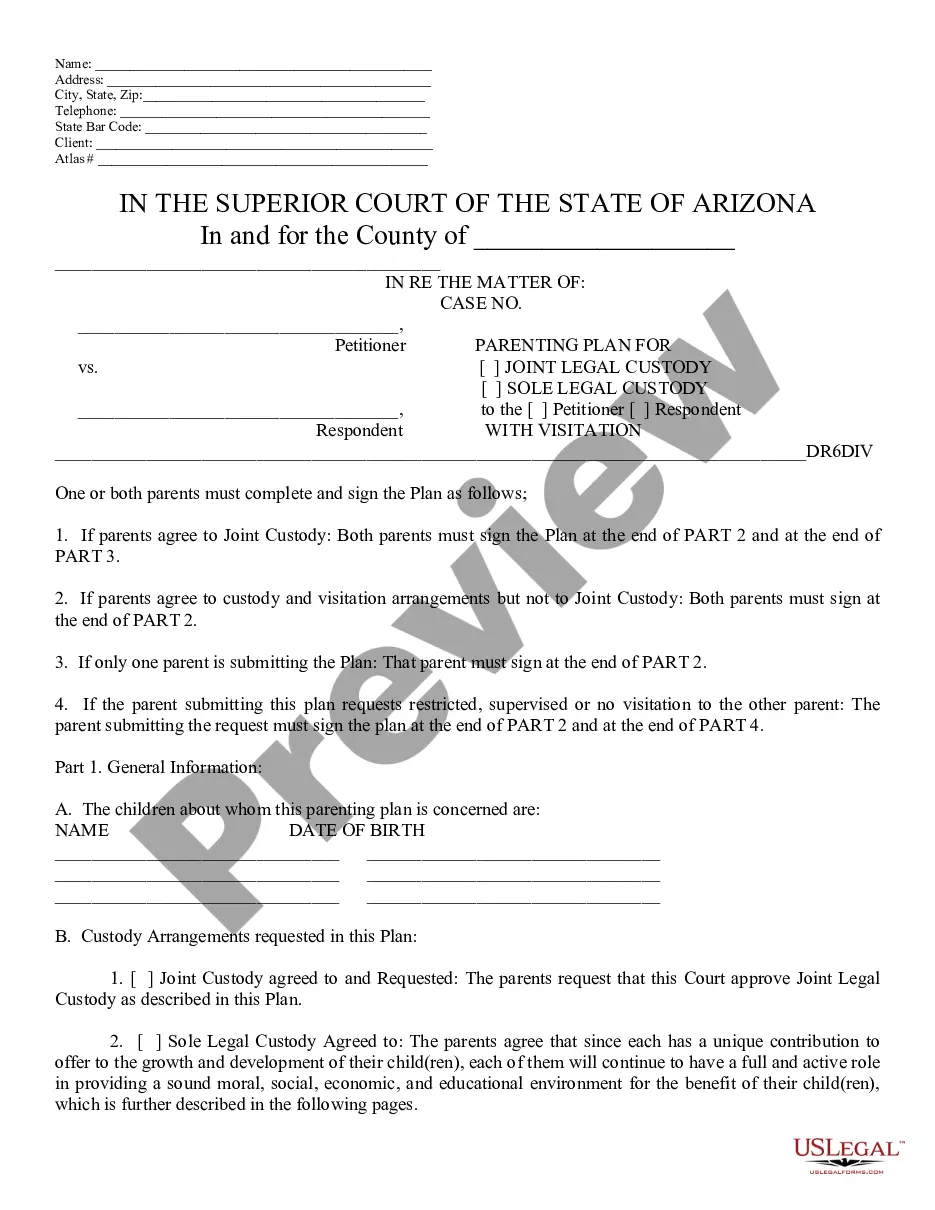
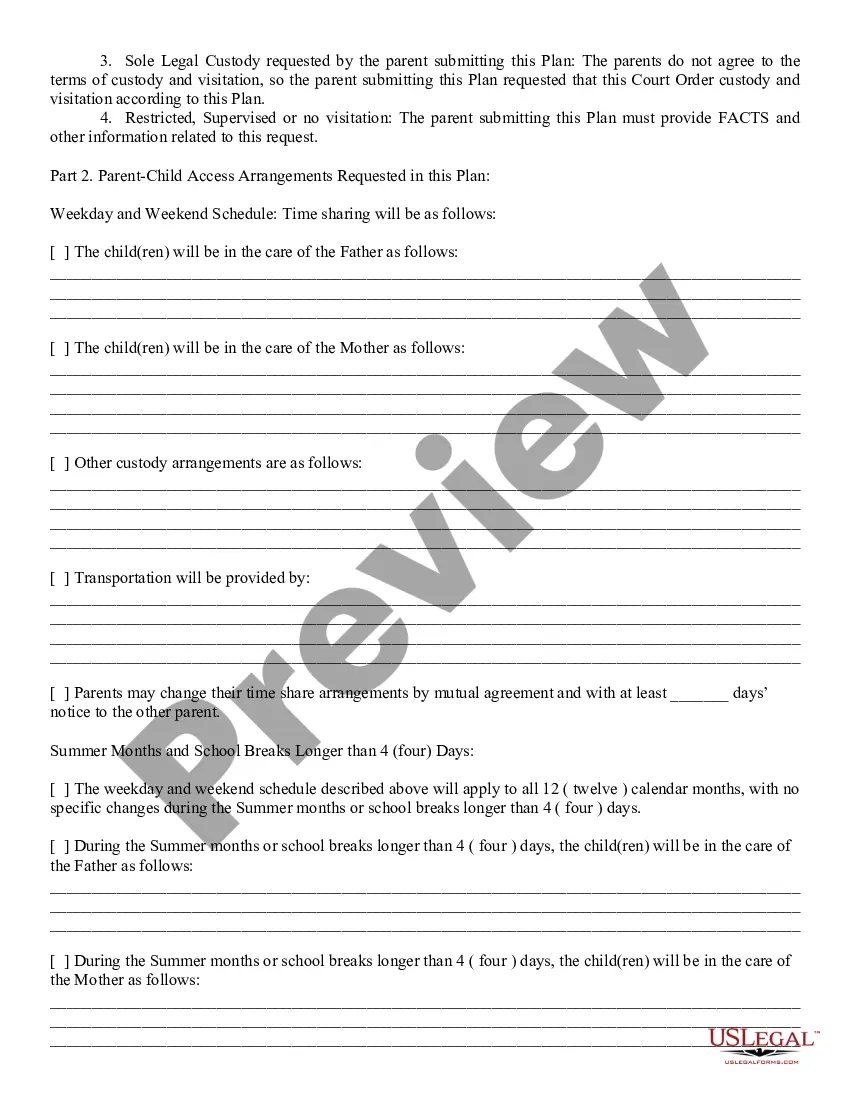
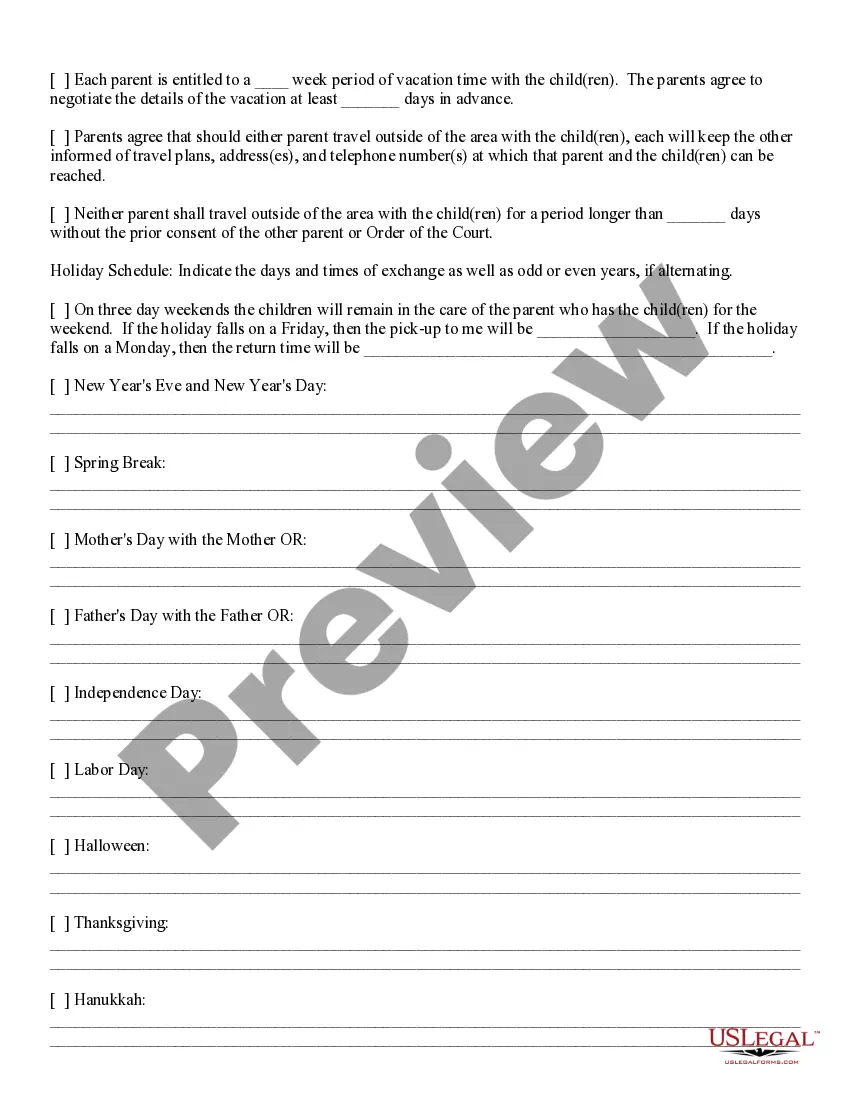
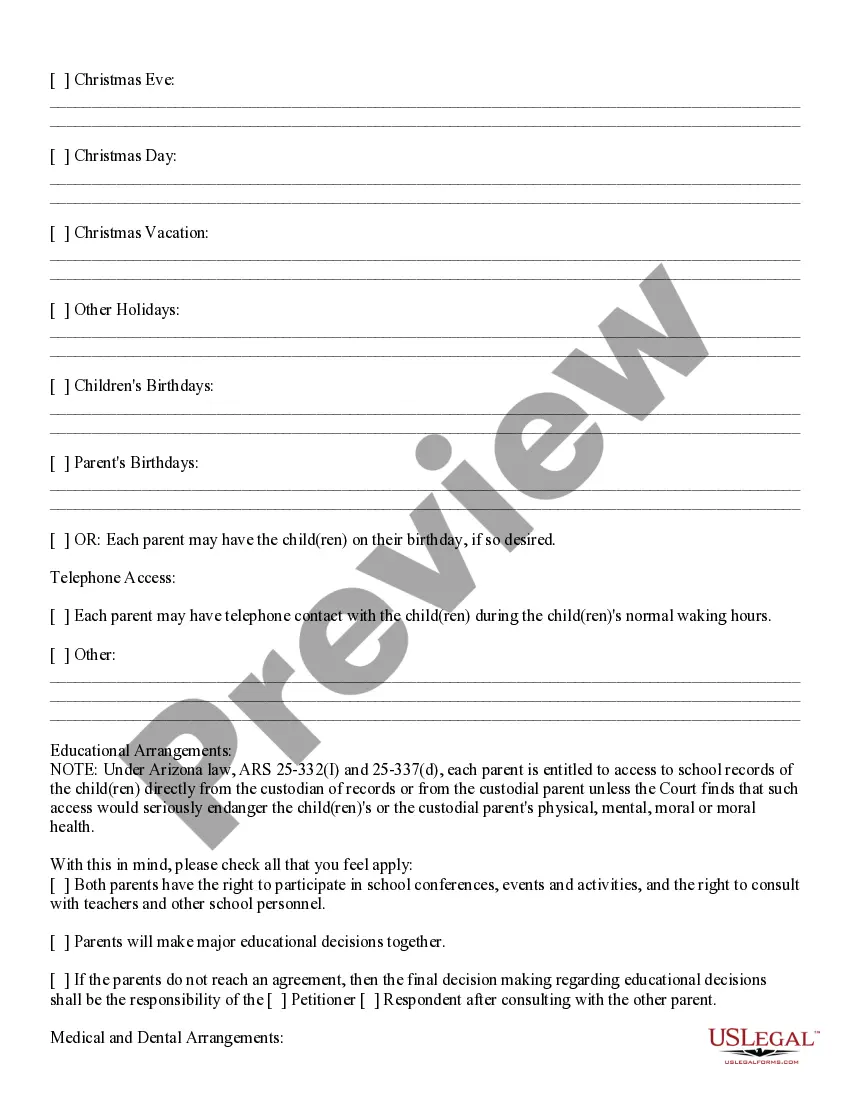
Parenting Plan Examples
Description
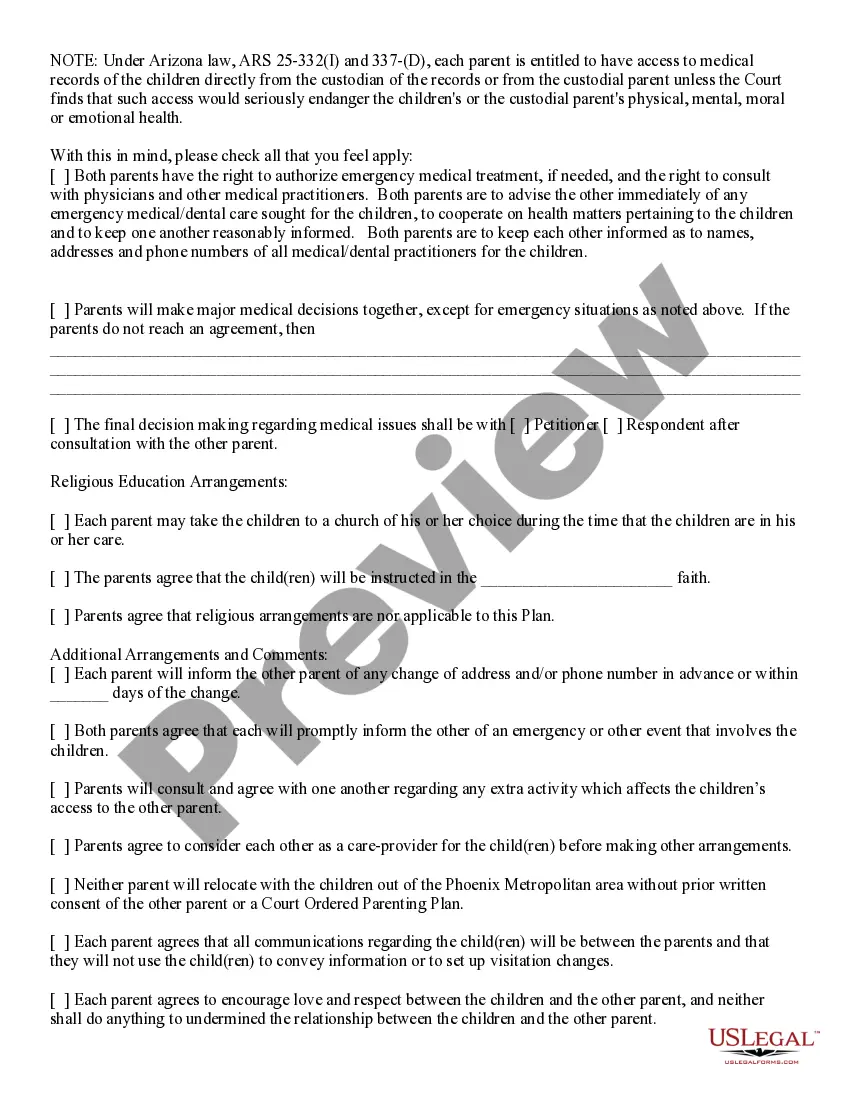
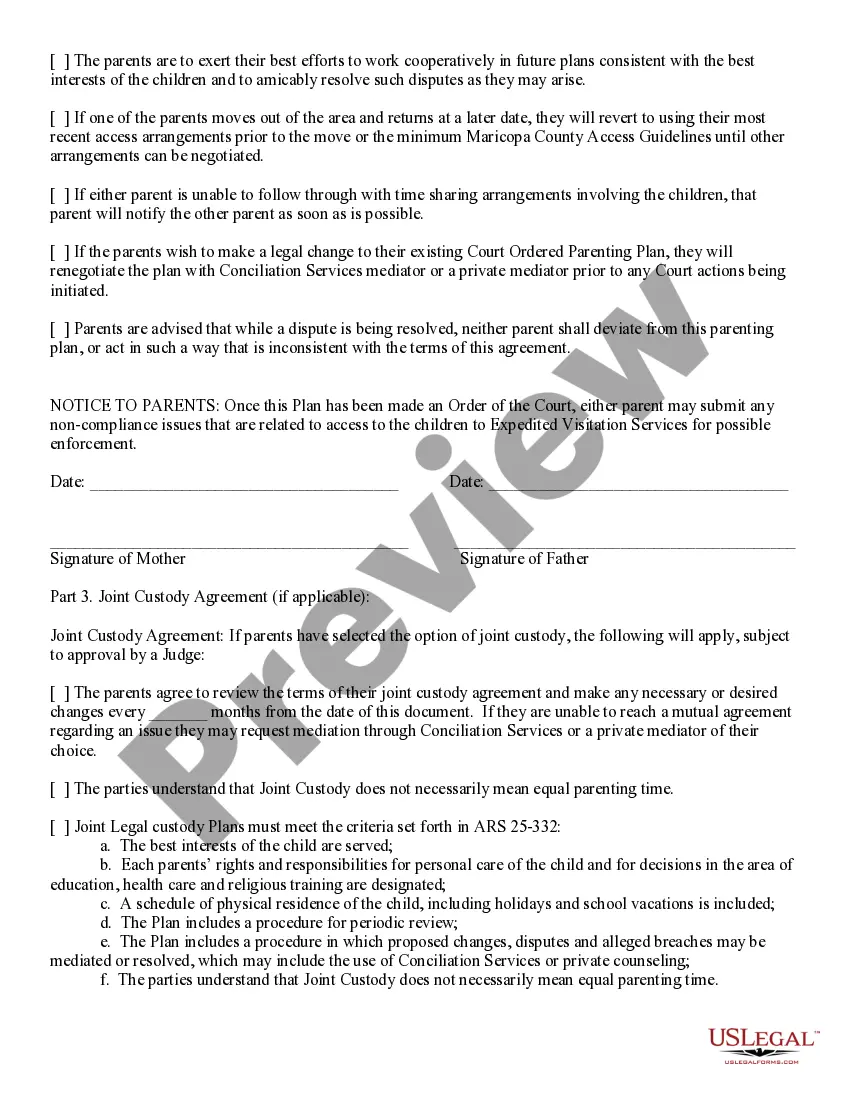
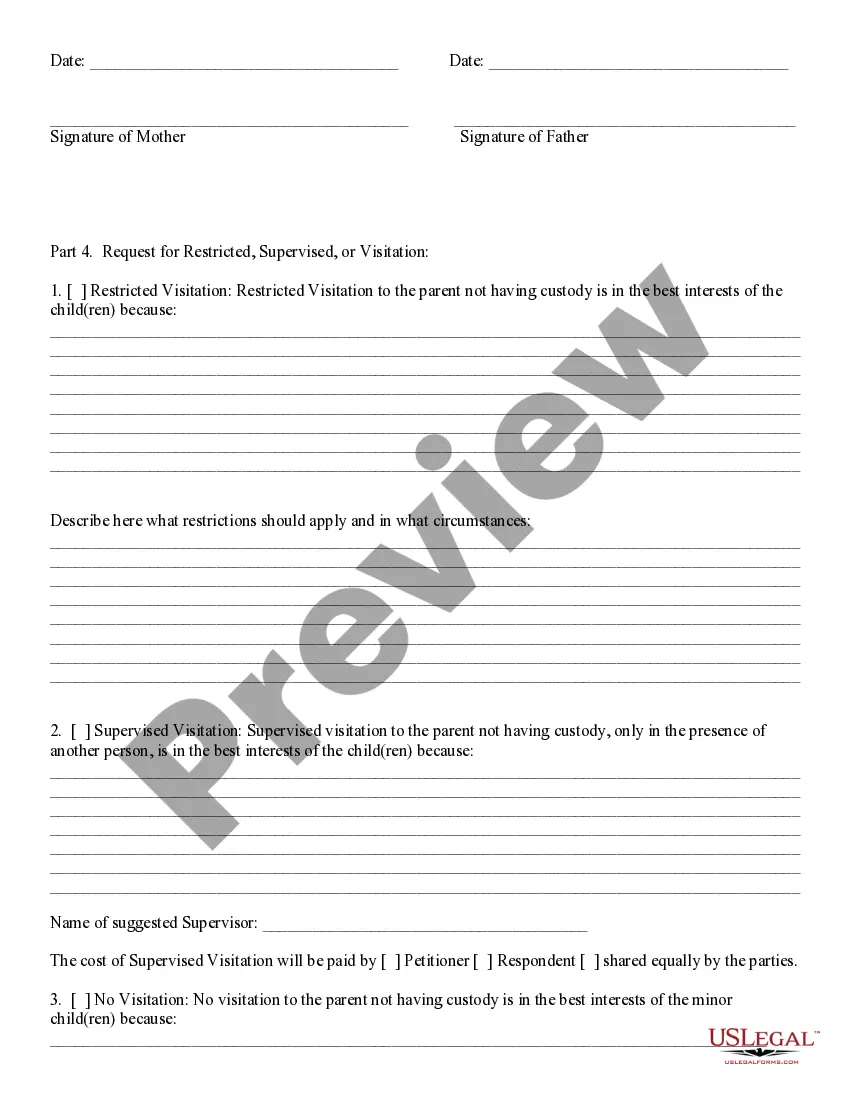
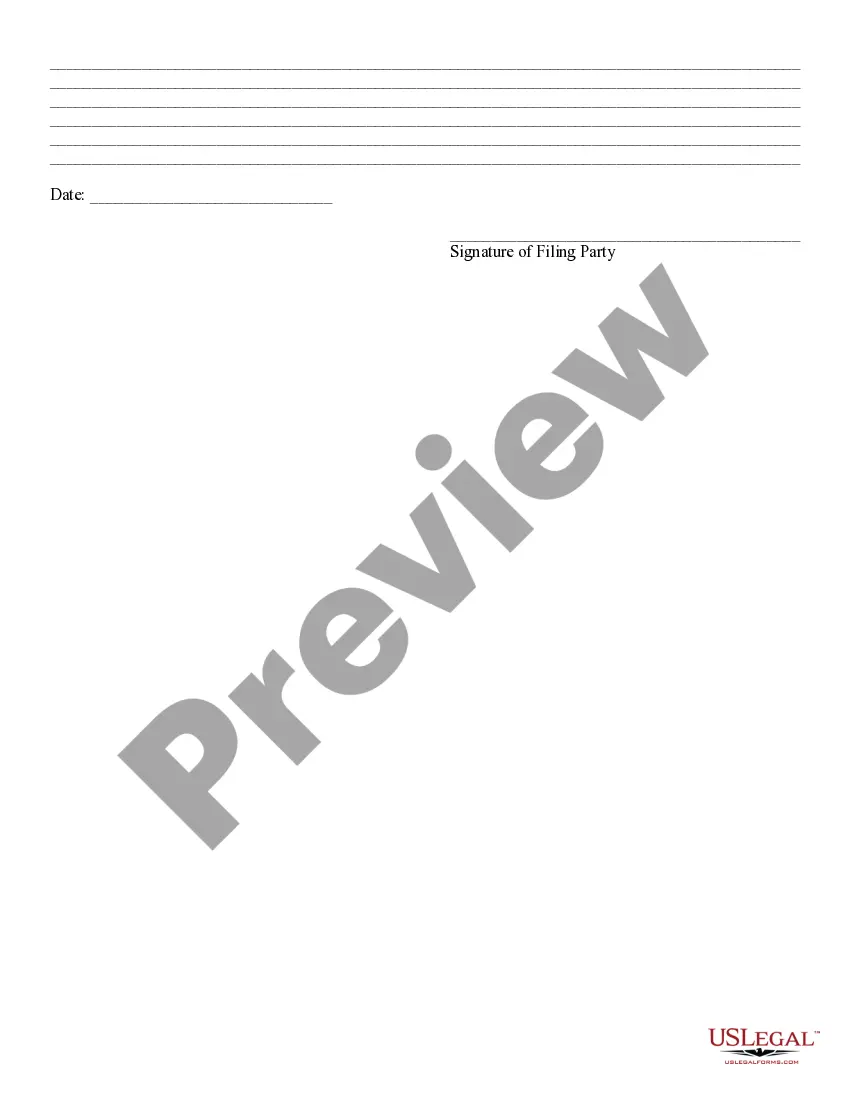
Get your form ready online
Our built-in tools help you complete, sign, share, and store your documents in one place.
Make edits, fill in missing information, and update formatting in US Legal Forms—just like you would in MS Word.
Download a copy, print it, send it by email, or mail it via USPS—whatever works best for your next step.
Sign and collect signatures with our SignNow integration. Send to multiple recipients, set reminders, and more. Go Premium to unlock E-Sign.
If this form requires notarization, complete it online through a secure video call—no need to meet a notary in person or wait for an appointment.
We protect your documents and personal data by following strict security and privacy standards.

Make edits, fill in missing information, and update formatting in US Legal Forms—just like you would in MS Word.

Download a copy, print it, send it by email, or mail it via USPS—whatever works best for your next step.

Sign and collect signatures with our SignNow integration. Send to multiple recipients, set reminders, and more. Go Premium to unlock E-Sign.

If this form requires notarization, complete it online through a secure video call—no need to meet a notary in person or wait for an appointment.

We protect your documents and personal data by following strict security and privacy standards.
Looking for another form?


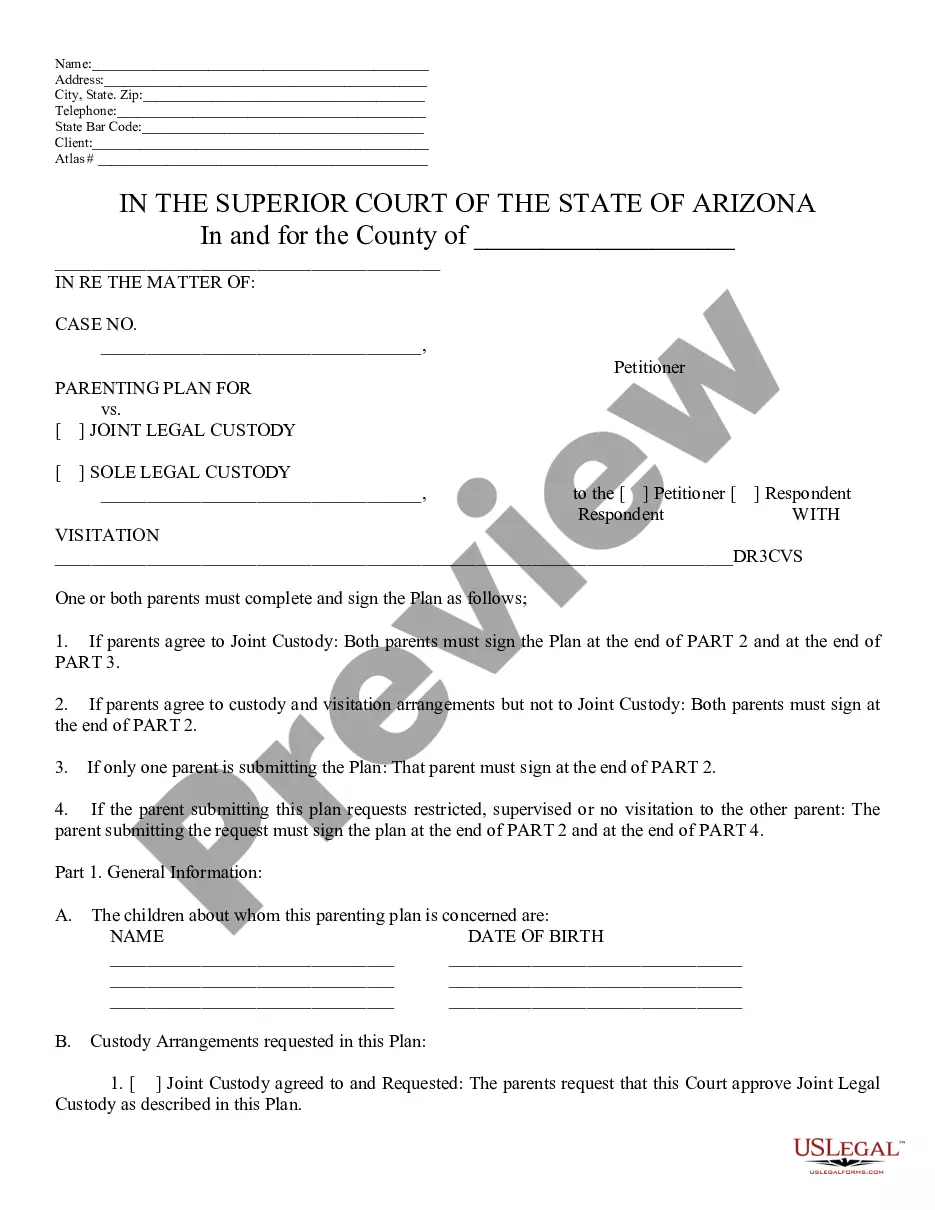
How to fill out Arizona Parenting Plan And Guidelines?
Dealing with legal documents and procedures can be an exhaustive addition to your day.
Parenting Plan Samples and similar forms often necessitate a hunt for them and the ability to find the most efficient way to complete them accurately.
Consequently, whether you are managing financial, legal, or personal issues, having a comprehensive and functional online directory of forms readily available will significantly help.
US Legal Forms is the premier online hub for legal templates, providing over 85,000 state-specific documents and a range of resources to assist you in completing your paperwork with ease.
Is this your first experience with US Legal Forms? Sign up and establish your account in only a few minutes and you'll gain entry to the form directory and Parenting Plan Samples. After that, follow the steps below to finish your form: Make sure you have selected the correct document using the Review feature and by reading the document description. Click Buy Now when you are prepared, and select the subscription plan that suits your needs. Hit Download then fill out, eSign, and print the document. US Legal Forms boasts twenty-five years of expertise in aiding clients with their legal documentation. Acquire the document you need today and streamline any process without breaking a sweat.
- Browse the directory of relevant documents with just a single click.
- US Legal Forms offers state- and county-specific templates accessible at any time for download.
- Protect your document management tasks using a premium service that enables you to prepare any document within minutes without any extra or hidden fees.
- Simply Log In to your account, find Parenting Plan Samples, and obtain it instantly from the My documents section.
- You can also access forms that you have previously downloaded.
Form popularity
FAQ
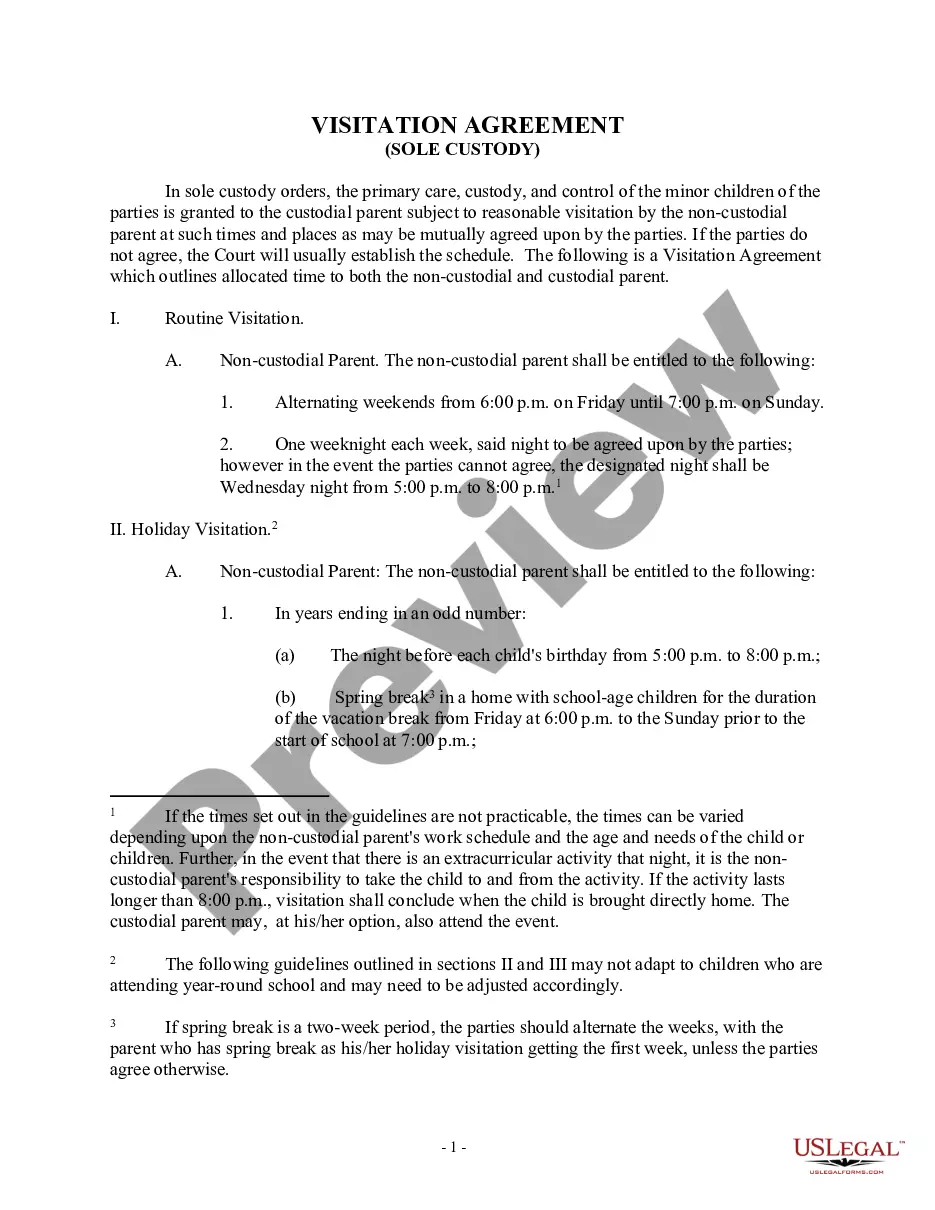
One of the biggest mistakes in a custody battle is not preparing a comprehensive parenting plan. A well-structured plan shows the court how you intend to provide for the child's needs and maintain their well-being. Relying solely on verbal assurances or informal agreements can weaken your case. Utilizing parenting plan examples can help you avoid common pitfalls and present a solid strategy to the judge.
A parallel parenting plan and custody order should specifically state: ? the start and end time of each custodial segment, ? the specific exchange place, and elimination of other issues that could cause conflict if there is miscommunication or the court order is vague. effort to avoid further litigations.
The baseline parenting plan in Washington is what we sometimes call an 'every-other-weekend' plan.
A 50/50 parenting schedule could be arranged in many ways, such as: Biweekly rotation - One week with one parent, and one week with the other parent. 2-2-5-5 rotation - Two days with one parent, and two days with the other parent. Then, five days back with the first parent, and five days with the other parent.
Ing to a report from the Washington State Center for Court Research, the most commonly reported balance of parenting time was 50/50 between mother and father, with nearly 21 percent of cases. However, in nearly two-thirds of all the cases, children spent more residential time with their mothers.
The most common co-parenting 50/50 plans include 2-2-3, 3-4-4-3, 2-2-5-5, and alternating weeks. However, some more uncommon arrangements also exist, like alternating custody every two weeks.