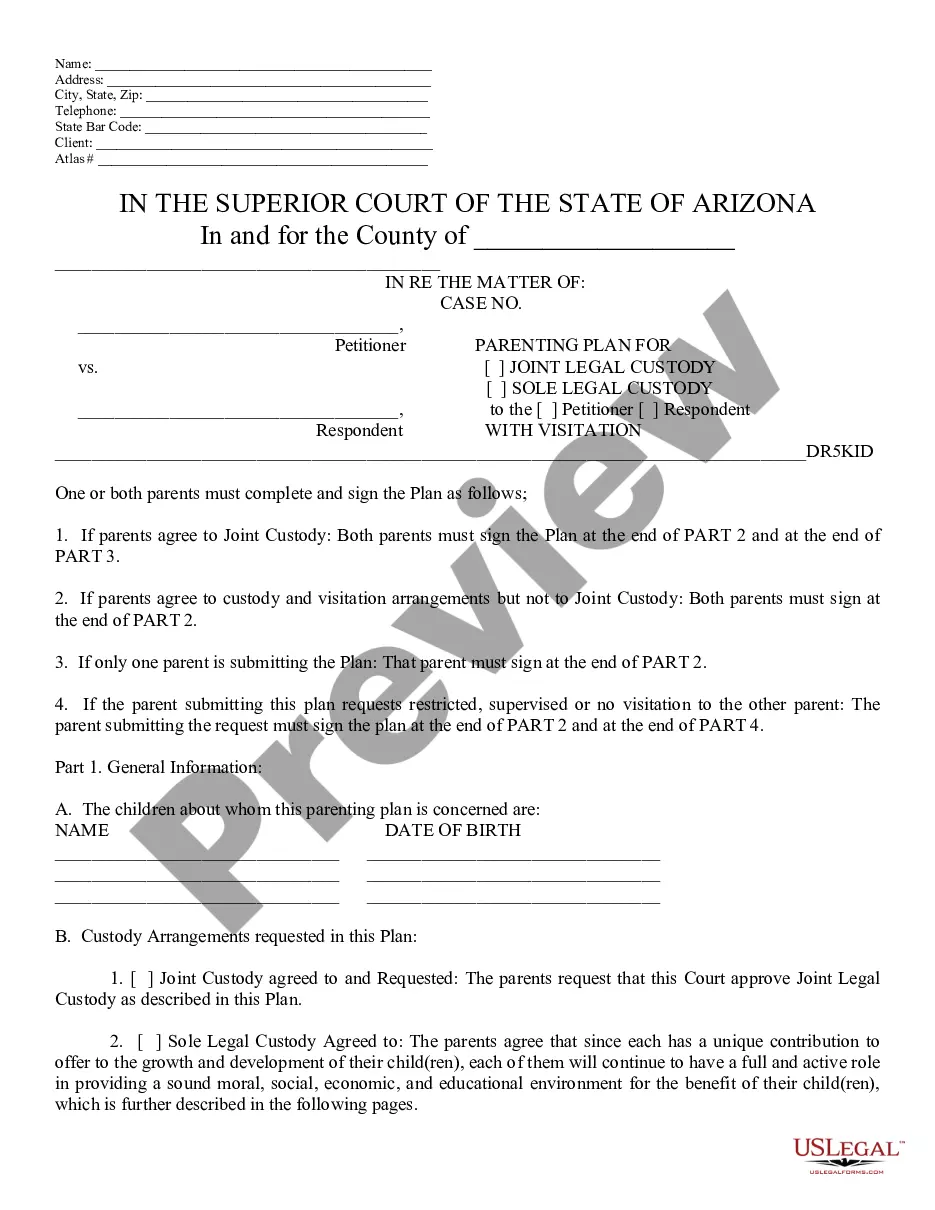
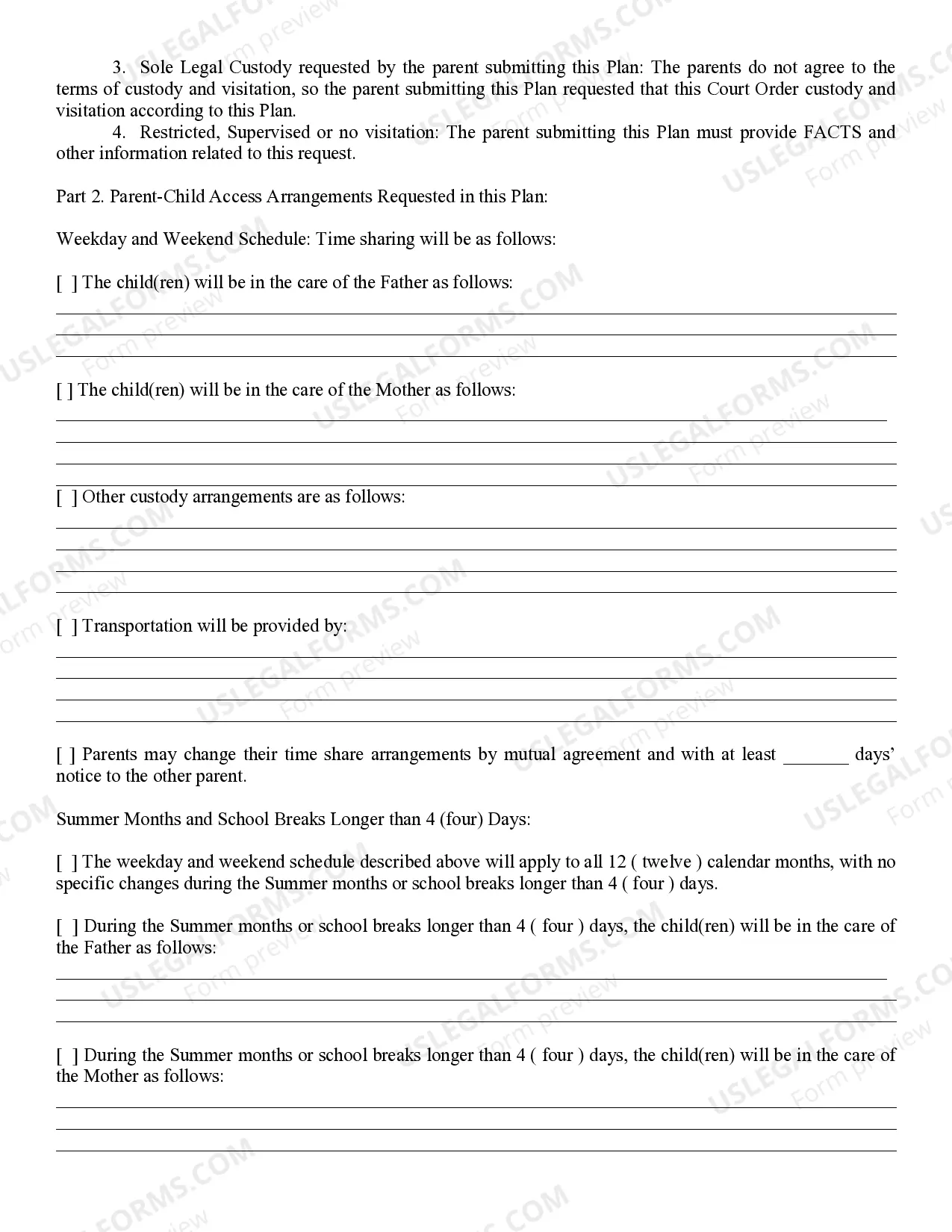
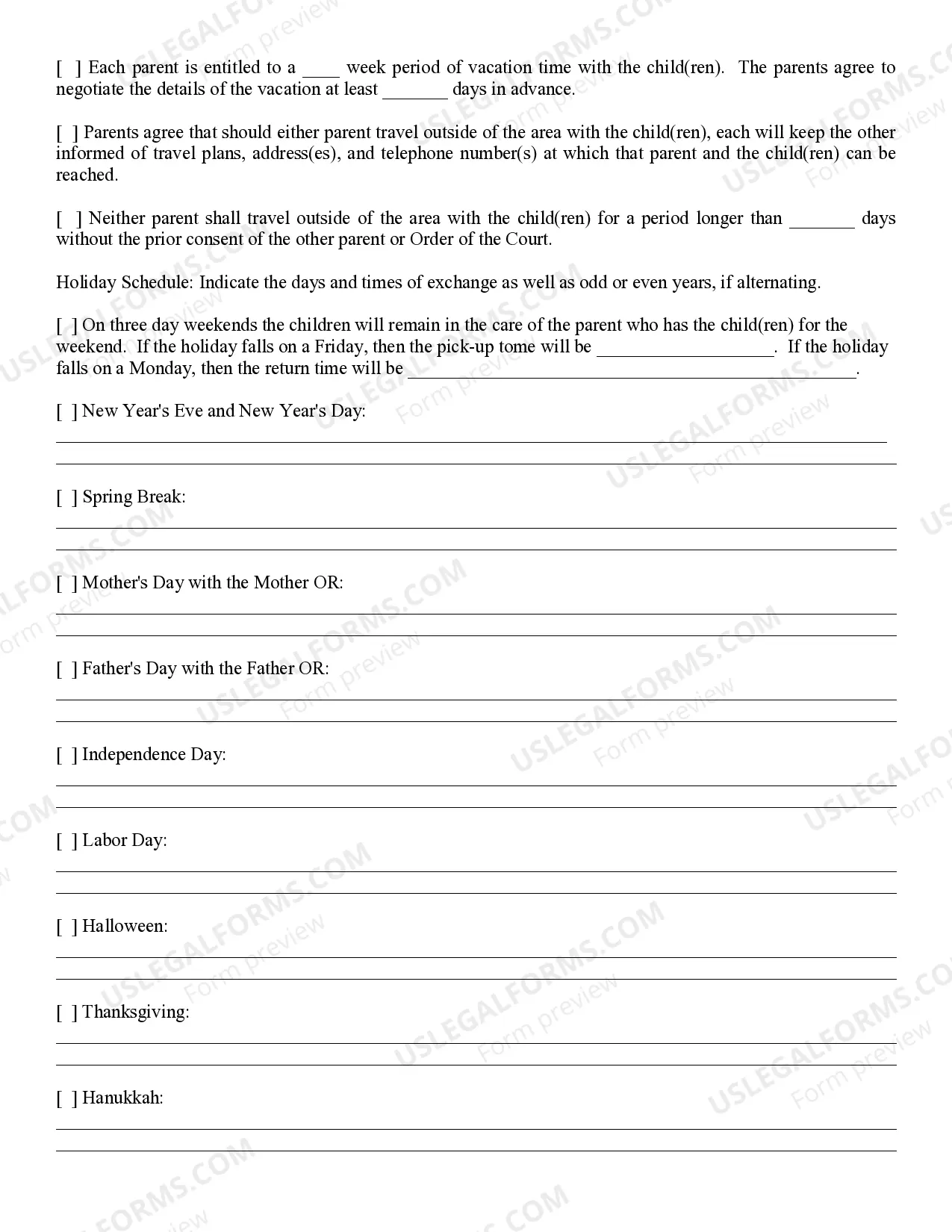
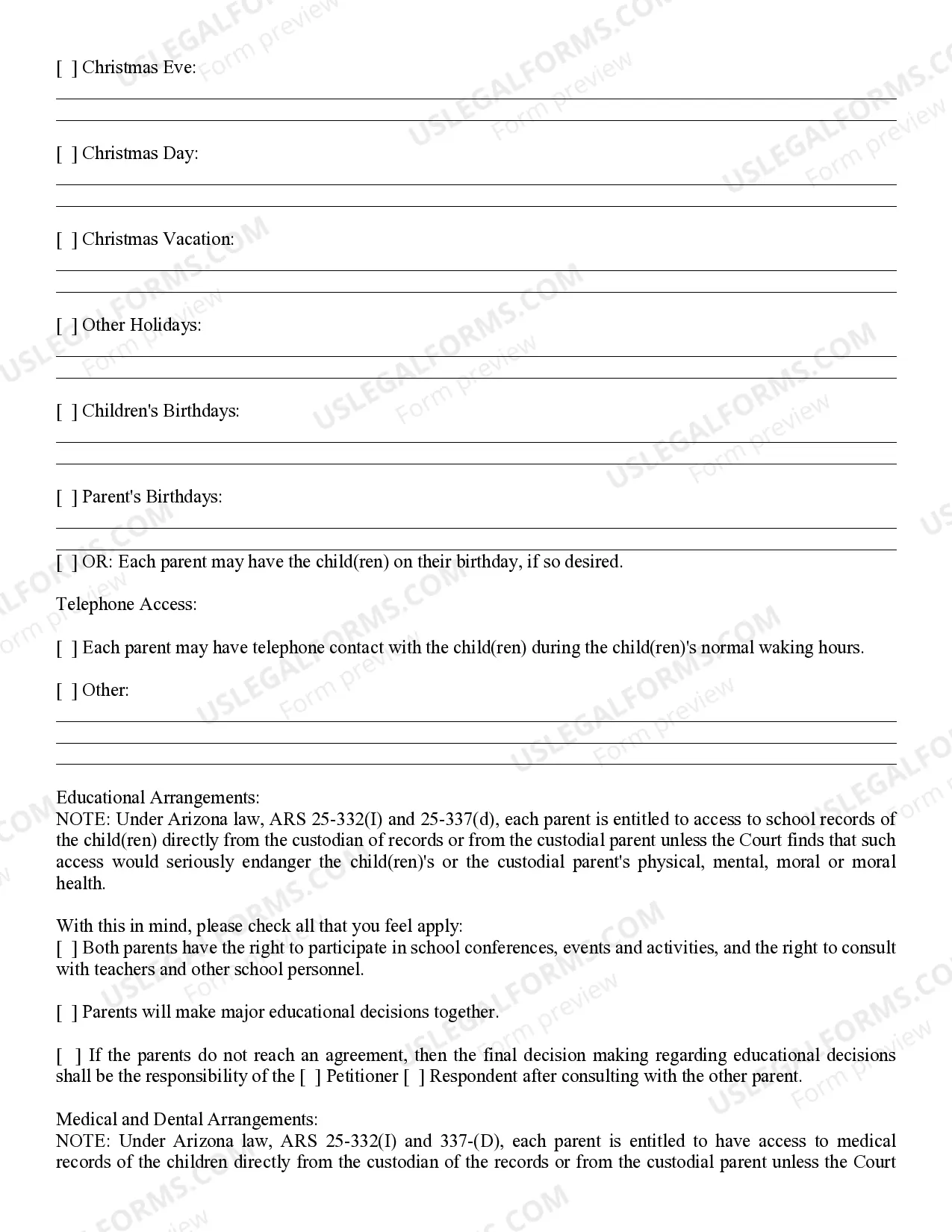
Parent Plan Each For Divorce
Description

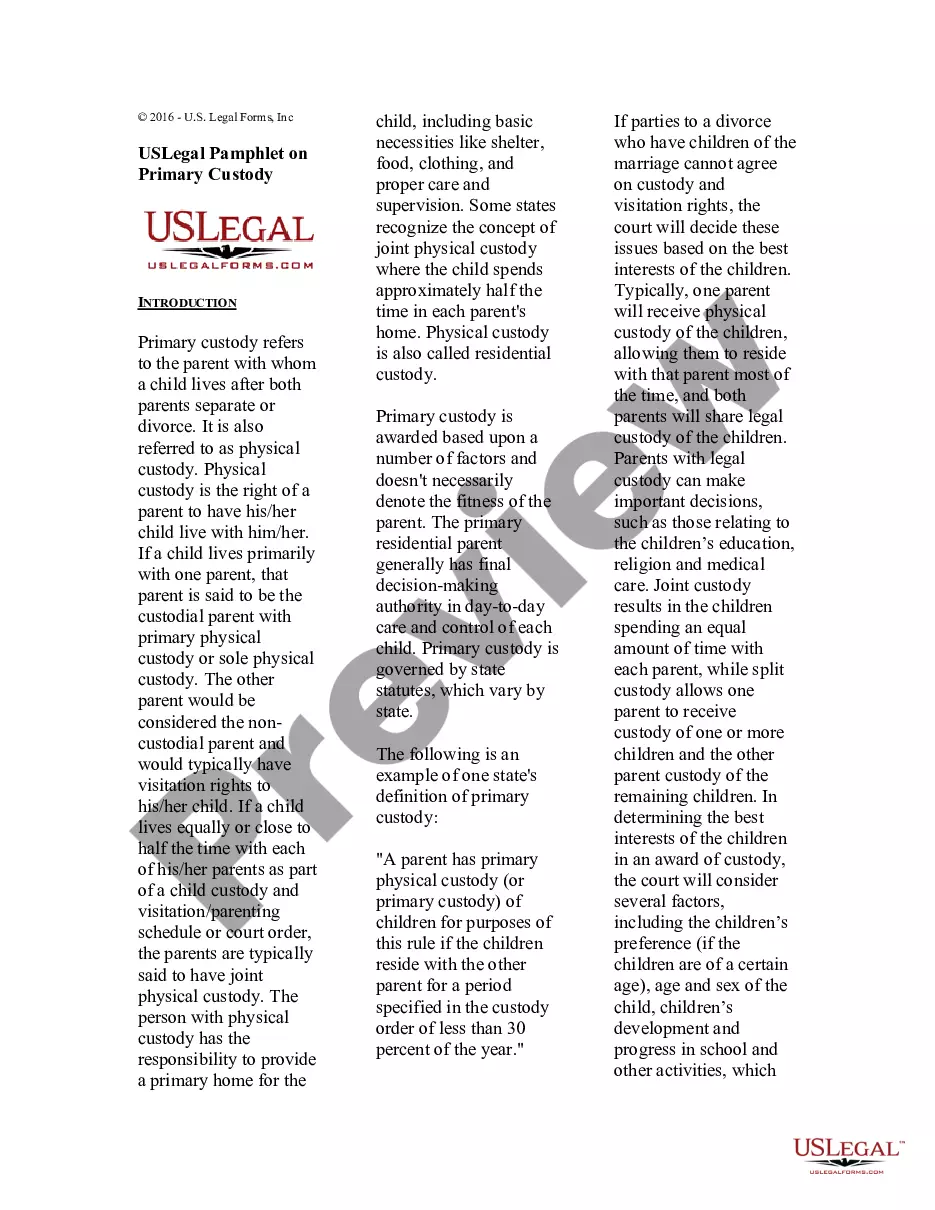
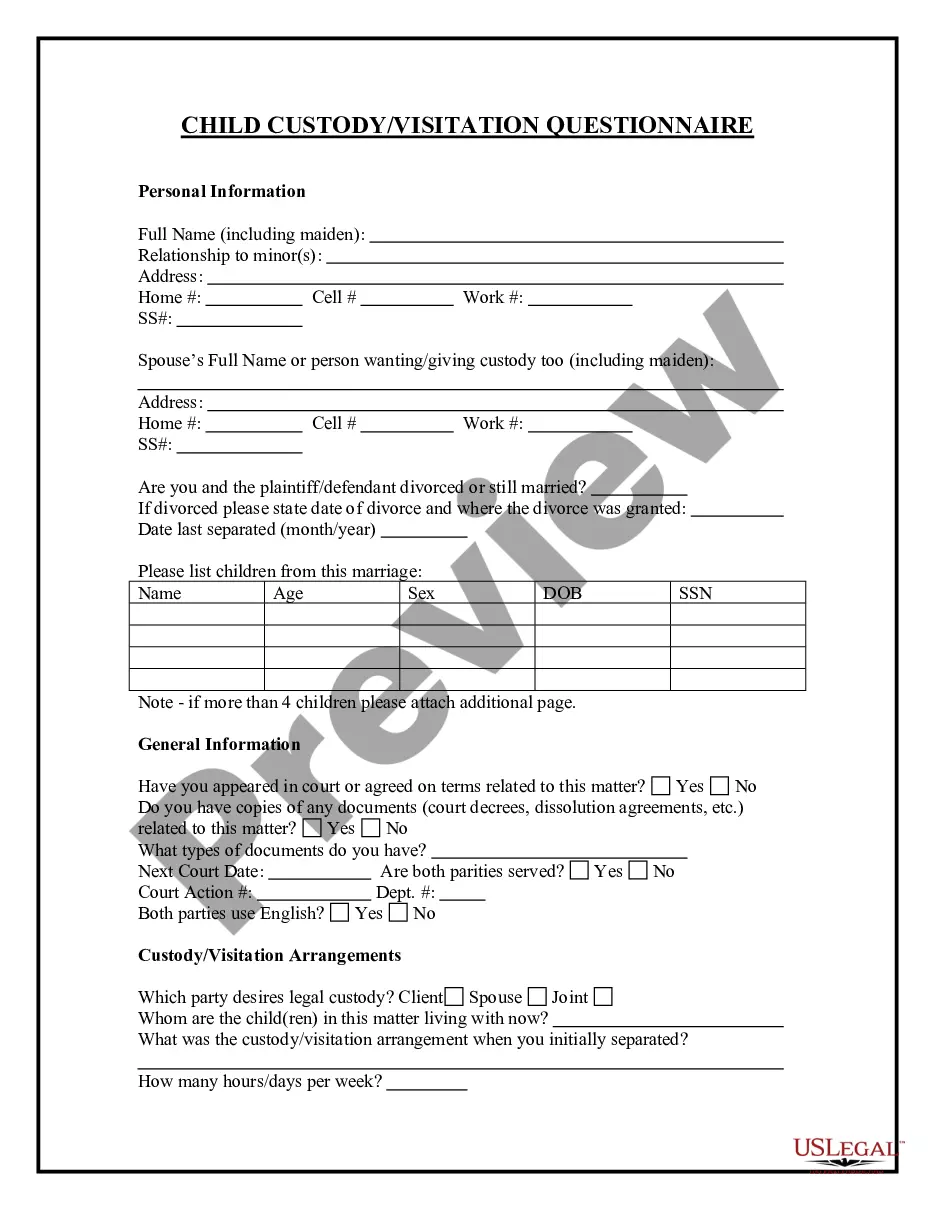
Get your form ready online
Our built-in tools help you complete, sign, share, and store your documents in one place.
Make edits, fill in missing information, and update formatting in US Legal Forms—just like you would in MS Word.
Download a copy, print it, send it by email, or mail it via USPS—whatever works best for your next step.
Sign and collect signatures with our SignNow integration. Send to multiple recipients, set reminders, and more. Go Premium to unlock E-Sign.
If this form requires notarization, complete it online through a secure video call—no need to meet a notary in person or wait for an appointment.
We protect your documents and personal data by following strict security and privacy standards.

Make edits, fill in missing information, and update formatting in US Legal Forms—just like you would in MS Word.

Download a copy, print it, send it by email, or mail it via USPS—whatever works best for your next step.

Sign and collect signatures with our SignNow integration. Send to multiple recipients, set reminders, and more. Go Premium to unlock E-Sign.

If this form requires notarization, complete it online through a secure video call—no need to meet a notary in person or wait for an appointment.

We protect your documents and personal data by following strict security and privacy standards.
Looking for another form?


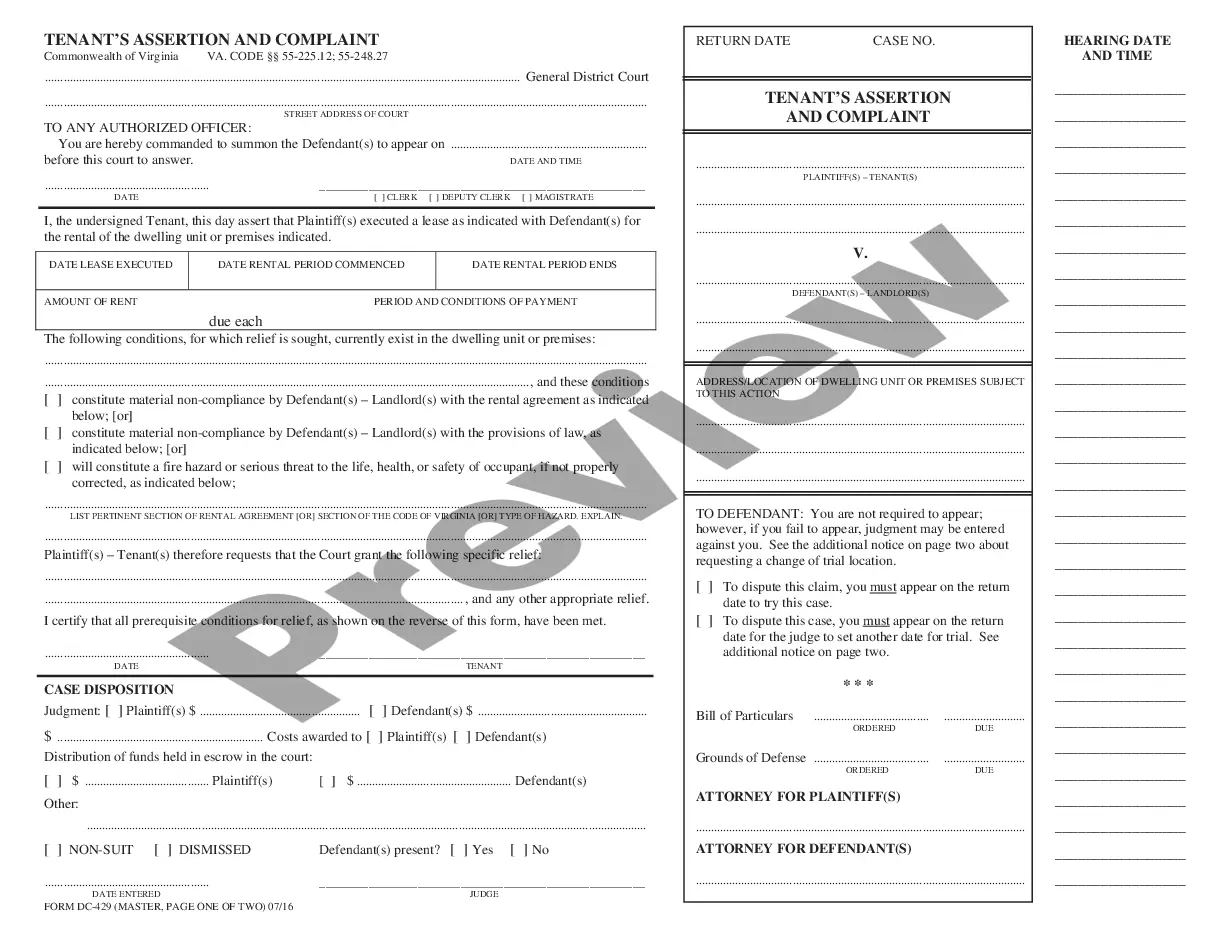




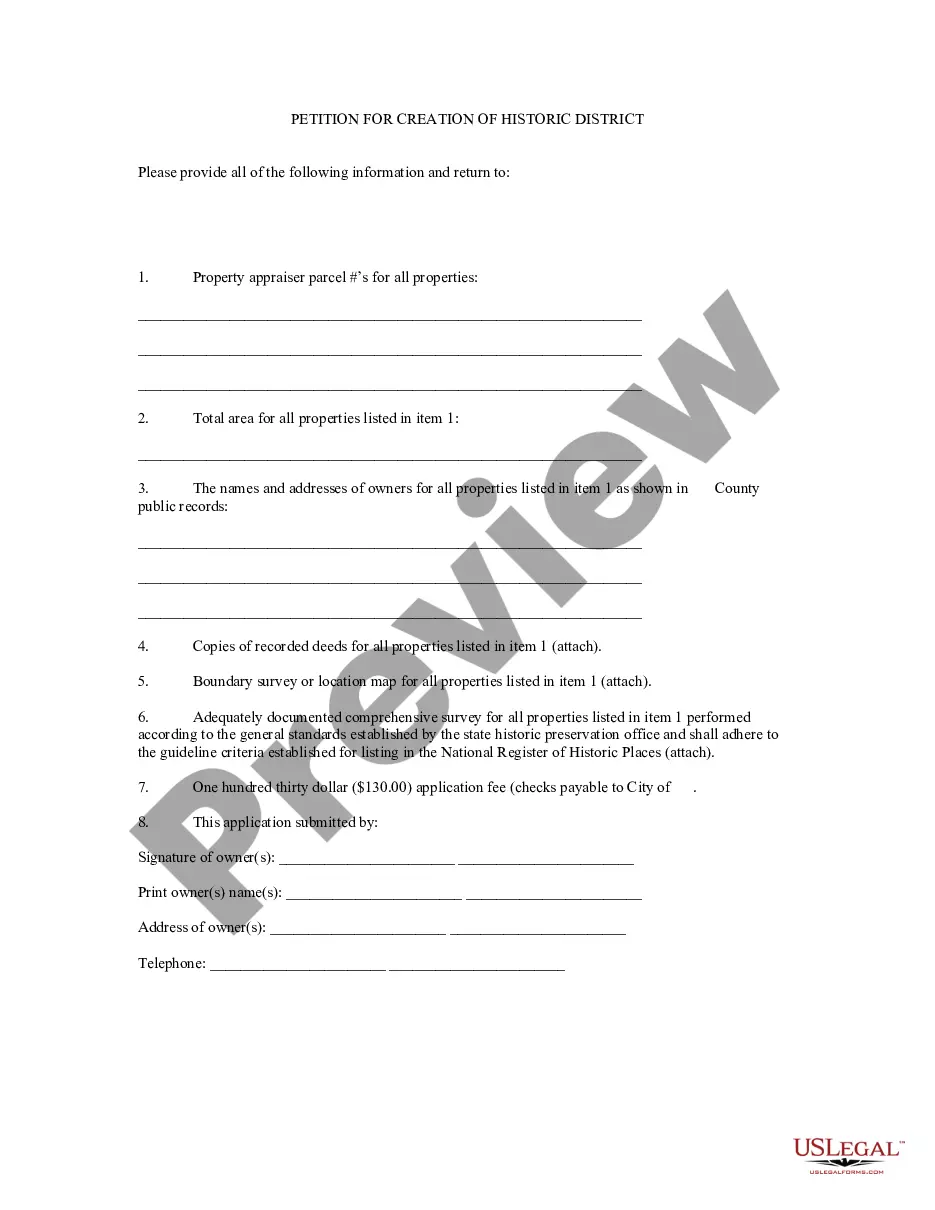


Form popularity
FAQ
A 70/30 split refers to a custody arrangement where one parent has the children approximately 70% of the time, while the other has them for 30%. This arrangement, outlined in a parent plan each for divorce, may involve specific days of the week or weekends. It aims to offer the children a consistent routine while allowing quality time with both parents. It's essential to prioritize the children's emotional and physical well-being when determining this split.
Finding the best schedule for divorced parents requires clear communication and flexibility. Every family's situation is unique, so consider the children's needs and parents' work commitments when creating a parent plan each for divorce. A common approach includes alternating weekends and shared holidays, ensuring quality time with both parents. Ultimately, the goal is to provide stability and maintain strong relationships.
Yes, developing a parenting plan is essential during a divorce, as it outlines how you and your spouse will share responsibilities. This plan plays a key role in helping both parents remain engaged in their child's life. Utilizing resources like US Legal Forms can assist you in creating a comprehensive parent plan for each divorce.
Research indicates that younger children typically struggle more with divorce, as they may not fully understand the changes occurring. Their emotional responses can be intense, making it crucial to have a strong parenting plan for each divorce in place. Older children may experience different challenges, but consistent support from both parents is vital at any age.
An effective parenting schedule balances time between both parents, catering to the child’s school and social activities. A well-thought-out parent plan for each divorce can accommodate holidays, special events, and other important dates. Tailoring a schedule to meet the child’s needs encourages stability and support.
The best custody arrangement varies depending on the family’s unique circumstances. A significant aspect is ensuring that the child maintains strong relationships with both parents. Crafting a solid parenting plan for each divorce will outline the custody terms and build a foundation for cooperation.
It is important to communicate with your child honestly and calmly. Use simple language and reassure them that both parents love them and will continue to support them. Creating a parent plan each for divorce can help clarify future arrangements, making the conversation easier.
In most cases, the custody arrangement is determined based on the child's best interest. A parenting plan for each divorce addresses living arrangements, ensuring kids spend quality time with both parents. Generally, courts favor arrangements that allow children to maintain regular contact with both mom and dad.
The best witnesses for a child custody trial typically include individuals who can attest to your parenting skills and the child’s well-being. This can involve teachers, childcare providers, or family friends who have observed your interactions. Their testimonies, combined with a solid parent plan each for divorce, can paint a clear picture of your capabilities as a parent. It’s wise to choose witnesses who convey a positive narrative about your parenting.
The best evidence for child custody includes documents proving your active involvement in your child’s life. This can involve school records, medical appointments, and photographs of shared activities. A well-thought-out parent plan each for divorce can also serve as significant evidence in demonstrating your commitment. Making sure your documentation is organized will enhance your credibility.