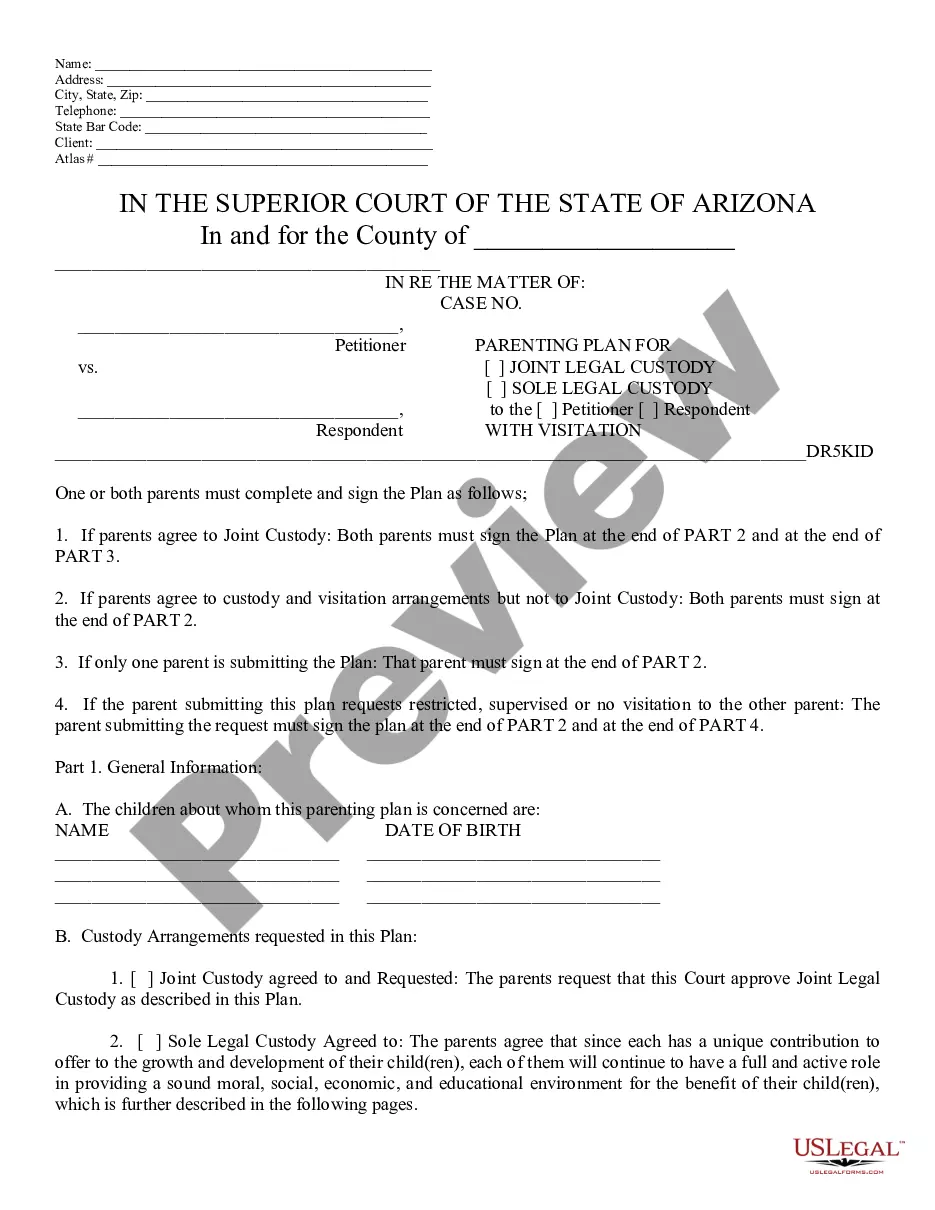
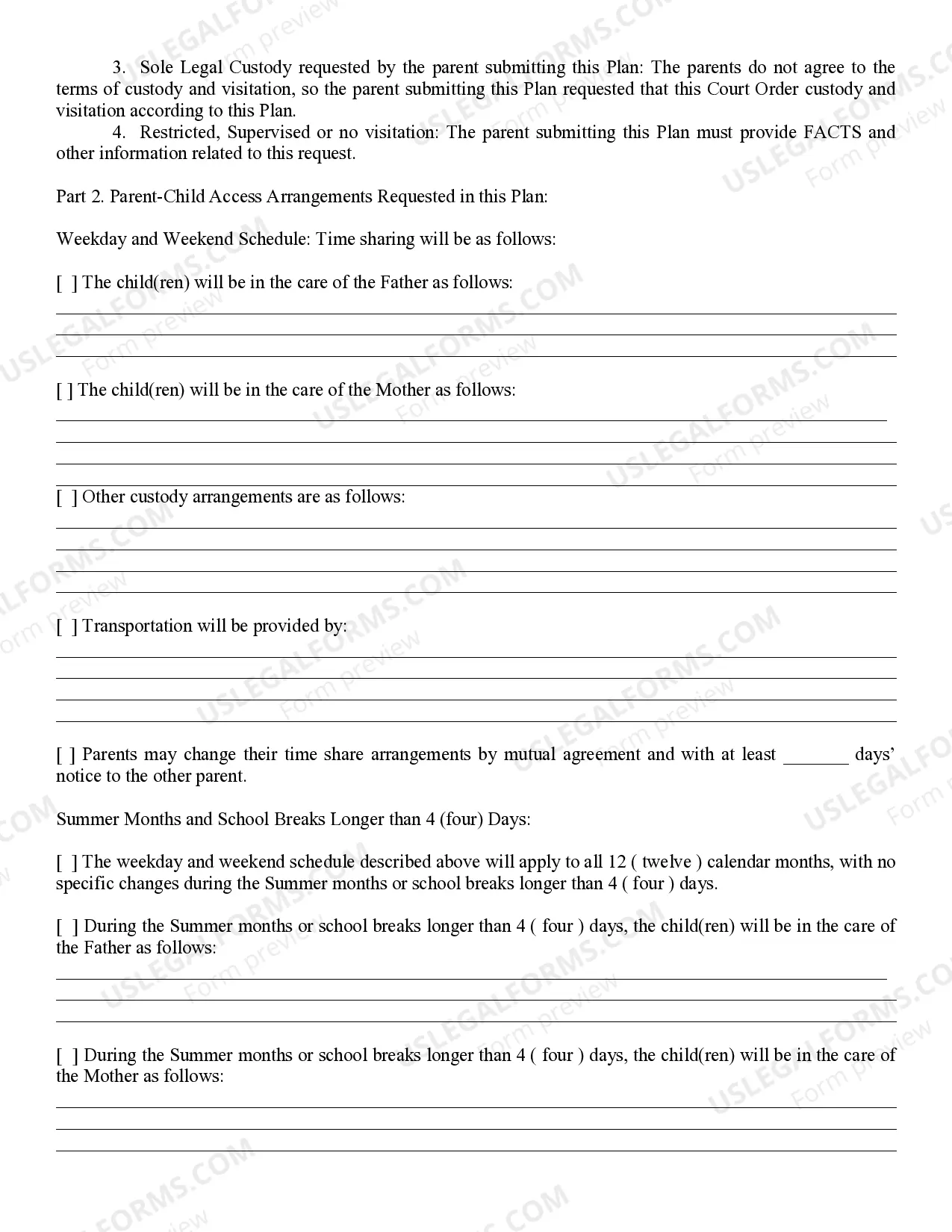
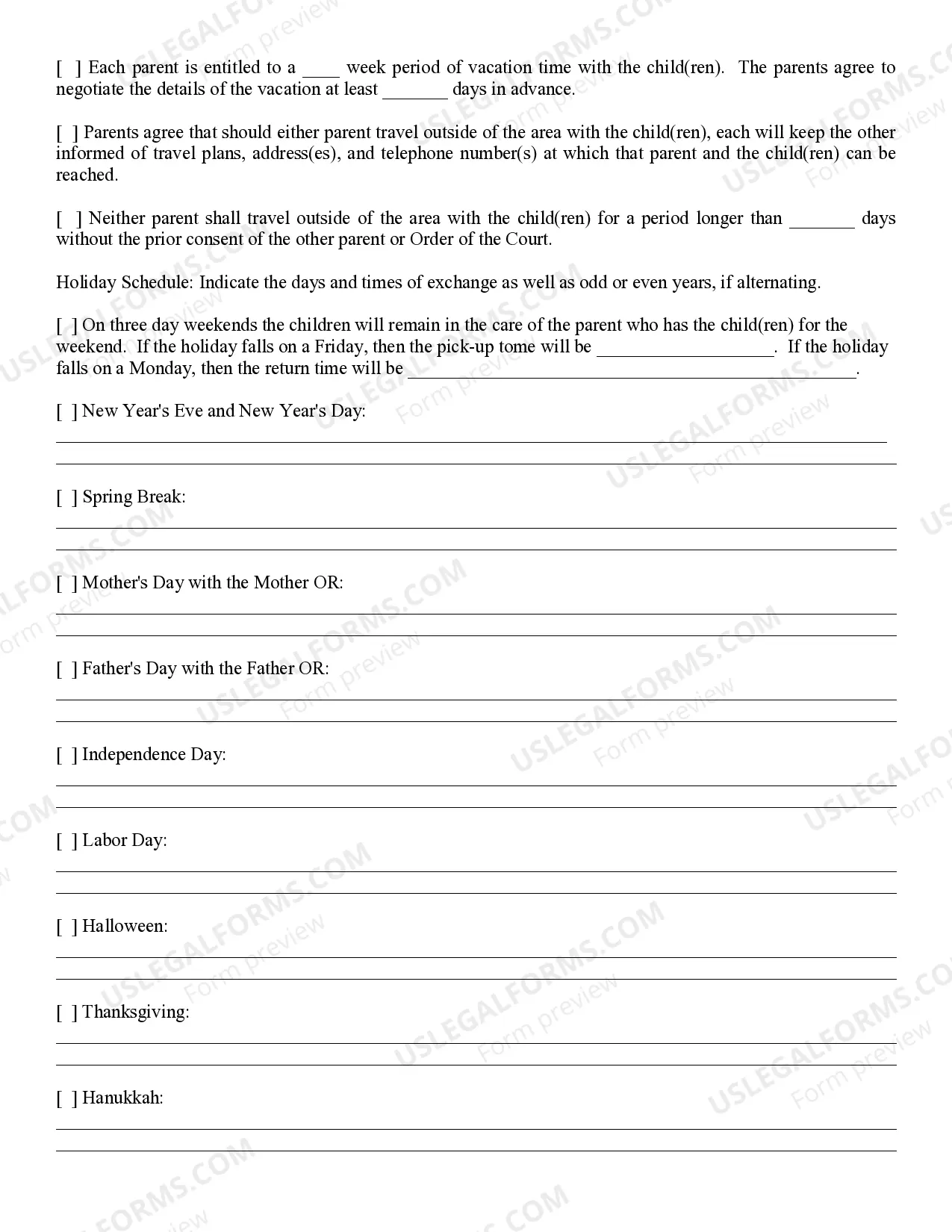
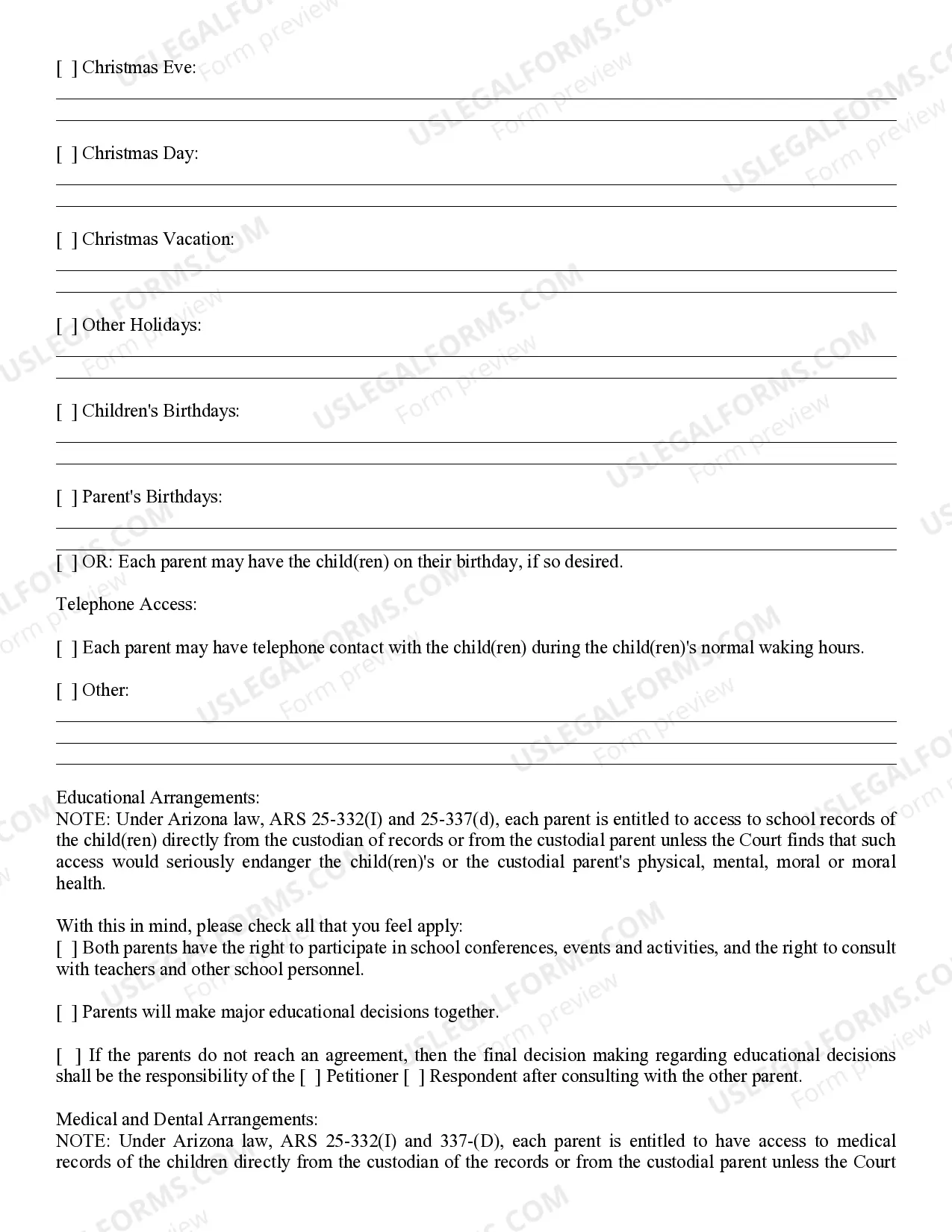
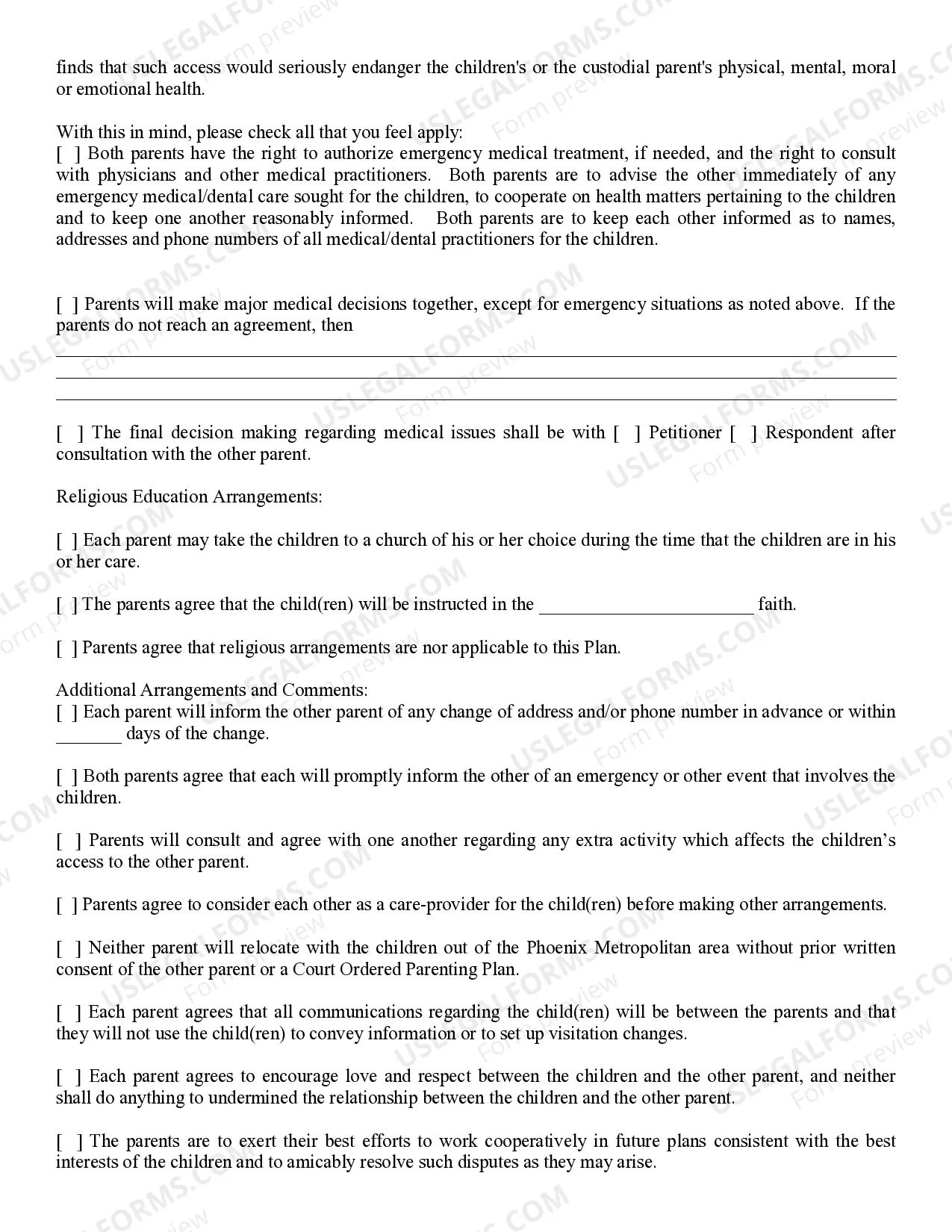
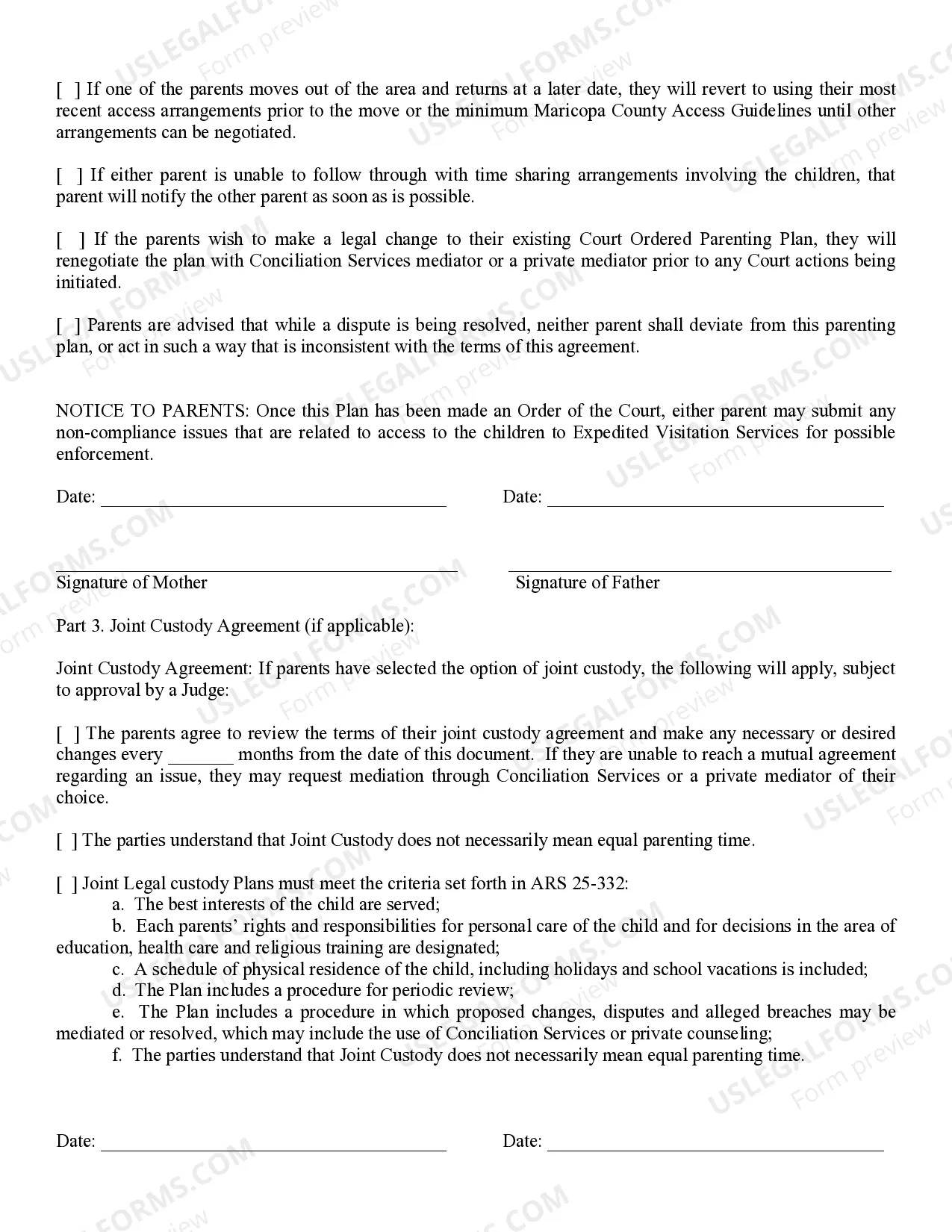
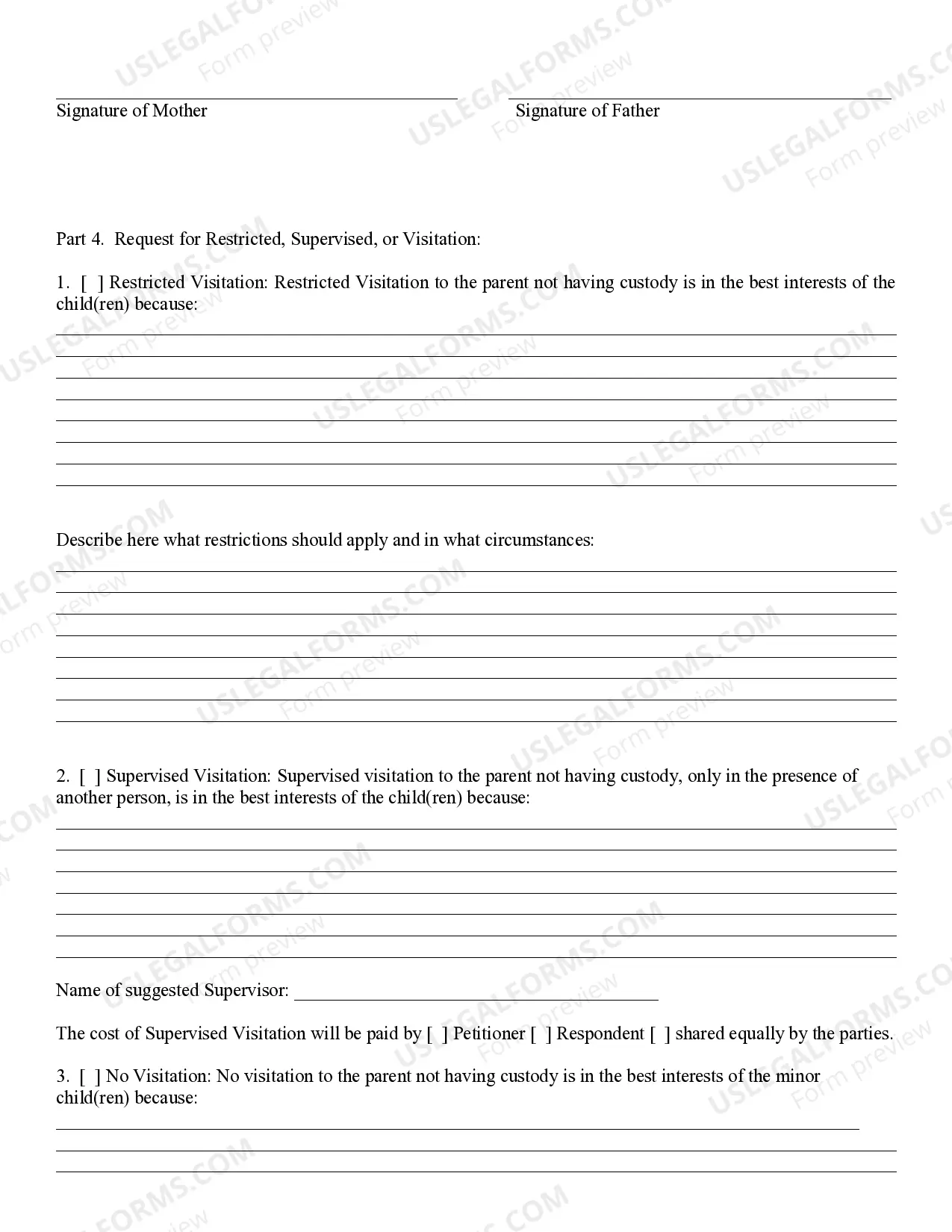
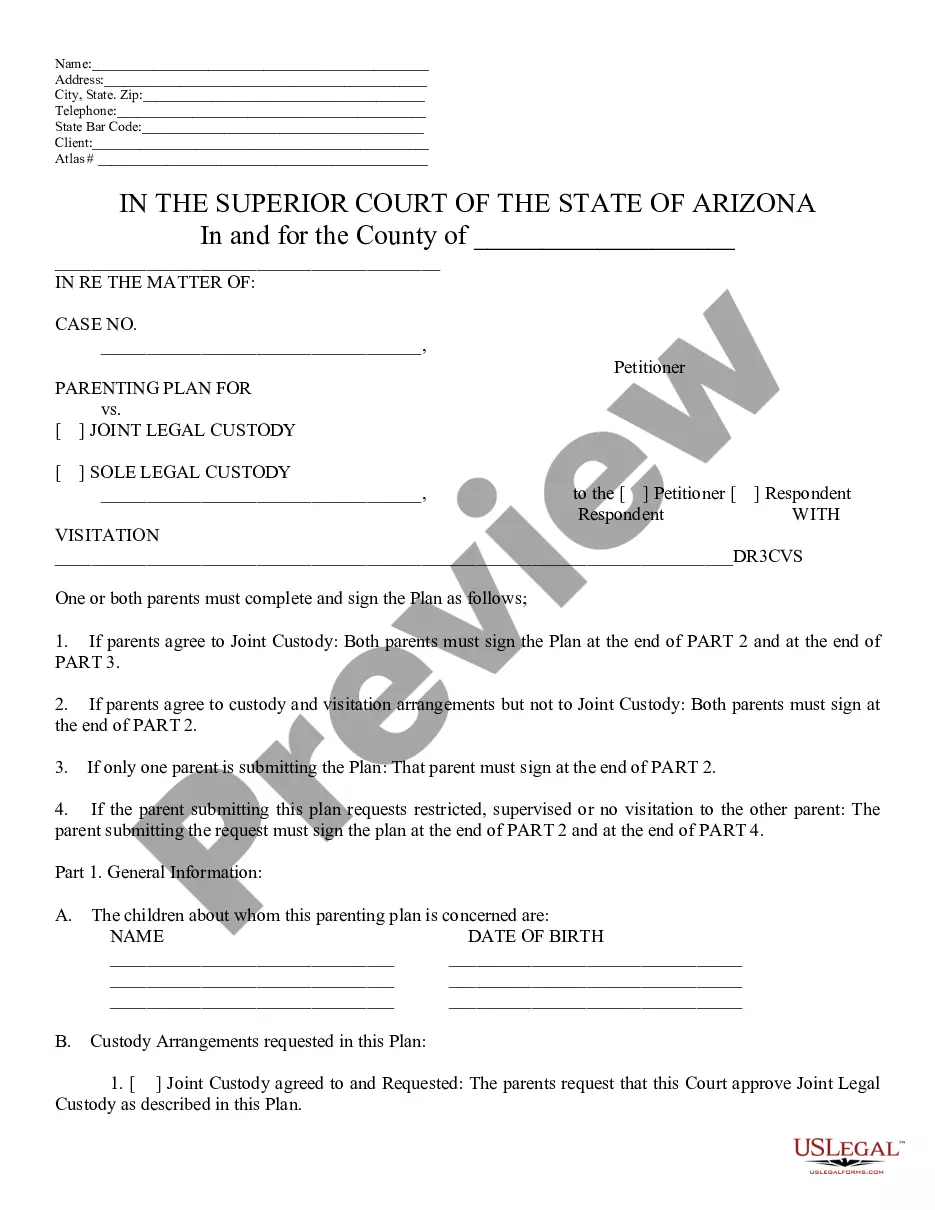
Parent Plan Each For Custody
Description

Get your form ready online
Our built-in tools help you complete, sign, share, and store your documents in one place.
Make edits, fill in missing information, and update formatting in US Legal Forms—just like you would in MS Word.
Download a copy, print it, send it by email, or mail it via USPS—whatever works best for your next step.
Sign and collect signatures with our SignNow integration. Send to multiple recipients, set reminders, and more. Go Premium to unlock E-Sign.
If this form requires notarization, complete it online through a secure video call—no need to meet a notary in person or wait for an appointment.
We protect your documents and personal data by following strict security and privacy standards.

Make edits, fill in missing information, and update formatting in US Legal Forms—just like you would in MS Word.

Download a copy, print it, send it by email, or mail it via USPS—whatever works best for your next step.

Sign and collect signatures with our SignNow integration. Send to multiple recipients, set reminders, and more. Go Premium to unlock E-Sign.

If this form requires notarization, complete it online through a secure video call—no need to meet a notary in person or wait for an appointment.

We protect your documents and personal data by following strict security and privacy standards.
Looking for another form?



Form popularity
FAQ
The best evidence for child custody includes documentation that highlights your relationship with the child and your parenting capabilities. This can involve school records, medical documentation, photographs of shared experiences, and records of communication with the other parent. Creating a detailed parenting plan for custody can also serve as strong evidence, showing the court that you have a thoughtful approach to raising your child. Gathering a mix of these documents and demonstrating your dedication will reinforce your case.
Winning a custody battle often depends on the circumstances of each case. Generally, parents who actively demonstrate their involvement in their child's life and present a thorough parenting plan for custody are favored. The court's primary focus is on the child's best interests, so those who can show their commitment and ability to provide a nurturing environment increase their chances. Each case is unique, so understanding your situation is crucial.
A parenting plan for primary custody outlines the living arrangements and responsibilities of each parent regarding the child. It typically includes details about daily routines, visitation schedules, education, healthcare, and communication methods between parents. This plan must prioritize the child's needs and well-being. Drafting a clear and comprehensive parenting plan for custody can help establish a stable environment for your child.
To win a custody battle, focus on creating a solid parenting plan for custody that highlights your commitment and ability to care for your child. Gather relevant documentation, such as proof of your involvement in your child's life, including school records, medical records, and testimonials from educators or family. Additionally, demonstrate your willingness to cooperate with the other parent and prioritize your child's best interests. Being organized and prepared can greatly influence the court's decision.
An effective example of a 70/30 split can be found in a scenario where one parent has the children from Monday morning until Wednesday evening, while the other parent has them from Wednesday evening to Monday morning. This ensures that each parent experiences key activities, such as school or weekend outings. When establishing your parent plan each for custody, be sure to account for various aspects of the children's lives. A straightforward example helps clarify co-parenting arrangements.
A 70/30 split translates to 70% of the time spent with one parent and 30% with the other. This percentage clearly delineates the major time commitment each parent has regarding child custody. Such arrangements can provide a framework that supports balanced parenting. Including specific percentages in your parent plan each for custody helps clarify expectations and responsibilities.
Visually, a 70/30 split resembles a schedule where the children spend more significant portions with one parent. For instance, the custodial parent may have the children from Sunday evening to Friday morning, while the non-custodial parent has them from Friday to Sunday. It is crucial to have a clear and organized parent plan each for custody to ensure successful co-parenting. This clarity helps parents effectively manage schedules and responsibilities.
A 70/30 split indicates the amount of time children spend with each parent. In this arrangement, one parent is responsible for the majority of parenting time, which can impact daily activities, schooling, and overall stability for the children. This type of split emphasizes the importance of having a structured parent plan each for custody. Understanding this balance can help both parents maintain a healthy co-parenting relationship.
A 70/30 split typically means one parent has the children for 70% of the time, while the other parent has them for 30%. This roughly translates to about 5 days a week with one parent and 2 days with the other. It encourages meaningful relationships with both parents. When creating a parent plan each for custody, consider how these days fit into each parent's schedule.
Sharing 50/50 custody requires open communication and cooperation between parents. A balanced parent plan each for custody should include detailed schedules that outline time with each parent, responsibilities during those times, and methods for decision-making. Using tools from uslegalforms can assist in formalizing this arrangement effectively.