Adoption Rights With The Us
Description

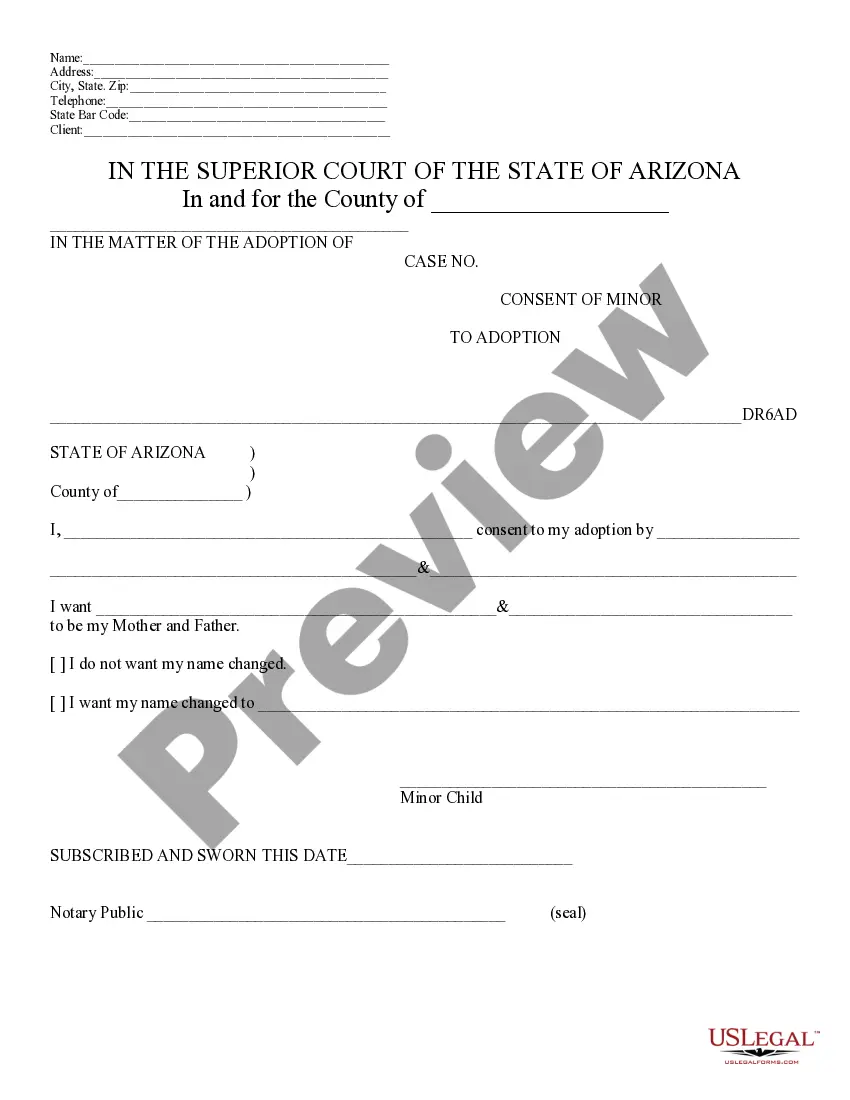
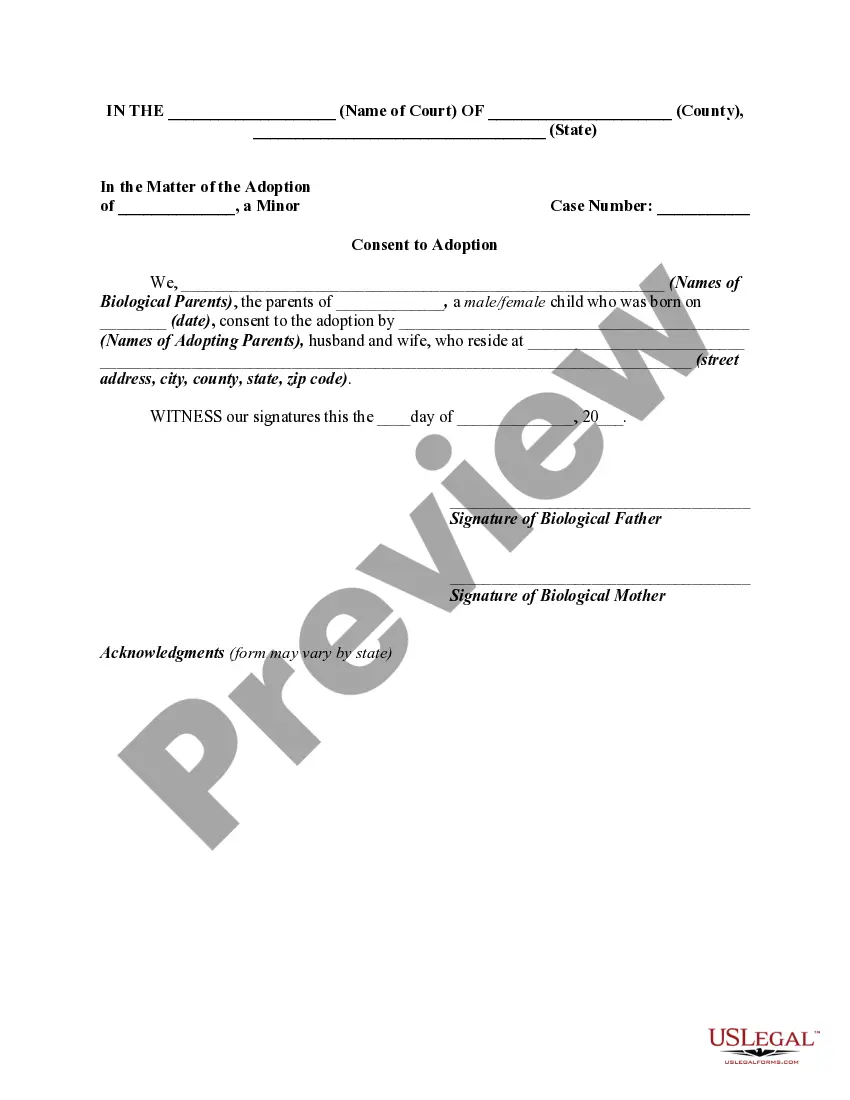
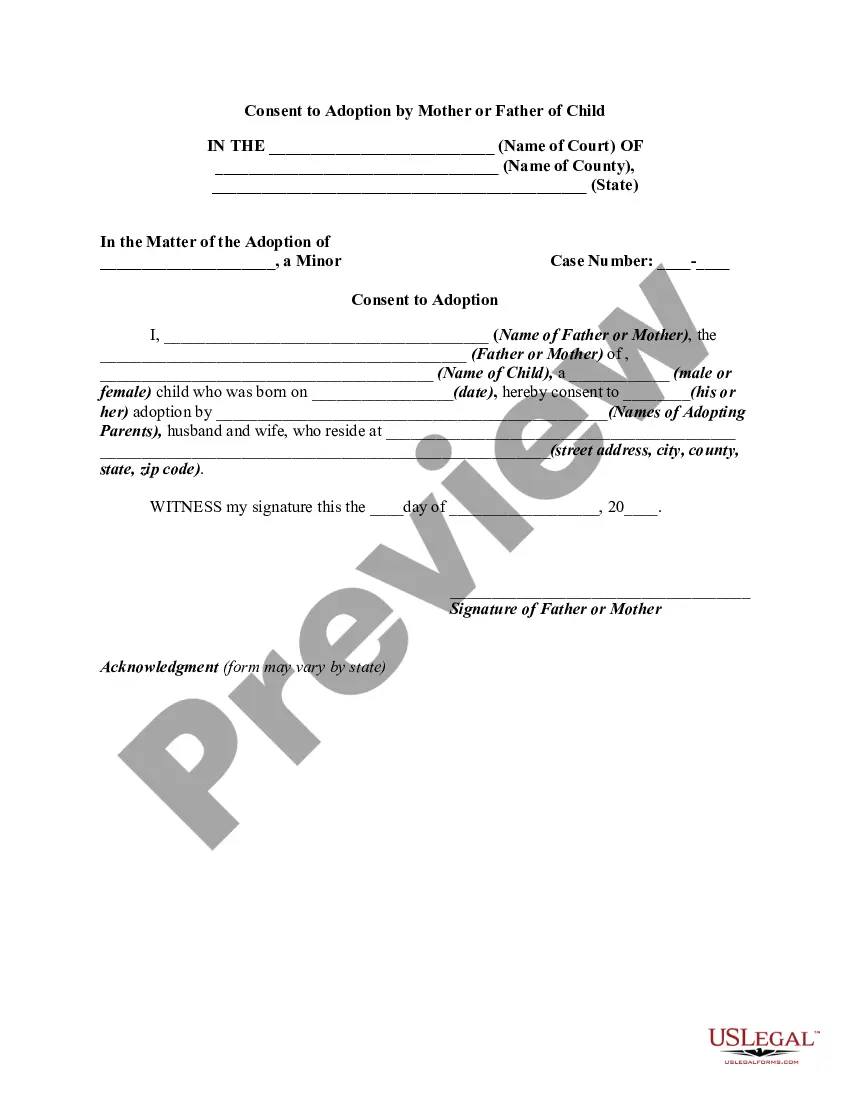
Get your form ready online
Our built-in tools help you complete, sign, share, and store your documents in one place.
Make edits, fill in missing information, and update formatting in US Legal Forms—just like you would in MS Word.
Download a copy, print it, send it by email, or mail it via USPS—whatever works best for your next step.
Sign and collect signatures with our SignNow integration. Send to multiple recipients, set reminders, and more. Go Premium to unlock E-Sign.
If this form requires notarization, complete it online through a secure video call—no need to meet a notary in person or wait for an appointment.
We protect your documents and personal data by following strict security and privacy standards.

Make edits, fill in missing information, and update formatting in US Legal Forms—just like you would in MS Word.

Download a copy, print it, send it by email, or mail it via USPS—whatever works best for your next step.

Sign and collect signatures with our SignNow integration. Send to multiple recipients, set reminders, and more. Go Premium to unlock E-Sign.

If this form requires notarization, complete it online through a secure video call—no need to meet a notary in person or wait for an appointment.

We protect your documents and personal data by following strict security and privacy standards.
Looking for another form?









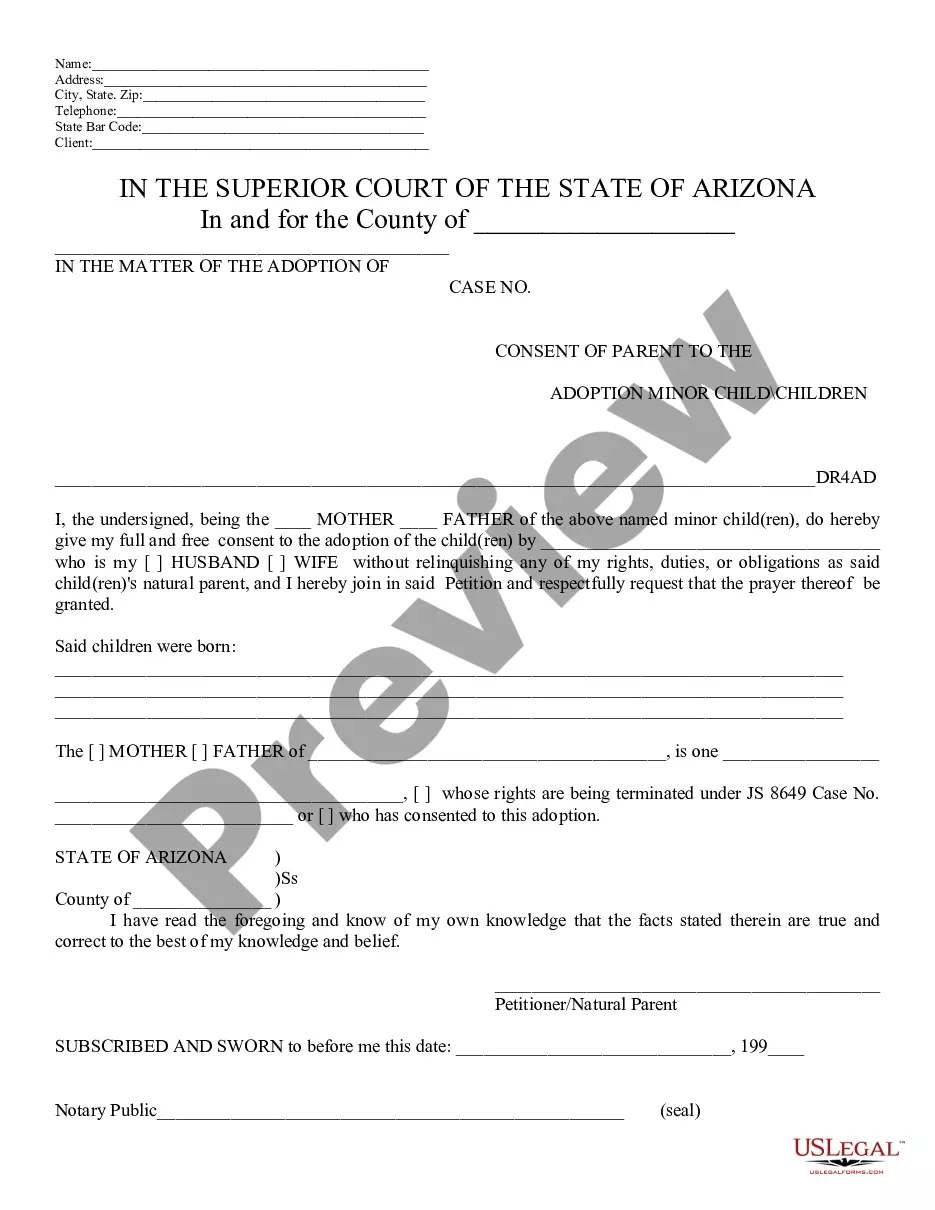
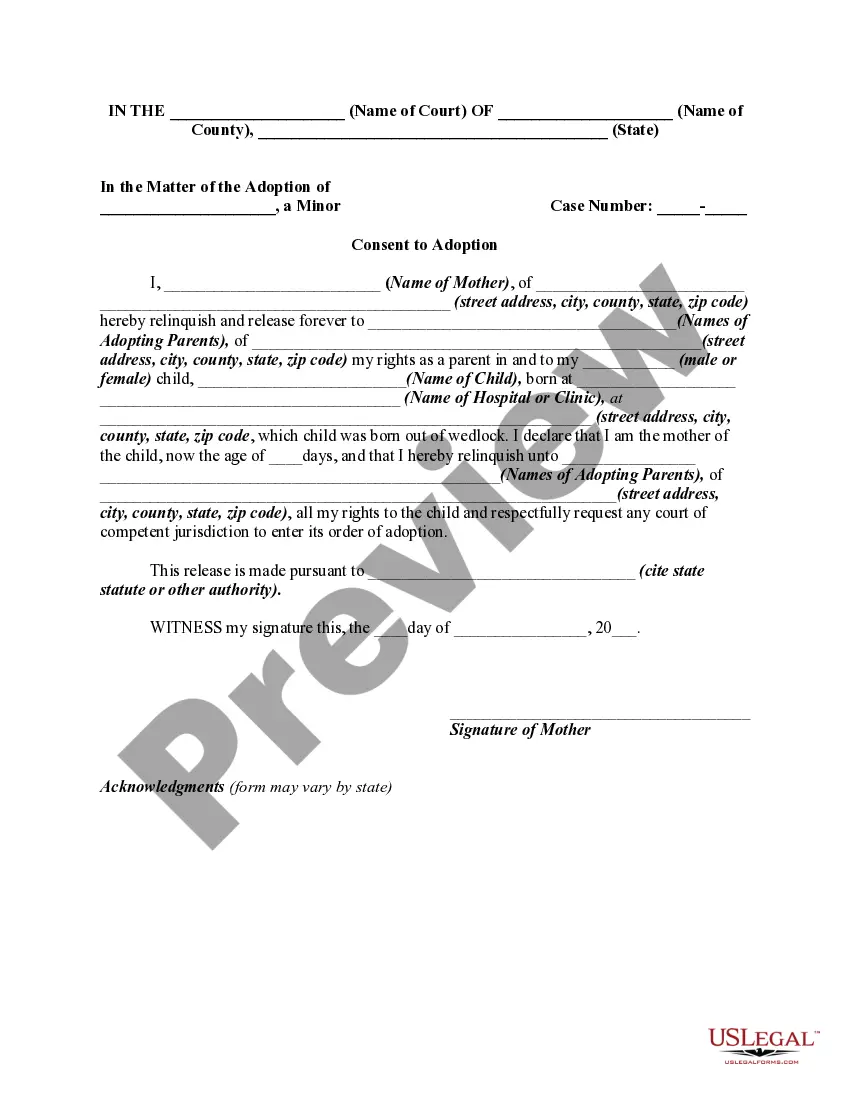
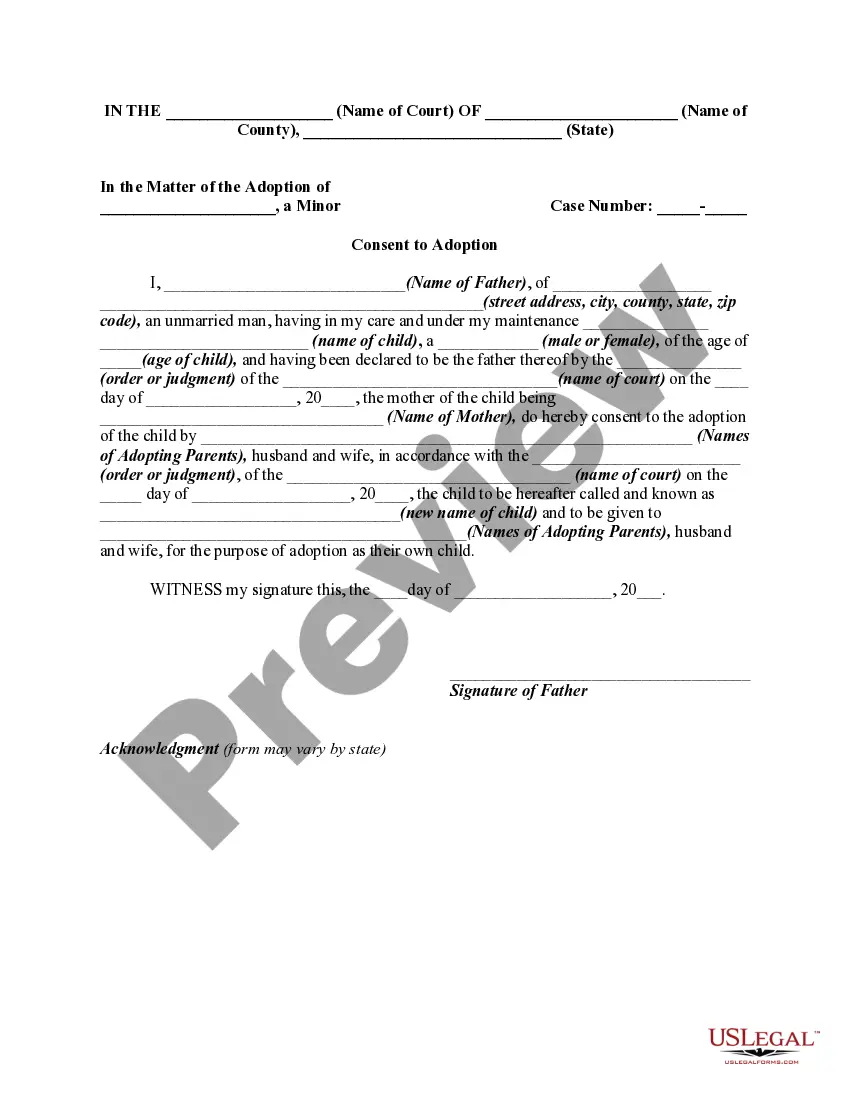
How to fill out Arizona Consent Of Parent To Adoption Of Minor Child - Nonrelinquishing Parental Rights?
- If you're a returning user, log in to your account and download the required form template by clicking the Download button. Check that your subscription is up-to-date; renew if necessary.
- For first-time users, start by reviewing the Preview mode and form description to ensure you select the correct document that meets your local jurisdiction's standards.
- Search for additional templates if needed. Use the Search tab for clarification; once you find a suitable form, proceed to the next step.
- Purchase the document. Click on the Buy Now button and select your preferred subscription plan. Make sure to register an account to access the extensive library.
- Complete your transaction by entering your payment details or using your PayPal account for the subscription.
- Download your selected form to your device for easy completion. Access it anytime through the My Forms section in your profile.
In conclusion, US Legal Forms empowers users with a robust collection of legal documents aimed at simplifying the adoption process. By following these steps, you can efficiently prepare the necessary paperwork and ensure your adoption rights are protected.
Take control of your adoption journey today by visiting US Legal Forms for the support and resources you need.
Form popularity
FAQ
Putting someone up for adoption can be an emotional and complex process that involves legal considerations. The level of difficulty may depend on various factors, including your relationship with the child and the laws in your state. It is crucial to understand your rights and obligations during this process. Utilizing resources such as USLegalForms can provide you with the documentation and guidance you need to navigate your adoption rights with the US effectively.
If your child is a U.S. citizen, this can provide you with options to remain in the U.S. Your child can petition for you to obtain legal status when they turn 21, which can help secure your residency. While the process requires careful attention to documentation and timelines, understanding these adoption rights with the US is important. Seeking assistance from platforms like USLegalForms can help streamline the process and clarify your options.
Yes, a non-US citizen can adopt a child in the US, but the process involves specific legal requirements. Generally, the prospective adoptive parent must show that they can provide a stable and loving environment for the child. Additionally, they need to comply with state laws and regulations regarding adoption rights with the US. Given the complexities, many adoptive parents benefit from consulting resource platforms like USLegalForms to navigate the legal landscape.
Yes, if you adopt a child in the USA, you may be eligible to apply for a Green Card. The adoption process can provide a pathway to permanent residency, especially if the child is under 16 years old at the time of adoption. Your parental relationship to the child will play a crucial role in the Green Card application. It is essential to understand the specific requirements and processes involved, which is where USLegalForms can assist you effectively.
The adoption rule in the USA refers to the regulations and procedures that govern how adoptions must be conducted. These rules, including adoption rights with the US, ensure that all parties involved in the process are properly protected and treated fairly. Each state has its own specific rules, but they all share common goals of safeguarding the welfare of the child. Familiarizing yourself with these rules is essential for a successful adoption experience.
Yes, non-U.S. citizens can adopt U.S. children, but the process involves specific legal requirements. Adoption rights with the US mandate that foreign adoptive parents must meet both U.S. and their home country's laws to complete the adoption. They need to provide documentation proving their eligibility and demonstrate their ability to care for the child. Resources like UsLegalForms can help navigate this complex process smoothly.
The Federal Adoption Act is a key piece of legislation that governs adoption on a national level. It outlines various laws and processes that states must follow to ensure legal consistency, ultimately protecting adoption rights with the US across all states. This act facilitates the adoption of children from different states and includes guidelines for interstate adoptions. Understanding these federal regulations is vital for prospective adoptive parents.
While a child’s opinion matters in the adoption process, they cannot solely decide if they want to be adopted. Adoption rights with the US provide minors some ability to express their feelings about the adoption, especially if they are older. Courts often consider the child's wishes alongside other factors to ensure the best outcome for their future. It is essential to approach this topic with sensitivity and care.
The Adoption Act in the USA establishes the legal framework for adoption procedures. It ensures that adoption rights with the US protect both the adopting parents and the children being adopted. This act promotes the welfare of children and sets guidelines for the types of adoptions available, offering clear paths for families to grow. Understanding this act is crucial for anyone considering adoption.
Adoptive parents are typically referred to simply as 'parents' once the adoption is final. This term underlines their full parental rights and responsibilities toward the child. It's important to emphasize that they are equally as capable as biological parents in nurturing and raising their children. Using this inclusive language reinforces the significance of adoption rights with the US.