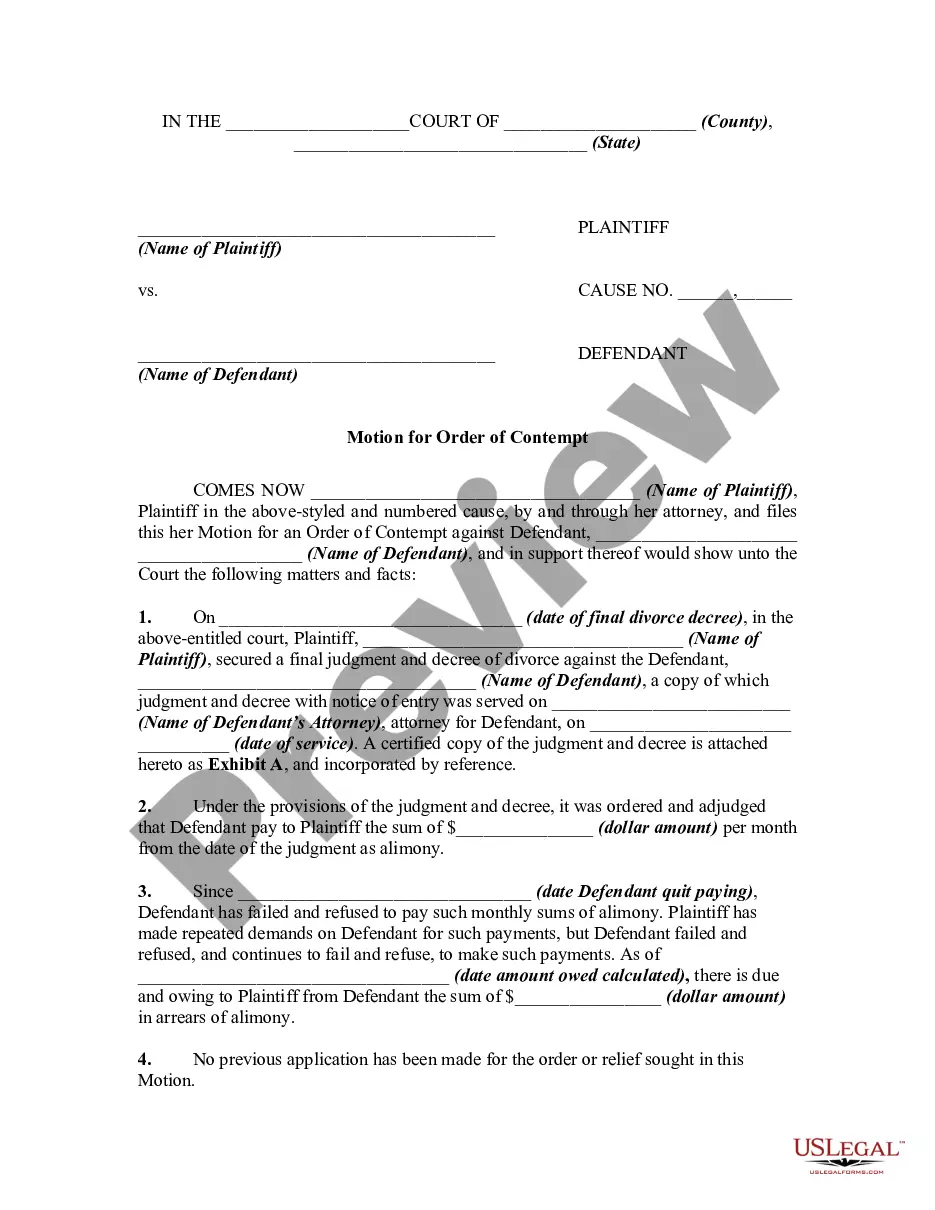
Contempt In Court Arrest
Description
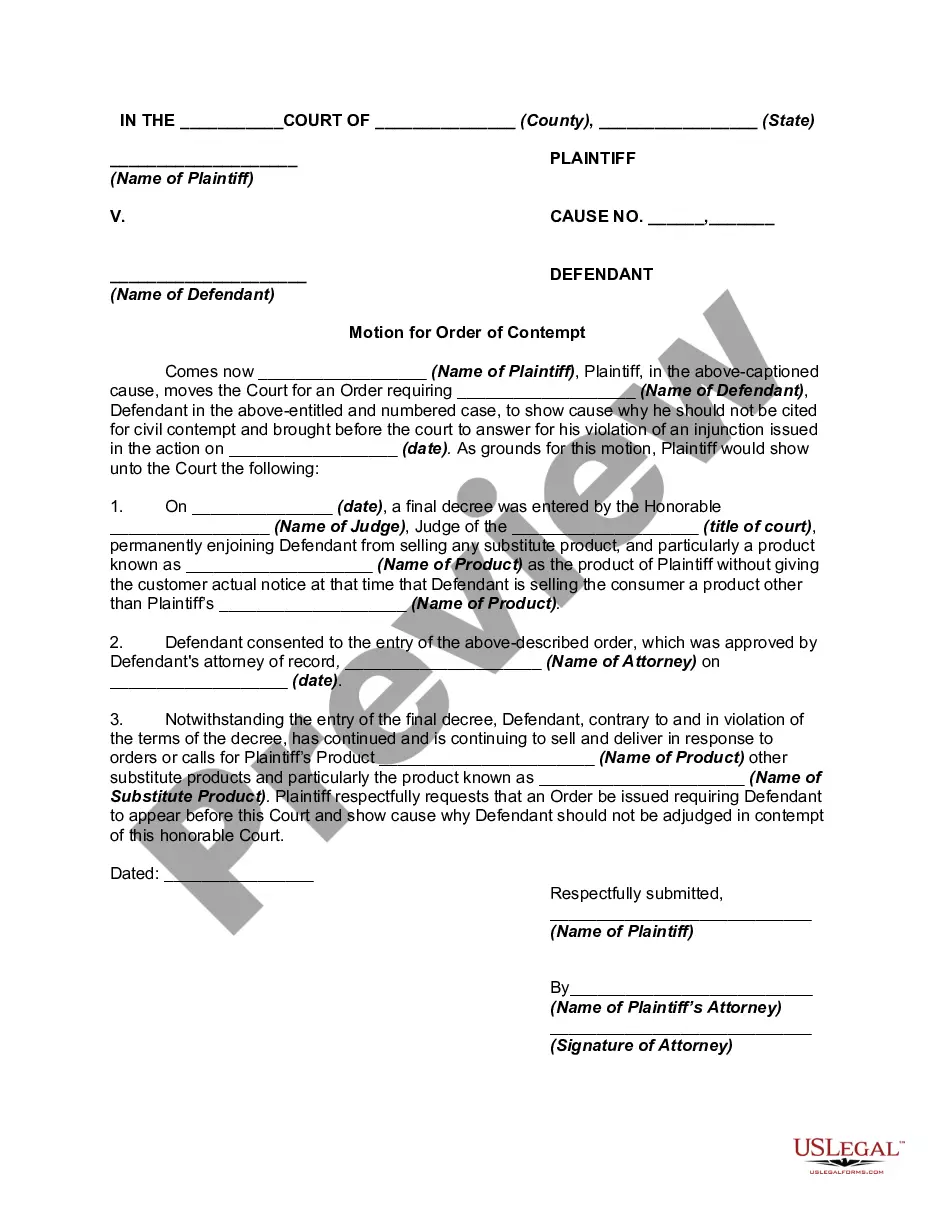
Get your form ready online
Our built-in tools help you complete, sign, share, and store your documents in one place.
Make edits, fill in missing information, and update formatting in US Legal Forms—just like you would in MS Word.
Download a copy, print it, send it by email, or mail it via USPS—whatever works best for your next step.
Sign and collect signatures with our SignNow integration. Send to multiple recipients, set reminders, and more. Go Premium to unlock E-Sign.
If this form requires notarization, complete it online through a secure video call—no need to meet a notary in person or wait for an appointment.
We protect your documents and personal data by following strict security and privacy standards.

Make edits, fill in missing information, and update formatting in US Legal Forms—just like you would in MS Word.

Download a copy, print it, send it by email, or mail it via USPS—whatever works best for your next step.

Sign and collect signatures with our SignNow integration. Send to multiple recipients, set reminders, and more. Go Premium to unlock E-Sign.

If this form requires notarization, complete it online through a secure video call—no need to meet a notary in person or wait for an appointment.

We protect your documents and personal data by following strict security and privacy standards.
Looking for another form?









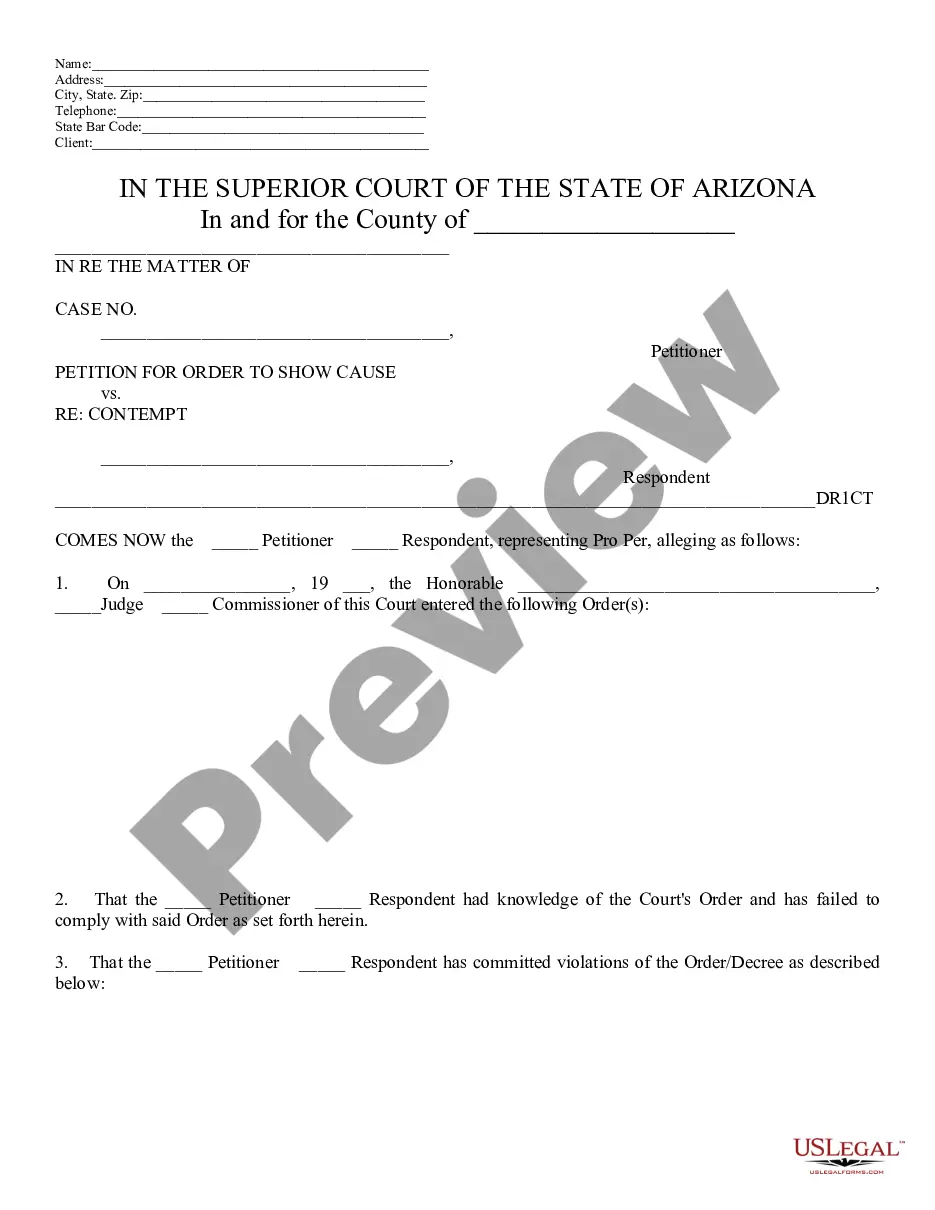
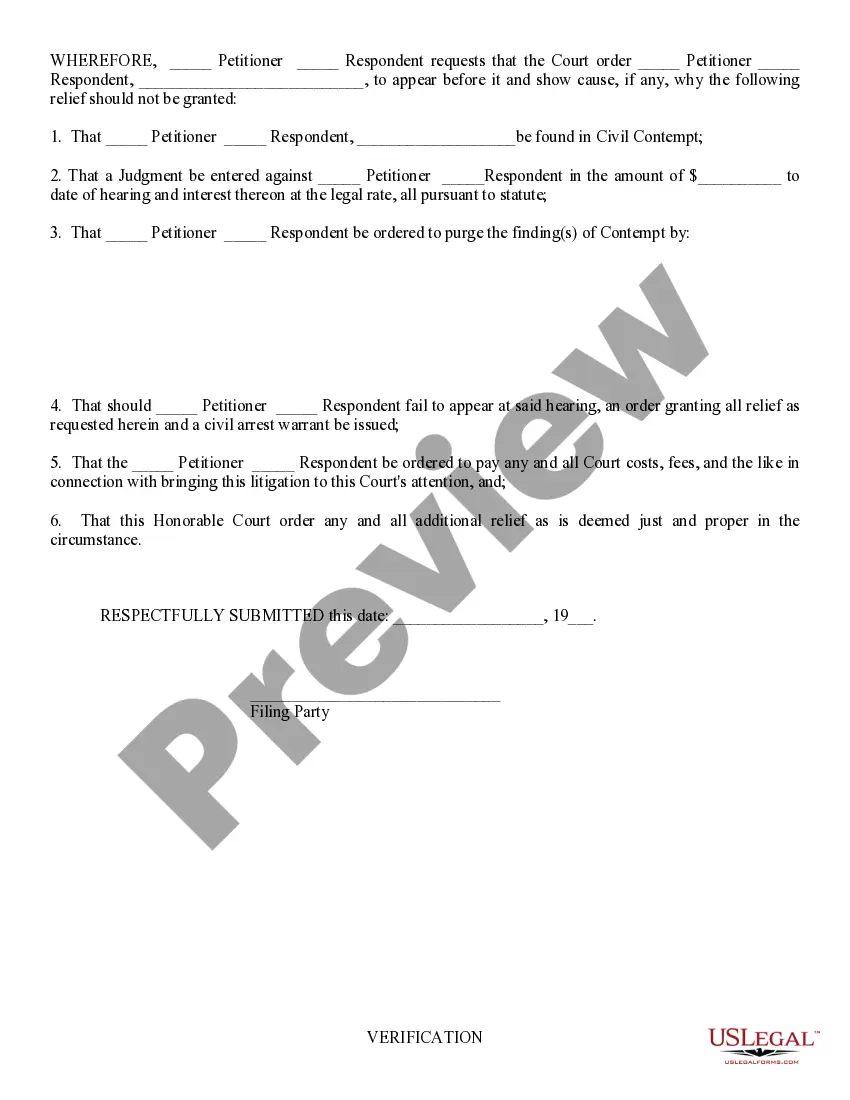
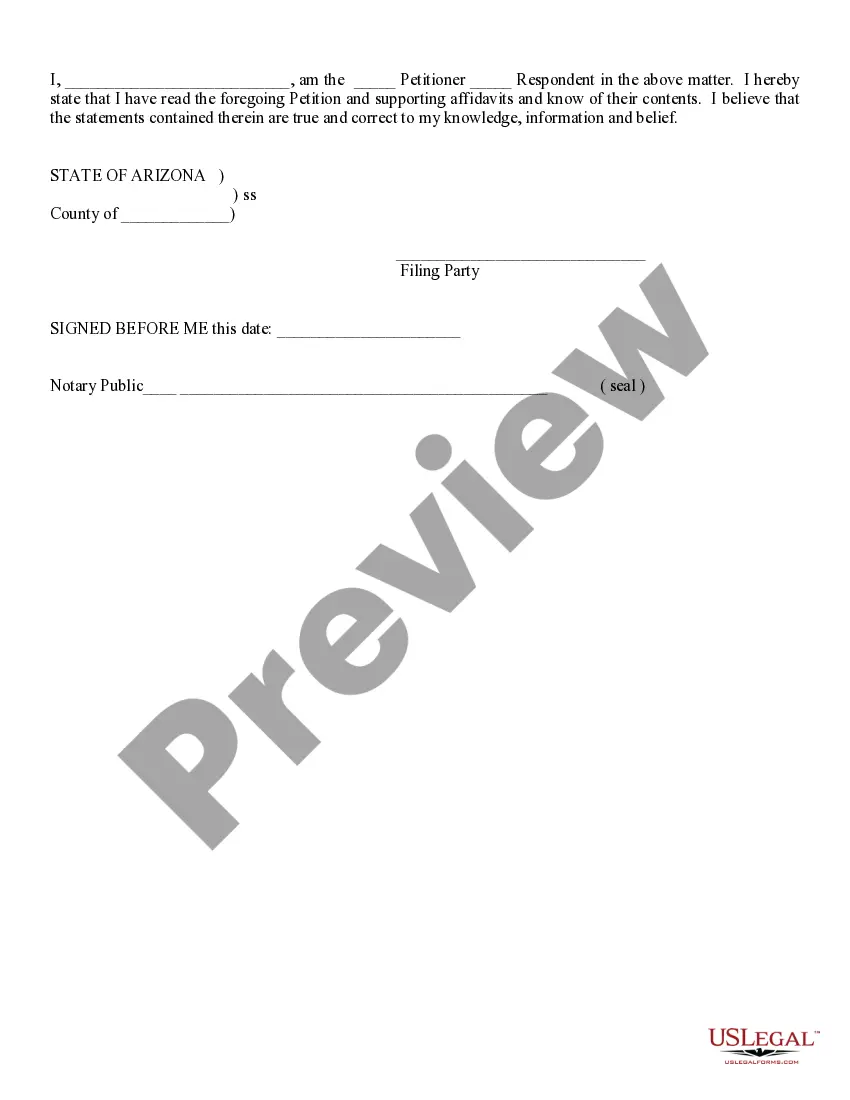
How to fill out Arizona Petition For Order To Show Cause Regarding Contempt?
Managing legal documents can be exasperating, even for the most informed experts.
When you are seeking a Contempt In Court Arrest and lack the time to hunt for the proper and updated version, the task can be stressful.
Access legal and business forms that are specific to your state or county.
US Legal Forms caters to all of your needs, from personal to business documents, all in one location.
If this is your first experience with US Legal Forms, create an account and gain unlimited access to all the benefits of the library. After downloading the desired form, follow these steps.
- Utilize advanced tools to complete and manage your Contempt In Court Arrest.
- Access a valuable repository of articles, guides, and manuals pertinent to your circumstances and needs.
- Save time and effort searching for the necessary paperwork, and use US Legal Forms’ enhanced search and Preview feature to locate and obtain Contempt In Court Arrest.
- If you have a subscription, Log In to your US Legal Forms account, find the form, and download it.
- Check the My documents section to view the documents you've previously saved and manage your folders as desired.
- A robust web form directory could transform the experience for anyone aiming to effectively handle these situations.
- US Legal Forms stands out as a leader in online legal documents, offering over 85,000 state-specific legal forms accessible anytime.
- With US Legal Forms, you can.
Form popularity
FAQ
Consequences of contempt of court include fines, jail time, or both, depending on the violation's severity and context. It can also negatively impact your legal standing in ongoing cases. Moreover, repeated violations may escalate penalties and complicate future legal dealings. To mitigate these risks, utilizing resources like USLegalForms can help you understand your situation and craft an appropriate response.
The duration of confinement for contempt of court can vary, but it often depends on the nature of the contempt. In some cases, a judge might impose a jail sentence until compliance occurs, while in others, the sentence may have a set period. Generally, it is crucial to resolve contempt issues promptly to avoid prolonged consequences. Understanding your rights and options can help you address this matter effectively.
If you are found in contempt of court, you may face penalties intended to enforce compliance with court orders. This could involve fines, community service, or jail time, depending on the specific case. Such repercussions aim to uphold the authority of the court and encourage respect for the judicial system. To navigate this situation, consider seeking legal guidance.
When you face a contempt in court arrest in Iowa, the court may order you to comply with its orders. If you fail to do so, you can confront penalties, including fines or even jail time. The judge may give you a chance to correct your behavior before imposing harsher consequences. Understanding the court's directives is essential to avoid such situations.
Winning a contempt of court case involves demonstrating your compliance with the court's order or challenging its validity. You may need to gather evidence or testimony to support your case. Engaging with an attorney can significantly improve your chances of a favorable outcome. Platforms like USLegalForms provide useful resources to guide you in building a strong defense.
A judge can hold you in contempt for failing to obey court orders, disrupting court proceedings, or displaying disrespect towards officials. Actions such as ignoring visitation rights, not paying child support, or failing to appear in court can lead to contempt in court arrest. Understanding these actions can help you stay compliant with court expectations. Legal resources, like USLegalForms, can assist you in understanding your obligations.
Yes, contempt in court arrest is a serious matter that can result in penalties, including fines or even jail time. When individuals fail to comply with court orders, they undermine the judicial system's authority. It is essential to take any issues relating to contempt seriously to avoid significant consequences. Seeking legal guidance can empower you if you face such situations.
Contempt in court arrest occurs when a person disobeys or shows disrespect for a court's order. Courts evaluate actions based on the clarity of the order and the individual's intent. If the order was clear and the individual knowingly ignored it, the court may determine contempt. Understanding this process can help you navigate potential issues.
Proving contempt can be challenging, as it requires clear evidence that a party willfully disobeyed a court order. This can often involve demonstrating the specific actions taken or not taken by the individual in question. Having comprehensive documentation and possibly legal assistance can strengthen your case regarding contempt in court arrest.
Yes, you can file for contempt of court without a lawyer, but doing so may present challenges. The legal procedures can be intricate, and understanding how to properly present your case is crucial. If you choose to proceed without legal representation, ensure you thoroughly understand the court's requirements to bolster your chances of success.