Withdraw Of Counsel
Description
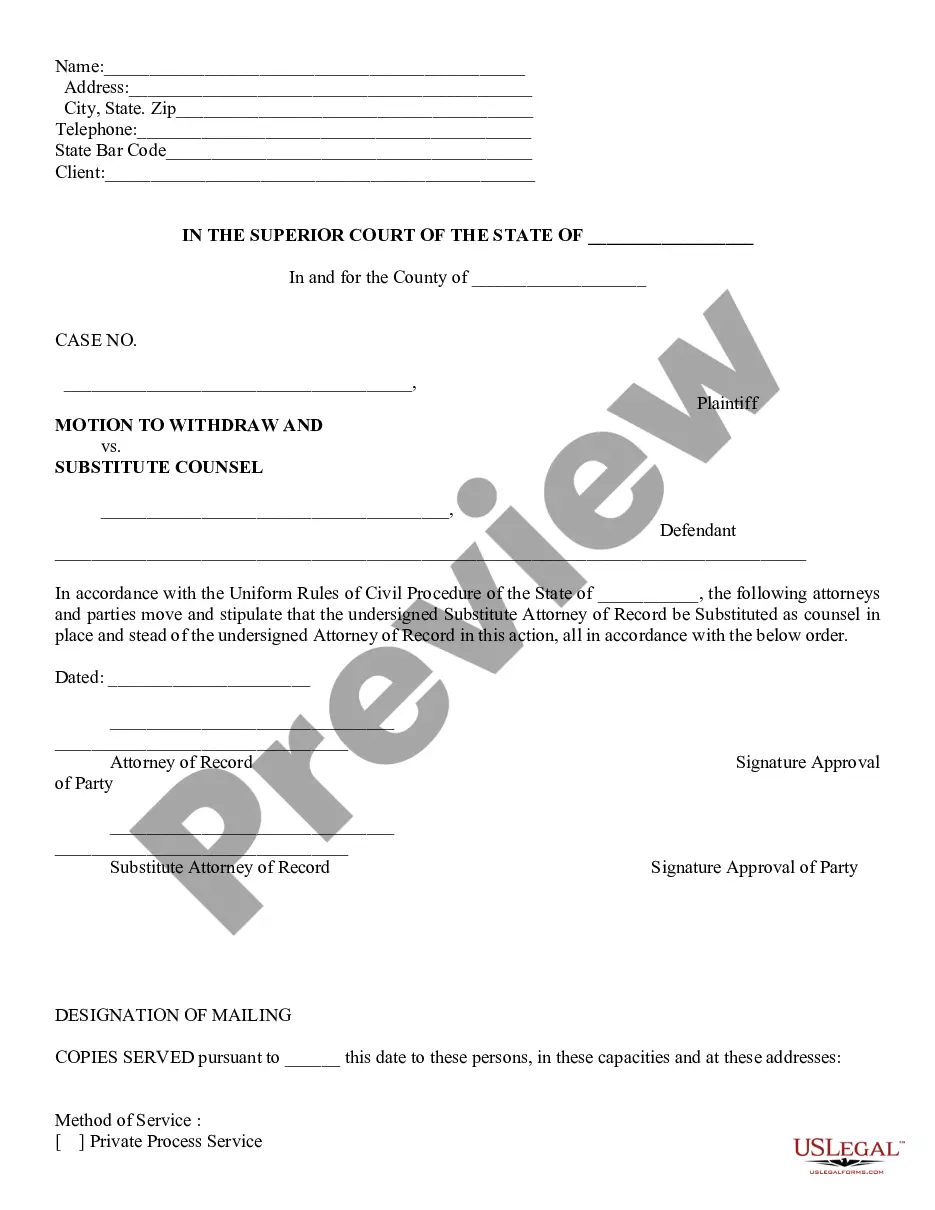
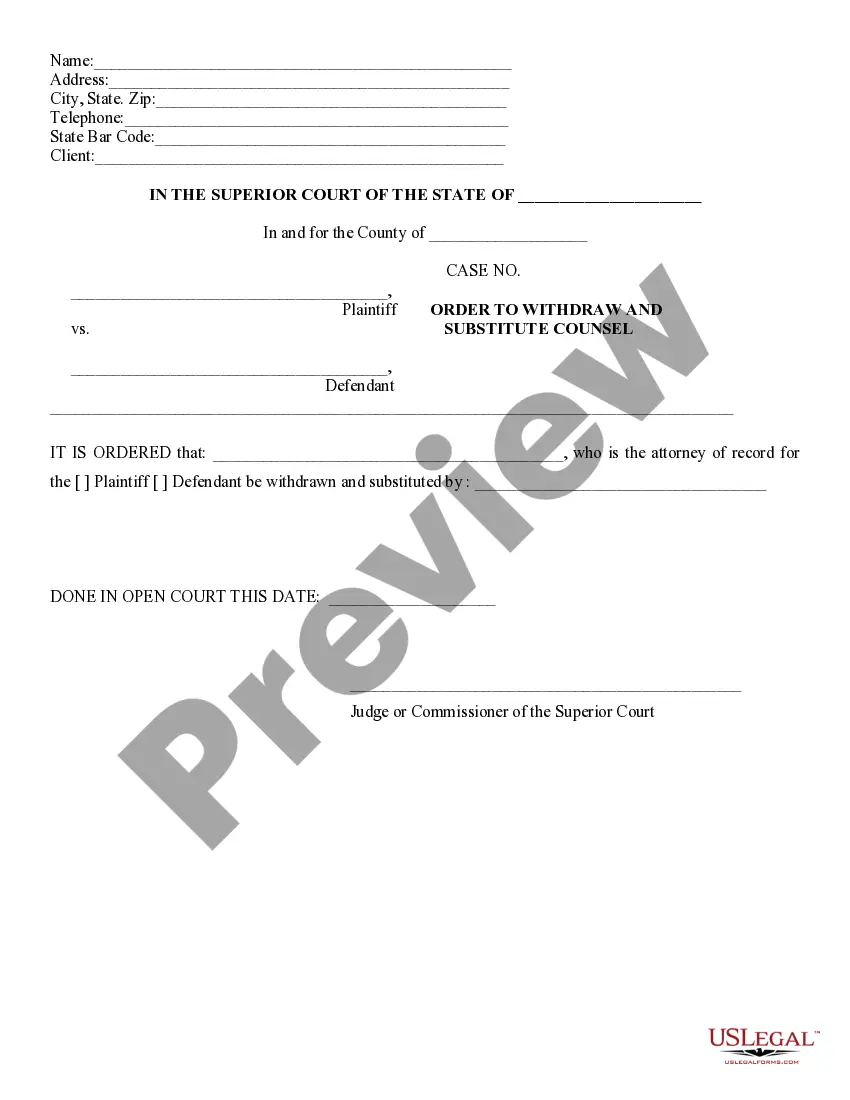
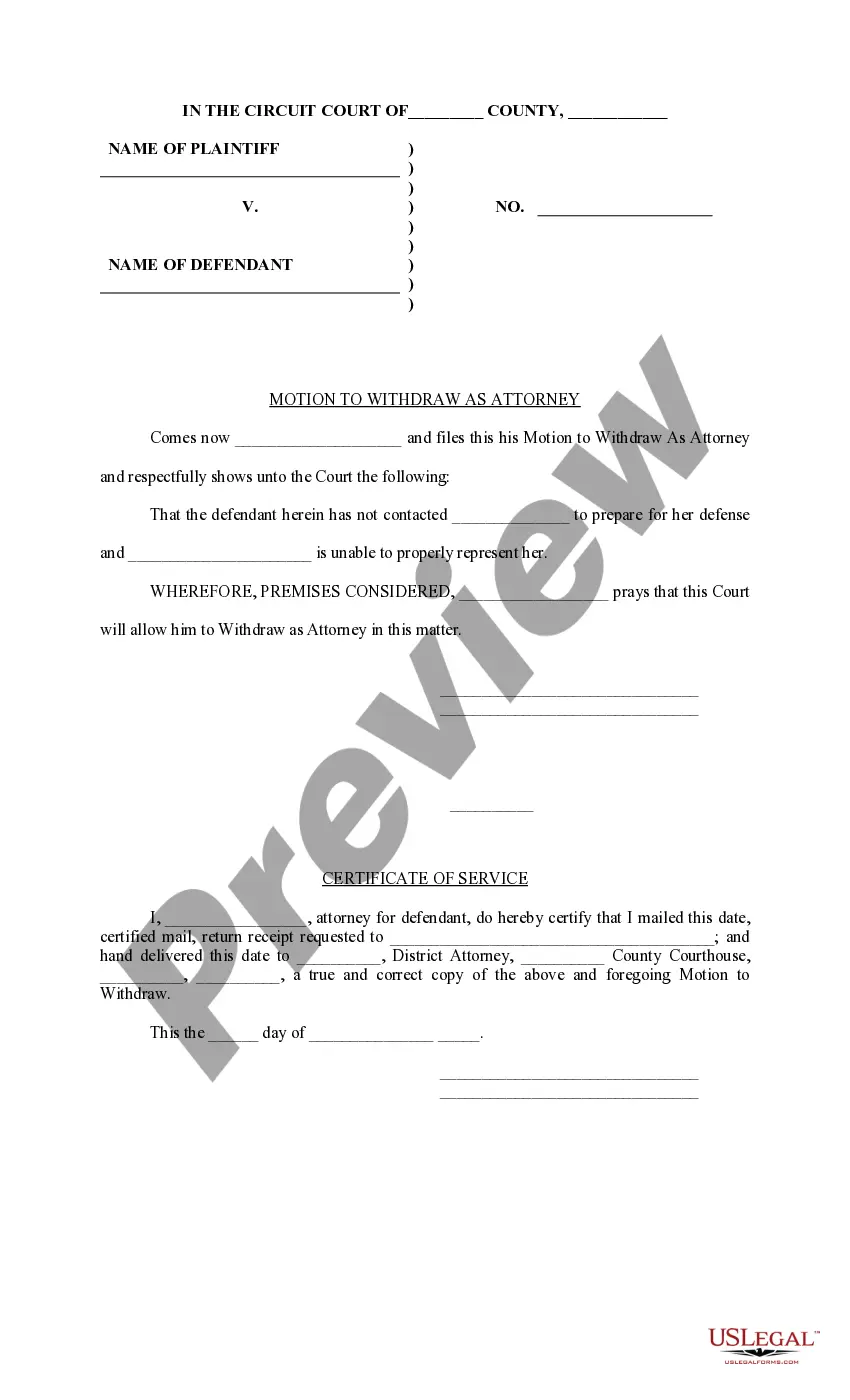
Get your form ready online
Our built-in tools help you complete, sign, share, and store your documents in one place.
Make edits, fill in missing information, and update formatting in US Legal Forms—just like you would in MS Word.
Download a copy, print it, send it by email, or mail it via USPS—whatever works best for your next step.
Sign and collect signatures with our SignNow integration. Send to multiple recipients, set reminders, and more. Go Premium to unlock E-Sign.
If this form requires notarization, complete it online through a secure video call—no need to meet a notary in person or wait for an appointment.
We protect your documents and personal data by following strict security and privacy standards.

Make edits, fill in missing information, and update formatting in US Legal Forms—just like you would in MS Word.

Download a copy, print it, send it by email, or mail it via USPS—whatever works best for your next step.

Sign and collect signatures with our SignNow integration. Send to multiple recipients, set reminders, and more. Go Premium to unlock E-Sign.

If this form requires notarization, complete it online through a secure video call—no need to meet a notary in person or wait for an appointment.

We protect your documents and personal data by following strict security and privacy standards.
Looking for another form?


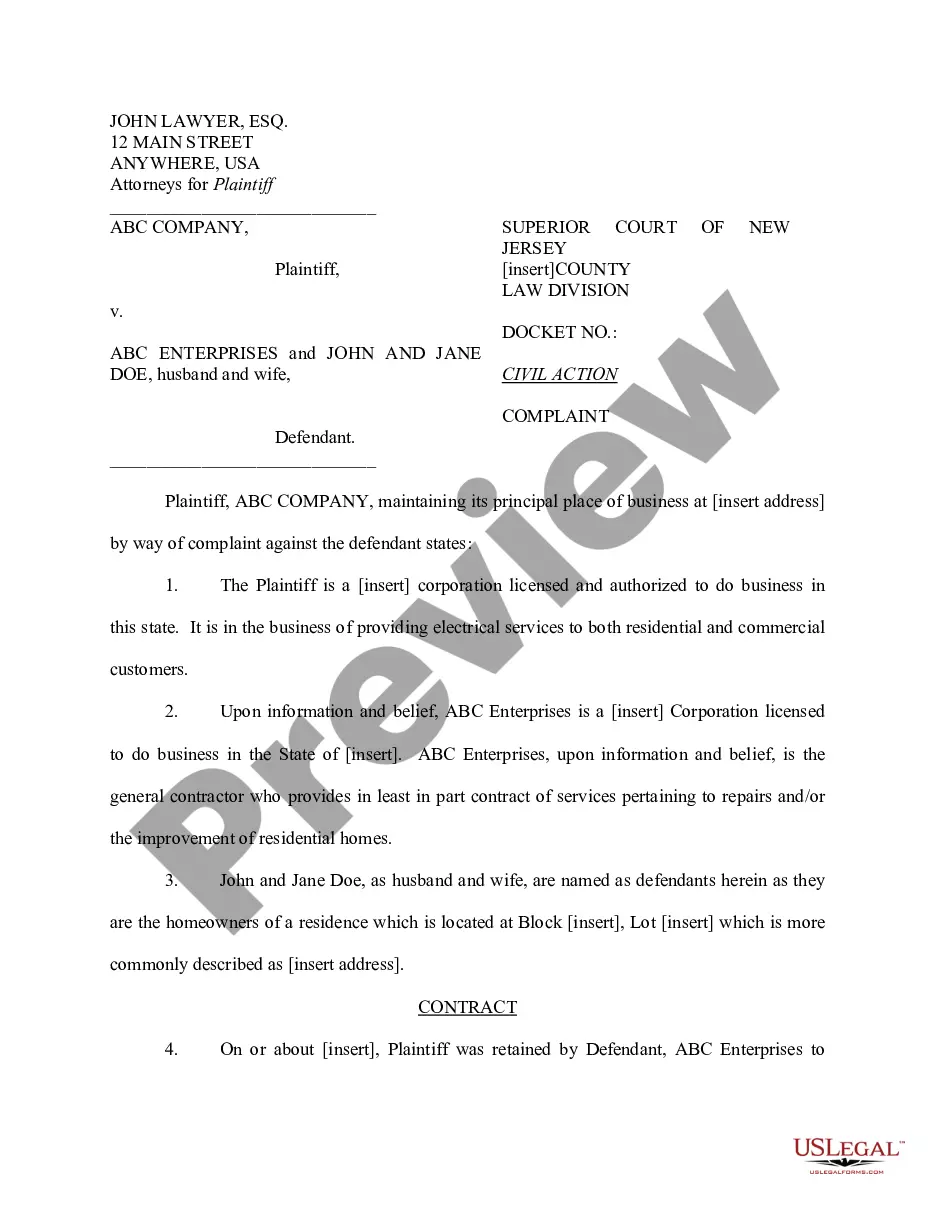


How to fill out Arizona Motion To Withdraw And Substitute Counsel And Order?
Whether for commercial objectives or for personal matters, everyone must manage legal circumstances at some time in their life.
Completing legal documentation necessitates meticulous attention, starting from selecting the appropriate form template.
With an extensive US Legal Forms catalog available, you never need to waste time searching for the right template across the internet. Use the library’s straightforward navigation to find the appropriate template for any occasion.
- Acquire the template you require by utilizing the search bar or catalog navigation.
- Review the form’s description to confirm it corresponds with your situation, state, and county.
- Click on the form’s preview to inspect it.
- If it is the incorrect form, return to the search function to locate the Withdraw Of Counsel template you need.
- Download the document if it satisfies your requirements.
- If you already possess a US Legal Forms profile, click Log in to access previously saved documents in My documents.
- If you don’t have an account yet, you can obtain the form by clicking Buy now.
- Select the appropriate pricing option.
- Complete the profile registration form.
- Select your payment method: utilize a bank card or PayPal account.
- Select the file format you desire and download the Withdraw Of Counsel.
- Once downloaded, you can complete the form using editing applications or print it and finish it manually.
Form popularity
FAQ
Sometimes the attorney is the one who feels that the client and the lawyer should no longer work together. When this happens, the attorney ?withdraws? from the case and terminates the relationship and ceases to represent the client.
Optional withdrawal The lawyer has the option to withdraw if it can be accomplished without material adverse effect on the client's interests. The lawyer also may withdraw where the client insists on taking action that the lawyer considers repugnant, imprudent, or with which the lawyer has a fundamental disagreement.
The lawyer should send a disengagement letter to establish that the relationship is no longer continuing, and to refer the client to another lawyer. In the disengagement letter, the lawyer should warn the client of applicable time limitations, deadlines, and uncompleted investigation or casework.
An attorney appearing in a case or adversary proceeding may request to withdraw as counsel of record for his or her client. Unless a court order or Local Rule 2091-2 provides otherwise, an attorney must file a motion and obtain Court approval to be removed as counsel.
What does an attorney withdrawal mean? Sometimes the attorney is the one who feels that the client and the lawyer should no longer work together. When this happens, the attorney ?withdraws? from the case and terminates the relationship and ceases to represent the client.