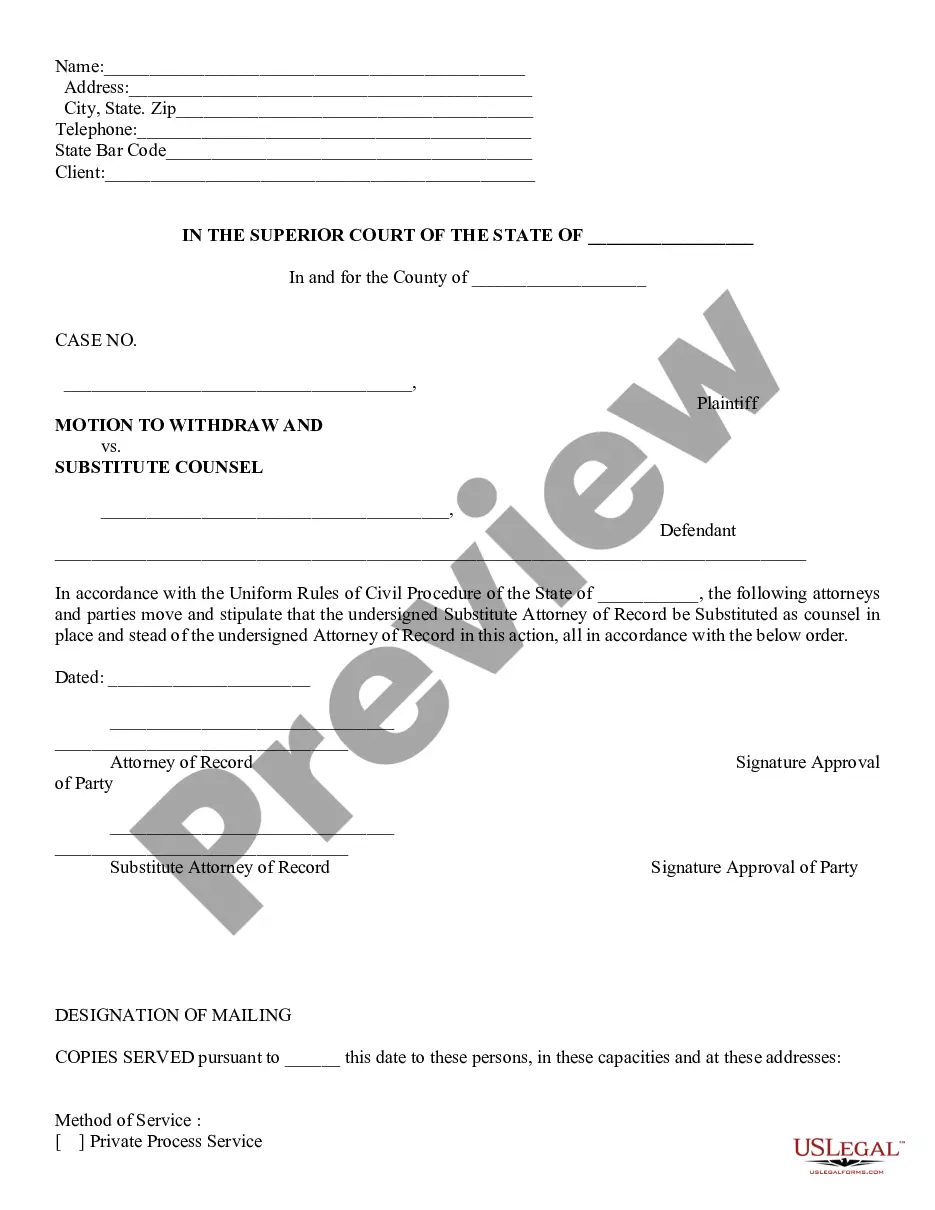
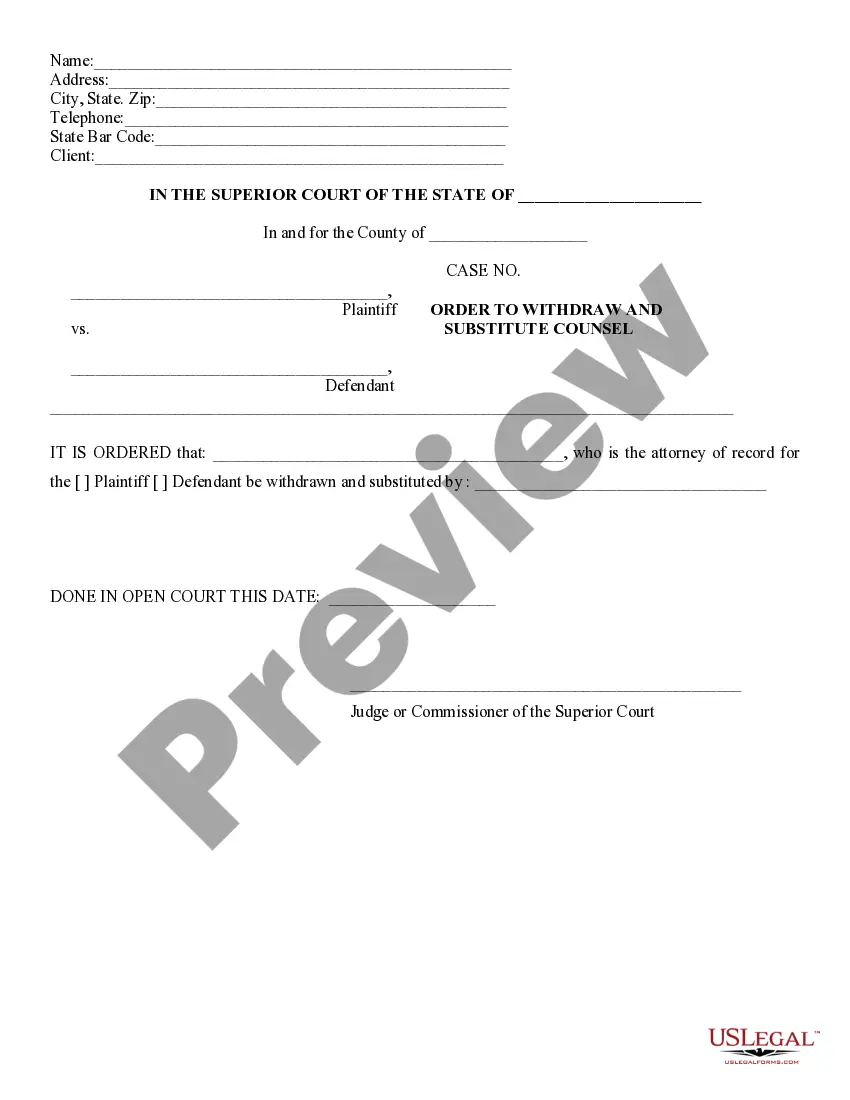
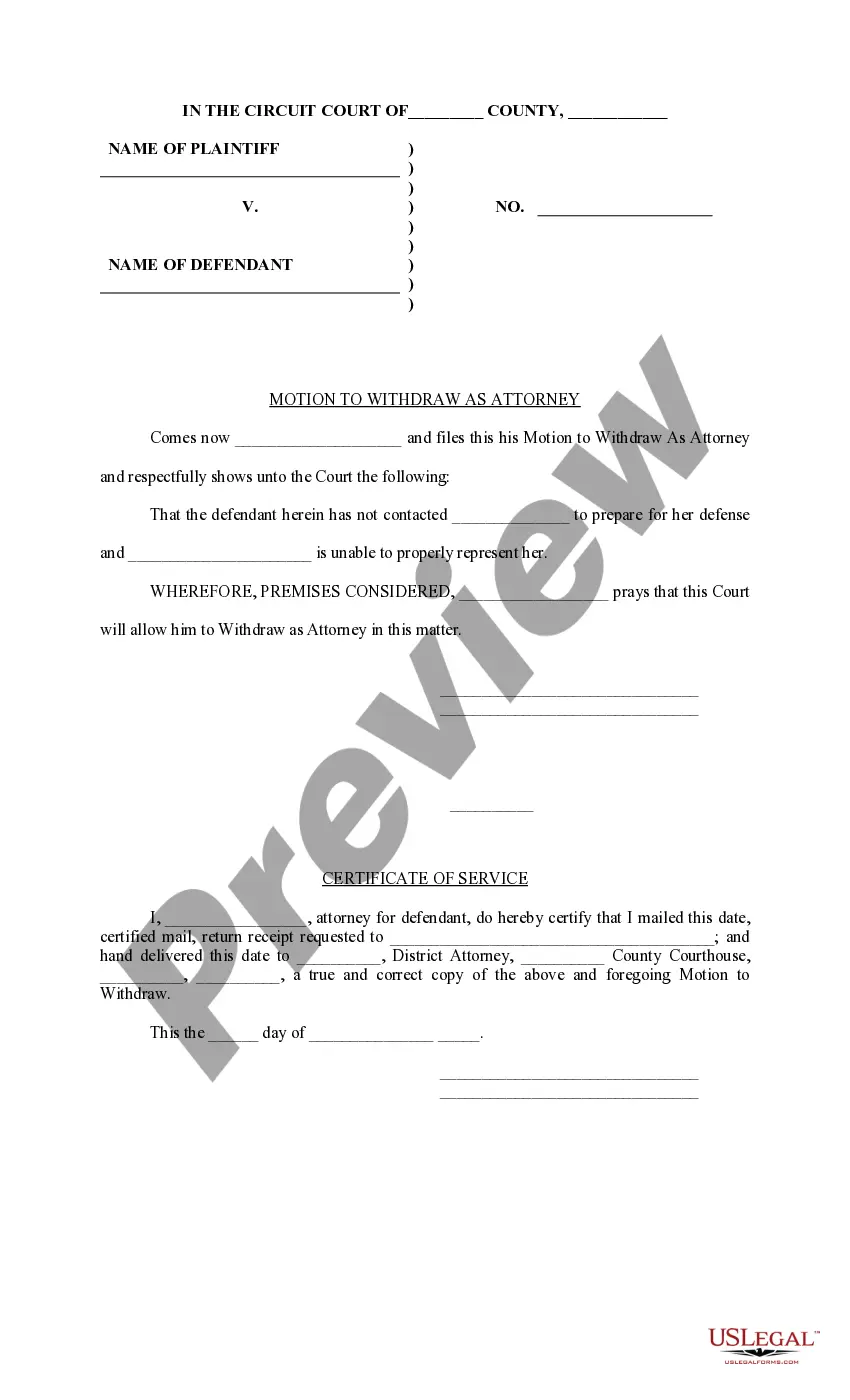
Motion To Withdraw Form Without Prejudice
Description
Get your form ready online
Our built-in tools help you complete, sign, share, and store your documents in one place.
Make edits, fill in missing information, and update formatting in US Legal Forms—just like you would in MS Word.
Download a copy, print it, send it by email, or mail it via USPS—whatever works best for your next step.
Sign and collect signatures with our SignNow integration. Send to multiple recipients, set reminders, and more. Go Premium to unlock E-Sign.
If this form requires notarization, complete it online through a secure video call—no need to meet a notary in person or wait for an appointment.
We protect your documents and personal data by following strict security and privacy standards.

Make edits, fill in missing information, and update formatting in US Legal Forms—just like you would in MS Word.

Download a copy, print it, send it by email, or mail it via USPS—whatever works best for your next step.

Sign and collect signatures with our SignNow integration. Send to multiple recipients, set reminders, and more. Go Premium to unlock E-Sign.

If this form requires notarization, complete it online through a secure video call—no need to meet a notary in person or wait for an appointment.

We protect your documents and personal data by following strict security and privacy standards.
Looking for another form?



How to fill out Arizona Motion To Withdraw And Substitute Counsel And Order?
It’s common knowledge that you cannot transform into a legal expert instantly, nor can you swiftly learn how to draft a Motion To Withdraw Form Without Prejudice without a specialized education.
Crafting legal documents is a lengthy process that demands particular qualifications and expertise. So why not entrust the preparation of the Motion To Withdraw Form Without Prejudice to the experts.
With US Legal Forms, one of the most extensive legal document repositories, you can locate anything from court paperwork to templates for organizational communications.
Create a free account and choose a subscription plan to purchase the template.
Select Buy now. After the purchase is finalized, you can obtain the Motion To Withdraw Form Without Prejudice, complete it, print it, and send or mail it to the relevant individuals or organizations.
- Understand how vital compliance and adherence to federal and state regulations are.
- Visit our website where all forms are location-specific and current.
- Find the document you require using the search bar at the top of the page.
- Preview it (if this feature is available) and read the accompanying description to ascertain if Motion To Withdraw Form Without Prejudice suits your needs.
- Initiate your search again if you seek a different form.
Form popularity
FAQ
In simple terms, 'without prejudice' means you can withdraw a claim or motion without it affecting your right to bring it back later. This gives you the freedom to rethink your case or gather more evidence without losing your standing. A motion to withdraw form without prejudice can help document this decision clearly. It is a valuable legal tool for many individuals.
When a motion is withdrawn without prejudice, it allows the party to refile the motion in the future. This means the court did not make a final decision on the motion, and you can bring it back later if needed. Essentially, this provides flexibility in legal proceedings. Using a motion to withdraw form without prejudice can facilitate this process.
Involuntary Dismissal A judge may dismiss a case without prejudice in order to allow for errors in the case presented to be addressed before it is brought back to court. A judge will dismiss a case with prejudice if he or she finds reason why the case should not move forward and should be permanently closed.
?With prejudice? means the decision is final. ?Without prejudice? means it's not final and subject to future inquiry. If the judge announces a case is dismissed with prejudice, that means it's permanently dismissed and can't be retried.
Dismissal Without Prejudice For example, if a person beats another person very severely, the prosecutor may file assault charges against the aggressor. If the victim later dies, the prosecutor may want to drop the assault charges in favor of a murder charge.
The without prejudice (WP) rule will generally prevent statements made in a genuine attempt to settle an existing dispute, whether made in writing or orally, from being put before the court as evidence of admissions against the interests of the party which made them.
The dismissal will be because the lawsuit is time-barred by the statute of limitations. For example: Prosecutors charge Raphael with assault, but legal errors in the court filing leads to the judge dismissing it without prejudice so the prosecutors can fix it and refile it.