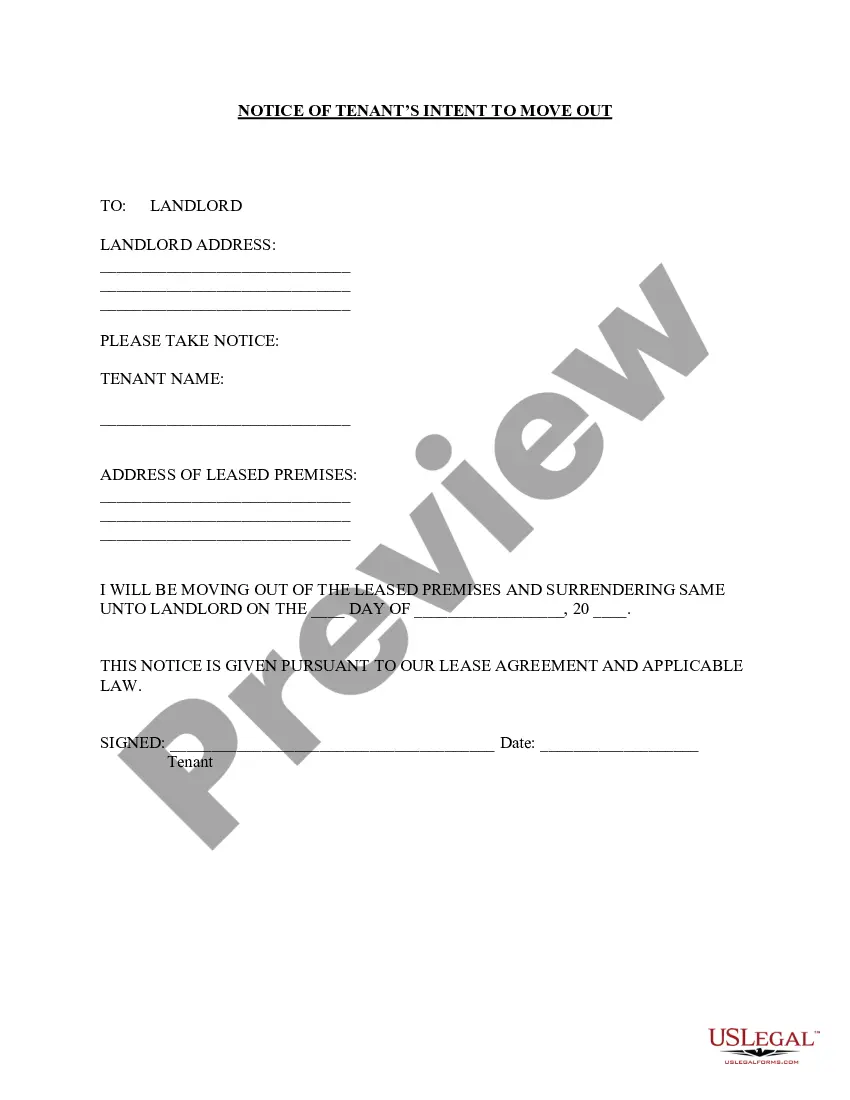
30 Days Notice To Tenant
Description

Get your form ready online
Our built-in tools help you complete, sign, share, and store your documents in one place.
Make edits, fill in missing information, and update formatting in US Legal Forms—just like you would in MS Word.
Download a copy, print it, send it by email, or mail it via USPS—whatever works best for your next step.
Sign and collect signatures with our SignNow integration. Send to multiple recipients, set reminders, and more. Go Premium to unlock E-Sign.
If this form requires notarization, complete it online through a secure video call—no need to meet a notary in person or wait for an appointment.
We protect your documents and personal data by following strict security and privacy standards.

Make edits, fill in missing information, and update formatting in US Legal Forms—just like you would in MS Word.

Download a copy, print it, send it by email, or mail it via USPS—whatever works best for your next step.

Sign and collect signatures with our SignNow integration. Send to multiple recipients, set reminders, and more. Go Premium to unlock E-Sign.

If this form requires notarization, complete it online through a secure video call—no need to meet a notary in person or wait for an appointment.

We protect your documents and personal data by following strict security and privacy standards.
Looking for another form?







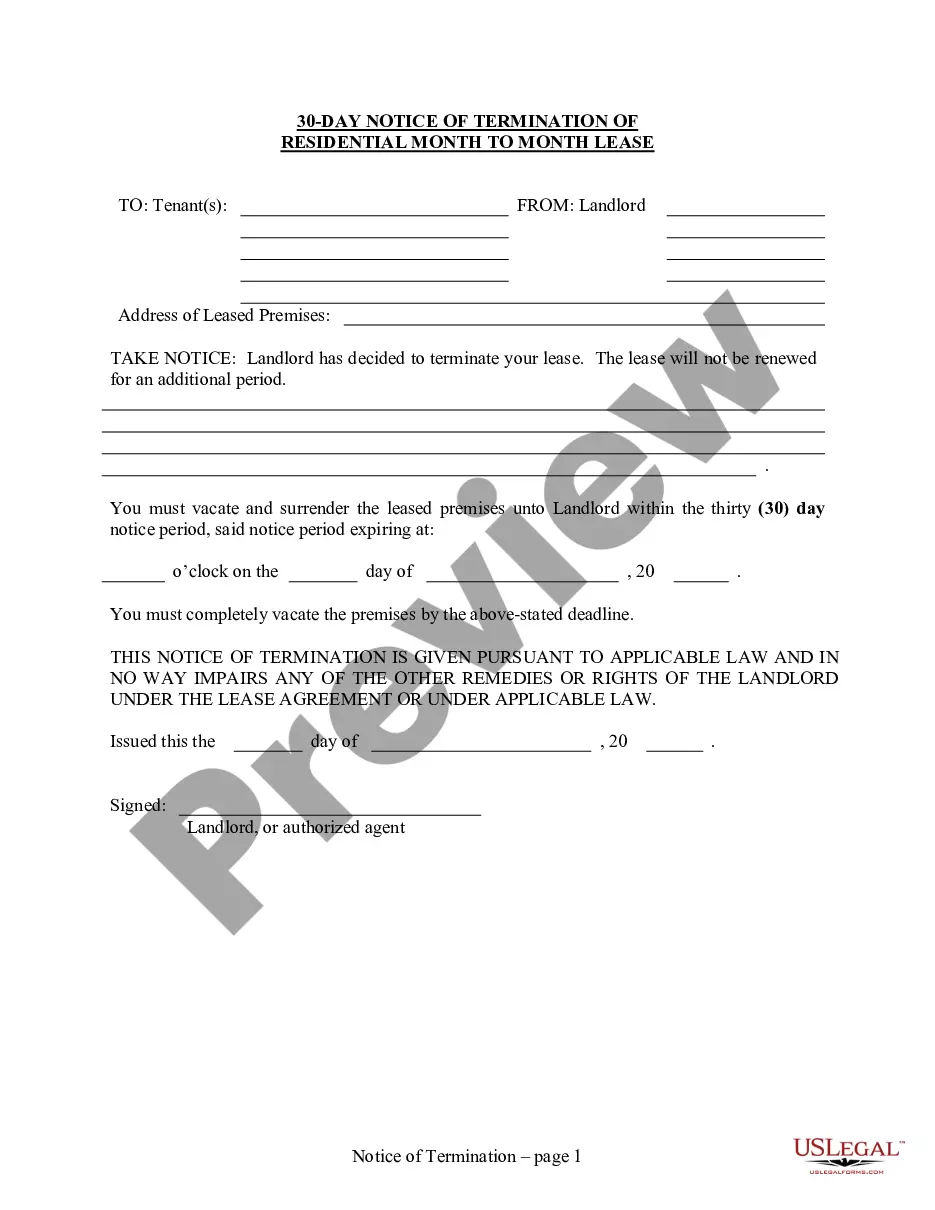
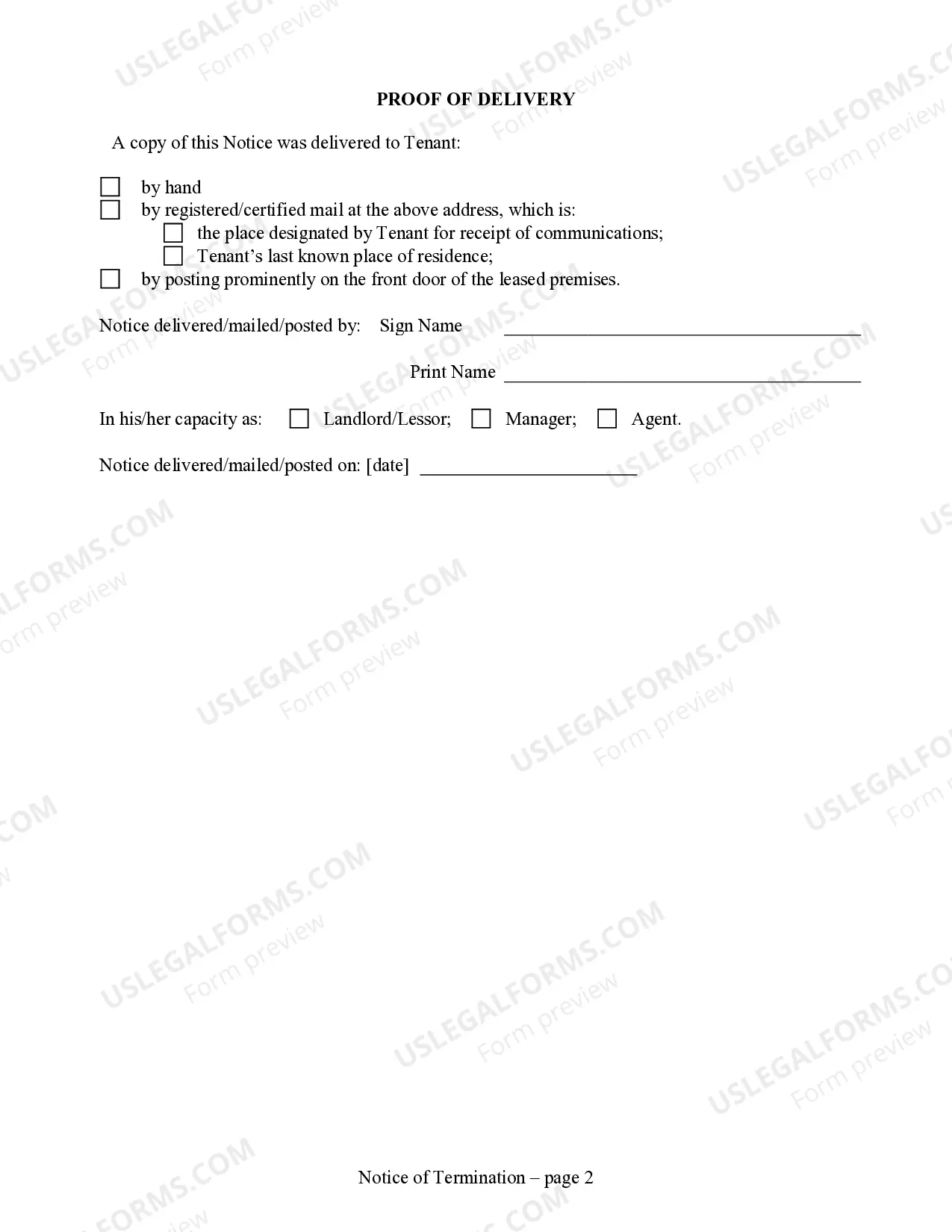
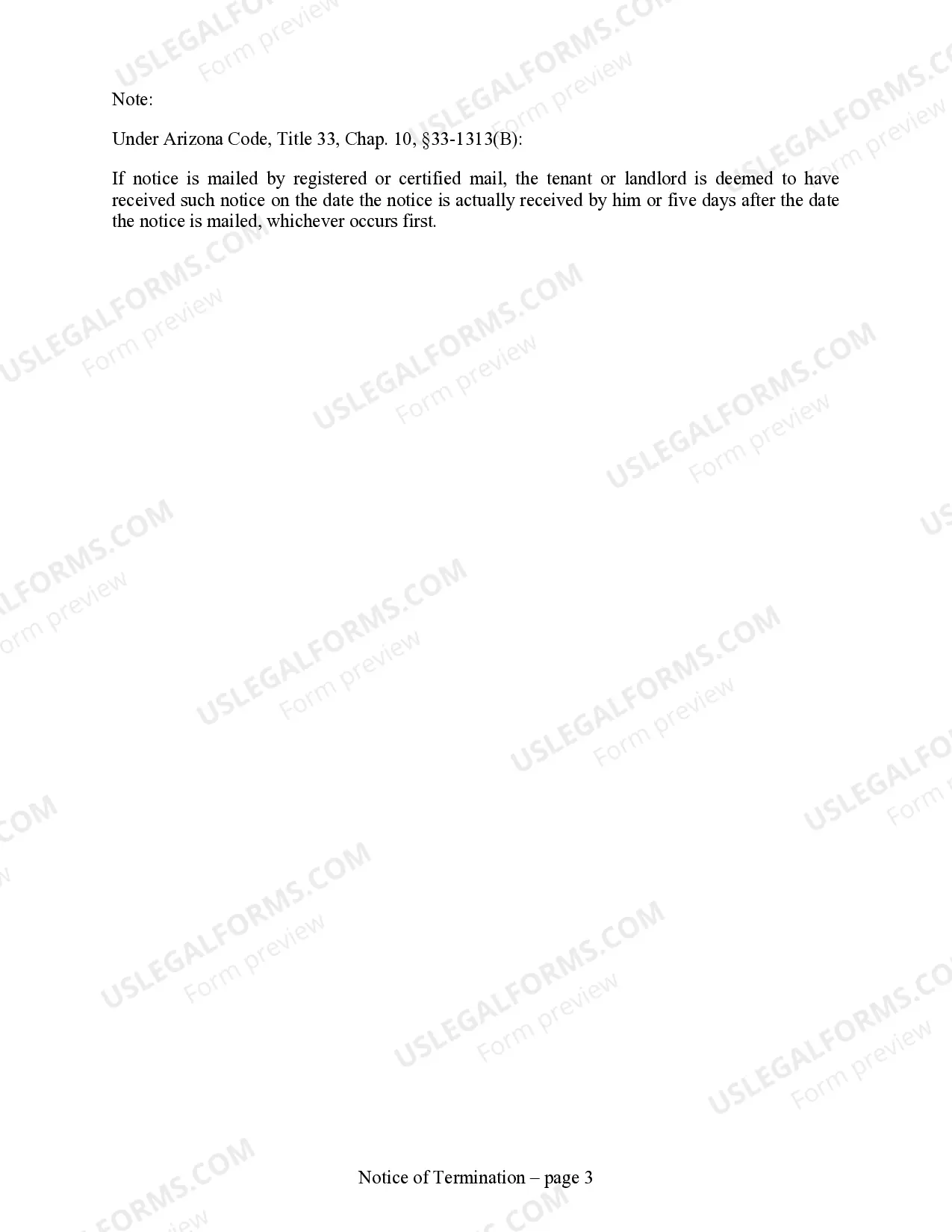
How to fill out Arizona 30 Day Notice To Terminate Month To Month Lease - Residential From Landlord To Tenant?
- Log in to your US Legal Forms account if you are a returning user and access the needed form template from your dashboard.
- If you're new to the service, begin by checking the form description and preview mode to confirm it fits your specific needs and local jurisdiction.
- If the form isn't suitable, utilize the Search feature to find an alternate template that meets your requirements.
- Purchase your chosen document by clicking the Buy Now button and selecting your desired subscription plan, while also creating an account for library access.
- Complete your transaction by entering your payment information via credit card or PayPal.
- Download the form to your device for completion, and remember that you can access it again in the My Forms section of your profile.
With US Legal Forms, individuals and attorneys can effortlessly manage legal documentation tasks. The extensive library contains over 85,000 customizable forms, ensuring you find the perfect template for any situation.
Don't hesitate—visit US Legal Forms today to streamline your legal processes and stay compliant with minimal effort!
Form popularity
FAQ
A 30-day notice is a formal communication from a landlord to a tenant, indicating that the tenant must vacate the rental property within 30 days. This notice serves as a legal requirement under many lease agreements and state laws. It clarifies the timeline for the tenant and helps the landlord prepare for new occupants. Understanding this notice is essential for both landlords and tenants to ensure a smooth transition.
In most cases, a 30-day notice does not need to be notarized to be valid. However, specific requirements can vary by state, so it's crucial to consult your local landlord-tenant laws. Notarization might provide added assurance, but usually, a properly served written notice is sufficient. To be on the safe side, check with US Legal Forms for guidance relevant to your area.
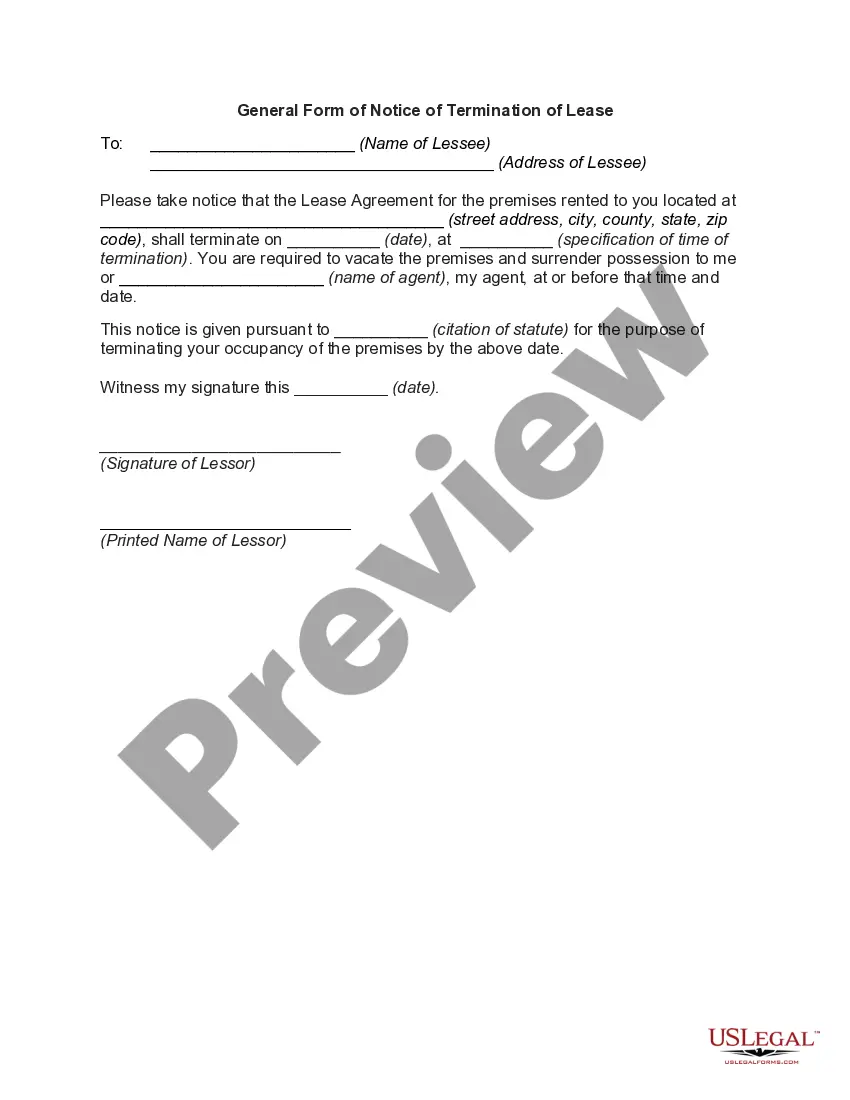
Writing a notice letter to your tenant requires specific details to be effective. Begin with a clear heading that states the purpose of the letter, such as '30-Day Notice to Tenant.' Include the tenant's information, the property address, and the effective date. Make sure you use polite language while clearly stating the intent to vacate, and consider using a template from US Legal Forms to streamline the process.
To provide a 30-day notice to tenant using a template, start by selecting a reliable source that offers legally compliant forms, such as US Legal Forms. Fill in the necessary fields, including the tenant's name, property details, and the date of notice. After completing the template, ensure that you provide a copy to the tenant and keep a copy for your records. This ensures clarity and avoids disputes over your notice.
Yes, a 30-day notice can be handwritten, but it must meet certain requirements. It should include all the essential information, such as the tenant's name, address, and the date of the notice. Ensure that the handwriting is clear and legible to avoid any misunderstandings. Remember, using a templated format from platforms like US Legal Forms can help ensure that your 30 days notice to tenant meets all legal standards.
A notice to vacate can become invalid for several reasons. For example, if it does not meet the required legal format or fails to provide the necessary time frame, it may be declared invalid. Additionally, if the notice is not properly served to the tenant, it may lack legal standing. Always make sure to follow the proper procedures to ensure that your 30 days notice to tenant is effective.
Saying 30 days notice simply means informing someone, usually a landlord or employer, that you plan to end your tenancy or employment in a month. Practically, it involves crafting a formal communication that clearly articulates your intention to adhere to the 30 days notice to tenant policy. This phrase is essential in both housing and job scenarios, ensuring that both parties understand the time frame involved. In short, being clear and concise helps prevent any misunderstandings.
Giving your employer a 30-day notice involves drafting a clear resignation letter. Mention your last working day, ensuring it aligns with the 30 days notice to tenant you are familiar with in rental agreements. Be courteous, express gratitude for the opportunities you've received, and offer to assist during the transition period. This approach reflects professionalism and respect for your employer.
To provide a professional 30-day notice, outline your intention clearly in a well-structured letter. State your rental address, the date you intend to vacate, and confirm that you are giving a 30 days notice to tenant as per your lease agreement. It's important to keep a copy for your records and to send the notice via a method that confirms receipt, such as certified mail. This way, you ensure your notice is documented and acknowledged.
To give notice professionally, start by writing a formal letter. Ensure you include the date, the recipient's address, and a clear statement indicating you are providing a 30 days notice to tenant. Maintain a respectful tone and provide details about your rental agreement, including your move-out date. This helps establish clarity and professionalism in your communication.