Limited Liability Company With One Member
Description



Get your form ready online
Our built-in tools help you complete, sign, share, and store your documents in one place.
Make edits, fill in missing information, and update formatting in US Legal Forms—just like you would in MS Word.
Download a copy, print it, send it by email, or mail it via USPS—whatever works best for your next step.
Sign and collect signatures with our SignNow integration. Send to multiple recipients, set reminders, and more. Go Premium to unlock E-Sign.
If this form requires notarization, complete it online through a secure video call—no need to meet a notary in person or wait for an appointment.
We protect your documents and personal data by following strict security and privacy standards.

Make edits, fill in missing information, and update formatting in US Legal Forms—just like you would in MS Word.

Download a copy, print it, send it by email, or mail it via USPS—whatever works best for your next step.

Sign and collect signatures with our SignNow integration. Send to multiple recipients, set reminders, and more. Go Premium to unlock E-Sign.

If this form requires notarization, complete it online through a secure video call—no need to meet a notary in person or wait for an appointment.

We protect your documents and personal data by following strict security and privacy standards.
Looking for another form?








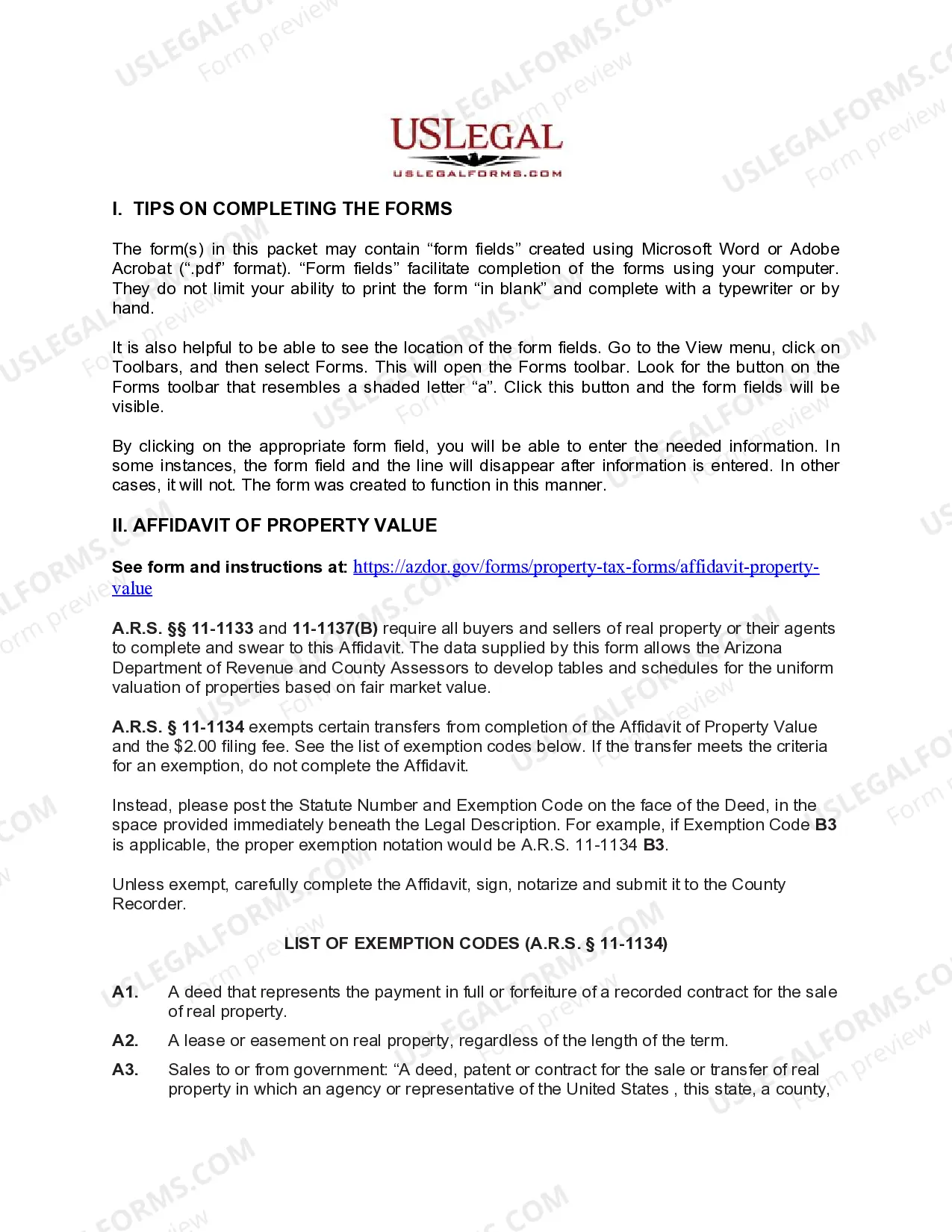
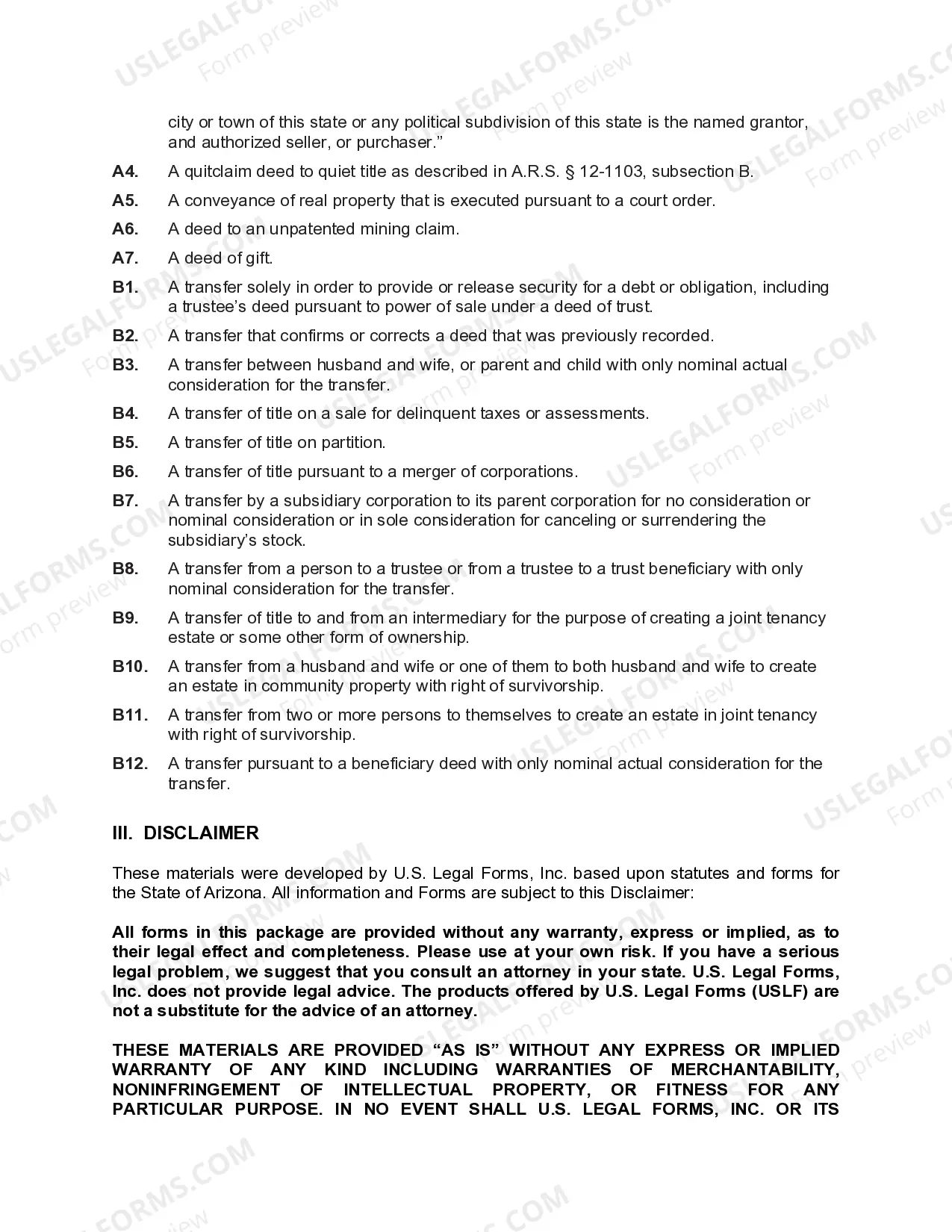
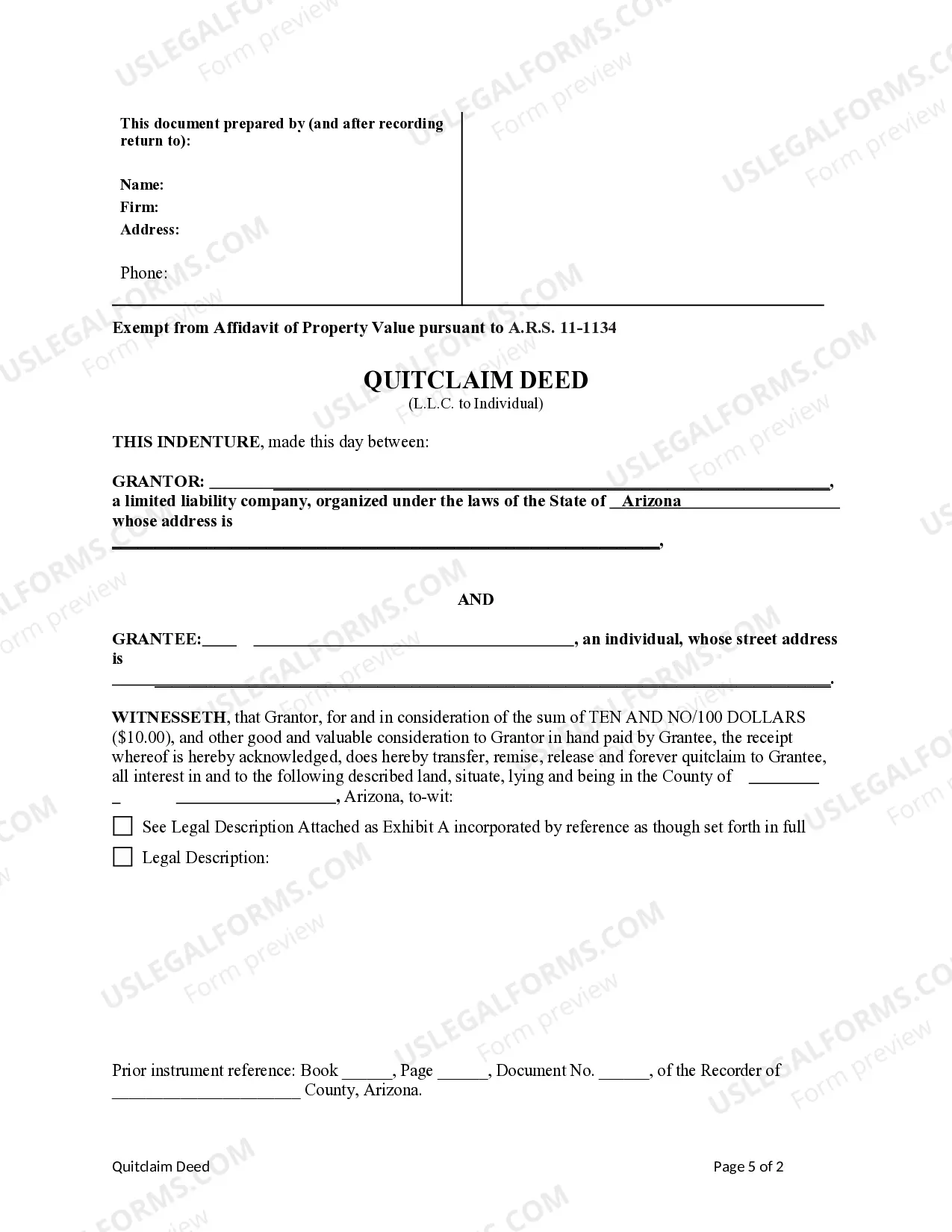
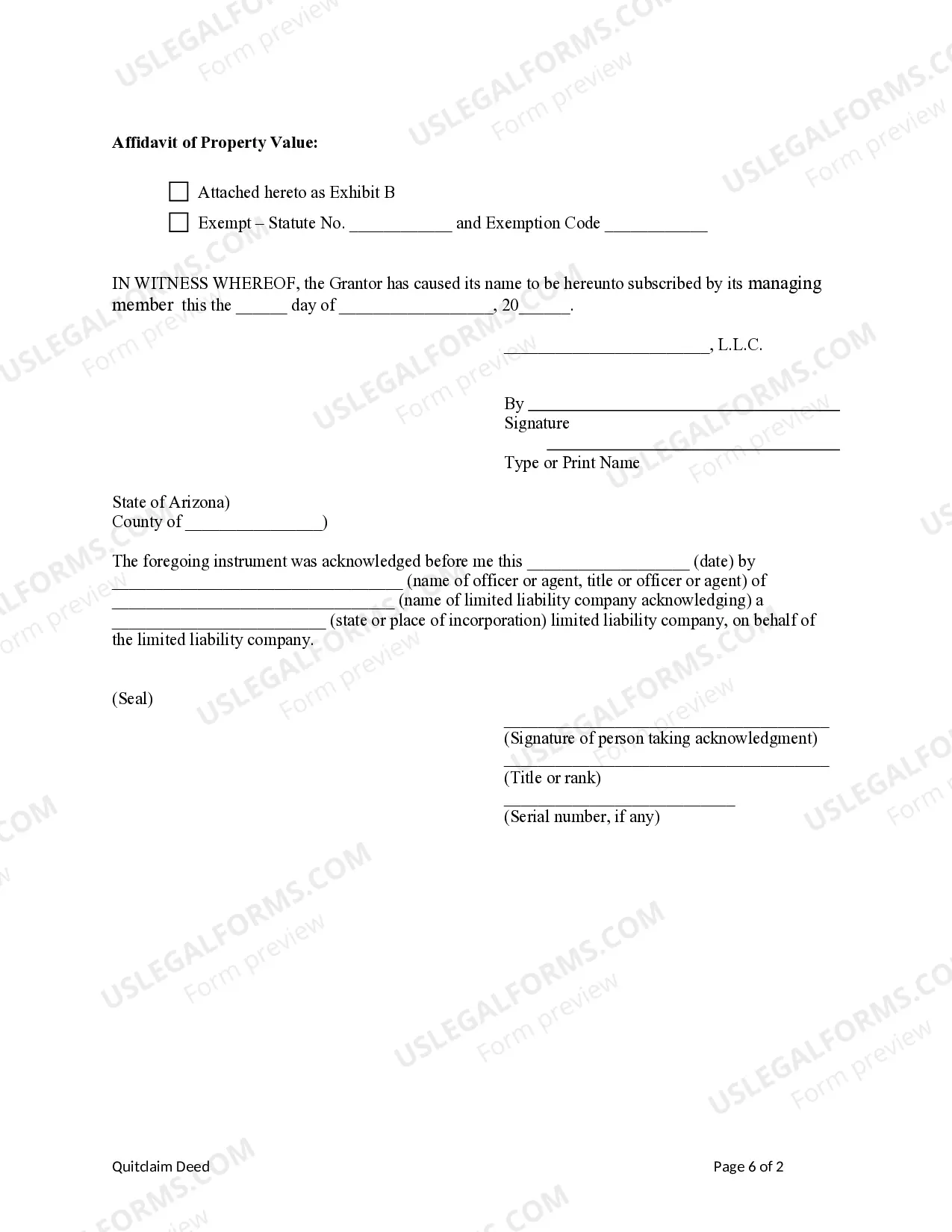
How to fill out Arizona Quitclaim Deed From A Limited Liability Company To An Individual?
- Log in to your US Legal Forms account if you're a returning user. Ensure your subscription is active to proceed with downloading.
- For first-time users, start by browsing the form library. Utilize the Preview mode to examine descriptions and ensure the chosen form meets your local jurisdiction requirements.
- If the form doesn't seem right, utilize the Search tab to locate the required document that fits your specifications.
- Once you've identified your document, click on the 'Buy Now' button to select your preferred subscription plan. Creating an account will provide access to more resources.
- Complete your purchase by entering your payment details, either via credit card or PayPal.
- Download the form directly to your device. You can also find it later in the 'My Forms' section of your account.
In conclusion, US Legal Forms simplifies the process of obtaining legal documentation for your single-member LLC. With an extensive collection and expert assistance available, you're well-equipped to create your business structure with confidence.
Start your journey today by visiting US Legal Forms and accessing the documents you need!
Form popularity
FAQ
Yes, a limited liability company can have only one member. This structure is commonly referred to as a single-member LLC, which operates distinctly from multi-member LLCs. It provides the same liability protection and benefits but with a more straightforward management process. If you’re considering forming this type of LLC, our platform can guide you through the setup process efficiently.
LLC owners do not evade taxes, but they can legally minimize their tax liabilities. By structuring their income and expenses properly, owners can benefit from deductions and credits available to limited liability companies. Utilizing strategies like legitimate business expense write-offs and correct reporting can result in tax savings. Consulting with a tax professional can further enhance your understanding of tax avoidance tactics legally available to LLCs.
As the owner of a limited liability company with one member, you can write off various business expenses on your taxes. Common deductions include costs for office supplies, travel expenses, and utility bills related to your business. Additionally, you can deduct any legal and professional fees incurred for your LLC. These write-offs can reduce your taxable income, providing you with more savings.
Whether a single-member LLC is better for taxes depends on individual circumstances. It allows for easy pass-through taxation, where your business earnings are taxed at your personal income rate. This structure can often lead to lower taxes compared to corporations. Furthermore, you can enjoy the liability protection that LLCs provide while still benefiting from simpler tax rules.
A limited liability company with one member offers significant tax benefits. Firstly, the Internal Revenue Service treats it as a disregarded entity, meaning the profits are reported on your personal tax return. This approach can simplify your tax filing process and potentially lower your overall tax burden. Additionally, you may deduct business expenses, which further enhances your savings.
Certainly, a limited liability company with one member can hire W-2 employees. This involves setting up a payroll system and adhering to tax requirements, including withholding taxes from employee wages. It’s a great way to build a team while enjoying the protective benefits that an LLC provides.
Yes, as the owner of a limited liability company with one member, you can hire someone to help with your operations. This could include employees or even external consultants. Just ensure that you adhere to necessary legal requirements and tax obligations when expanding your workforce.
A limited liability company with one member can be a smart choice for many entrepreneurs. It offers personal liability protection, separating personal assets from business risks. Additionally, it allows for flexible management and potential tax benefits, providing an effective structure for solo business owners.
To add an employee to your limited liability company with one member, you should first obtain an Employer Identification Number (EIN) if you haven't already. Next, you'll need to register for state tax purposes and set up a payroll system. This process ensures compliance with employment laws and smooth management of employee compensation.
Absolutely, a limited liability company with one member can be owned by another company. This structure is often useful for corporate groups or holding companies. It allows the parent company to benefit from limited liability while managing its subsidiaries effectively.