Life Estate
Description

Get your form ready online
Our built-in tools help you complete, sign, share, and store your documents in one place.
Make edits, fill in missing information, and update formatting in US Legal Forms—just like you would in MS Word.
Download a copy, print it, send it by email, or mail it via USPS—whatever works best for your next step.
Sign and collect signatures with our SignNow integration. Send to multiple recipients, set reminders, and more. Go Premium to unlock E-Sign.
If this form requires notarization, complete it online through a secure video call—no need to meet a notary in person or wait for an appointment.
We protect your documents and personal data by following strict security and privacy standards.

Make edits, fill in missing information, and update formatting in US Legal Forms—just like you would in MS Word.

Download a copy, print it, send it by email, or mail it via USPS—whatever works best for your next step.

Sign and collect signatures with our SignNow integration. Send to multiple recipients, set reminders, and more. Go Premium to unlock E-Sign.

If this form requires notarization, complete it online through a secure video call—no need to meet a notary in person or wait for an appointment.

We protect your documents and personal data by following strict security and privacy standards.
Looking for another form?
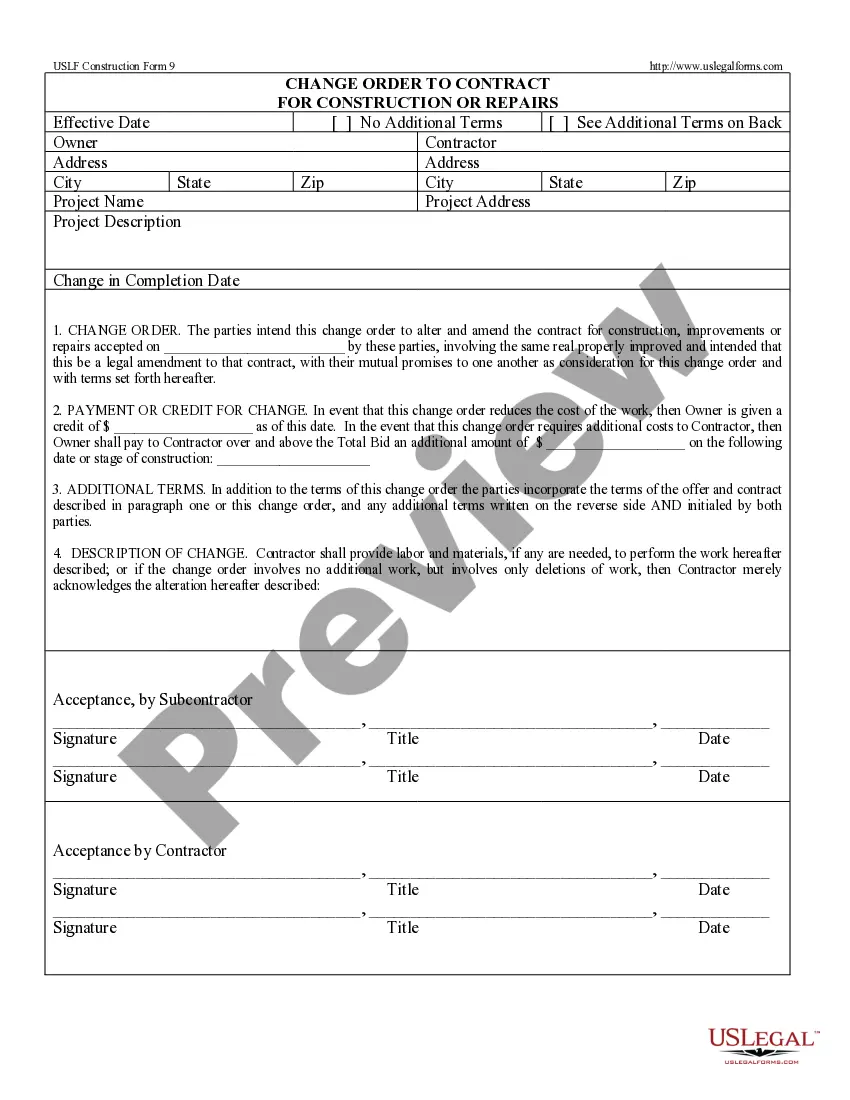








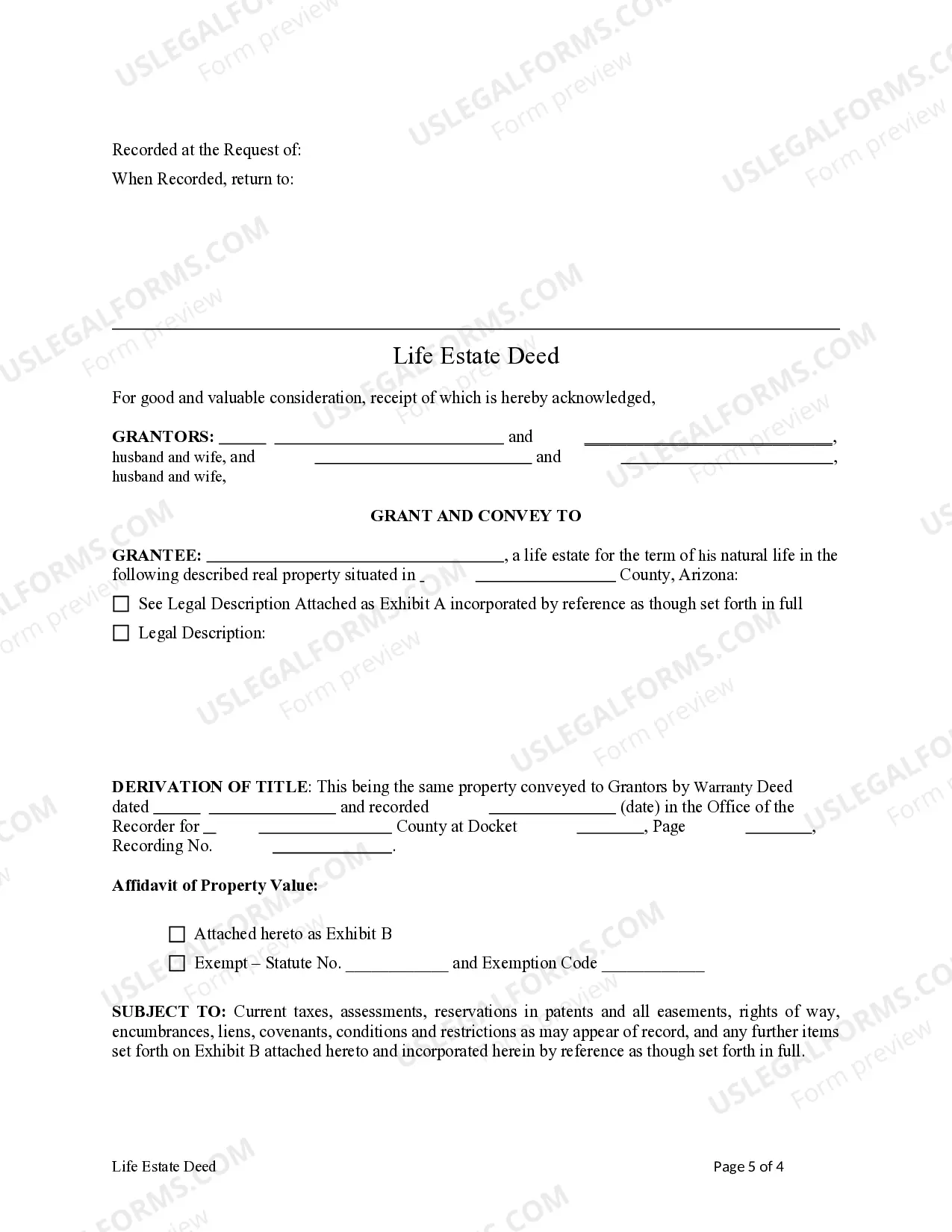
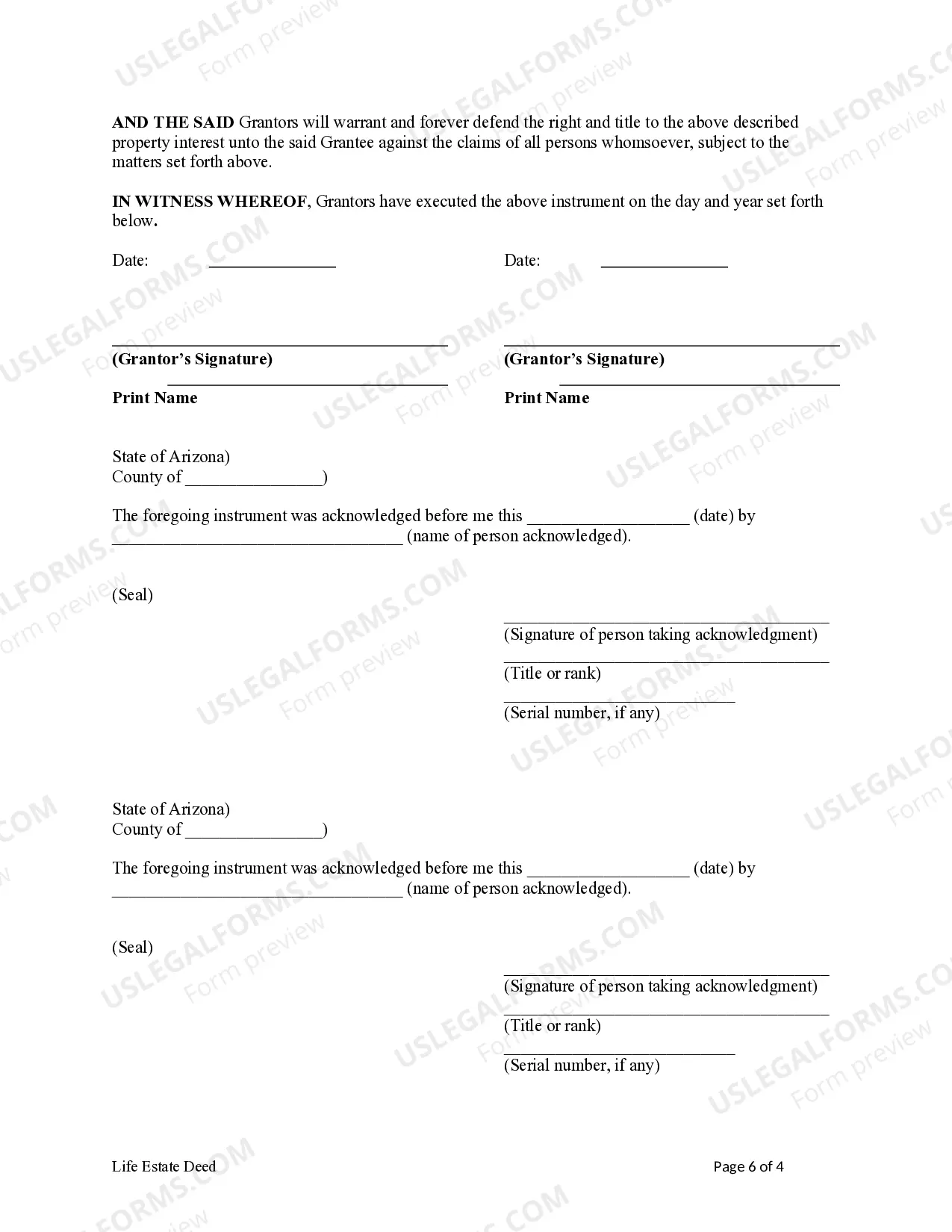
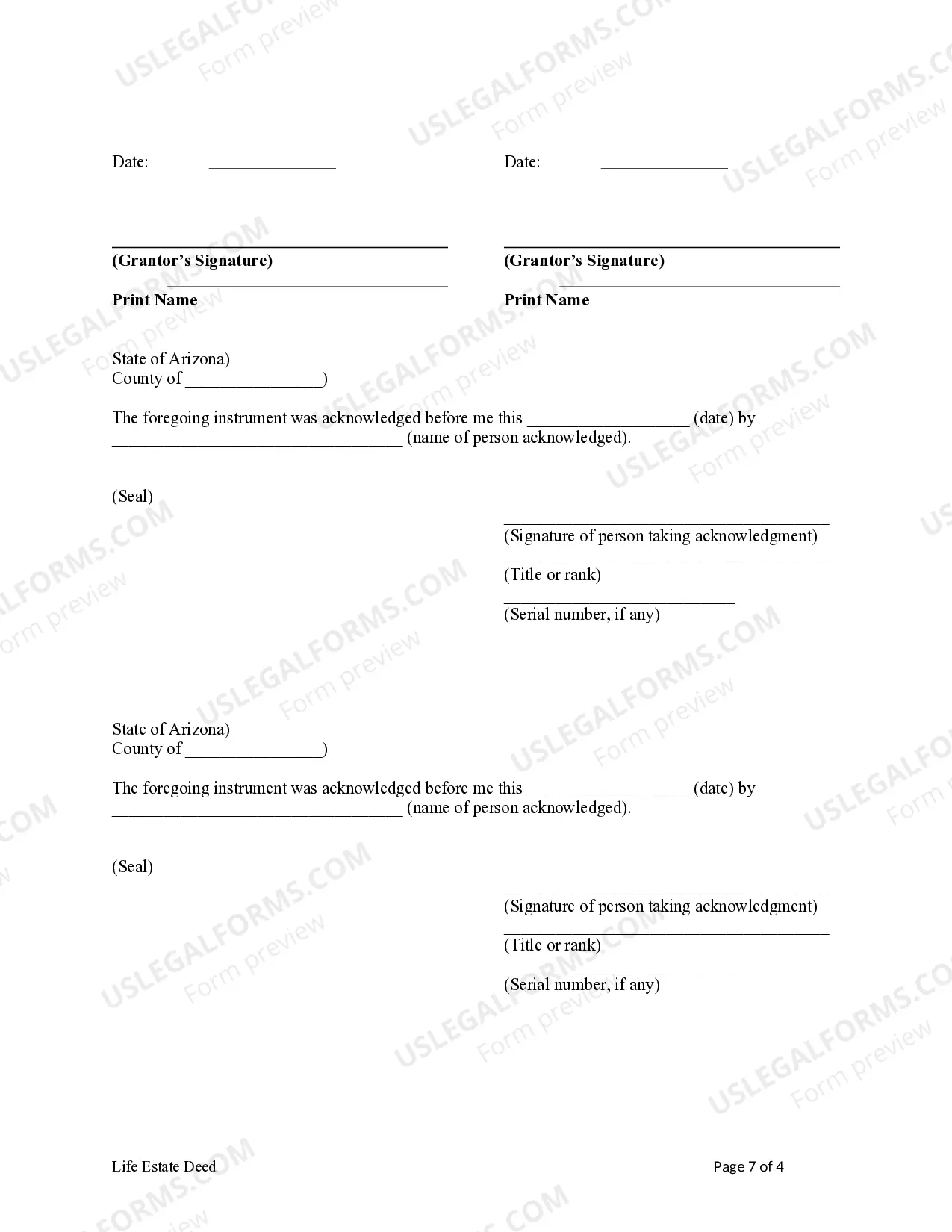
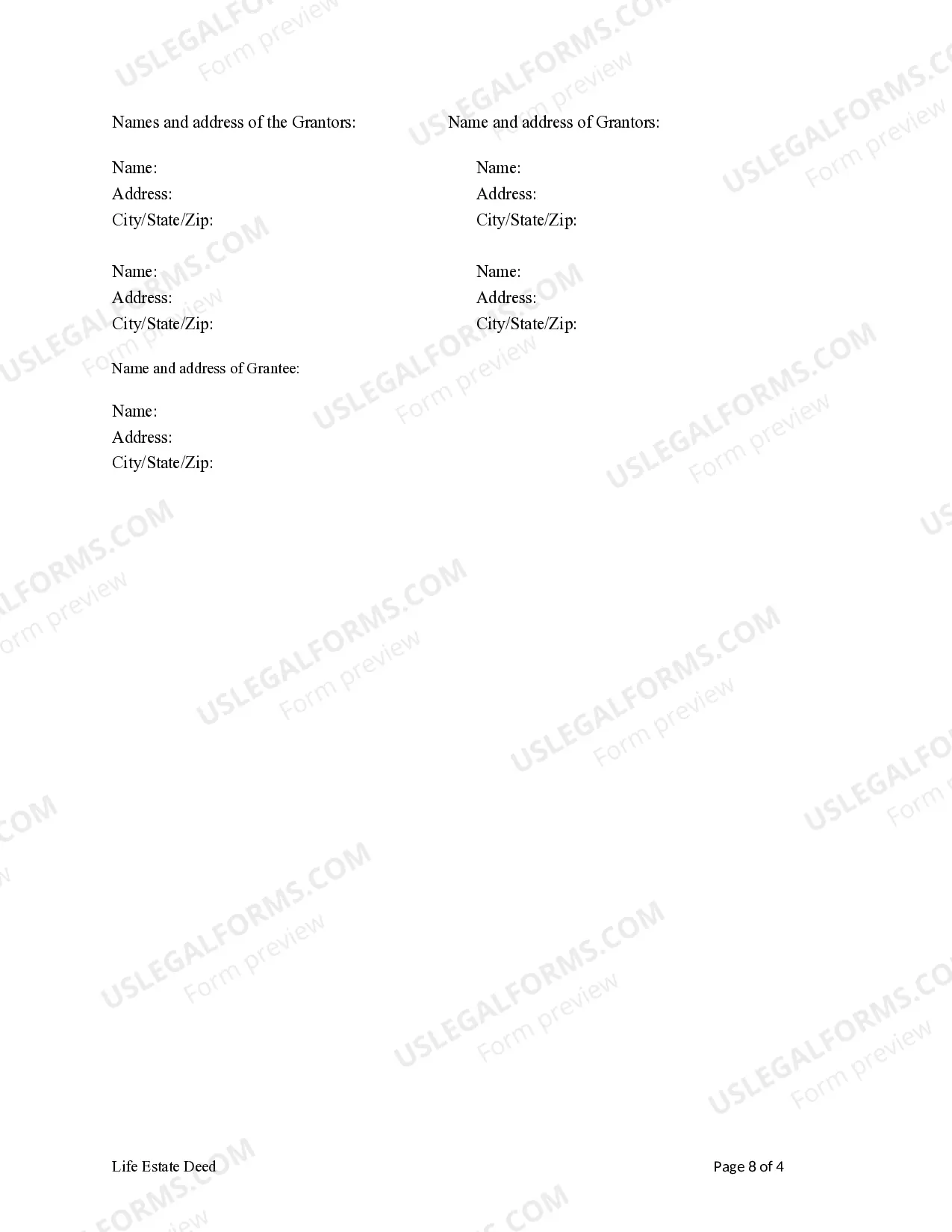
How to fill out Arizona Life Estate Deed From Two Married Couples To An Individual?
- If you have used US Legal Forms before, log in and download your life estate form from your account. Ensure your subscription is active; renew if needed.
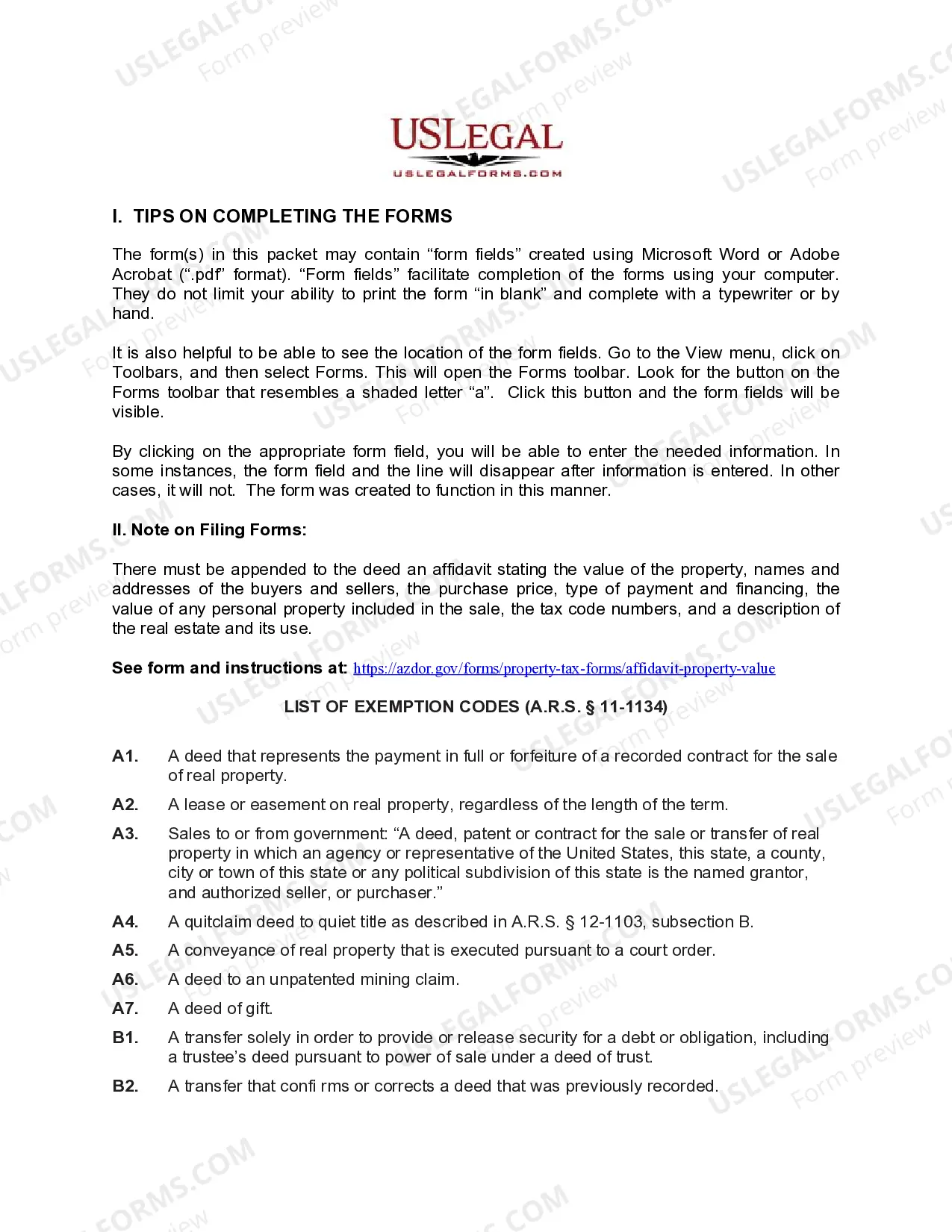
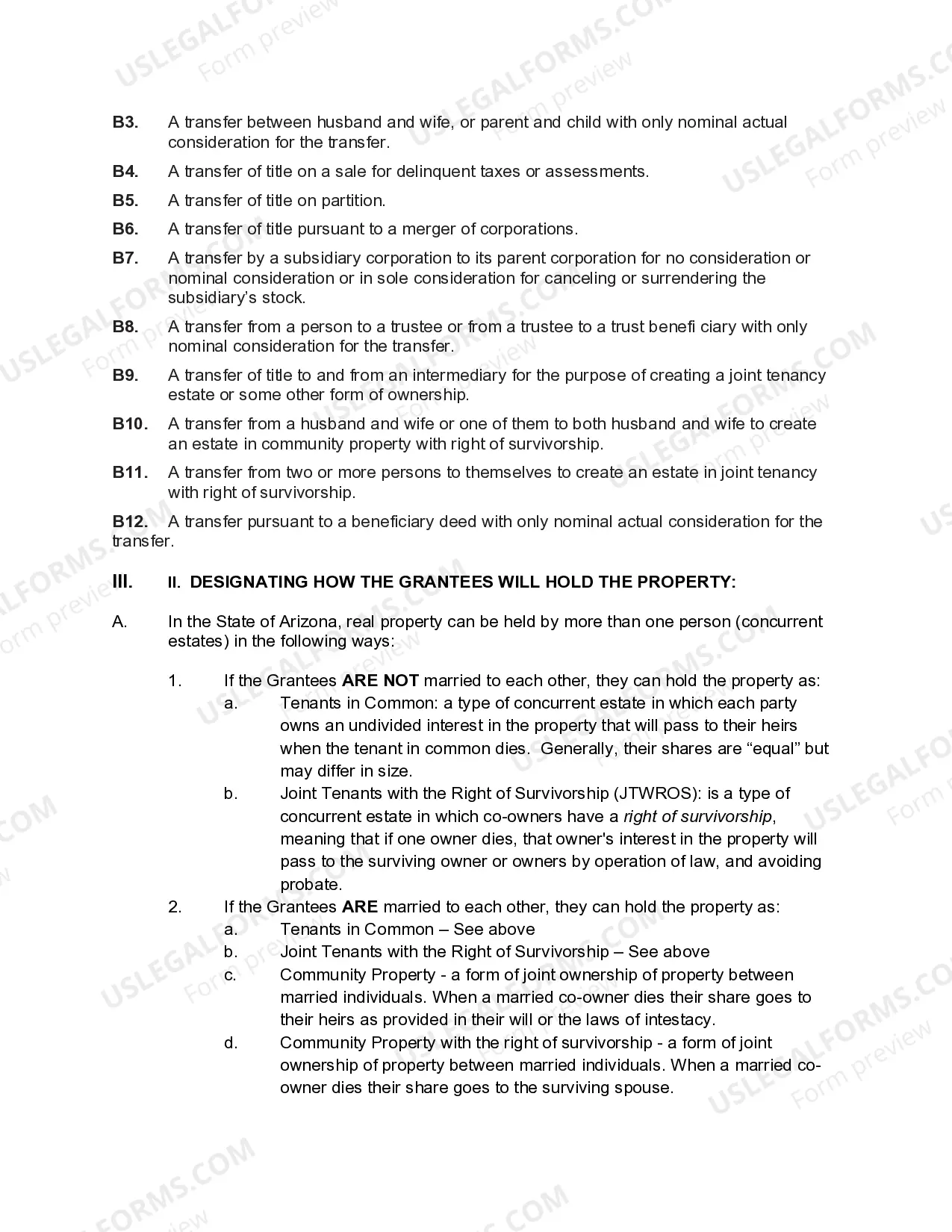
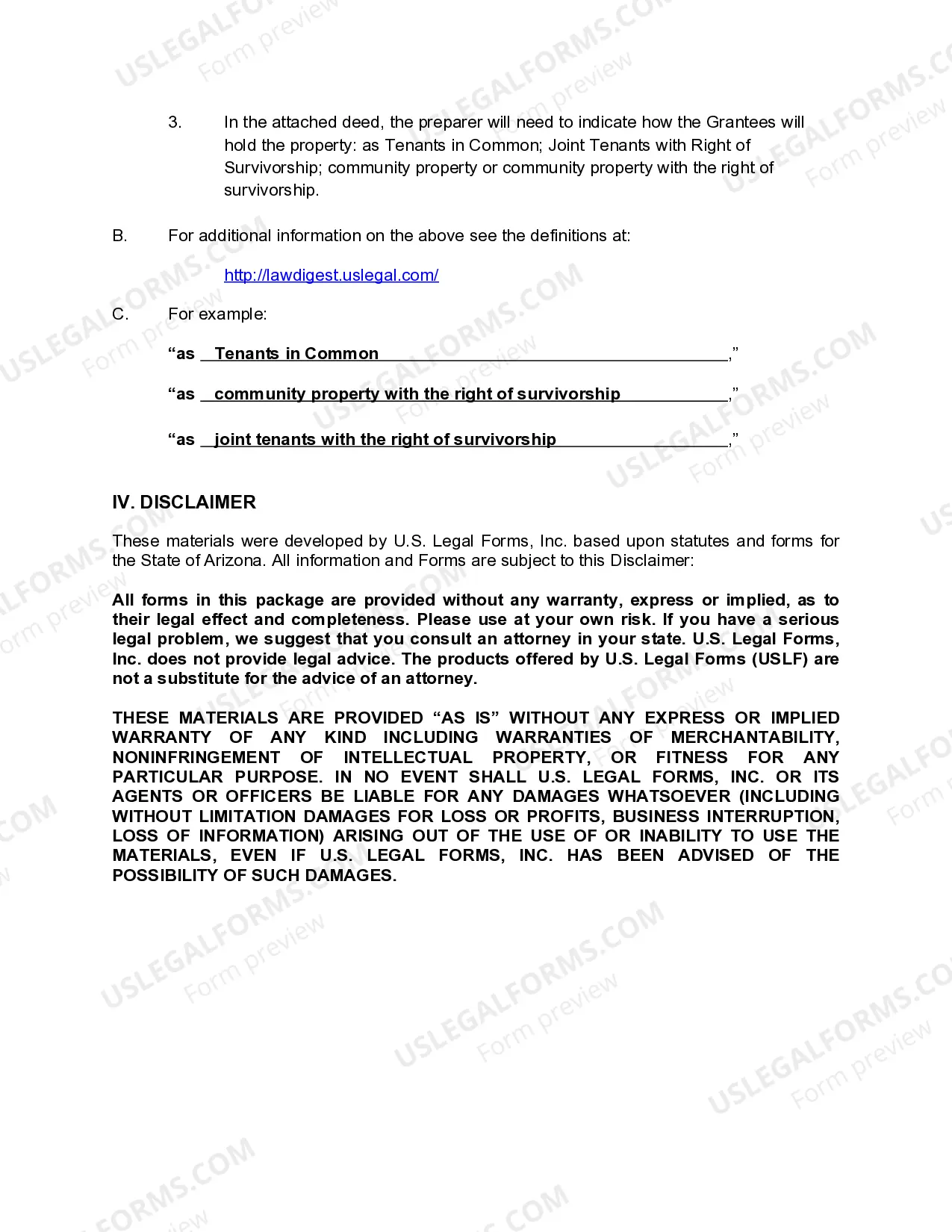
- For first-time users, begin by reviewing the form descriptions in preview mode to select the appropriate template that aligns with your local laws.
- If you don’t find what you need, utilize the Search feature to discover correct templates that fit your requirements.
- Once you find the right form, click on the Buy Now button and select a subscription plan that suits you. You'll need to create an account for access.
- Proceed to checkout by entering your payment details, using either a credit card or your PayPal account.
- After completing your purchase, download the form to your device for completion. You can access it anytime from the My Forms section of your profile.
US Legal Forms provides an extensive collection of over 85,000 legal templates, ensuring you can find exactly what you need. With the assistance of premium experts, all legal documents can be filled out accurately, giving you peace of mind.
In conclusion, navigating the world of life estates doesn’t have to be complicated. With US Legal Forms, you can efficiently access the necessary templates and expert advice. Start your process today and secure your legal needs with ease.
Form popularity
FAQ
When someone dies with a life estate, the ownership of the property passes directly to the remainderman as specified in the life estate deed. This transfer occurs automatically without going through probate, which simplifies the process for heirs. Consequently, understanding life estates is crucial for effective estate planning, and platforms like US Legal Forms can assist in managing these arrangements.
You can sell a house in a life estate; however, the sale is subject to the rights of the life estate holder. The life estate holder retains the right to live in the property until their death. Therefore, any potential buyer must be aware of these conditions and understand how they affect ownership and use of the property.
To claim a life estate, you typically need to revise the property deed to include the life estate language that specifies your rights. This often requires drafting legal documents to ensure precise specifications are in place. Using platforms like US Legal Forms can streamline this process, offering templates that guide you through creating valid life estate documents.
The purpose of a life estate is to provide an individual with the right to use and benefit from a property during their lifetime. It allows for a clear designation of property rights, where the holder can live in or rent out the property. Furthermore, this legal arrangement helps to avoid probate issues upon death, simplifying the transfer process to the designated remainderman.
When a life estate holder dies, the property automatically transfers to the remainderman, who holds the future interest in the property. This transfer does not require probate, allowing for a smooth transition of ownership. Thus, the life estate ends upon the holder's death, ensuring that the property remains within the intended estate plan.
While a life estate has benefits, it also comes with some drawbacks. One significant downside is the lack of flexibility; the life tenant cannot sell or modify the property without the consent of the remainderman. Additionally, the life estate may create complications in tax situations or affect eligibility for certain benefits. It's advisable to consider these factors thoroughly, and platforms like USLegalForms can provide guidance on navigating these challenges effectively.
A common example of a life estate is when an elderly parent transfers property to their child but retains the right to live there for the rest of their life. In this scenario, the parent enjoys full use of the property while ensuring that ownership passes seamlessly to the child after their passing. This arrangement not only secures the parent's living situation but also simplifies future estate transfers. Life estates like this serve as practical solutions in estate planning.
Yes, creditors can pursue a life estate under certain circumstances. Since the life tenant retains rights to the property, the life estate may be considered an asset for debt collection. However, the specifics can vary based on state laws and the nature of the debts. Consulting with a legal professional can help clarify how creditors may be involved.
A life estate allows you to retain ownership of a property for your lifetime while transferring future ownership to another party. This arrangement provides peace of mind, as you can live in your home without worrying about its future. Additionally, a life estate can help avoid probate, thus simplifying the transfer of property upon death. Overall, a life estate serves as a valuable estate planning tool.
One downside of a living trust is that it can require more initial setup work compared to a traditional will. Setting up a living trust involves transferring your assets into the trust, which may take time and effort. Additionally, there are ongoing administrative tasks and potential costs related to maintenance or modification. However, the benefits can outweigh these drawbacks, especially when considering the streamlined asset distribution it offers.