Beneficiary Transfer Death With Trust
Description




Get your form ready online
Our built-in tools help you complete, sign, share, and store your documents in one place.
Make edits, fill in missing information, and update formatting in US Legal Forms—just like you would in MS Word.
Download a copy, print it, send it by email, or mail it via USPS—whatever works best for your next step.
Sign and collect signatures with our SignNow integration. Send to multiple recipients, set reminders, and more. Go Premium to unlock E-Sign.
If this form requires notarization, complete it online through a secure video call—no need to meet a notary in person or wait for an appointment.
We protect your documents and personal data by following strict security and privacy standards.

Make edits, fill in missing information, and update formatting in US Legal Forms—just like you would in MS Word.

Download a copy, print it, send it by email, or mail it via USPS—whatever works best for your next step.

Sign and collect signatures with our SignNow integration. Send to multiple recipients, set reminders, and more. Go Premium to unlock E-Sign.

If this form requires notarization, complete it online through a secure video call—no need to meet a notary in person or wait for an appointment.

We protect your documents and personal data by following strict security and privacy standards.
Looking for another form?
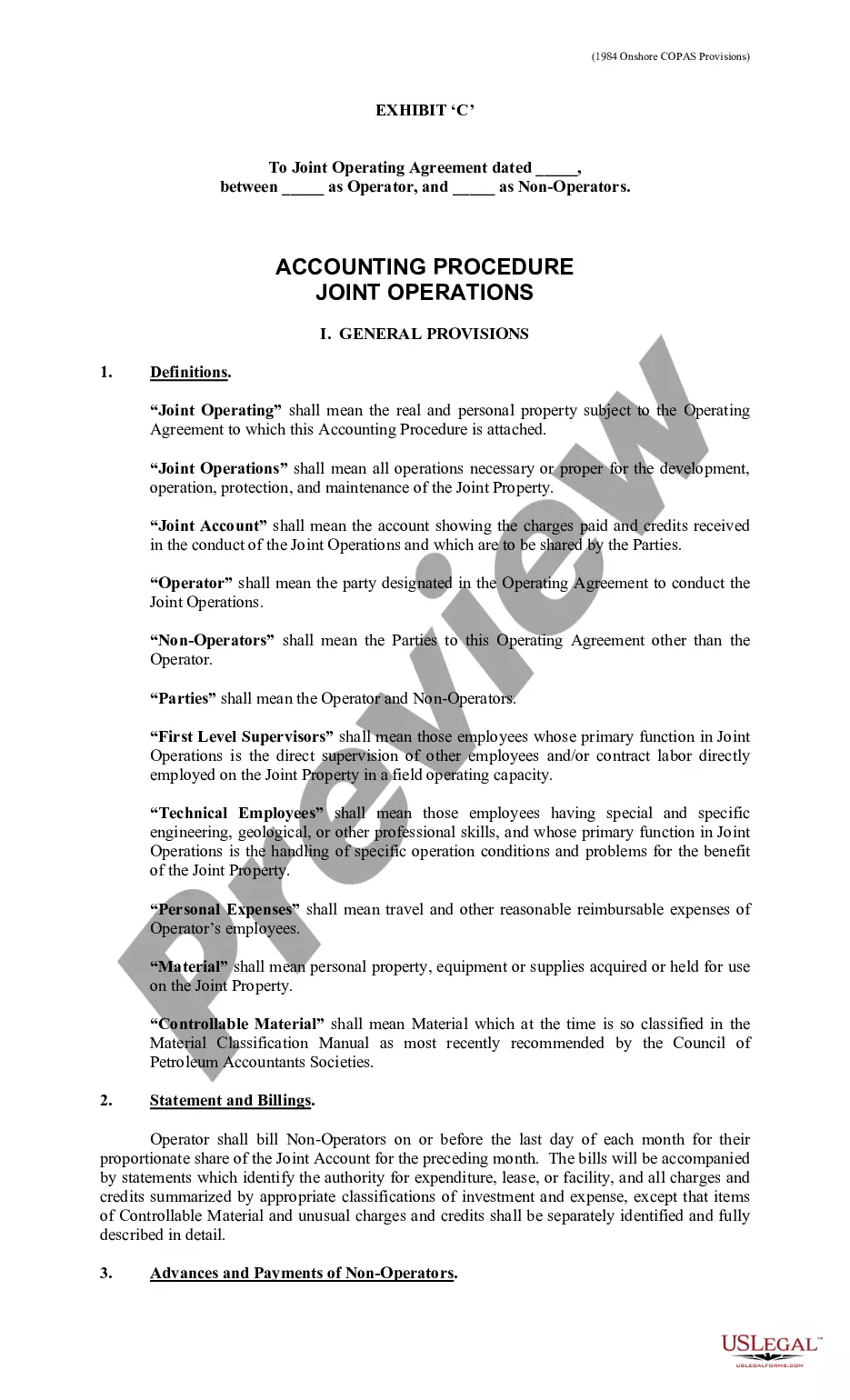
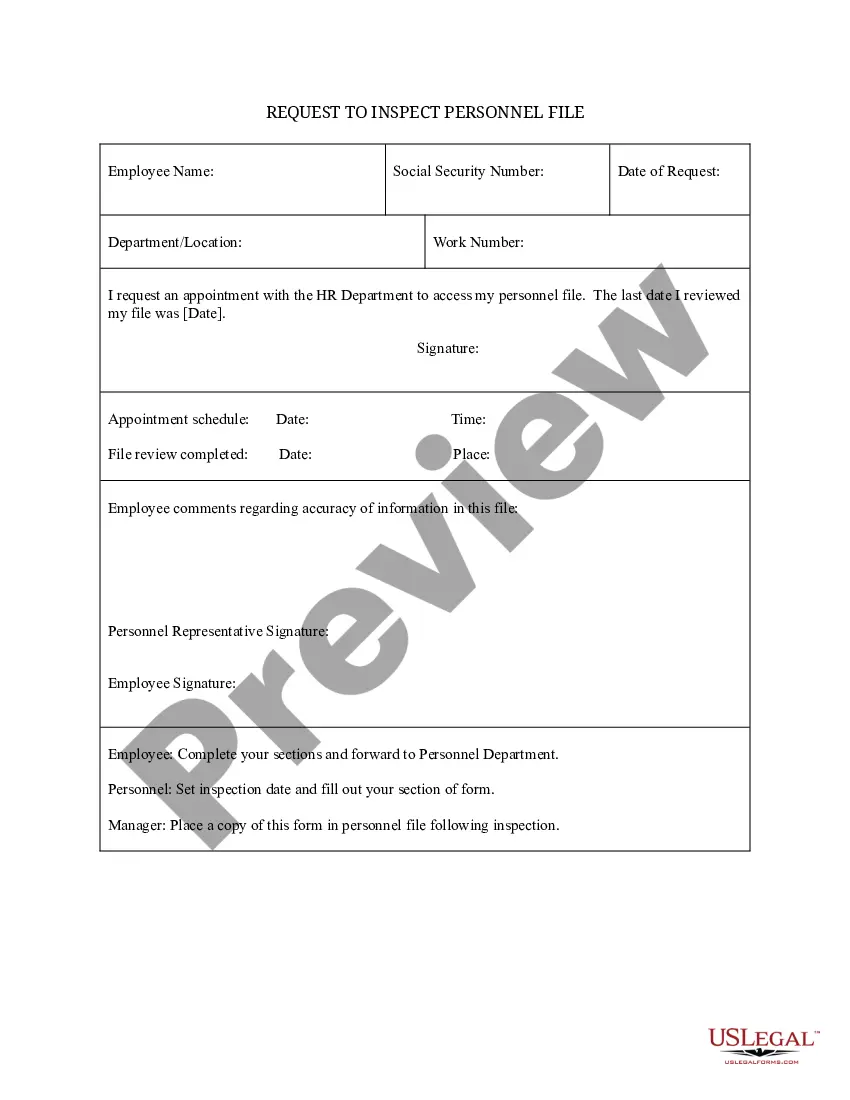
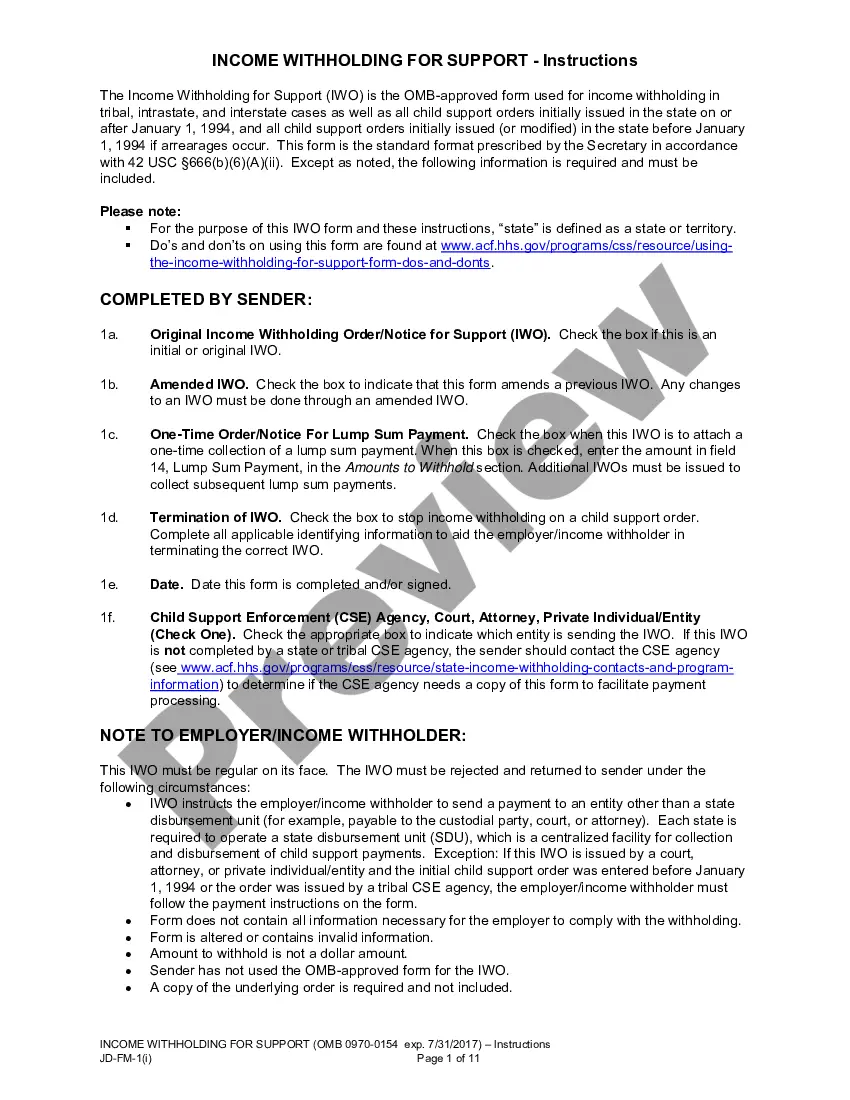
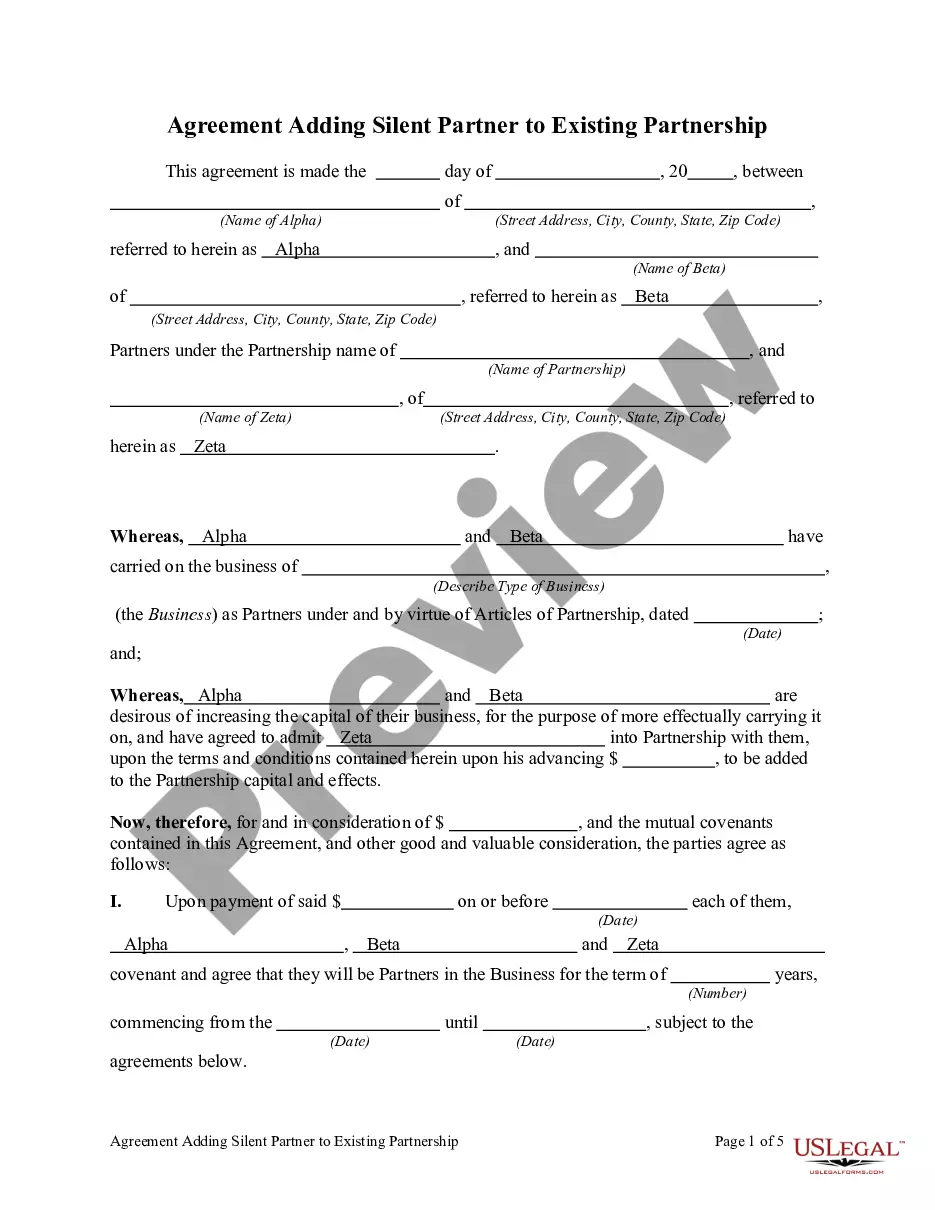



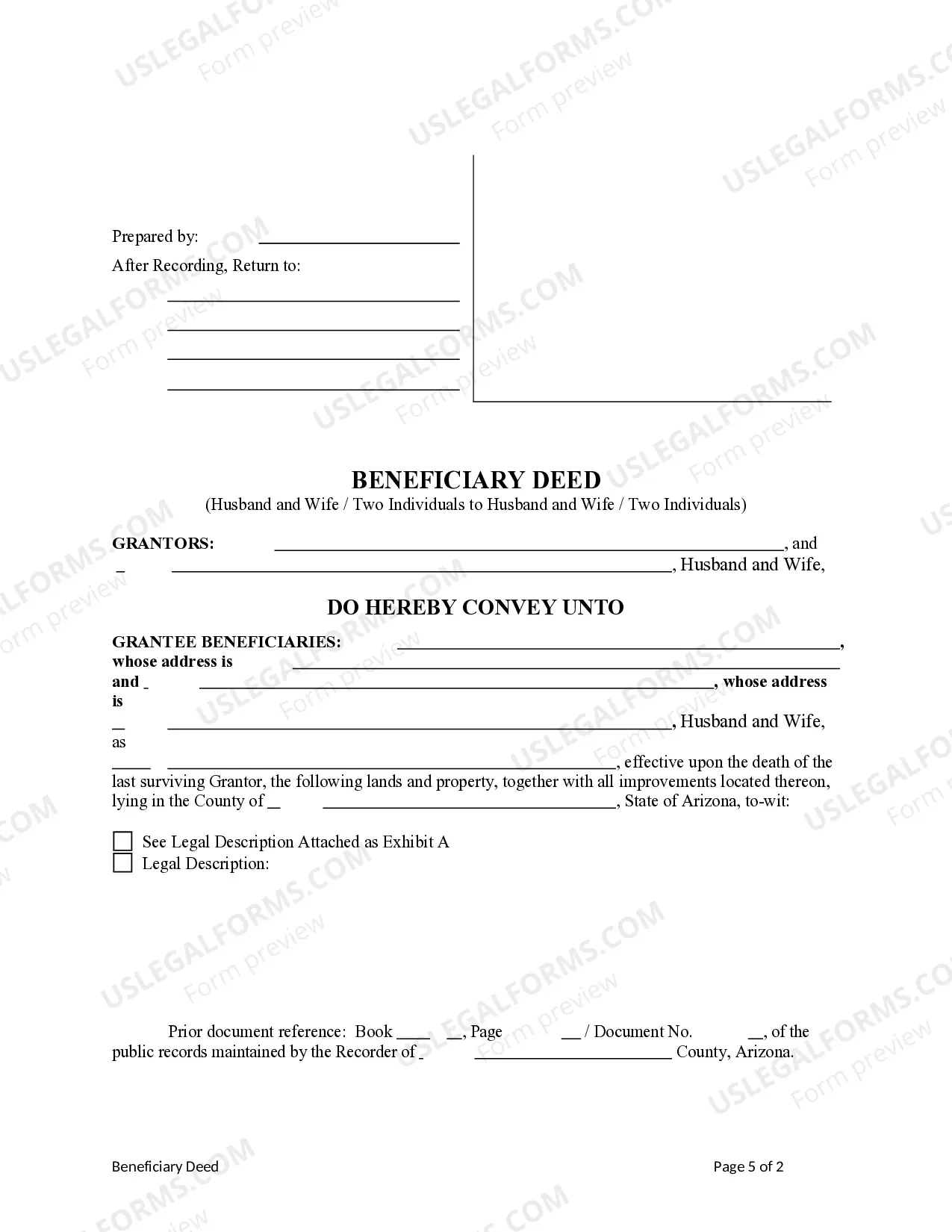
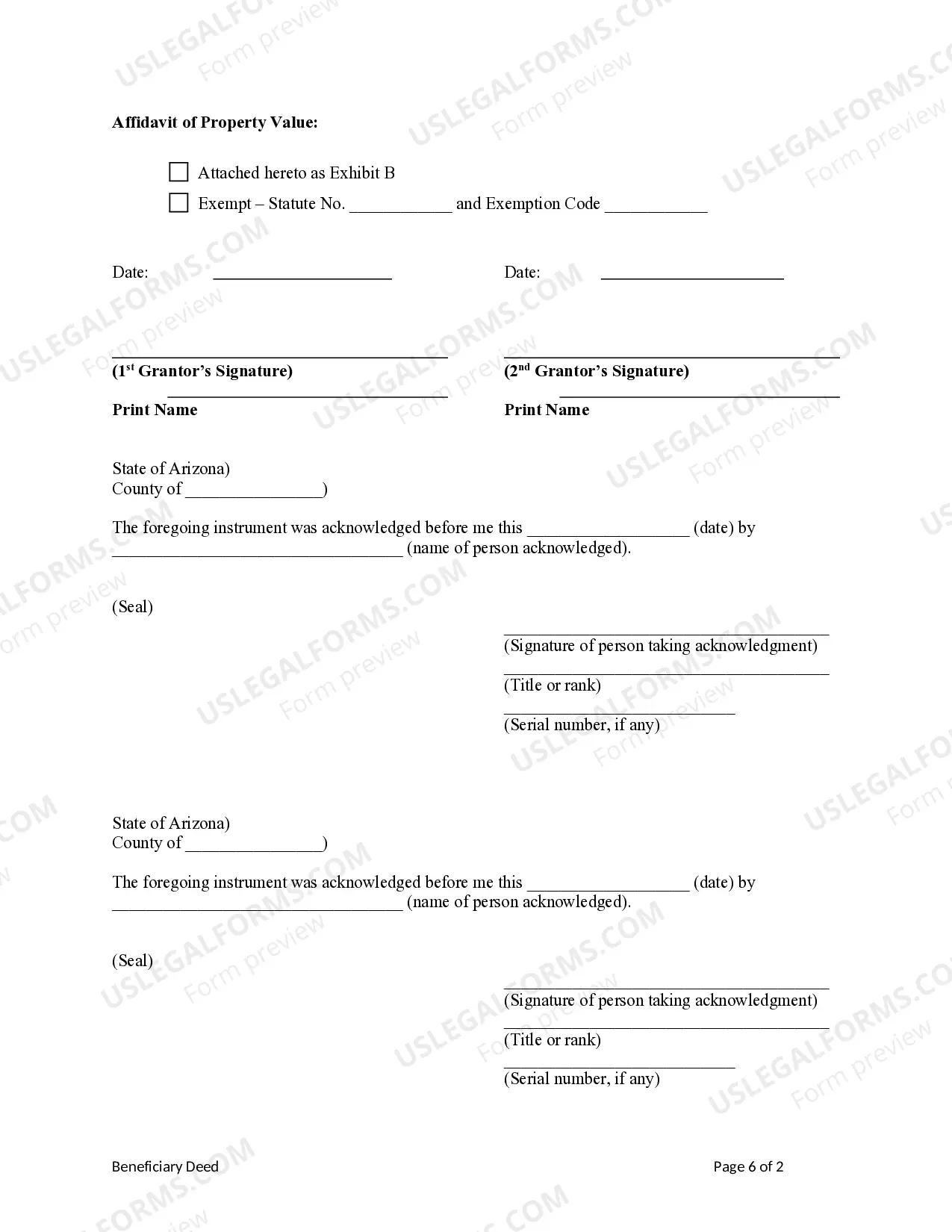
How to fill out Arizona Beneficiary Or Transfer Of Death (TOD) Deed - Husband And Wife / Two Individuals To Husband And Wife / Two Individuals?
- Log in to your US Legal Forms account. If you haven't used the service before, create an account to get started.
- Review the available templates in Preview mode. Make sure to choose one that fits your needs and complies with your local regulations.
- Use the Search tab if you need a different form. Ensure it matches your requirements before proceeding.
- Select your document. Click the Buy Now button and opt for a subscription plan that works best for you.
- Complete the purchase by entering your payment details. Payments can be made via credit card or PayPal.
- Once purchased, download the form to your device and access it anytime through the My Forms menu.
In conclusion, US Legal Forms simplifies the process of managing legal documentation, particularly when dealing with sensitive matters such as beneficiary transfers. With a robust library of forms and access to expert assistance, you can ensure that your documents are accurate and legally sound.
Start your journey today with US Legal Forms and secure the right resources for your legal needs!
Form popularity
FAQ
While it's not mandatory to hire a lawyer for a transfer on death (TOD) deed, consulting one can ease the process. A lawyer can guide you through the legal implications and ensure that the deed aligns with your overall estate plan. Understanding beneficiary transfer death with trust is vital, and having professional support can simplify potential legal complexities, making sure everything is in order.
Transferring assets from a trust to a beneficiary involves the trustee executing the terms specified in the trust document. The trustee should assess what assets belong to the trust and ensure that distributions comply with the trust’s rules. This process can facilitate an efficient beneficiary transfer death with trust, but seeking assistance from platforms like USLegalForms can provide valuable tools and templates to help navigate this process smoothly.
Yes, a trust can be designated as a transfer on death beneficiary, allowing assets to bypass probate. When a trust is named in this capacity, it can effectively manage how assets are distributed after death. This method simplifies the beneficiary transfer death with trust, ensuring that assets move directly to the trust without unnecessary complications. The original trust terms will dictate how assets are managed and distributed.
Distributing funds from a trust to beneficiaries typically involves the trustee following the instructions laid out in the trust document. The trustee must gather the necessary information about each beneficiary and ensure that all taxes and debts are settled first. This process ensures a smooth beneficiary transfer death with trust, and if any complexities arise, engaging a legal professional can provide clarity and guided support.
If a beneficiary dies while the trust is still active, the distribution of assets depends on the terms set in the trust document. Often, the share of the deceased beneficiary may pass to their heirs or be redistributed among the surviving beneficiaries. It's crucial to review the trust provisions to ensure proper handling of the beneficiary transfer death with trust. In some cases, consulting a legal expert can ensure compliance with the trust's terms.
Determining whether a trust or a transfer on death (TOD) is better for you requires careful consideration. Trusts offer comprehensive management and flexibility, allowing for tailored provisions that reflect your wishes. In contrast, TODs are straightforward and can be easier to implement. However, if your estate is complex, understanding beneficiary transfer death with trust may provide the peace of mind you need for long-term planning.
Transfer on death deeds can simplify asset transfer, but they also come with significant drawbacks. They do not provide guidance for asset management during your lifetime, leaving you with less control over your estate. Additionally, they may have limited effectiveness in complex scenarios, such as when multiple heirs or debts are involved. For those considering beneficiary transfer death with trust, understanding these disadvantages can influence your estate planning strategy.
Choosing between a transfer on death and a trust depends on your specific needs and goals. A trust provides extensive management for your assets during your lifetime and after your death, while a transfer on death simplifies the transfer process but offers less control. Ultimately, the decision should be based on your financial situation and preferences. We encourage you to explore beneficiary transfer death with trust to determine the best option for you.
When a beneficiary designated in a trust dies, the trust's terms dictate the next steps. In many cases, the trust will designate alternate beneficiaries to inherit the deceased's share. This process ensures that the assets are managed according to the deceased's wishes, without unnecessary delays. Understanding beneficiary transfer death with trust helps you plan effectively for unexpected situations.
One potential disadvantage of naming a trust as a beneficiary is the complexity it may add to the distribution process. Beneficiary transfer death with trust involves legal considerations and administrative tasks that could delay asset distribution. Additionally, if the trust is not properly set up, it may lead to misunderstandings among heirs regarding their entitlements. It's essential to consult with a legal expert to ensure the trust meets your needs effectively.