Transfer Death Beneficiary Form For A Beneficiary
Description



Get your form ready online
Our built-in tools help you complete, sign, share, and store your documents in one place.
Make edits, fill in missing information, and update formatting in US Legal Forms—just like you would in MS Word.
Download a copy, print it, send it by email, or mail it via USPS—whatever works best for your next step.
Sign and collect signatures with our SignNow integration. Send to multiple recipients, set reminders, and more. Go Premium to unlock E-Sign.
If this form requires notarization, complete it online through a secure video call—no need to meet a notary in person or wait for an appointment.
We protect your documents and personal data by following strict security and privacy standards.

Make edits, fill in missing information, and update formatting in US Legal Forms—just like you would in MS Word.

Download a copy, print it, send it by email, or mail it via USPS—whatever works best for your next step.

Sign and collect signatures with our SignNow integration. Send to multiple recipients, set reminders, and more. Go Premium to unlock E-Sign.

If this form requires notarization, complete it online through a secure video call—no need to meet a notary in person or wait for an appointment.

We protect your documents and personal data by following strict security and privacy standards.
Looking for another form?





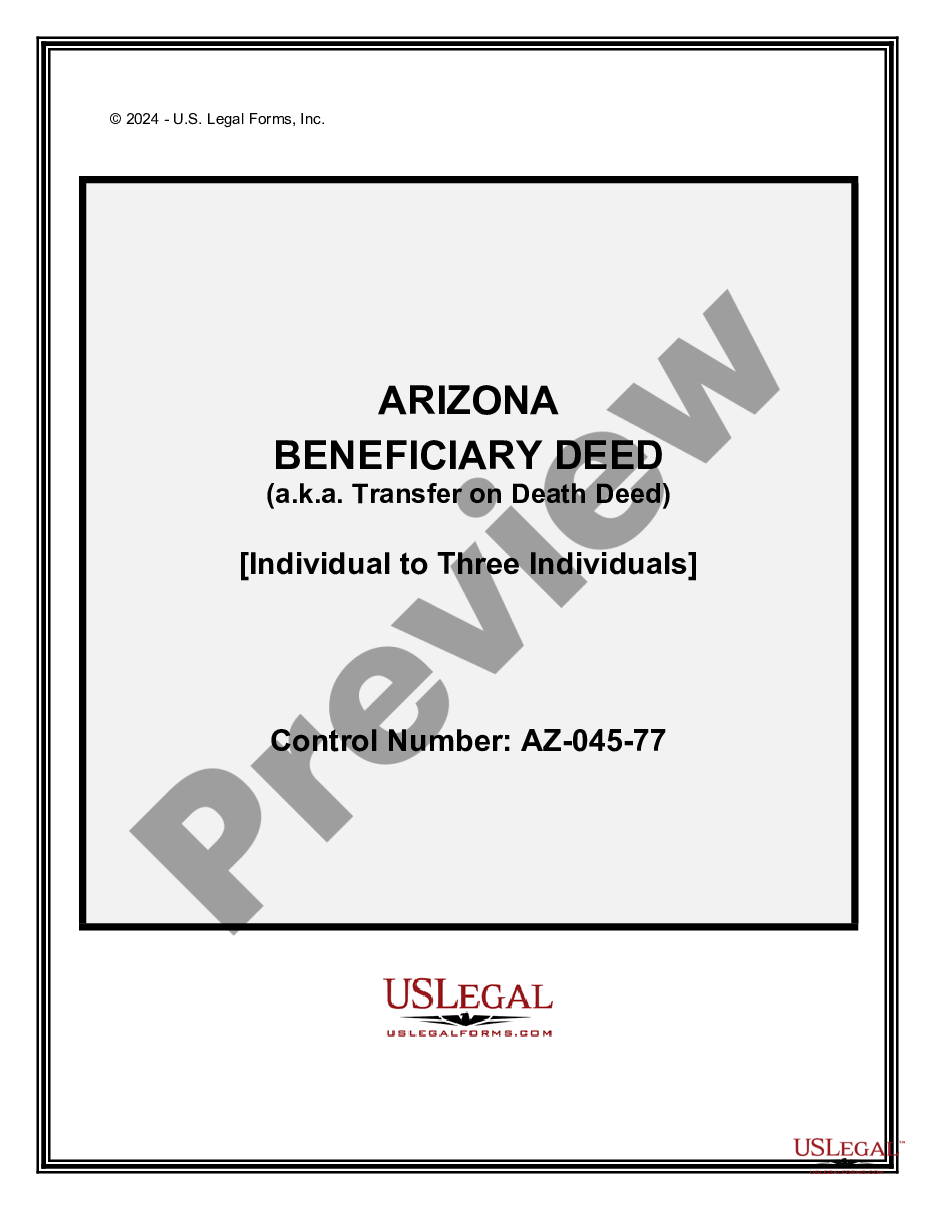
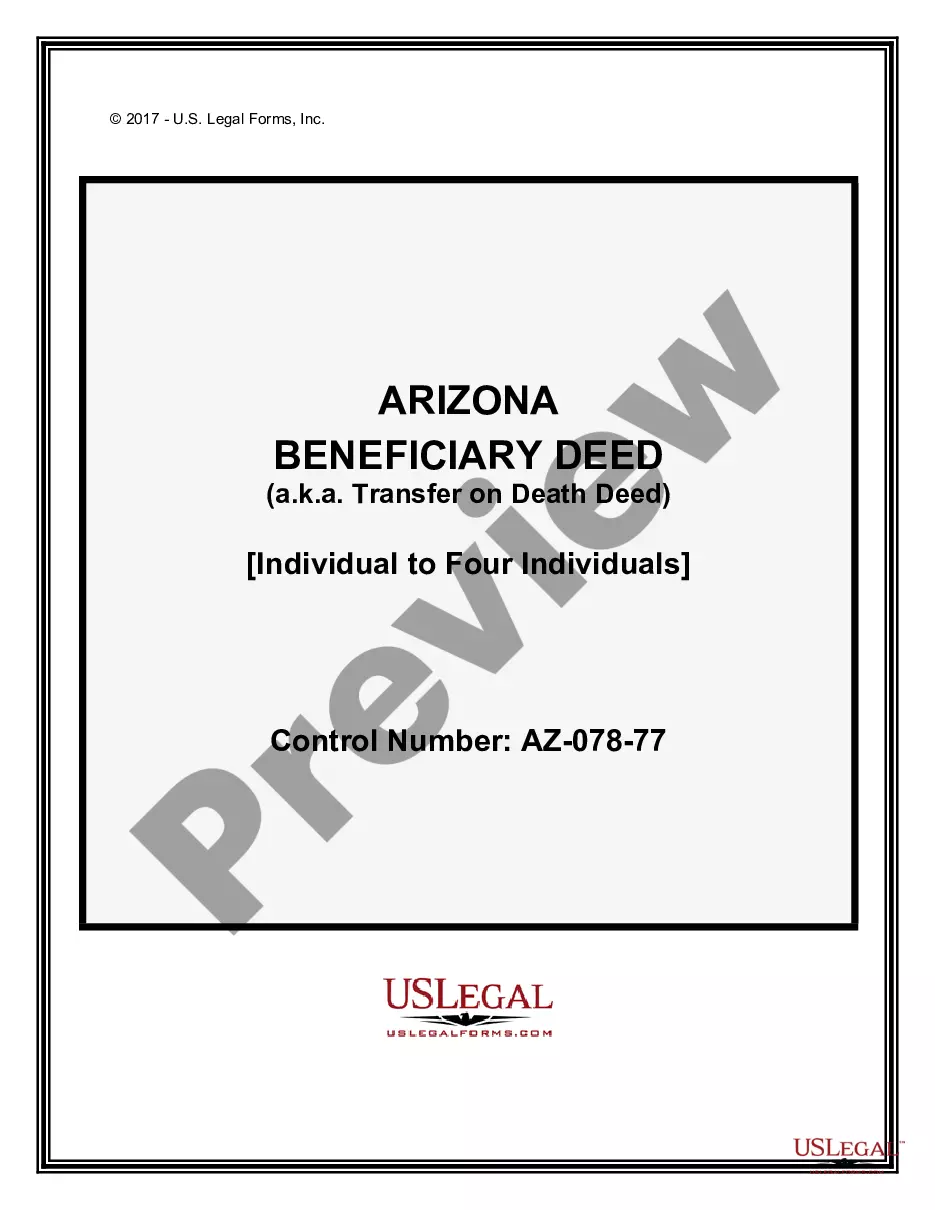
How to fill out Arizona Transfer On Death Or TOD - Beneficiary Deed - Individual Grantor To Three Individuals?
- Log in to your US Legal Forms account if you’re a returning user, and click on the Download button to save the necessary form to your device. Confirm that your subscription remains active or renew it if needed.
- Check the Preview mode and read the form description to ensure it meets your local requirements and preferences.
- If you require a different template, utilize the Search tab to find the right one that better fits your needs.
- Click the Buy Now button under the desired form and select your preferred subscription plan. You'll be prompted to create an account to access our extensive library of legal documents.
- Complete your purchase by entering your credit card information or using your PayPal account for your subscription.
- Finally, download your form and save it to your device. You can access it anytime from the My Forms section in your profile, making future use effortless.
In conclusion, US Legal Forms streamlines the process of acquiring legal documents, providing you with an extensive range of forms to ensure compliance and accuracy. Take advantage of our robust platform and get started today!
Visit US Legal Forms and empower your legal documentation process effortlessly.
Form popularity
FAQ
Transfer on death deeds have notable disadvantages worth considering. They may lead to disputes among heirs if beneficiaries disagree or if the deed is unclear. Moreover, the transfer death beneficiary form for a beneficiary does not address tax implications or affect the management of the property while the owner is still alive, which can complicate financial situations.
Transfer on death accounts can serve as a good idea for certain individuals, especially if they want to avoid probate for specific assets. They provide a straightforward way to pass assets directly to beneficiaries, but you must consider your entire estate plan. Evaluating your options with the help of resources such as uslegalforms can clarify if the transfer death beneficiary form for a beneficiary aligns with your needs.
Filling out beneficiary paperwork requires careful attention to detail. You must include the legal names of the beneficiaries, provide necessary identification, and clearly indicate the assets involved. Utilizing a platform like uslegalforms can assist you in accurately completing the transfer death beneficiary form for a beneficiary.
You do not necessarily need a lawyer to create a beneficiary deed, but consulting one can simplify the process. Having professional guidance ensures that you properly complete the transfer death beneficiary form for a beneficiary and understand the implications of your decisions. This can help you avoid potential legal pitfalls.
Transfer on death (Tod) accounts may seem beneficial, but they come with some disadvantages. For one, they can create complications if not all assets are included. Additionally, they do not help avoid probate for other accounts or assets not designated by the transfer death beneficiary form for a beneficiary.
Unfortunately, you cannot change a beneficiary after death. However, if you decide to update your beneficiaries while you are still living, you can use the transfer death beneficiary form for a beneficiary to submit your changes. It's essential to regularly review your designations to ensure they align with your wishes.
Yes, accounts with a transfer on death designation typically avoid probate. This means your beneficiaries can access the assets more quickly and without the associated court processes. Using the transfer death beneficiary form for a beneficiary helps streamline the transfer process, providing peace of mind for you and your loved ones.
A beneficiary is a person or entity named to receive assets upon your passing, while transfer on death describes a specific legal designation that allows for this transfer without probate. The transfer death beneficiary form for a beneficiary outlines how your assets will pass, providing clear guidance that simplifies the process for your loved ones.
Typically, Transfer on Death (TOD) and Payable on Death (POD) serve different purposes. TOD is useful for transferring ownership of assets, while POD is primarily for financial accounts. Consider the transfer death beneficiary form for a beneficiary to best suit your needs, ensuring it aligns with your overall estate planning strategy.
One downside of a transfer on death is that it may not work for all types of assets. Additionally, if the beneficiary predeceases you, the inheritance might become complicated, leading to potential disputes. When using the transfer death beneficiary form for a beneficiary, it's crucial to review your choices regularly to ensure they reflect your current wishes.