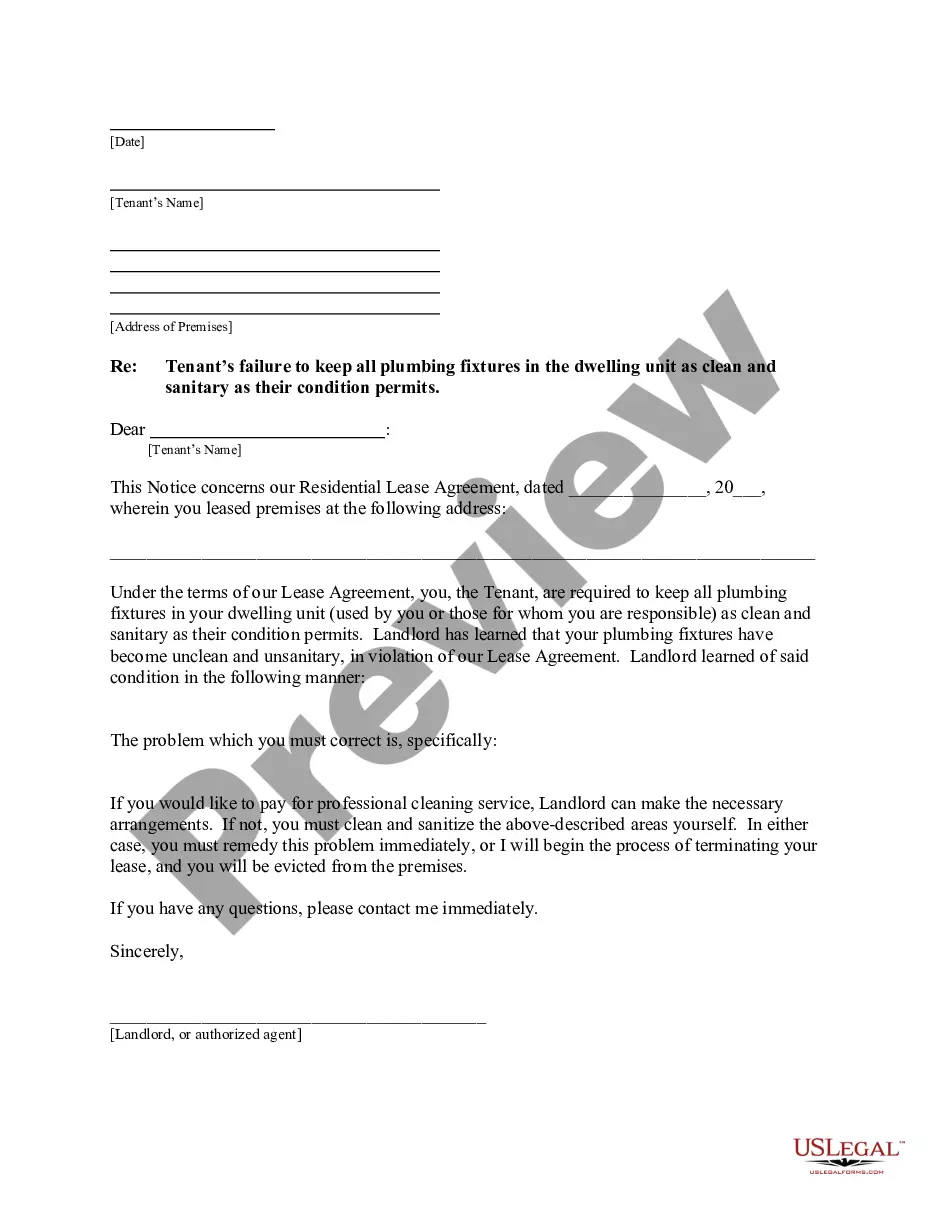
Tenant Failure Plumbing For The Toilet
Description


Get your form ready online
Our built-in tools help you complete, sign, share, and store your documents in one place.
Make edits, fill in missing information, and update formatting in US Legal Forms—just like you would in MS Word.
Download a copy, print it, send it by email, or mail it via USPS—whatever works best for your next step.
Sign and collect signatures with our SignNow integration. Send to multiple recipients, set reminders, and more. Go Premium to unlock E-Sign.
If this form requires notarization, complete it online through a secure video call—no need to meet a notary in person or wait for an appointment.
We protect your documents and personal data by following strict security and privacy standards.

Make edits, fill in missing information, and update formatting in US Legal Forms—just like you would in MS Word.

Download a copy, print it, send it by email, or mail it via USPS—whatever works best for your next step.

Sign and collect signatures with our SignNow integration. Send to multiple recipients, set reminders, and more. Go Premium to unlock E-Sign.

If this form requires notarization, complete it online through a secure video call—no need to meet a notary in person or wait for an appointment.

We protect your documents and personal data by following strict security and privacy standards.
Looking for another form?

How to fill out Arkansas Letter From Landlord To Tenant For Failure To Keep All Plumbing Fixtures In The Dwelling Unit As Clean As Their Condition Permits - Remedy Or Lease Terminates?
- Log in to your US Legal Forms account if you're an existing user. Ensure your subscription is active; renew if necessary.
- Preview the form options available, paying close attention to descriptions to find one that suits your plumbing issue and complies with local laws.
- If needed, use the Search tab to find additional templates that may meet your requirements.
- Select the appropriate document and click the Buy Now button. Choose a subscription plan that fits your needs and create an account to access the library.
- Complete your purchase, entering payment details through credit card or PayPal.
- Download the form to your device for easy access and completion. You can also find it anytime in your My Forms section.
By following these steps, you can quickly and efficiently access the legal forms you need to address tenant plumbing failures. US Legal Forms not only saves time but also provides assurance that your documents are accurate and legally sound.
Empower yourself with the resources available at US Legal Forms today!
Form popularity
FAQ
Determining responsibility for clogged toilets can vary by situation. Generally, if it results from tenant failure plumbing for the toilet, such as misuse, the tenant bears the responsibility for the repair. However, if the issue stems from systemic plumbing problems, the landlord usually takes on the responsibility. Consider reviewing your lease agreement or consulting local regulations for further clarity.
Yes, you should call your landlord if you have a clogged toilet, especially if it is beyond simple solutions. The landlord may have specific procedures for handling tenant failure plumbing for the toilet. By informing them, they can arrange for a professional to assess the issue adequately. It's important to communicate these problems promptly for a quick resolution.
Liability for a blocked toilet typically depends on the cause of the clog. If the blockage results from tenant failure plumbing for the toilet, like flushing inappropriate items, the tenant may be responsible for the repairs. Conversely, if the clog arises from plumbing issues within the building’s system, the landlord may be liable. It's essential to review your lease agreement and local laws for clear guidelines.
Landlord neglect refers to a failure to address property maintenance issues, including plumbing problems like tenant failure plumbing for the toilet. This neglect can lead to unsafe living conditions or deteriorating properties. Tenants may need to document instances of neglect to seek repairs or pursue legal action through platforms like uslegalforms.
Uninhabitable living conditions can include severe plumbing issues, like a broken toilet, which affects basic sanitation. If tenant failure plumbing for the toilet persists and creates significant discomfort or health risks, it may be considered uninhabitable. Tenants have the right to request repairs or seek legal recourse in these situations.
Typically, unclogging a toilet is the landlord's responsibility, especially if it is due to issues that arose from normal use. However, if the clog results from tenant misuse, then the tenant may be liable. It is crucial to communicate clearly about any clogging-related issues to determine if it falls under tenant failure plumbing for the toilet.
In Texas, landlords are generally expected to repair a non-functioning toilet promptly due to its impact on habitability. If a toilet issue falls under tenant failure plumbing for the toilet, the landlord should address it within 24 hours. Prolonged delays may violate tenant rights and lease agreements.
In Texas, landlords usually have seven days to fix non-urgent repairs, such as minor plumbing issues. However, for serious problems like tenant failure plumbing for the toilet, you should expect a quicker response. Always document requests for repairs to track timelines and hold landlords accountable.
Landlords are typically required to address plumbing issues in a timely manner, but the exact timeframe can vary by state. Most often, landlords must respond to urgent issues, like tenant failure plumbing for the toilet, within 24 to 48 hours. Check local laws for specific requirements in your area.
In general, tenants are not responsible for plumbing issues that result from normal wear and tear. If the problem arises due to negligence or misuse by the tenant, they may be liable. Understanding your lease is vital to clarify responsibilities related to tenant failure plumbing for the toilet.