Arkansas Quit Claim Deed With Life Estate
Description


Get your form ready online
Our built-in tools help you complete, sign, share, and store your documents in one place.
Make edits, fill in missing information, and update formatting in US Legal Forms—just like you would in MS Word.
Download a copy, print it, send it by email, or mail it via USPS—whatever works best for your next step.
Sign and collect signatures with our SignNow integration. Send to multiple recipients, set reminders, and more. Go Premium to unlock E-Sign.
If this form requires notarization, complete it online through a secure video call—no need to meet a notary in person or wait for an appointment.
We protect your documents and personal data by following strict security and privacy standards.

Make edits, fill in missing information, and update formatting in US Legal Forms—just like you would in MS Word.

Download a copy, print it, send it by email, or mail it via USPS—whatever works best for your next step.

Sign and collect signatures with our SignNow integration. Send to multiple recipients, set reminders, and more. Go Premium to unlock E-Sign.

If this form requires notarization, complete it online through a secure video call—no need to meet a notary in person or wait for an appointment.

We protect your documents and personal data by following strict security and privacy standards.
Looking for another form?
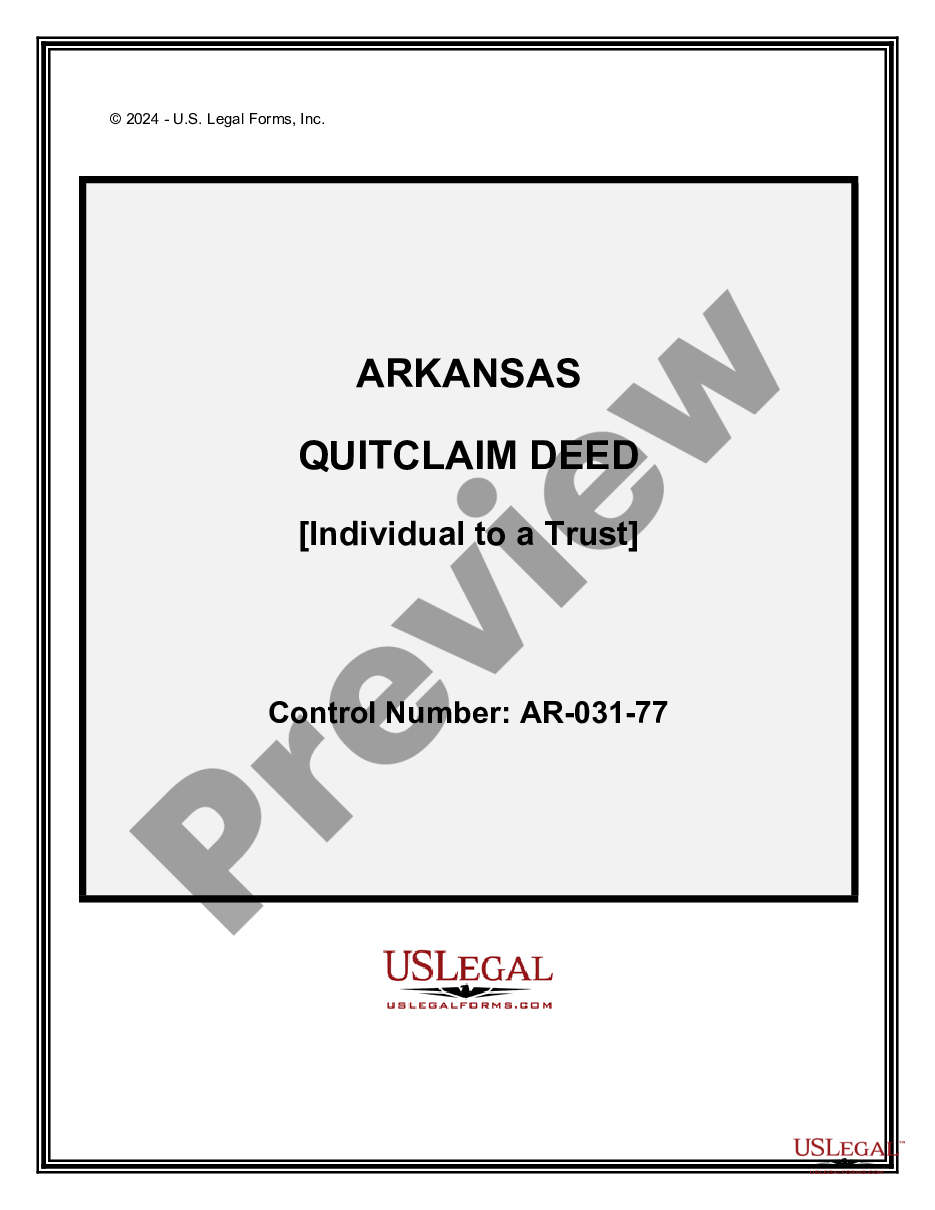
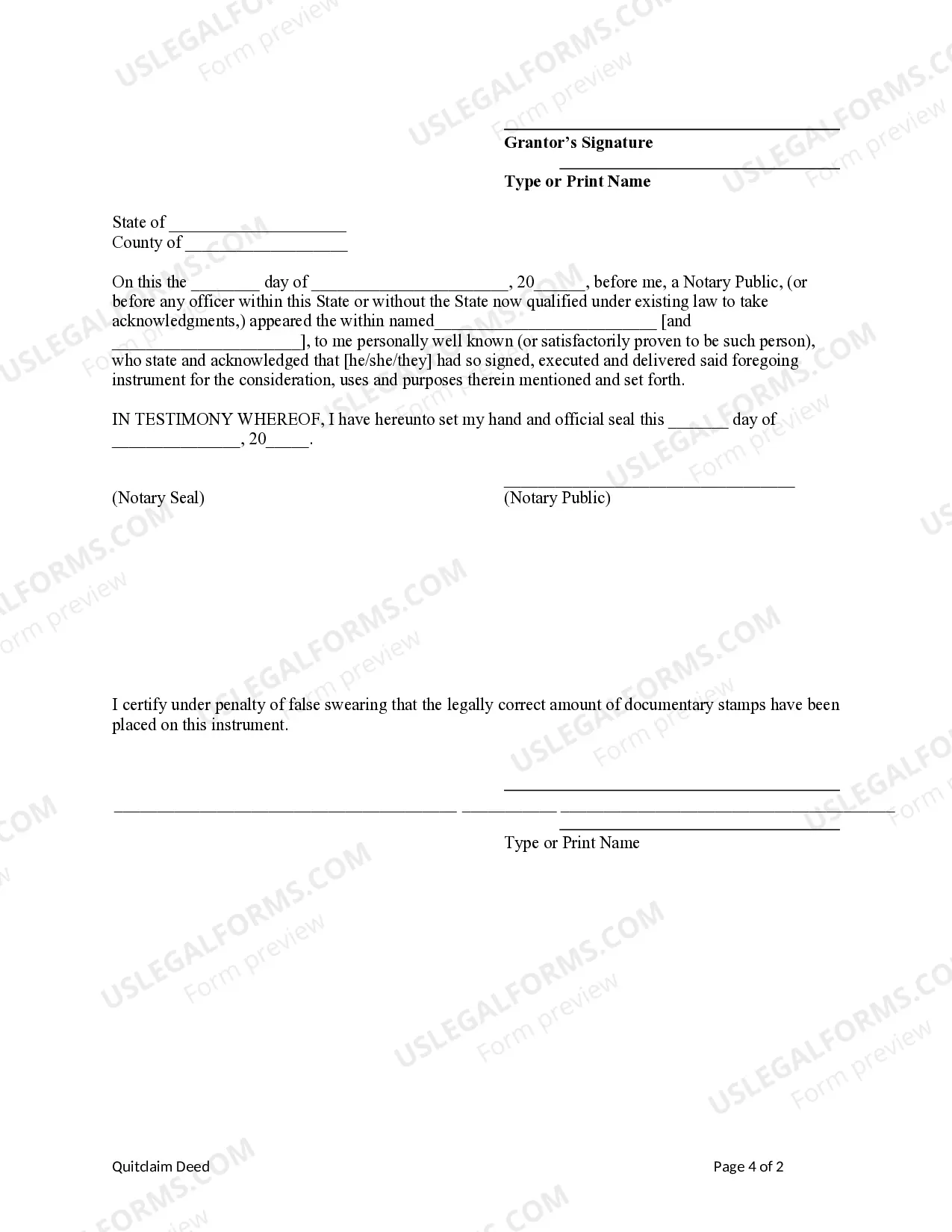
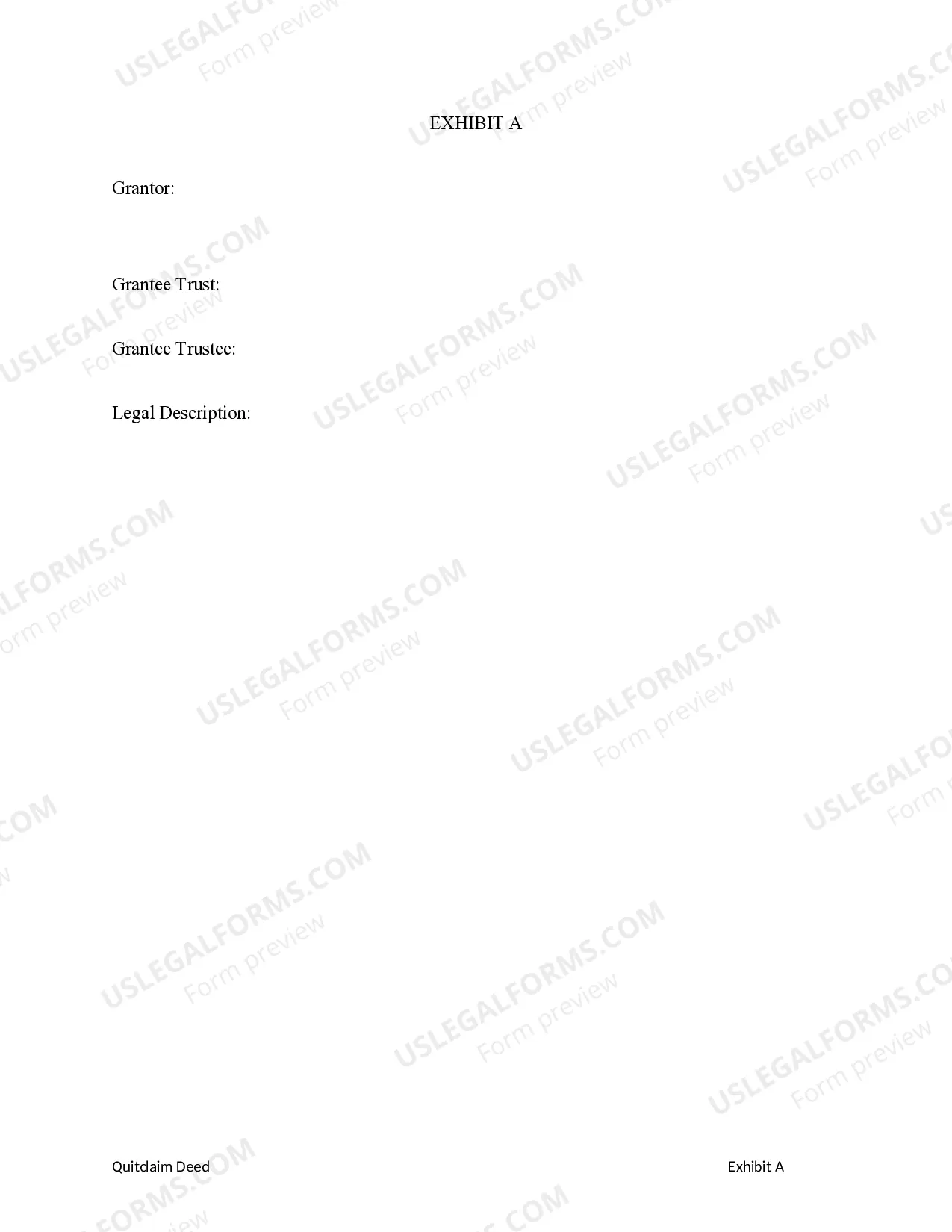
How to fill out Arkansas Quitclaim Deed From An Individual To A Trust?
Steering through the red tape of official paperwork and forms can be challenging, particularly if one does not engage in that profession. Even selecting the appropriate form for obtaining an Arkansas Quit Claim Deed With Life Estate can be laborious, as it needs to be valid and precise to the last numeral.
However, you will need to invest significantly less time locating a suitable template from a source you can depend on. US Legal Forms is a platform that streamlines the process of seeking the correct paperwork online.
US Legal Forms is a singular destination to acquire the newest examples of documents, receive guidance on their usage, and download these templates to complete them. It serves as a repository with over 85,000 documents applicable in various sectors. In looking for an Arkansas Quit Claim Deed With Life Estate, you can be assured of its validity since all the forms are authenticated.
US Legal Forms can save you time and effort verifying if the form you found online is appropriate for your needs. Create an account and gain unlimited access to all the templates you need.
- Establish an account at US Legal Forms to guarantee you have all the essential documents within your access.
- Store them in your archive or add them to the My documents catalog.
- Access your saved documents from any device by clicking Log In at the library website.
- If you do not yet possess an account, you can always search again for the template you seek.
- Acquire the correct document in a few straightforward steps.
- Input the title of the document in the search bar.
- Locate the appropriate Arkansas Quit Claim Deed With Life Estate from the list of results.
- Review the description of the sample or view its preview.
- If the template aligns with your requirements, click Buy Now.
- Continue to select your subscription plan.
- Use your email and create a password to register an account at US Legal Forms.
- Choose a credit card or PayPal payment option.
- Download the template document to your device in the format you prefer.
Form popularity
FAQ
Transferring a property deed from a deceased relative in Arkansas generally involves obtaining a copy of the death certificate and identifying whether the property was in the deceased person's name solely or if a living trust was established. If the estate has gone through probate, the executor can transfer the property using an Arkansas quit claim deed with life estate. Consider using platforms like USLegalForms to find the necessary forms and guidance for a smooth transfer.
Yes, in Arkansas, a quitclaim deed must be notarized to be valid. This notarization serves to ensure that the signatures on the deed are authentic and that the parties involved understand the transaction. After notarization, the Arkansas quit claim deed with life estate can then be filed with the county clerk for public record.
To file an Arkansas quit claim deed with life estate, you must first complete the deed form, ensuring it includes the names of the grantor and grantee, a property description, and the life estate clause. After that, you need to sign the deed in the presence of a notary public. Once notarized, you should file the deed with the local county clerk's office for it to take effect.
The main difference lies in the level of protection offered during property transfer. An Arkansas quit claim deed with life estate transfers only the grantor's interest without guaranteeing clear title, which means there could be claims against the property. In contrast, a warranty deed provides a guarantee that the title is clear, offering more protection to the buyer. Knowing these differences can help you choose the right deed for your needs.
An Arkansas quit claim deed with life estate enables the current property owner to transfer their ownership rights to another party. The new owner receives the property, but the original owner retains a life estate, allowing them to live on the property for the rest of their life. This arrangement offers security to the original owner while simplifying the transfer process. Understanding how this deed functions is crucial for making informed decisions.
To create an Arkansas quit claim deed with life estate, you need basic information like the names of the grantor and grantee, a legal description of the property, and the signature of the grantor. It's crucial for the document to be notarized to ensure its validity under Arkansas law. Additionally, filing the deed with the county clerk's office is essential for public record. Always consider consulting a legal expert to guide you through this process.
Individuals often take advantage of an Arkansas quit claim deed with life estate. This tool is especially useful for property owners wishing to transfer ownership without a lengthy legal process. Family members, such as parents transferring property to children, often find it beneficial. Additionally, it can simplify property transfer in estate planning, ensuring a smoother transition.
Transferring property title to a family member in Arkansas can be efficiently done via an Arkansas quit claim deed with life estate. Prepare the deed with both your and your family member's information, alongside a detailed property description. After completing the deed, sign it before a notary and file it with the county clerk. This process ensures the title transfer is official and legally binding.
To fill out an Arkansas quit claim deed with life estate, start by obtaining the correct form, which is available online or at local legal stations. Clearly write the grantor's and grantee's names, ensuring they match official documents. Next, include a description of the property, specifying the life estate details. Finally, sign the document in front of a notary public, then file it with your county clerk for legal recognition.
Selling a property with a life estate deed can be complicated. The life tenant retains rights to occupy the property, which can limit the sale process. Furthermore, any sale typically requires the agreement of the remainderman, complicating negotiations. If you seek to navigate these complexities, platforms like uslegalforms can offer valuable assistance in understanding and managing your life estate deed.