Transfer On Death Deed For Texas
Description


Get your form ready online
Our built-in tools help you complete, sign, share, and store your documents in one place.
Make edits, fill in missing information, and update formatting in US Legal Forms—just like you would in MS Word.
Download a copy, print it, send it by email, or mail it via USPS—whatever works best for your next step.
Sign and collect signatures with our SignNow integration. Send to multiple recipients, set reminders, and more. Go Premium to unlock E-Sign.
If this form requires notarization, complete it online through a secure video call—no need to meet a notary in person or wait for an appointment.
We protect your documents and personal data by following strict security and privacy standards.

Make edits, fill in missing information, and update formatting in US Legal Forms—just like you would in MS Word.

Download a copy, print it, send it by email, or mail it via USPS—whatever works best for your next step.

Sign and collect signatures with our SignNow integration. Send to multiple recipients, set reminders, and more. Go Premium to unlock E-Sign.

If this form requires notarization, complete it online through a secure video call—no need to meet a notary in person or wait for an appointment.

We protect your documents and personal data by following strict security and privacy standards.
Looking for another form?










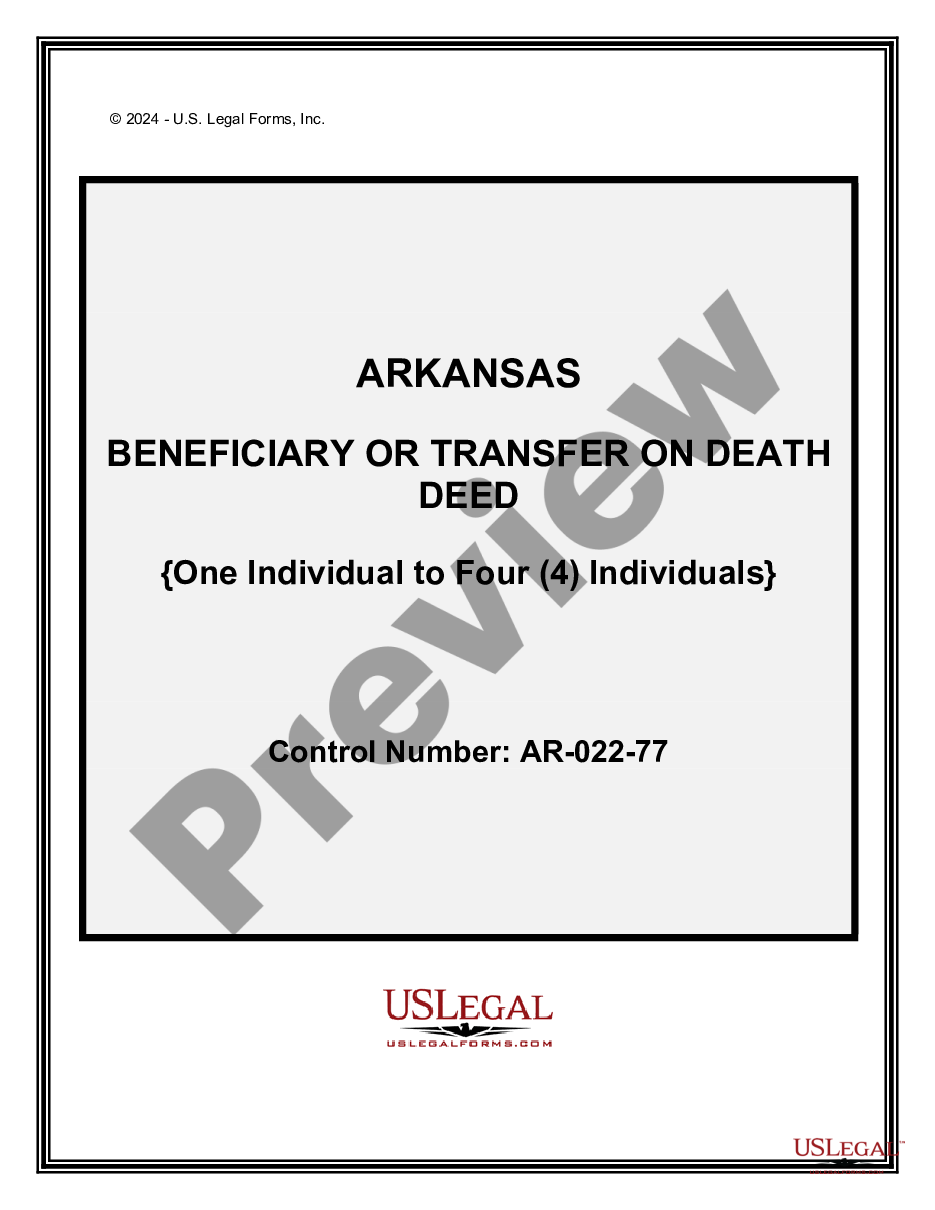
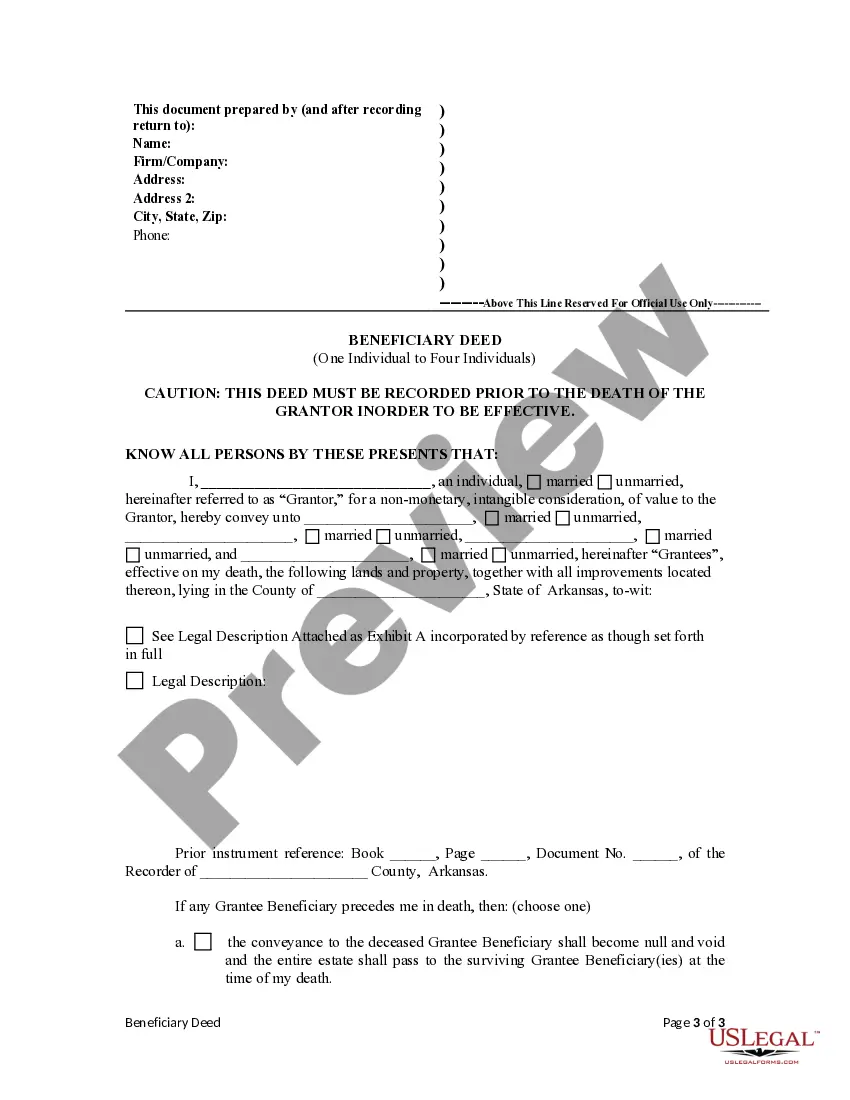
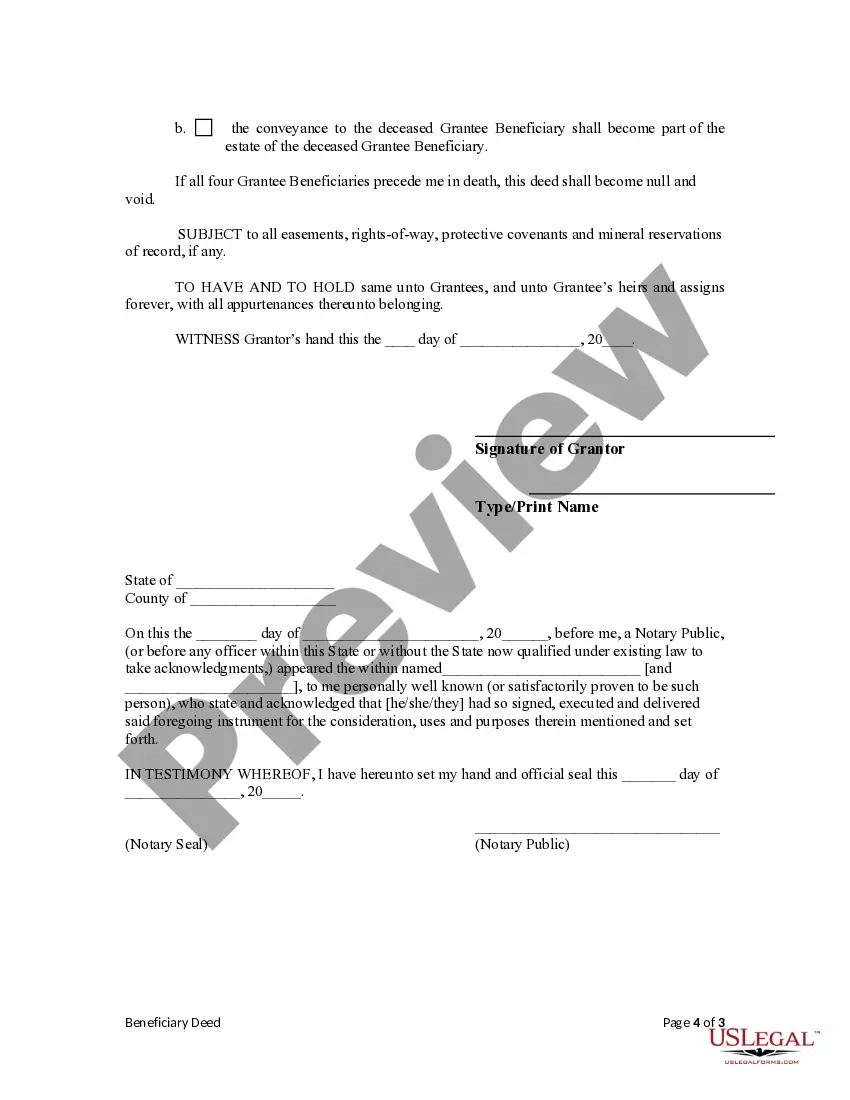
How to fill out Arkansas Transfer On Death Deed Or TOD - Beneficiary Deed For One Individual To Four Individuals?
- If you're a returning user, log in to your US Legal Forms account and download the TOD Deed template by clicking the Download button. Ensure your subscription is active, or renew if necessary.
- For first-time users, start by browsing the extensive library. Preview the TOD Deed form to confirm that it fits your needs and complies with Texas regulations.
- If necessary, refine your search for alternative templates. Utilize the search function at the top to find the correct form that matches your specific requirements.
- Select the desired document by clicking on the Buy Now button and choose a subscription plan that fits your needs while setting up your account for library access.
- Complete your payment using your credit card or PayPal and finalize your purchase.
- Once your transaction is complete, download the TOD Deed form directly to your device for easy access and completion. You can also find it later under the My Forms section.
By following these steps, you not only secure your property but also ensure a smoother transition for your loved ones. US Legal Forms not only offers 85,000+ customizable forms but also provides access to premium experts for assistance.
Take control of your estate planning today and visit US Legal Forms to get started with your Transfer on Death deed.
Form popularity
FAQ
A transfer on death deed for Texas can be an effective alternative to a will, but they serve different purposes. The deed allows for a direct transfer of property without probate, making it typically faster and simpler. However, a will covers a broader scope, detailing asset distribution and guardianship for minor children. Depending on your needs, you may benefit from using both tools in your estate planning.
One downside of a transfer on death deed for Texas is that it does not provide for contingencies, such as if the beneficiary predeceases the owner. This can lead to complications regarding who receives the property. Additionally, if you have debts or need Medicaid assistance, the property could still be subject to claims. It's crucial to weigh these factors and consider other estate planning options.
A transfer on death deed for Texas allows the owner to leave the property to a beneficiary upon death without the need for probate. In contrast, a ladybird deed retains certain rights for the original owner, allowing them to sell or use the property during their lifetime. Both options have unique benefits, so carefully consider your situation and perhaps consult with a legal expert to choose the right one.
While you can create a transfer on death deed for Texas without an attorney, having one can be advantageous. An attorney can offer expertise and ensure that the deed complies with state laws, reducing the risk of complications later on. They can also tailor the deed to meet your specific needs and address any concerns you may have. Engaging a professional may save you time and trouble.
The best way to leave property upon death often depends on individual circumstances. A transfer on death deed for Texas allows you to pass your property directly to a beneficiary without going through probate. This method is usually simple and efficient, avoiding the lengthy legal process associated with wills. Consider your goals and consult with a professional to determine the best approach.
You do not necessarily need a lawyer to create a transfer on death deed for Texas. However, consulting with a legal professional can help ensure that you meet all the requirements and avoid potential issues. A qualified attorney can provide guidance on the deed's language and assist with the property title. Ultimately, having legal support may give you peace of mind.
To transfer a title from a deceased person in Texas, you will first need the death certificate and any applicable estate documents. If there is a Transfer on Death Deed for Texas, it simplifies the process significantly, allowing for a direct transfer to the named beneficiary. If no such deed exists, you may need to open a probate case and follow legal procedures to ensure the title is legally transferred.
Yes, Texas allows Transfer on Death Deeds. This option provides a straightforward way for property owners to designate beneficiaries who will inherit their property upon their death. By utilizing a Transfer on Death Deed for Texas, property owners can avoid probate and make the transfer process simpler for their loved ones.
To transfer property ownership after death in Texas, start by reviewing any estate planning documents left by the deceased. If a Transfer on Death Deed for Texas is in place, this document facilitates the transfer directly to the beneficiary without going through probate. If there is no deed, you may need to follow the probate process, which involves legal documentation and may take longer.
To transfer ownership from a deceased owner in Texas, you will need to gather several important documents. First, secure a certified copy of the death certificate. Next, obtain the will, if one exists, and determine the executor or personal representative named in it. Additionally, you will need the property deed and the completed Transfer on Death Deed for Texas to facilitate the ownership transfer smoothly.