Transfer Death Deed Beneficiary With Trust
Description



Get your form ready online
Our built-in tools help you complete, sign, share, and store your documents in one place.
Make edits, fill in missing information, and update formatting in US Legal Forms—just like you would in MS Word.
Download a copy, print it, send it by email, or mail it via USPS—whatever works best for your next step.
Sign and collect signatures with our SignNow integration. Send to multiple recipients, set reminders, and more. Go Premium to unlock E-Sign.
If this form requires notarization, complete it online through a secure video call—no need to meet a notary in person or wait for an appointment.
We protect your documents and personal data by following strict security and privacy standards.

Make edits, fill in missing information, and update formatting in US Legal Forms—just like you would in MS Word.

Download a copy, print it, send it by email, or mail it via USPS—whatever works best for your next step.

Sign and collect signatures with our SignNow integration. Send to multiple recipients, set reminders, and more. Go Premium to unlock E-Sign.

If this form requires notarization, complete it online through a secure video call—no need to meet a notary in person or wait for an appointment.

We protect your documents and personal data by following strict security and privacy standards.
Looking for another form?




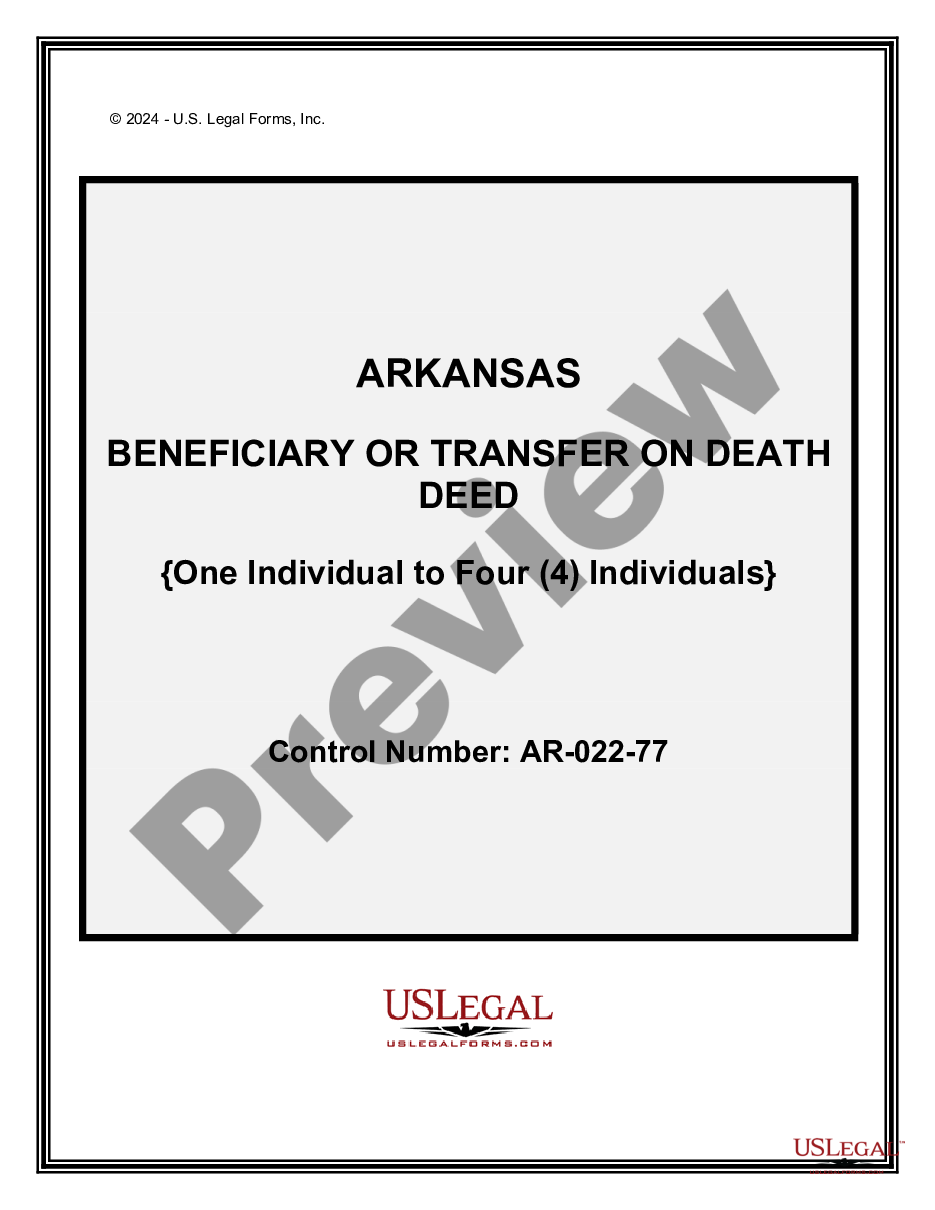
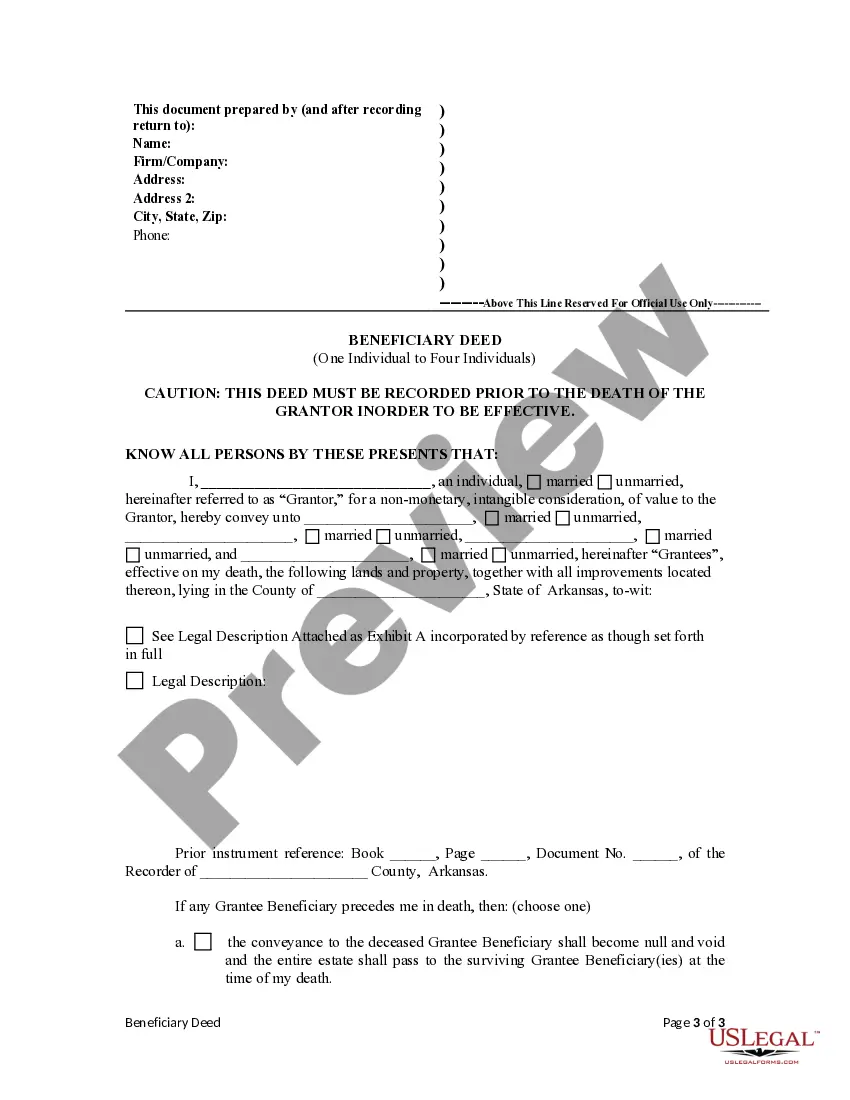
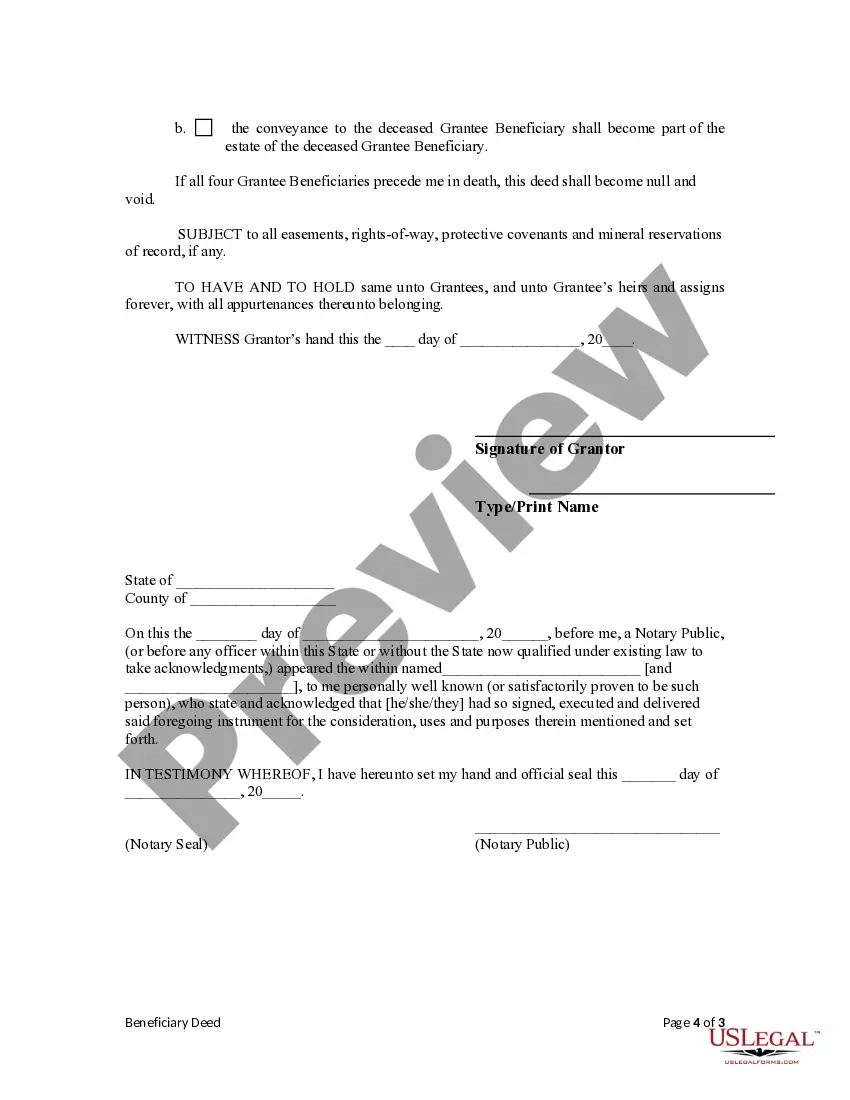
How to fill out Arkansas Transfer On Death Deed Or TOD - Beneficiary Deed For One Individual To Four Individuals?
- Start by logging into your US Legal Forms account. If you’re not yet a member, create a free account to access the library.
- Browse or search for the specific death deed beneficiary form that suits your needs. Review the description and ensure it meets local jurisdiction requirements.
- If necessary, locate an alternative template using the Search feature for correct matching.
- Select the form and click the 'Buy Now' button. Choose your preferred subscription plan to access additional forms.
- Complete your purchase by entering your payment details through credit card or PayPal.
- Once payment is confirmed, download the form directly to your device for quick access and completion.
By following these organized steps, you can efficiently acquire the necessary legal documentation for transferring a death deed beneficiary within a trust using US Legal Forms.
Get started today on securing your estate planning needs—access a wealth of legal forms and expert assistance by visiting US Legal Forms.
Form popularity
FAQ
A beneficiary deed allows you to transfer your property to a beneficiary upon your death without the need for probate. In contrast, a trust establishes a framework for managing your assets during your lifetime and after your passing. If you are considering how to transfer a death deed beneficiary with trust, it's essential to understand that trusts can provide more control and flexibility over your assets. Both methods offer unique benefits, so be sure to assess your specific needs and consider solutions like USLegalForms for seamless implementation.
While a transfer on death deed can simplify the process of transferring your property, it does have some disadvantages. For instance, if you have debts, creditors may still claim against the property after your death. Additionally, without a comprehensive estate plan, relying solely on a transfer death deed beneficiary with trust could create disputes among heirs and unintended outcomes.
Transfer on death (TOD) is a specific form of beneficiary designation that applies to various assets, including property and financial accounts. While both serve to assign who receives your assets after your death, a TOD deed specifically applies to real estate. A transfer death deed beneficiary with trust offers a clear plan for your property, ensuring your wishes are honored with minimal complications.
A transfer on death (TOD) account passes directly to the named beneficiary upon your death. This process avoids the often lengthy probate period associated with traditional inheritances. Utilizing a transfer death deed beneficiary with trust simplifies this transfer, giving beneficiaries access to account funds quickly and efficiently.
A transfer on death deed designates who will receive your property after your death. It functions differently from traditional inheritance as it allows for immediate transfer upon your passing, bypassing probate. By choosing a transfer death deed beneficiary with trust, you ensure a smooth transition of your property without unnecessary delays, providing certainty for your loved ones.
Choosing between a transfer on death (TOD) and naming beneficiaries after death depends on your estate goals. A transfer death deed beneficiary with trust often provides easier management of your assets and potentially avoids probate. On the other hand, direct beneficiaries can sometimes lead to complications, especially in larger estates. Evaluating your individual situation with legal professionals can help determine which option better meets your needs.
A trust deed transfer is a legal process where property is transferred into a trust for the benefit of specified individuals. This can provide greater control over how assets are managed and distributed after your death. By using a transfer death deed beneficiary with trust, you ensure that property is held in trust until specific conditions are met, providing security for both you and your beneficiaries. It's a valuable tool for those looking to maintain control over their estate.
While a transfer on death deed offers benefits, it also comes with potential downsides. For instance, it may not provide protection from creditors or can transfer property without considering taxes owed on the estate. Additionally, family disputes may arise regarding the intent or fairness of transferring property in this manner. Exploring a transfer death deed beneficiary with trust can help mitigate some of these issues by adding more detailed planning to your estate strategy.
The best way to leave property upon death often depends on your unique circumstances and goals. A transfer death deed beneficiary with trust allows you to name beneficiaries directly, bypassing probate and ensuring a smooth transfer. This method offers control over how and when your property passes to heirs, and can be more straightforward than other options. Consulting an estate planning expert can help you make the best choice for your situation.
A transfer on death deed does not necessarily avoid inheritance tax. The property may still be subject to taxation based on your state's laws, even if it transfers directly to your beneficiaries. However, utilizing a transfer death deed beneficiary with trust can simplify the process and reduce certain tax implications. Working with a tax professional is essential to understand how these laws apply to your specific situation.